
Q
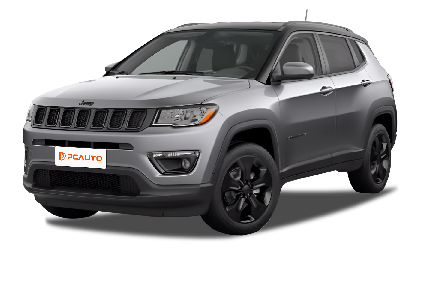
How about the durability of the Jeep Compass?
 InventorMindMay 22, 2025, 11:38 AM
Its body structure incorporates approximately 65% high-strength steel, providing robust construction that forms a solid foundation for long-term use. The vehicle's suspension system delivers excellent shock absorption, ensuring comfortable and stable driving, while its well-tuned setup helps minimize impact on components during operation, thereby extending the overall lifespan.
Additionally, the Compass is equipped with the Selec-Terrain traction control system, which offers four distinct driving modes for various road conditions, ensuring stable performance across challenging terrains while reducing wear and tear caused by poor road surfaces. Jeep's reputation for reliability and durability further reinforces the Compass's long-lasting qualities. With proper routine maintenance, including regular inspections and timely repairs, the Jeep Compass is capable of serving owners reliably for many years.
Special Disclaimer: This content is published by users and does not represent the views or position of PCauto.
Related Q&A
Q
Is the Jeep Compass engine powerful?
The Jeep Compass 2.4 Limited (2014) is equipped with a 2.4L naturally aspirated inline-four engine that delivers 172 horsepower at 6000 rpm and a peak torque of 224 Nm at 4400 rpm. Whether an engine is powerful enough depends on individual needs and expectations. For urban commuting and light off-road driving, this engine provides adequate power for smooth acceleration and overtaking. It is paired with an automatic transmission and an all-wheel drive system, ensuring stable performance across various road conditions. However, if you seek high-performance driving with rapid acceleration and high top speeds, this engine may not meet those expectations. Overall, it strikes a good balance between daily usability and light adventure capabilities.
 SilverStreamMay 20, 2025
Q
What is the maximum range of the Jeep Compass?
The Jeep Compass 2.4 Limited (2014) has a fuel tank capacity of 51 liters. However, its maximum range depends on various factors such as driving habits, road conditions, and vehicle load. With a 51-liter fuel tank, under ideal conditions with efficient driving, it can achieve a long range, but the actual range often varies. For example, if the vehicle averages around 10 liters per 100 kilometers (this is just an estimate as actual consumption may differ), it could travel approximately 510 kilometers on a full tank. Regular maintenance like proper tire inflation, timely oil changes, and efficient engine tuning can also improve fuel efficiency and increase the maximum range. Keep in mind these are approximations and the actual maximum range may fluctuate.
 BuddyTimeTogetherMay 21, 2025
Q
How much does it cost to fill up Jeep Compass?
The Jeep Compass has a fuel tank capacity of 51 liters. However, the actual cost to fill it up depends on current fuel prices. Gasoline prices fluctuate - taking standard RON 95 as an example, if its price is RM 2.20 per liter, a full tank would cost approximately RM 112.20. For RON 97 priced at RM 2.50 per liter, filling the tank would require RM 127.50.
Fuel consumption varies significantly based on driving habits and road conditions. Proper driving habits and favorable road conditions can improve fuel efficiency, reducing refueling frequency and costs. Conversely, aggressive driving and challenging terrain increase fuel consumption, leading to higher refueling expenses.
 FriendshipMay 21, 2025
Q
Does Jeep Compass have a spacious room?
The room of Jeep Compass is spacious. With a length of 4404mm, width of 1760mm, height of 1656mm and wheelbase of 2634mm, it provides an ample space inside. The five-seat layout means there's enough room for a small family. The front seats offer manual adjustability for the driver and passenger, and the passenger seat has features like tumble-fold and heating. The rear seats can be split 60:40, which not only gives flexibility for seating arrangements but also allows for more cargo space when needed. The trunk has a volume of 458L, which is sufficient for daily groceries or a couple of suitcases for a short trip. Also, features like a single sunroof increases the sense of spaciousness and airiness inside the vehicle, making the Jeep Compass a good choice for those seeking a vehicle with adequate space.
 GamerZoneFunMay 21, 2025
Q
Is the Jeep Compass SUV or XUV?
The Jeep Compass is a compact SUV that has the typical features of an SUV. It has elevated ground clearance that enables it to easily handle challenging terrains with better passability than conventional sedans. Its interior offers adequate space, providing ample room for both passengers and cargo to meet the consumers' needs for daily commutes and family travel.
In design, it carries forward Jeep's iconic DNA with the classic seven-slot grille paired with distinctive headlights, complemented by muscular body lines. For the hood, it offers a range of powertrain options including gasoline engines, as well as electrified variants like mild-hybrid, plug-in hybrid, and all-electric versions to cater to consumers'diverse preferences.
Some models are equipped with an intelligent 4WD system, delivering off-road performance—all of which align with authentic SUV traits rather than the XUV.
 ActorStagePerformanceMay 21, 2025
Q
What type of vehicle is the Jeep Compass?
The Jeep Compass is a compact SUV that belongs to the Jeep family. With a body length of 4,404mm, width of 1,760mm, height of 1,656mm, and a wheelbase of 2,634mm, its dimensions secure its position in the compact SUV segment. For the hood, it once offered a 2.4L naturally aspirated engine version producing 172PS maximum horsepower, sufficient for daily driving needs.
In terms of features, the vehicle is equipped with numerous practical and comfort-oriented configurations. In safety, it includes six standard airbags, electronic stability control, hill start assist, etc. The front seats offer manual adjustment, supporting heating functionality, while the rear seats feature a 60:40 split-folding capability for flexible cargo space expansion. Additionally, the multifunction steering wheel and 6.5-inch touchscreen infotainment system further enhance the driving experience.
With these characteristics, the Jeep Compass is suitable for both daily commutes and outdoor adventures, which is a good choice for consumers.
 WriterPageStoryMay 21, 2025
Q
How far can an empty-fuel Jeep Compass travel?
It's difficult to determine exactly how far an empty-fuel Jeep Compass can travel, as this depends on various factors like driving style, road conditions, and vehicle load. The 2014 Jeep Compass 2.4 Limited has a 51-liter fuel tank, with actual fuel consumption varying between drivers - typically ranging from 11 to 15 liters per 100 kilometers.
Assuming approximately 10 liters of fuel remain when the warning light activates (this is a rough estimate and varies by vehicle), at a consumption rate of 12 liters per 100 km, the theoretical remaining range would be around 80 kilometers. However, this is only an estimate. In practice, to avoid potential fuel pump overheating damage because of insufficient cooling, which may even cause the breakdown of vehicle, it's strongly recommended to refuel the vehicle as soon as possible after the warning light illuminates.
 ArtistBrushCreativityMay 21, 2025
Q
Which country does Jeep Compass come from?
The Jeep Compass is an American brand. Jeep is an automotive brand with a profound historical heritage and is affiliated with Chrysler Corporation in the United States. This brand is renowned worldwide for producing off-road vehicles with outstanding performance. As a member of the Jeep family, the Jeep Compass inherits the brand's unique features. It combines classic design with modern technology, featuring iconic exterior elements of the Jeep brand such as the seven-slot grille and a series of advanced configurations, such as the available Freedom Drive active full-time 4WD system, which enhances its on-road stability and off-road capability. In Malaysia, many consumers favor the Jeep Compass, as it offers unique and distinctive options for local SUV buyers.
 DancerMoveGracefulMay 21, 2025
Q
What is the fuel capacity of Jeep Compass?
The fuel capacity of the Jeep Compass is 51 liters, which helps improve the driving range. The fuel tank capacity refers to the volume from the bottom of the fuel tank to the safe fill level. In actual refueling, it may exceed the calibrated value because there is still space from the safe fill level to the fuel tank opening, which is to prevent fuel overflow due to thermal expansion. This vehicle runs on gasoline, and its fuel consumption per 100 kilometers fluctuates within a certain range. Understanding the fuel capacity is important for trip planning. For example, before a long-distance trip, check the remaining fuel level and plan refueling stops in advance. During daily use, it is also recommended to monitor the remaining fuel level through the vehicle's fuel gauge and refuel the vehicle promptly when the level is low to avoid travel disruption due to fuel depletion.
 PilotFlightSkyHighMay 21, 2025
Q
Is Jeep Compass the full-size car?
Jeep Compass is not the full size car. It is a compact SUV, categorized into the C-Segment. With a length of 4404mm (for the 2014 model) and a wheelbase of 2634mm, its dimensions make it a compact vehicle. Full size cars or SUVs typically have larger dimensions, offering more spacious interior, especially in terms of passenger room and cargo capacity. However, over the years, the Compass has undergone upgrades. The newer versions have increased in size, with a length reaching 4550mm and an extended wheelbase of 2795mm, which also boosts the cargo space to 550L. This evolution makes it more spacious than before, yet still within the category of compact vehicle.
 SwimmerStrokeGraceMay 21, 2025
Popular Cars
Model Year
Car Compare
Car Photo
Related Models
 Cars
CarsLatest Q&A
Q
Is AMT similar to automatic?
There are significant differences between AMT transmissions and automatic transmissions (AT) in terms of core structure and driving experience. AMT is essentially an electronically automated version of a manual transmission, simulating manual clutch operation and gear shifting through a computerized control system while retaining the gear set structure of manual transmissions. As a result, it offers higher transmission efficiency, with fuel consumption approximately 8%-12% lower than AT, making it particularly suitable for highway or long-distance driving. However, it may exhibit jerking similar to manual transmissions during low-speed gear shifts, especially noticeable in congested traffic conditions.
AT transmissions rely on torque converters for power transfer, delivering smooth and seamless gear shifts that appeal to comfort-oriented users. However, their complex structure (incorporating planetary gear sets, hydraulic systems, etc.) results in higher maintenance costs. A single service may cost between 800 to 1,500 ringgit, whereas AMT only requires gear oil replacement at approximately 400 ringgit.
From a market perspective, AMT is predominantly used in budget vehicles or commercial models priced below 80,000 ringgit, while AT is typically featured in mid-to-high-end vehicles. Consumers should select based on actual needs: AMT suits those prioritizing fuel efficiency and low maintenance costs, while AT better serves those valuing comfort. Notably, recent advancements in AMT electronic control technology have significantly mitigated jerking issues, though test drives should still emphasize low-speed performance evaluation.
 AriaMar 26, 2026
Q
Which is better, DCT or AT?
DCT (Dual-Clutch Transmission) and AT (Automatic Transmission) each have their own advantages and disadvantages, and the choice should be based on personal driving needs. AT transmissions transfer power through a torque converter, offering excellent shift smoothness, making them suitable for urban commuting or novice drivers. However, they tend to have higher fuel consumption, and vehicles equipped with them are usually more expensive. DCT transmissions utilize a dual-clutch structure, featuring fast shift speeds and high power transmission efficiency, which provides a more direct driving experience—particularly suitable for users seeking a sporty feel. However, they may exhibit jerking at low speeds and have relatively high maintenance costs. If durability and comfort are priorities, AT is the more reliable choice; if power responsiveness and driving pleasure are preferred, wet DCT (such as Volkswagen DSG) performs better, though dry DCT models should be avoided in prolonged stop-and-go traffic conditions. Additionally, CVT transmissions excel in smoothness and fuel efficiency, making them ideal for daily commuting, but they lack driving excitement. It is recommended to test-drive before purchasing, as tuning varies significantly across brands, and real-world experience is more important than theoretical specifications.
 FlutteringMar 26, 2026
Q
Is Amt good or bad?
AMT gearboxes have a significant cost advantage in the local market, typically being around 5,000 Ringgit cheaper than models equipped with conventional automatic transmissions. Their fuel efficiency is comparable to manual transmissions, resulting in long-term fuel savings. Featuring a straightforward design, they achieve transmission efficiency exceeding 90% with relatively low maintenance costs, making them ideal for practicality-oriented consumers. However, their shifting logic contains inherent limitations: gear changes between 1st and 2nd cause 0.3-0.5 second power interruptions, while unintended upshifts on inclines may reduce engine speed by 15%-20%, compromising driving smoothness. For urban commuters or budget-conscious buyers, AMT offers excellent value, though those prioritizing premium driving dynamics should consider alternative transmission types. Some domestic models like the Perodua Axia employ enhanced AMT systems, where optimized shift programming has reduced gearshift shock by approximately 30%.
 RainbowsMar 26, 2026
Q
Which gives better mileage, CVT or AMT?
From the perspective of fuel economy, CVT transmissions generally perform better under urban driving conditions. Their continuously variable design allows the engine to consistently operate within the optimal speed range, significantly reducing fuel consumption during frequent starts and stops. Test data shows that their fuel consumption in urban driving conditions is 10% to 15% lower than that of comparable models. AMT transmissions, on the other hand, inherit the high transmission efficiency of manual transmissions, delivering fuel efficiency close to manual transmissions during high-speed cruising. This makes them particularly suitable for long-distance driving in large-displacement vehicles. However, due to power interruption during gear shifts, their overall fuel consumption may be 5% to 8% higher than CVTs.
The difference in fuel-saving characteristics between the two transmissions stems from their technical principles: CVTs achieve continuous variability through steel belts and pulleys, eliminating the fixed gear ratio limitations of traditional transmissions; AMTs simulate manual gear changes via electronic control systems while maintaining the mechanical efficiency of gear transmission. Notably, actual fuel consumption is also influenced by driving habits. Smooth acceleration and anticipatory deceleration can maximize the transmissions' fuel-saving potential. If the vehicle budget permits and urban commuting is the primary use, CVTs offer a more economical choice. For frequent highway driving with an emphasis on cost-effectiveness, AMTs are equally worth considering.
 RubyBlazeMar 26, 2026
Q
Which is cheaper, AMT or CVT?
In terms of gearbox cost, AMT is usually more economical than CVT. Essentially, AMT is a manual transmission equipped with an electronic control unit, featuring a simple structure and low maintenance costs. The unit price ranges from approximately 5,000 to 8,000 ringgit, making it suitable for budget-conscious consumers or those who prioritize long-term operating costs. CVT incurs higher manufacturing costs due to its precision steel belt transmission system and continuous variable transmission technology, with a unit price of about 7,000 to 10,000 ringgit. However, it delivers a smoother driving experience and superior fuel efficiency. The primary differences between the two lie in technical complexity: AMT retains the gear-shifting mechanism, resulting in noticeable shift shock; CVT achieves linear power output through stepless speed variation but requires periodic belt inspection and incurs higher maintenance expenses. For those prioritizing initial cost and basic transportation needs, AMT offers better value; if comfort and long-term fuel economy are priorities, CVT represents a more worthwhile investment. Note that actual prices may vary based on vehicle model, brand, and local supply chain factors.
 ShadowProwlMar 26, 2026
Pros
Cons