
Q
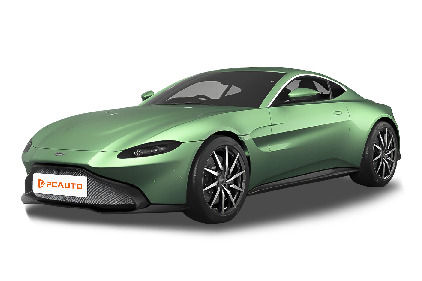
How is the handling of the 2024 Aston Martin Vantage?
 DazzlingSparkleOct 21, 2025, 03:53 PM
The 2024 Aston Martin Vantage brings some serious upgrades to the table when it comes to handling, making it a perfect fit for Malaysia's twisty roads and urban jungle. Under the hood, you've got that 4.0-liter twin-turbo V8 cranking out 656 horsepower, mated to an 8-speed auto that delivers power quickly and smoothly. The suspension's been retuned and the electronic power steering is spot-on, giving you precise stability through corners – even when the tarmac's a bit damp, it still grips like a champ. They've stiffened up the body and shaved off some weight too, which really sharpens the dynamics and lets you feel every bit of what the road's telling you.
For Malaysian enthusiasts, the Vantage comes with those adjustable drive modes – Sport, Sport+, and Track – so it can handle everything from KL's bumper-to-bumper traffic to carving up the Genting Highlands or Cameron Highlands. And let's not overlook the supercar-grade brakes and that optional rear-wheel steering; they make a huge difference to safety when you need to make a sudden lane change, and that tech really puts it ahead of some rivals in its class.
If you're in the market for a high-performance GT, the Vantage actually beats out those pure track-focused competitors when it comes to day-to-day usability – think decent boot space and seats that are comfortable enough for longer drives. It's got the goods for both thrills and practicality.
Special Disclaimer: This content is published by users and does not represent the views or position of PCauto.
Related Q&A
Q
Does the 2024 Aston Martin Vantage have all-wheel drive
The 2024 Aston Martin Vantage doesn't come with all-wheel drive; instead, it sticks with the brand's iconic rear-wheel drive setup. This design prioritizes the pure essence of driving fun and sporty performance, making it a perfect fit for Malaysia's passionate high-performance sports car enthusiasts. Under the hood, you'll find a 4.0-liter twin-turbo V8 that cranks out 535 horsepower, mated to an 8-speed automatic transmission. The power delivery and chassis tuning are heavily focused on cornering precision, and even in Malaysia's rainy conditions, the electronic stability program and limited-slip differential work together to keep traction reliable. If you're set on all-wheel drive, the DBX SUV from the same stable is worth a look, but the Vantage's rear-drive character is exactly what draws in so many driving purists—it offers that direct power response and a more engaging, challenging driving experience. One thing to keep in mind: Malaysia's hot and humid climate can be tough on high-performance tires, so regular checks to ensure they're in good shape are a smart move for safety.
 StrongWillOct 20, 2025
Q
Where is the Aston Martin Vantage 2024 built?
The 2024 Aston Martin Vantage continues to roll off the production line right here in the UK, specifically at the brand's headquarters factory in Gaydon, England. That's the birthplace of many of Aston's legendary sports cars, where the traditions of hand craftsmanship and high-performance tuning are very much alive and kicking. For our Malaysian petrolheads, good news – this beauty is coming in through official import channels. Under the hood lies that iconic 4.0-liter twin-turbo V8 (developed in collaboration with AMG), cranking out a whopping 665 horsepower. Mated to an 8-speed automatic gearbox, it'll blast from 0-100km/h in just 3.4 seconds. But it's not all about straight-line speed; the new Vantage gets some aerodynamic tweaks and chassis refinements too, making it even more of a hoot for drivers who live for sharp, precise handling.
One thing that really stands out is Aston Martin's commitment to personalization in Southeast Asia. Malaysian owners can dive into the Q by Aston Martin program to spec their Vantage with unique paint colors or interior materials – really make it their own. And locally, the dealers have got brand-certified service teams, so you can rest easy knowing your pride and joy is maintained to the exacting standards of the factory. Now, if you're thinking about parallel imports, it's worth noting that UK right-hand-drive models are a direct fit for Malaysian road rules. But honestly? We'd always recommend going through official authorized channels to keep that all-important after-sales support and peace of mind intact.
 PrettyPictureOct 20, 2025
Q
What is the fuel economy of the 2024 Aston Martin Vantage?
Aston Martin has officially released the fuel economy figures for the 2024 Vantage. Powered by its 4.0-liter twin-turbo V8, the grand tourer returns a combined fuel consumption of around 11.8 liters per 100 kilometers. Of course, real-world figures can vary depending on your driving style, road conditions, and specific vehicle specifications.
For Malaysian buyers, this fuel efficiency lands pretty much par for the course in the high-performance sports car segment. Let's be real—this beast prioritizes power and driving thrills over sipping fuel. With a robust 535 horsepower under the hood and a blistering 0-100 km/h sprint time of just 3.6 seconds, that's where its heart truly lies.
It's worth keeping in mind that Malaysia's hot climate and often congested city streets might nudge those fuel numbers up a bit. To keep things running efficiently, regular maintenance is a solid move to ensure the engine stays in peak form. If you're looking to stretch a tank a little further, make good use of the drive mode selector—flipping to "Comfort Mode" around town can help optimize fuel efficiency.
Sure, the Vantage isn't marketed as a fuel sipper, but let's be honest—its phenomenal performance and that quintessential British luxury craftsmanship still make it the stuff of many petrolheads' dreams.
 GracefulStepOct 20, 2025
Q
Does the 2024 Aston Martin Vantage have a rearview camera?
The 2024 Aston Martin Vantage does come with a rearview camera, a feature that's pretty much standard fare in modern high-performance sports cars these days. It really ups the safety and convenience when reversing, especially handy for Malaysia's tight streets or busy parking lots. Beyond just the rear camera, this ride might also pack a 360-degree surround-view system. That uses multiple cameras to stitch together a bird's-eye view around the car, cutting down on blind spots even more. As a GT that's all about the driving feel, the Vantage keeps that pure, engaging drive alive while still throwing in these practical tech touches – right in line with what today's buyers want: a luxury sports car that delivers both performance and day-to-day usability. It's worth noting that the driver assistance systems in these premium machines are usually fine-tuned to perfection. The camera feed is sharp, the system responds quickly – industry-leading stuff that complements the car's sporty character nicely. For Malaysian owners, though, our hot and rainy weather can play havoc with camera lens clarity. So, a little regular maintenance to keep those lenses clean is definitely a good idea to make sure everything works like a charm.
 KindheartedOct 20, 2025
Q
What is the fuel tank capacity of the 2024 Aston Martin Vantage?
The 2024 Aston Martin Vantage comes with a 78-liter fuel tank, a design that strikes a balance between daily driving practicality and performance needs – perfect for Malaysian drivers whether they're navigating city streets or hitting the highway for a road trip. As a sporty GT that means business, the Vantage packs a 4.0-liter twin-turbo V8 under the hood. Pair that 78-liter tank with its efficient fuel management system, and you get a nice middle ground between spirited driving and relaxed cruising. Crunching the numbers with a combined fuel consumption of around 11.8 liters per 100 km, you're looking at a range of roughly 660 km on a full tank. That's more than enough for those cross-peninsula jaunts, like the 350-odd km stretch from Kuala Lumpur to Penang. It's worth keeping in mind, though, that fuel economy in high-performance cars like this can vary big time depending on how heavy your right foot is. If you're heading out for a track day or some enthusiastic driving, it's smart to map out where the gas stations are beforehand. All Aston Martin models in Malaysia run on RON97 or higher octane fuel, which lines up with the local standard for performance cars, so you can easily fill up at stations like Petronas or Shell.
 SilverStreamOct 20, 2025
Q
How reliable is the 2024 Aston Martin Vantage?
The 2024 Aston Martin Vantage shows promise in terms of reliability. Under the hood, you'll find a refined 4.0-liter twin-turbo V8 that delivers smoother power delivery and improved durability. They've also tweaked the gearbox and electronics to cut down on potential headaches. For folks in Malaysia, the car's ability to handle our tropical climate is a big plus – the cooling system and seals have been optimized for the heat and humidity, so it should stand up well to local weather conditions.
It's worth noting that Aston Martin has upped its game significantly when it comes to quality control lately. The 2024 model benefits from better build quality and stricter component checks, which is reassuring. Sure, supercars need a bit more TLC for daily use, but the Vantage strikes a nice balance that makes it more livable than some rivals in its class. Malaysian owners should pay extra attention to regular gearbox and brake system maintenance, and stick to official authorized service centers whenever possible – that’s the best way to keep the car in top shape for the long run. All things considered, if you follow the manufacturer’s recommended care routine, the 2024 Vantage should deliver the kind of reliable performance you’d expect from a luxury sports car.
 AmberGlowOct 20, 2025
Q
What is the cargo space of the 2024 Aston Martin Vantage?
The 2024 Aston Martin Vantage, a high-performance luxury sports car, The 2024 Aston Martin Vantage, a high - performance luxury sports car, offers a luggage capacity of around 300 liters. Cargo space isn't exactly the top priority when designing these kinds of machines, but this volume still meets the needs of daily short trips or storing items like a golf bag. For Malaysian drivers, it achieves a good balance between driving thrills and the practical needs of city commuting or weekend getaways. It's worth keeping in mind that sports car trunks are often restricted by factors such as mid - engine layouts or streamlined aerodynamic body structures, so they're naturally more compact than what you'd find in an SUV or sedan. But the Vantage regains some practicality through smart design tweaks – the hatchback tailgate, for instance, makes loading and unloading a whole lot easier. If your primary need is for large cargo - carrying capacity, you might want to check out some electric sports cars in the same class that come with a frunk. But the Vantage is all about that pure driving experience. Under the hood, you've got a 4.0 - liter twin - turbo V8 generating 535 horsepower, and this performance - oriented design explains the space - related choices. Given Malaysia's hot and rainy climate, a tip for owners: regular cleaning of the trunk rubber seals and avoiding leaving damp items piled up for too long will help keep that all - important cabin airtightness in check.
 CoolBreezeOct 20, 2025
Q
How does the 2024 Aston Martin Vantage compare to the Porsche 911?
The 2024 Aston Martin Vantage and Porsche 911 are both icons of the high-performance sports car world, but they carve out distinct niches with very different personalities. The Vantage, with its 4.0-liter twin-turbo V8 churning out 535 hp, is all about that quintessential British blend of luxury and sporty thrills. Step inside, and you're greeted by lashings of leather and aluminum, making it a strong contender for Malaysian buyers who crave head-turning design and a brand with serious heritage.
The 911, on the other hand, offers a much broader spectrum of powertrains, from rear-wheel drive to all-wheel drive setups. Even the base model packs a punch with its 3.0-liter flat-six turbo, doling out 385 hp. What really sets the 911 apart is its pinpoint handling and decades of refined engineering, making it just as at home carving up a track as it is tackling your daily commute.
Here in Malaysia, the 911 edges ahead in terms of after-sales support, with a more extensive service network translating to slightly easier maintenance. But the Vantage fights back with its exclusivity factor – you'll definitely turn more heads in that. Both come loaded with advanced driver assistance systems, but let's be real, Porsche's PDK gearbox is still the gold standard when it comes to lightning-fast shifts.
So, if your budget stretches that bit further and you're all about standing out from the crowd, the Vantage is a compelling pick. But if resale value and day-to-day practicality are higher on your list, the 911 makes a lot of sense. A quick heads-up though – Malaysia's sweltering heat can be tough on high-performance engines and cooling systems. Do yourself a favor and take both for a thorough test drive, especially to check how their air-con and cooling hold up under pressure.
 RipplingStreamOct 21, 2025
Q
How fuel-efficient is the 2024 Aston Martin Vantage?
The 2024 Aston Martin Vantage's fuel economy is right in line with what you'd expect from a high-performance luxury sports car. While official figures aren't fully out yet, looking at its 4.0-liter twin-turbo V8 and that snappy 8-speed auto they've tuned, I'd bet on a combined figure around 12-14 liters per 100km. Cruise on the highway, and you might even squeeze it down to around 10 liters. But hit the city streets, especially with that stop-start traffic, don't be surprised if it creeps up to 15 liters or more.
For Malaysian buyers, let's be real – fuel efficiency isn't the top priority here. It's all about the driving rush and that badge cachet. Good to know, though, that our local RON95 or RON97 will both keep that engine happy. Just remember, if you're constantly firing it up from stops or giving it the beans everywhere, that fuel gauge will drop faster than you can say "DB11".
Aston's been doing their bit lately with lighter materials and better aero to eke out more efficiency, but let's not kid ourselves – a high-performance car like this is always gonna emit more than your average family hauler. That means, in Malaysia, you're looking at steeper COE and road tax costs because of that. If miles per liter are a big concern, sure, there are some hybrid options in the same class you could check out. But c'mon, the Vantage's roar and the way it dances through corners? That's the kind of stuff you can't replace with a hybrid badge.
 GamerZoneOct 21, 2025
Q
Why is the 2024 Aston Martin Vantage considered a high-performance sports car?
The 2024 Aston Martin Vantage solidifies its reputation as a high-performance sports car, thanks largely to its potent powertrain and meticulous engineering. Under the hood lies a 4.0-liter twin-turbocharged V8 engine, cranking out a whopping 656 horsepower. That translates to a blistering 0-100 km/h sprint in just 3.5 seconds and a top speed of 325 km/h – figures that truly make it stand out in its class.
But there's more to the story. The Vantage employs a lightweight aluminum body structure paired with advanced aerodynamics. This combo not only sharpens up the handling, making it nimble and responsive, but also hones in on stability when you're pushing those high speeds.
For Malaysian enthusiasts, the Vantage's adaptability is another big plus. Its suspension has been carefully tuned to handle the bumps and imperfections of city streets while still letting loose and delivering maximum performance on the track.
And let's not forget the extras. Aston Martin has kitted it out with the latest driver assistance tech and a luxurious interior, both of which go a long way in enhancing the overall driving experience. At the end of the day, a top-tier sports car isn't just about straight-line speed; it's about that perfect balance. The Vantage nails that sweet spot where power, handling, and comfort all come together seamlessly – and that's a big part of why it's so highly regarded.
 ShadowChaserOct 21, 2025
Popular Cars
Model Year
Car Compare
Car Photo
Related Models
 Cars
CarsLatest Q&A
Q
Is AMT similar to automatic?
There are significant differences between AMT transmissions and automatic transmissions (AT) in terms of core structure and driving experience. AMT is essentially an electronically automated version of a manual transmission, simulating manual clutch operation and gear shifting through a computerized control system while retaining the gear set structure of manual transmissions. As a result, it offers higher transmission efficiency, with fuel consumption approximately 8%-12% lower than AT, making it particularly suitable for highway or long-distance driving. However, it may exhibit jerking similar to manual transmissions during low-speed gear shifts, especially noticeable in congested traffic conditions.
AT transmissions rely on torque converters for power transfer, delivering smooth and seamless gear shifts that appeal to comfort-oriented users. However, their complex structure (incorporating planetary gear sets, hydraulic systems, etc.) results in higher maintenance costs. A single service may cost between 800 to 1,500 ringgit, whereas AMT only requires gear oil replacement at approximately 400 ringgit.
From a market perspective, AMT is predominantly used in budget vehicles or commercial models priced below 80,000 ringgit, while AT is typically featured in mid-to-high-end vehicles. Consumers should select based on actual needs: AMT suits those prioritizing fuel efficiency and low maintenance costs, while AT better serves those valuing comfort. Notably, recent advancements in AMT electronic control technology have significantly mitigated jerking issues, though test drives should still emphasize low-speed performance evaluation.
 AriaMar 26, 2026
Q
Which is better, DCT or AT?
DCT (Dual-Clutch Transmission) and AT (Automatic Transmission) each have their own advantages and disadvantages, and the choice should be based on personal driving needs. AT transmissions transfer power through a torque converter, offering excellent shift smoothness, making them suitable for urban commuting or novice drivers. However, they tend to have higher fuel consumption, and vehicles equipped with them are usually more expensive. DCT transmissions utilize a dual-clutch structure, featuring fast shift speeds and high power transmission efficiency, which provides a more direct driving experience—particularly suitable for users seeking a sporty feel. However, they may exhibit jerking at low speeds and have relatively high maintenance costs. If durability and comfort are priorities, AT is the more reliable choice; if power responsiveness and driving pleasure are preferred, wet DCT (such as Volkswagen DSG) performs better, though dry DCT models should be avoided in prolonged stop-and-go traffic conditions. Additionally, CVT transmissions excel in smoothness and fuel efficiency, making them ideal for daily commuting, but they lack driving excitement. It is recommended to test-drive before purchasing, as tuning varies significantly across brands, and real-world experience is more important than theoretical specifications.
 FlutteringMar 26, 2026
Q
Is Amt good or bad?
AMT gearboxes have a significant cost advantage in the local market, typically being around 5,000 Ringgit cheaper than models equipped with conventional automatic transmissions. Their fuel efficiency is comparable to manual transmissions, resulting in long-term fuel savings. Featuring a straightforward design, they achieve transmission efficiency exceeding 90% with relatively low maintenance costs, making them ideal for practicality-oriented consumers. However, their shifting logic contains inherent limitations: gear changes between 1st and 2nd cause 0.3-0.5 second power interruptions, while unintended upshifts on inclines may reduce engine speed by 15%-20%, compromising driving smoothness. For urban commuters or budget-conscious buyers, AMT offers excellent value, though those prioritizing premium driving dynamics should consider alternative transmission types. Some domestic models like the Perodua Axia employ enhanced AMT systems, where optimized shift programming has reduced gearshift shock by approximately 30%.
 RainbowsMar 26, 2026
Q
Which gives better mileage, CVT or AMT?
From the perspective of fuel economy, CVT transmissions generally perform better under urban driving conditions. Their continuously variable design allows the engine to consistently operate within the optimal speed range, significantly reducing fuel consumption during frequent starts and stops. Test data shows that their fuel consumption in urban driving conditions is 10% to 15% lower than that of comparable models. AMT transmissions, on the other hand, inherit the high transmission efficiency of manual transmissions, delivering fuel efficiency close to manual transmissions during high-speed cruising. This makes them particularly suitable for long-distance driving in large-displacement vehicles. However, due to power interruption during gear shifts, their overall fuel consumption may be 5% to 8% higher than CVTs.
The difference in fuel-saving characteristics between the two transmissions stems from their technical principles: CVTs achieve continuous variability through steel belts and pulleys, eliminating the fixed gear ratio limitations of traditional transmissions; AMTs simulate manual gear changes via electronic control systems while maintaining the mechanical efficiency of gear transmission. Notably, actual fuel consumption is also influenced by driving habits. Smooth acceleration and anticipatory deceleration can maximize the transmissions' fuel-saving potential. If the vehicle budget permits and urban commuting is the primary use, CVTs offer a more economical choice. For frequent highway driving with an emphasis on cost-effectiveness, AMTs are equally worth considering.
 RubyBlazeMar 26, 2026
Q
Which is cheaper, AMT or CVT?
In terms of gearbox cost, AMT is usually more economical than CVT. Essentially, AMT is a manual transmission equipped with an electronic control unit, featuring a simple structure and low maintenance costs. The unit price ranges from approximately 5,000 to 8,000 ringgit, making it suitable for budget-conscious consumers or those who prioritize long-term operating costs. CVT incurs higher manufacturing costs due to its precision steel belt transmission system and continuous variable transmission technology, with a unit price of about 7,000 to 10,000 ringgit. However, it delivers a smoother driving experience and superior fuel efficiency. The primary differences between the two lie in technical complexity: AMT retains the gear-shifting mechanism, resulting in noticeable shift shock; CVT achieves linear power output through stepless speed variation but requires periodic belt inspection and incurs higher maintenance expenses. For those prioritizing initial cost and basic transportation needs, AMT offers better value; if comfort and long-term fuel economy are priorities, CVT represents a more worthwhile investment. Note that actual prices may vary based on vehicle model, brand, and local supply chain factors.
 ShadowProwlMar 26, 2026
Pros
Cons