
Q
How much does a Senna McLaren cost?
 PopAug 14, 2025, 11:36 AM
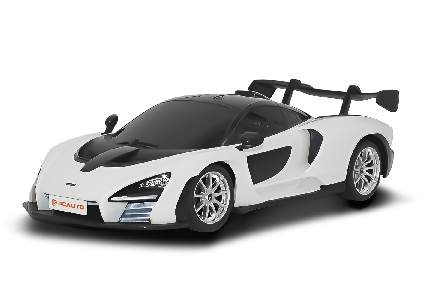
In Malaysia, the McLaren Senna, a limited-edition high-performance supercar, has a price that varies depending on the configuration, taxes, and market fluctuations. The price of a new car usually ranges from 4 million to 5 million Malaysian ringgit. The specific price should be based on the quotes from local dealers. This car is equipped with a 4.0-liter V8 twin-turbocharged engine with a maximum power of 789 horsepower. It features a lightweight carbon-fiber structure and is optimized for track performance. With only 500 units produced globally, it has great collectible value.
For car enthusiasts in Malaysia, it should be noted that imported luxury cars are subject to relatively high tariffs and consumption taxes, which will affect the final on-road price. Additionally, the Senna is a track-oriented model, so its daily driving comfort may not be as good as that of other McLaren models like the 720S. However, its extreme performance and rarity still attract many collectors.
If your budget is limited, you can also pay attention to the used-car market, but you need to carefully check the vehicle condition and maintenance records.
Special Disclaimer: This content is published by users and does not represent the views or position of PCauto.
Related Q&A
Q
Are McLaren Sennas still being produced?
The production of the McLaren Senna officially ended in 2018. This limited-edition supercar was produced in only 500 units globally. As a special model by the brand to pay tribute to the legendary racing driver Ayrton Senna, it is equipped with a 4.0-liter V8 twin-turbocharged engine that can deliver 789 horsepower. It also features an extremely lightweight design, with a curb weight of only 1,198 kilograms, making it the McLaren road-going model with the strongest track performance at that time.
For Malaysian car enthusiasts, although the car was not introduced through the local official channels, a few Sennas imported privately may still appear at high-end automotive events. Such limited-edition supercars usually have extremely high collectible value, and their second-hand market prices often far exceed the original factory prices.
It's worth noting that subsequent limited-edition models like the Elva and Sabre launched by McLaren also carry forward the extreme performance concept of the Senna, but with more specific positioning. It is recommended that car fans interested in McLaren's technology should keep an eye on the newly released Artura hybrid supercar. This car is about to be launched in the Malaysian market, which showcases the brand's technological direction in the electrification era.
 SonAug 14, 2025
Q
Are McLaren Sennas legal?
Regarding the legality of the McLaren Senna in Malaysia, this limited-edition supercar technically meets international emission and safety standards. However, whether it can be driven on Malaysian roads depends on the vehicle's certification status. Malaysia's import vehicle regulations require vehicles to pass the VTA (Vehicle Type Approval) and meet the technical specifications of the local JPJ (Road Transport Department), including right-hand drive configuration. As the Senna is a left-hand drive model, it cannot be registered without special approval. However, a small number of owners may obtain permission through the "display vehicle" or "limited import" methods.
It's worth noting that Malaysia has strict restrictions on the modification of high-performance cars. In particular, when it comes to exhaust noise or power upgrades, owners must comply with JPJ regulations. Top-notch supercars similar to the Senna are usually imported into Malaysia for "track-only" use. If owners want to drive them legally on public roads, they need to entrust professional importers to complete the full set of certification processes, including local modifications such as adjusting the headlight angles and installing rear fog lights.
Other top-end supercars, such as the Ferrari Monza SP series, face similar situations. It is recommended that potential buyers consult Malaysian import vehicle agents or lawyers in advance to understand the latest parallel import policies and tariff calculation methods. The import tax for such models can be as high as over 300% of the vehicle's original price.
 NonAug 14, 2025
Q
How many McLaren Sennas are there?
The McLaren Senna is a limited-production supercar, with only 500 units produced globally. This number was specifically set to honor the Brazilian racing legend Ayrton Senna. Each car comes with a unique serial number to highlight its rarity. It's powered by a 4.0-liter twin-turbocharged V8 engine, delivering a maximum horsepower of 789. It can accelerate from 0 to 100 km/h in just 2.8 seconds, making it an ultimate performance machine built by McLaren for both the track and the road.
For car enthusiasts in Malaysia, although the number of Sennas is extremely limited, they can catch a glimpse of it through McLaren's official channels or high-end car exhibitions. There's even a chance to see the real car at top-notch automotive events in major cities like Kuala Lumpur.
The Senna not only represents McLaren's technological peak in the supercar field but is also a highly sought-after treasure for collectors and performance enthusiasts. Its limited-edition status and legendary background have led to a continuous increase in its value in the used-carmarket.
 PonAug 14, 2025
Q
Does the McLaren Senna have AC?
Yes, the McLaren Senna is indeed equipped with an air-conditioning system. Even though it's a track-focused supercar that emphasizes ultimate performance and lightweight design, McLaren still retains basic comfort features for daily driving, including the air-conditioning system. However, to reduce weight, the air-conditioning in the Senna might be more simplified than that in regular cars. For example, it could feature manual controls or use lightweight materials.
In the hot climate of Malaysia, the air-conditioning in a high-performance car like the Senna is particularly important. After all, while pursuing track performance, comfort during daily driving also needs to be considered. As one of the flagship models in McLaren's Ultimate Series, the design concept of the Senna is to strike a balance between ultimate performance and limited practicality. So, apart from the air-conditioning, it also keeps a basic audio system and power windows. But unnecessary sound-insulation materials and non-essential electronic devices are removed to cut down the vehicle's weight.
It's worth noting that many track-focused supercars, such as the Ferrari XX models or the Lamborghini Essenza SCV12, usually remove the air-conditioning completely to achieve ultimate lightweight. In contrast, the Senna's choice better suits its positioning as a "road-legal track car", making it ideal for markets like Malaysia where both daily driving and track experiences are required.
 MonAug 14, 2025
Q
Is the McLaren Senna faster than the 720S?
Judging from the performance data, the McLaren Senna does offer a more extreme track performance than the 720S. The Senna is equipped with a 4.0 - liter V8 twin - turbocharged engine, which can output 789 horsepower and 800 Nm of torque. Coupled with an ultra - lightweight body weighing only 1,198 kg, it can accelerate from 0 - 100 km/h in just 2.8 seconds. While the 720S has 720 horsepower and 770 Nm of torque, its heavier body (1,283 kg) results in a 0 - 100 km/h acceleration time of 2.9 seconds. The Senna's active aerodynamics design and race - track tuning give it an edge in cornering limits and braking performance. However, as a GT sports car, the 720S focuses more on daily driving comfort, while the Senna is an ultimate machine built for the track. In the hot climate of Malaysia, both cars need to pay attention to the heat dissipation of their turbocharged engines. It is recommended to regularly check the cooling system. For owners who pursue ultimate performance, the Senna is a better choice. But if you need to balance daily use, the 720S is more suitable for Malaysia's diverse road conditions.
 BinAug 14, 2025
Q
Is a McLaren Senna worth it?
As an ultimate supercar specifically designed for the racetrack, the McLaren Senna is definitely worth considering, especially for Malaysian car enthusiasts who pursue ultimate performance. This car is equipped with a 4.0-liter V8 twin-turbocharged engine, which can output 789 horsepower. It can accelerate from 0 to 100 km/h in just 2.8 seconds and has a top speed of over 340 km/h. Its aerodynamic design is precisely tailored for track performance, capable of generating astonishing downforce at high speeds. The Senna's carbon fiber monocoque body and lightweight design make it a true driver's car. Although its comfort on daily roads may not be as good as that of other supercars, if you love track driving or collecting rare car models, its value is irreplaceable.
In Malaysia, due to the hot and humid climate, it is recommended that car owners pay special attention to the maintenance of the cooling system and choose professional maintenance services to ensure the vehicle's performance. Moreover, the rarity of the Senna (only 500 units are produced globally) also endows it with high collection value and it may appreciate in the future.
 KonAug 14, 2025
Q
Why is the McLaren Senna so expensive?
The high price of the McLaren Senna is mainly due to the fact that it's a limited-edition supercar created by the brand to honor the legendary racing driver Ayrton Senna. Only 500 units were produced worldwide, and this scarcity directly drives up its value. This car is equipped with a 4.0-liter twin-turbocharged V8 engine, with a maximum output of 789 horsepower. The body uses a carbon-fiber monocoque structure, weighing only 1,198 kilograms. The extreme lightweight design and aerodynamic features (such as the active rear wing and the bottom diffuser) enable its track performance to approach that of an F1 car. The R & D cost and technological content far exceed those of ordinary supercars.
Moreover, the Senna offers a high degree of customization. Owners can freely choose carbon-fiber components, racing liveries, and even interior materials. This personalized service also adds to the cost. For car enthusiasts in Malaysia, these supercars also have to bear high import taxes and tariffs, further increasing the local selling price.
It's worth mentioning that the Senna belongs to McLaren's "Ultimate Series", along with models like the Speedtail, which are part of the brand's top-tier product line. These models often combine collectible value with the significance of technological benchmarks and may continue to appreciate in the second-hand car market in the future. This is also an important consideration in its pricing strategy.
 AimAug 14, 2025
Q
Why is the McLaren Senna so special?
The McLaren Senna is so special for several reasons. First of all, it's an ultimate track-focused machine crafted by McLaren in honor of the legendary racing driver Ayrton Senna. With only 500 units produced globally, its rarity makes it a dream car for collectors.
Under its hood, there's a 4.0-liter V8 twin-turbocharged engine that can pump out 800 horsepower. Paired with an ultra-lightweight design that weighs just 1198 kilograms, it can sprint from 0 to 100 km/h in a mere 2.8 seconds. This showcases McLaren's top-notch technology in performance and aerodynamics. In particular, the active rear wing and the complex body airflow guides can generate astonishing downforce at high speeds, ensuring stability during track handling.
For Malaysian car enthusiasts, the Senna isn't just a performance beast; it represents the pursuit of pure driving passion. Although its track-oriented nature makes it a bit demanding for daily driving, that's exactly where its charm lies.
Moreover, the Senna's carbon-fiber monocoque cockpit and racing-style interior, like the ultra-lightweight carbon-fiber seats, further highlight its focus on the driving experience. And McLaren's customization service allows every owner to create a one-of-a-kind vehicle.
This car is not only a product of advanced technology but also a tribute to Senna's racing spirit, making it stand out in the super-car world.
 DipAug 14, 2025
Q
Is a McLaren Senna rare?
Yes, the McLaren Senna is indeed a very rare supercar. It's a global limited-edition with only 500 units produced, which makes it a highly sought-after vehicle among collectors and car enthusiasts in Malaysia and around the world. Named after the legendary racing driver Ayrton Senna, the Senna not only features an ultimate aerodynamic design and a lightweight body but also comes equipped with a 4.0-liter V8 twin-turbocharged engine. With a maximum power output of 800 horsepower, its performance is at the track-level standard. In Malaysia, due to the limited production and high price, the chances of seeing the actual car are extremely slim, further enhancing its rarity. For local car fans, the Senna not only represents McLaren's top-notch technology in the supercar field but also symbolizes automotive culture and the racing spirit. If you're interested in this kind of limited-edition supercars, you can also keep an eye on other similar models, such as the Ferrari Monza SP series or the Porsche 911 GT3 RS. They are also well-known for their rarity and high performance, but the Senna's unique track heritage and limited-edition status make it even more special.
 VipAug 14, 2025
Q
What is the weight of a Mclaren Senna?
The weight of the McLaren Senna is typically around 1198 kilograms. However, the actual weight of the car may vary slightly due to different configurations and optional parts.
 HappyKoalaMay 8, 2025
Popular Cars
Model Year
Car Compare
Car Photo
Related Models
 Cars
CarsLatest Q&A
Q
Is AMT similar to automatic?
There are significant differences between AMT transmissions and automatic transmissions (AT) in terms of core structure and driving experience. AMT is essentially an electronically automated version of a manual transmission, simulating manual clutch operation and gear shifting through a computerized control system while retaining the gear set structure of manual transmissions. As a result, it offers higher transmission efficiency, with fuel consumption approximately 8%-12% lower than AT, making it particularly suitable for highway or long-distance driving. However, it may exhibit jerking similar to manual transmissions during low-speed gear shifts, especially noticeable in congested traffic conditions.
AT transmissions rely on torque converters for power transfer, delivering smooth and seamless gear shifts that appeal to comfort-oriented users. However, their complex structure (incorporating planetary gear sets, hydraulic systems, etc.) results in higher maintenance costs. A single service may cost between 800 to 1,500 ringgit, whereas AMT only requires gear oil replacement at approximately 400 ringgit.
From a market perspective, AMT is predominantly used in budget vehicles or commercial models priced below 80,000 ringgit, while AT is typically featured in mid-to-high-end vehicles. Consumers should select based on actual needs: AMT suits those prioritizing fuel efficiency and low maintenance costs, while AT better serves those valuing comfort. Notably, recent advancements in AMT electronic control technology have significantly mitigated jerking issues, though test drives should still emphasize low-speed performance evaluation.
 AriaMar 26, 2026
Q
Which is better, DCT or AT?
DCT (Dual-Clutch Transmission) and AT (Automatic Transmission) each have their own advantages and disadvantages, and the choice should be based on personal driving needs. AT transmissions transfer power through a torque converter, offering excellent shift smoothness, making them suitable for urban commuting or novice drivers. However, they tend to have higher fuel consumption, and vehicles equipped with them are usually more expensive. DCT transmissions utilize a dual-clutch structure, featuring fast shift speeds and high power transmission efficiency, which provides a more direct driving experience—particularly suitable for users seeking a sporty feel. However, they may exhibit jerking at low speeds and have relatively high maintenance costs. If durability and comfort are priorities, AT is the more reliable choice; if power responsiveness and driving pleasure are preferred, wet DCT (such as Volkswagen DSG) performs better, though dry DCT models should be avoided in prolonged stop-and-go traffic conditions. Additionally, CVT transmissions excel in smoothness and fuel efficiency, making them ideal for daily commuting, but they lack driving excitement. It is recommended to test-drive before purchasing, as tuning varies significantly across brands, and real-world experience is more important than theoretical specifications.
 FlutteringMar 26, 2026
Q
Is Amt good or bad?
AMT gearboxes have a significant cost advantage in the local market, typically being around 5,000 Ringgit cheaper than models equipped with conventional automatic transmissions. Their fuel efficiency is comparable to manual transmissions, resulting in long-term fuel savings. Featuring a straightforward design, they achieve transmission efficiency exceeding 90% with relatively low maintenance costs, making them ideal for practicality-oriented consumers. However, their shifting logic contains inherent limitations: gear changes between 1st and 2nd cause 0.3-0.5 second power interruptions, while unintended upshifts on inclines may reduce engine speed by 15%-20%, compromising driving smoothness. For urban commuters or budget-conscious buyers, AMT offers excellent value, though those prioritizing premium driving dynamics should consider alternative transmission types. Some domestic models like the Perodua Axia employ enhanced AMT systems, where optimized shift programming has reduced gearshift shock by approximately 30%.
 RainbowsMar 26, 2026
Q
Which gives better mileage, CVT or AMT?
From the perspective of fuel economy, CVT transmissions generally perform better under urban driving conditions. Their continuously variable design allows the engine to consistently operate within the optimal speed range, significantly reducing fuel consumption during frequent starts and stops. Test data shows that their fuel consumption in urban driving conditions is 10% to 15% lower than that of comparable models. AMT transmissions, on the other hand, inherit the high transmission efficiency of manual transmissions, delivering fuel efficiency close to manual transmissions during high-speed cruising. This makes them particularly suitable for long-distance driving in large-displacement vehicles. However, due to power interruption during gear shifts, their overall fuel consumption may be 5% to 8% higher than CVTs.
The difference in fuel-saving characteristics between the two transmissions stems from their technical principles: CVTs achieve continuous variability through steel belts and pulleys, eliminating the fixed gear ratio limitations of traditional transmissions; AMTs simulate manual gear changes via electronic control systems while maintaining the mechanical efficiency of gear transmission. Notably, actual fuel consumption is also influenced by driving habits. Smooth acceleration and anticipatory deceleration can maximize the transmissions' fuel-saving potential. If the vehicle budget permits and urban commuting is the primary use, CVTs offer a more economical choice. For frequent highway driving with an emphasis on cost-effectiveness, AMTs are equally worth considering.
 RubyBlazeMar 26, 2026
Q
Which is cheaper, AMT or CVT?
In terms of gearbox cost, AMT is usually more economical than CVT. Essentially, AMT is a manual transmission equipped with an electronic control unit, featuring a simple structure and low maintenance costs. The unit price ranges from approximately 5,000 to 8,000 ringgit, making it suitable for budget-conscious consumers or those who prioritize long-term operating costs. CVT incurs higher manufacturing costs due to its precision steel belt transmission system and continuous variable transmission technology, with a unit price of about 7,000 to 10,000 ringgit. However, it delivers a smoother driving experience and superior fuel efficiency. The primary differences between the two lie in technical complexity: AMT retains the gear-shifting mechanism, resulting in noticeable shift shock; CVT achieves linear power output through stepless speed variation but requires periodic belt inspection and incurs higher maintenance expenses. For those prioritizing initial cost and basic transportation needs, AMT offers better value; if comfort and long-term fuel economy are priorities, CVT represents a more worthwhile investment. Note that actual prices may vary based on vehicle model, brand, and local supply chain factors.
 ShadowProwlMar 26, 2026
Pros
Cons