
Q
How much does it cost to service an Aston Martin DBX?
 SingerzzSep 18, 2025, 06:13 PM
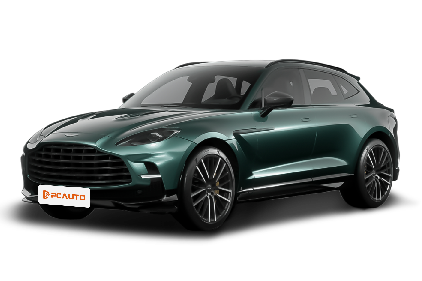
In Malaysia, the regular maintenance cost of the Aston Martin DBX is approximately between RM5,000 and RM8,000. The specific price depends on the pricing of the service center and the parts that need to be replaced, such as engine oil, filters, and brake fluid. Major maintenance, like changing the transmission fluid or spark plugs, may cost between RM10,000 and RM15,000. Since the DBX is a luxury SUV that uses high - performance components, the cost of original parts and professional technical services is relatively high.
In addition, it is recommended that car owners choose the officially authorized Aston Martin service centers to ensure that the vehicle maintenance meets the brand standards and to enjoy the original factory warranty service at the same time. If maintenance is carried out at non - authorized repair points, it may affect the warranty terms.
For DBX owners, regular maintenance can not only maintain the vehicle's performance but also extend its service life. In particular, its 4.0 - liter V8 twin - turbocharged engine and air suspension system require professional maintenance. Therefore, long - term maintenance costs should be considered when planning the budget.
Special Disclaimer: This content is published by users and does not represent the views or position of PCauto.
Related Q&A
Q
Is Aston Martin DBX good?
The Aston Martin DBX is a luxury high-performance SUV that combines the brand's iconic elegant design with powerful performance, making it highly suitable for the road conditions and driving needs in Malaysia. It is equipped with a 4.0-liter V8 twin-turbocharged engine, delivering an output of 550 horsepower. It can accelerate from 0 to 100 km/h in just 4.5 seconds, showing outstanding power performance. At the same time, its adaptive air suspension and full-time four-wheel drive system ensure a balance between comfort and handling, enabling it to easily handle both city roads and mountainous roads in the suburbs.
In terms of the interior, the DBX uses top-grade leather and exquisite craftsmanship. It is equipped with advanced entertainment and driving assistance systems, presenting a combination of a sense of technology and luxury. For Malaysian consumers, the DBX has a moderate size. It is not only suitable for family use but also can meet the pursuit of driving pleasure. Coupled with the brand premium of Aston Martin, it is a choice that combines practicality and individuality.
Moreover, the after-sales service system of the DBX is relatively well - established in Malaysia. Car owners can enjoy professional maintenance support, which is also an important factor when considering luxury cars. If you pursue a unique design, excellent performance, and British luxury charm, the DBX is undoubtedly a choice worthy of consideration.
 SailorsoSep 18, 2025
Q
Does the Aston Martin DBX have a sunroof?
Yes, the Aston Martin DBX is indeed equipped with a Panoramic Sunroof. This feature provides passengers inside the car with a broader view and a brighter riding experience. Especially in Malaysia's tropical climate, the sunshade design of the sunroof can effectively block the intense sunlight while maintaining ventilation and comfort inside the vehicle. As Aston Martin's first SUV, the DBX not only inherits the brand's luxury genes but also makes many optimizations in terms of practicality. For example, the addition of the panoramic sunroof enhances the pleasure of daily driving.
In addition, the DBX is also equipped with an advanced air purification system and sound - insulation technology, ensuring a high - level driving and riding quality whether in the city traffic jams in Malaysia or on long - distance trips. If you're interested in this kind of luxury SUV, you can also pay attention to the sunroof designs of similar models from other brands, such as the Bentley Bentayga or the Lamborghini Urus. They also offer panoramic sunroof options in different styles. However, the uniqueness of the DBX lies in its balance of British elegance and sporty performance, making it a great fit for Malaysian consumers who pursue both individuality and practicality.
 SingerVoiceSep 18, 2025
Q
What is the 2021 Aston Martin DBX?
The 2021 Aston Martin DBX is the first high - performance SUV launched by this British luxury car brand. It is specifically designed for high - end consumers who pursue both sportiness and practicality.
It is powered by a 4.0 - liter V8 twin - turbocharged engine, which can deliver 550 horsepower and 700 Nm of torque. Matched with a 9 - speed automatic transmission, it can accelerate from 0 to 100 km/h in just 4.5 seconds and reach a top speed of 291 km/h. Its performance is comparable to that of a sports car.
The DBX features a lightweight aluminum body structure. It comes standard with an adaptive air suspension and a four - wheel - drive system, which combines both on - road handling and mild off - road capabilities. The interior is furnished with high - end Bridge of Weir leather and metal trim panels. It is equipped with a 10.25 - inch central control screen and 64 - color ambient lighting. The rear legroom measures up to 1,020 millimeters, and the trunk volume reaches 632 liters, perfectly integrating luxury and functionality.
In the Malaysian market, the DBX's adjustable ground clearance function (up to 235 millimeters) can adapt to the local variable road conditions. The standard 360 - degree surround - view camera system is particularly useful in the narrow urban environment. It's worth mentioning that Aston Martin has an official showroom in Kuala Lumpur. Local car owners can enjoy exclusive services including a 5 - year unlimited - mileage warranty.
The main competitors of this car include the Lamborghini Urus and the Bentley Bentayga. However, the DBX differentiates itself with its unique British elegant design language and a relatively affordable starting price (approximately RM 818,000).
 WriterPageSep 18, 2025
Q
How many seats are in the Aston Martin DBX?
As a luxury SUV, the Aston Martin DBX comes with a standard 5 - seat configuration in a 2 + 3 seating arrangement, offering passengers a spacious and comfortable riding space. It's particularly suitable for Malaysian families' outings or long - distance trips. The seat design of the DBX emphasizes both luxury and support. It comes standard with high - grade genuine leather, and you can also opt for more sporty performance seats or a more comfortable massage function to meet different needs. It's worth mentioning that the rear seats of the DBX can be folded down in proportion, allowing for flexible expansion of the luggage compartment space, which is very useful when loading golf equipment or weekend camping gear.
As Aston Martin's first SUV, the DBX continues the brand's iconic British elegant design. At the same time, it is equipped with an all - wheel drive system that can adapt to Malaysia's diverse road conditions. Its 4.0 - liter V8 twin - turbocharged engine can produce 550 horsepower, and it can accelerate from 0 - 100 km/h in just 4.5 seconds, perfectly combining the practicality of an SUV with the excitement of a sports car. For Malaysian consumers, the DBX not only retains the exquisite craftsmanship of a super - luxury brand but also takes into account thoughtful features such as a powerful air - conditioning system and ventilated seats required in the tropical climate. It is the top - notch choice among SUVs that combines performance and daily practicality.
 DuskRiderSep 18, 2025
Q
Is the Aston Martin DBX a supercar?
Strictly speaking, the Aston Martin DBX isn't a supercar. Instead, it's a high - performance luxury SUV that combines the brand's iconic sporting genes with the practicality of an SUV, making it more suitable for daily driving and long - distance trips.
The DBX is powered by either a 4.0 - liter V8 twin - turbocharged engine or a 5.2 - liter V12 engine. It offers extremely strong power. The 0 - 100 km/h acceleration takes only about 4.5 seconds (V8 version) or 4.3 seconds (V12 version). It truly has performance approaching that of a supercar. However, its body shape and positioning are more inclined towards a luxury sports SUV rather than a pure supercar that solely pursues ultimate speed and handling.
For Malaysian consumers, the advantage of the DBX lies in its combination of performance and practicality, which meets the diverse local road - condition requirements. Whether it's for urban commuting or self - driving in the suburbs, the DBX can handle it with ease.
Supercars usually focus on a low - slung body, extreme lightweight design, and track performance. In contrast, the DBX emphasizes luxury, comfort, and multi - functionality, which is the difference between it and traditional supercars.
If you're after an ultimate driving experience, Aston Martin's Vantage or DBS Superleggera may better fit the definition of a supercar. But if you want a high - performance vehicle that can offer an exciting drive and also meet family needs, the DBX is an ideal choice.
 BlazingTrailSep 18, 2025
Q
How much is the 2021 Aston Martin DBX?
The 2021 Aston Martin DBX is priced from approximately RM818,000 in the Malaysian market. The exact price will fluctuate depending on the selected options and local taxes. This vehicle is Aston Martin's first SUV, equipped with a 4.0-liter V8 twin-turbocharged engine that delivers a maximum output of 550 horsepower. It can accelerate from 0 to 100 km/h in just 4.5 seconds, combining luxury and performance.
The interior of the DBX features high - end leather and metal materials. It comes with a 10.25 - inch central control screen and a panoramic sunroof, offering both a sense of technology and comfort. For Malaysian consumers, the off - road capabilities of the DBX have been specially tuned to adapt to the local diverse road conditions. Meanwhile, the brand has an official dealer in Kuala Lumpur, providing comprehensive after - sales services.
It's worth mentioning that Aston Martin has been actively expanding its SUV market in recent years. The success of the DBX has opened up a new customer base for the brand. There may also be a plug - in hybrid version in the future to meet environmental protection requirements. This car is suitable for high - end Malaysian consumers who pursue British luxury and sports performance.
 IronBeastSep 18, 2025
Popular Cars
Model Year
Car Compare
Car Photo
Related Models
 Cars
CarsLatest Q&A
Q
Is AMT similar to automatic?
There are significant differences between AMT transmissions and automatic transmissions (AT) in terms of core structure and driving experience. AMT is essentially an electronically automated version of a manual transmission, simulating manual clutch operation and gear shifting through a computerized control system while retaining the gear set structure of manual transmissions. As a result, it offers higher transmission efficiency, with fuel consumption approximately 8%-12% lower than AT, making it particularly suitable for highway or long-distance driving. However, it may exhibit jerking similar to manual transmissions during low-speed gear shifts, especially noticeable in congested traffic conditions.
AT transmissions rely on torque converters for power transfer, delivering smooth and seamless gear shifts that appeal to comfort-oriented users. However, their complex structure (incorporating planetary gear sets, hydraulic systems, etc.) results in higher maintenance costs. A single service may cost between 800 to 1,500 ringgit, whereas AMT only requires gear oil replacement at approximately 400 ringgit.
From a market perspective, AMT is predominantly used in budget vehicles or commercial models priced below 80,000 ringgit, while AT is typically featured in mid-to-high-end vehicles. Consumers should select based on actual needs: AMT suits those prioritizing fuel efficiency and low maintenance costs, while AT better serves those valuing comfort. Notably, recent advancements in AMT electronic control technology have significantly mitigated jerking issues, though test drives should still emphasize low-speed performance evaluation.
 AriaMar 26, 2026
Q
Which is better, DCT or AT?
DCT (Dual-Clutch Transmission) and AT (Automatic Transmission) each have their own advantages and disadvantages, and the choice should be based on personal driving needs. AT transmissions transfer power through a torque converter, offering excellent shift smoothness, making them suitable for urban commuting or novice drivers. However, they tend to have higher fuel consumption, and vehicles equipped with them are usually more expensive. DCT transmissions utilize a dual-clutch structure, featuring fast shift speeds and high power transmission efficiency, which provides a more direct driving experience—particularly suitable for users seeking a sporty feel. However, they may exhibit jerking at low speeds and have relatively high maintenance costs. If durability and comfort are priorities, AT is the more reliable choice; if power responsiveness and driving pleasure are preferred, wet DCT (such as Volkswagen DSG) performs better, though dry DCT models should be avoided in prolonged stop-and-go traffic conditions. Additionally, CVT transmissions excel in smoothness and fuel efficiency, making them ideal for daily commuting, but they lack driving excitement. It is recommended to test-drive before purchasing, as tuning varies significantly across brands, and real-world experience is more important than theoretical specifications.
 FlutteringMar 26, 2026
Q
Is Amt good or bad?
AMT gearboxes have a significant cost advantage in the local market, typically being around 5,000 Ringgit cheaper than models equipped with conventional automatic transmissions. Their fuel efficiency is comparable to manual transmissions, resulting in long-term fuel savings. Featuring a straightforward design, they achieve transmission efficiency exceeding 90% with relatively low maintenance costs, making them ideal for practicality-oriented consumers. However, their shifting logic contains inherent limitations: gear changes between 1st and 2nd cause 0.3-0.5 second power interruptions, while unintended upshifts on inclines may reduce engine speed by 15%-20%, compromising driving smoothness. For urban commuters or budget-conscious buyers, AMT offers excellent value, though those prioritizing premium driving dynamics should consider alternative transmission types. Some domestic models like the Perodua Axia employ enhanced AMT systems, where optimized shift programming has reduced gearshift shock by approximately 30%.
 RainbowsMar 26, 2026
Q
Which gives better mileage, CVT or AMT?
From the perspective of fuel economy, CVT transmissions generally perform better under urban driving conditions. Their continuously variable design allows the engine to consistently operate within the optimal speed range, significantly reducing fuel consumption during frequent starts and stops. Test data shows that their fuel consumption in urban driving conditions is 10% to 15% lower than that of comparable models. AMT transmissions, on the other hand, inherit the high transmission efficiency of manual transmissions, delivering fuel efficiency close to manual transmissions during high-speed cruising. This makes them particularly suitable for long-distance driving in large-displacement vehicles. However, due to power interruption during gear shifts, their overall fuel consumption may be 5% to 8% higher than CVTs.
The difference in fuel-saving characteristics between the two transmissions stems from their technical principles: CVTs achieve continuous variability through steel belts and pulleys, eliminating the fixed gear ratio limitations of traditional transmissions; AMTs simulate manual gear changes via electronic control systems while maintaining the mechanical efficiency of gear transmission. Notably, actual fuel consumption is also influenced by driving habits. Smooth acceleration and anticipatory deceleration can maximize the transmissions' fuel-saving potential. If the vehicle budget permits and urban commuting is the primary use, CVTs offer a more economical choice. For frequent highway driving with an emphasis on cost-effectiveness, AMTs are equally worth considering.
 RubyBlazeMar 26, 2026
Q
Which is cheaper, AMT or CVT?
In terms of gearbox cost, AMT is usually more economical than CVT. Essentially, AMT is a manual transmission equipped with an electronic control unit, featuring a simple structure and low maintenance costs. The unit price ranges from approximately 5,000 to 8,000 ringgit, making it suitable for budget-conscious consumers or those who prioritize long-term operating costs. CVT incurs higher manufacturing costs due to its precision steel belt transmission system and continuous variable transmission technology, with a unit price of about 7,000 to 10,000 ringgit. However, it delivers a smoother driving experience and superior fuel efficiency. The primary differences between the two lie in technical complexity: AMT retains the gear-shifting mechanism, resulting in noticeable shift shock; CVT achieves linear power output through stepless speed variation but requires periodic belt inspection and incurs higher maintenance expenses. For those prioritizing initial cost and basic transportation needs, AMT offers better value; if comfort and long-term fuel economy are priorities, CVT represents a more worthwhile investment. Note that actual prices may vary based on vehicle model, brand, and local supply chain factors.
 ShadowProwlMar 26, 2026
Pros
Cons