
Q
How much horsepower does the 2023 Bugatti Divo have?
 CherrySep 05, 2025, 05:30 PM
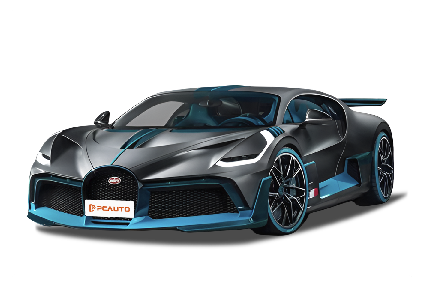
The 2023 Bugatti Divo is powered by an 8.0-liter quad-turbocharged W16 engine delivering a staggering 1,500 horsepower. Sharing its powertrain with the Chiron, the Divo achieves sharper track performance through more extreme aerodynamic design and lightweight construction. Limited to just 40 units worldwide, this hypercar is crafted for collectors seeking ultimate handling. Its top speed is electronically limited to 380 km/h (237 mph), yet it accelerates from 0 to 100 km/h (62 mph) in a mere 2.4 seconds. For Malaysian enthusiasts, while local road conditions may not fully showcase the Divo's capabilities, its carbon fiber monocoque and active rear wing technology remain noteworthy. Such cutting-edge innovations are gradually trickling down to more production supercars, such as the locally visible Ferrari SF90 hybrid. It's important to note that maintaining such top-tier supercars in Malaysia's hot and humid climate requires special care, particularly regular inspections of the turbo system and carbon-ceramic brakes.
Special Disclaimer: This content is published by users and does not represent the views or position of PCauto.
Related Q&A
Q
What engine does a 2023 Bugatti have?
The 2023 Bugatti is powered by an 8.0-liter quad-turbocharged W16 engine, a true masterpiece of automotive engineering. Cranking out a massive 1,500 horsepower and 1,600 Nm of peak torque, paired with a 7-speed dual-clutch gearbox, it rockets from 0-100 km/h in a mind-blowing 2.4 seconds and tops out over 420 km/h. The performance is simply staggering.
For Malaysian car enthusiasts, while Bugattis are a rare sight on local roads, that engine tech represents the absolute pinnacle of supercar engineering. The W16 layout mated with four turbos really showcases the ultimate potential of internal combustion. What's impressive too is that Bugatti hasn't just chased raw power—they've nailed the precision tuning and reliability. Even in Malaysia's hot and humid climate, the cooling systems and materials hold up, ensuring it performs consistently.
It's worth noting this W16 might be one of the last of its kind. With the global auto industry shifting towards electrification, Bugatti's already planning hybrid models. But the 2023 model sticks to pure combustion, delivering that unadulterated performance that'll go down as a classic for petrolheads.
 SilverStrikeOct 24, 2025
Q
How much is the 2023 Bugatti Divo?
The official price tag for the 2023 Bugatti Divo sits around the €5 million mark, which translates to roughly RM24 million. This hypercar is an exclusive beast, with only 40 units ever hitting the production line. Under the hood, it shares the same monster 8.0-litre W16 quad-turbocharged engine as the Chiron, churning out a whopping 1500 horsepower. But here's where it gets really exciting for track rats: thanks to some serious aerodynamic tweaks – we're talking a massive 456 kg of downforce – and a lighter build, the Divo is way more aggressive than the Chiron when the rubber meets the race track.
For Malaysian petrolheads, getting your hands on something this top-tier usually means navigating special import procedures. And let's not forget the elephant in the room: import duties and registration fees can hit a staggering 300%, potentially doubling the actual on-the-road cost. It's also worth mentioning that Bugattis are a rare sight in Southeast Asia. The local climate and road conditions can be tough on these high-performance machines, making maintenance a real headache. That said, there are still a handful of collectors in major cities like Kuala Lumpur who own Veyrons or Chirons, and they typically rely on specialized teams to keep their prized possessions in tip-top shape.
If the Divo has sparked your interest, your best bet is to reach out to Bugatti directly to check on availability. These limited-edition models? They usually get snapped up long before they even hit the headlines.
 VoidWalkerOct 24, 2025
Q
How much is Bugatti Divo in Malaysia?
Regarding the price of the Bugatti Divo in Malaysia, the official price of this limited - production supercar is approximately 5 million euros (equivalent to about 25 million Malaysian ringgit). However, the actual on - road price will increase significantly due to import duties, registration fees, and optional extras. Malaysia has relatively high luxury car tax rates, and the final price may be close to 30 million to 35 million Malaysian ringgit.
Only 40 Divos are available globally. It is equipped with an 8.0 - liter W16 quad - turbo engine with a maximum horsepower of 1500. It is designed for ultimate handling and focuses more on aerodynamics and cornering performance compared to the Chiron.
In the Malaysian market, top - tier supercars like this are usually imported through exclusive agents or custom channels. The purchasing process involves special orders and a relatively long delivery period. It's worth noting that Malaysia's tariff policy imposes high taxes on imported cars with a displacement of over 3000cc, which is the main reason for the high prices of such models. Meanwhile, local buyers also need to consider insurance and maintenance costs. Regular maintenance of Bugattis requires technicians from the European factory to fly in for service, and these hidden costs far exceed those of ordinary supercars.
 GlimmerAug 4, 2025
Q
Who is faster, Bugatti Divo or Bugatti Chiron?
Both the Bugatti Divo and the Bugatti Chiron are top - tier supercars, but their performance focuses differ. The Chiron has a slight edge in straight - line acceleration and top speed, while the Divo places more emphasis on cornering performance and handling experience.
The Chiron is equipped with an 8.0 - liter W16 quad - turbocharged engine, generating a maximum horsepower of 1500. It can reach a top speed of 420 km/h and accelerate from 0 - 100 km/h in just 2.4 seconds. It's a typical speed - oriented machine.
Although the Divo uses the same powertrain, through aerodynamic optimization and lightweight design, its cornering performance has been improved by 8%. However, its top speed drops slightly to 380 km/h, making it more suitable for track driving.
For car enthusiasts in Malaysia, both of these cars are dream choices. But it should be noted that the local hot and humid climate poses a great challenge to the cooling systems of high - performance cars, so extra care is needed for daily maintenance.
Top - tier supercars like Bugatti not only represent the peak technology of the automotive industry but also embody the perfect combination of ultimate craftsmanship and luxurious experience. Each model is a collectible masterpiece.
 FrostyAug 4, 2025
Q
Can I buy a Bugatti Divo?
Buying a Bugatti Divo is a challenging but not entirely impossible goal for Malaysian car enthusiasts. This limited-production supercar has only 40 units globally, with a price tag as high as 5 million euros (approximately 24 million Malaysian ringgit), and it's already sold out. However, you can look for resale opportunities in the second - hand market. But keep in mind that reselling such top - tier supercars usually incurs a hefty premium.
As a model specifically designed for track performance, the Divo weighs 35 kilograms less than the Chiron and features more extreme aerodynamic design. Its power - to - weight ratio of 1.8 hp and the acceleration from 0 - 100 km/h in 3.2 seconds both showcase Bugatti's engineering prowess.
Malaysian owners need to consider the issue of right - hand drive conversion. Although Bugatti doesn't offer a factory - made right - hand drive version, it can be done through professional modification workshops. At the same time, you have to prepare for an import tax of about 300% (including customs duty, excise duty, and sales tax), which may push the total cost beyond 80 million Malaysian ringgit.
It's worth noting that there are currently at least three owners of Bugatti Chirons in Malaysia, indicating that the local supercar collector community has the corresponding purchasing power. You can also consider joining local supercar clubs to get more information about purchasing channels.
 BreezeAug 4, 2025
Q
What is special about Bugatti Divo?
The Bugatti Divo is a supercar specifically designed for ultimate handling and track performance. Its uniqueness lies in a comprehensive optimization based on the Chiron platform, especially excelling in aerodynamics and lightweight design. The Divo features a more aggressive front - end design, a large rear wing, and optimized underbody air channels, which increase its downforce by 90 kg compared to the Chiron, significantly enhancing its stability when taking high - speed corners. The vehicle's weight is reduced by 35 kg compared to the Chiron. Coupled with a retuned suspension system and steering system, it offers more sensitive handling responses.
In terms of power, the Divo still comes with an 8.0 - liter W16 quad - turbocharged engine with a maximum horsepower of 1,500. However, its top speed is electronically limited to 380 km/h to emphasize track performance rather than straight - line acceleration. For car enthusiasts in Malaysia, the rarity of the Divo is also part of its allure. With only 40 units produced globally and a price tag as high as 5 million euros, it has become a dream collectible for collectors.
This car showcases Bugatti's balance between ultimate performance and artistic design. It also reflects the growing emphasis on track - focused models in the supercar market. Similar concepts can also be found in models such as the Ferrari F8 Tributo or the Lamborghini Aventador SVJ.
 ModelPoseAug 4, 2025
Q
Is Bugatti Divo Street legal?
The Bugatti Divo is a limited - edition supercar specifically designed for track performance. It is built on the Chassis but has undergone more extreme aerodynamic optimization. Its design meets the street - legal standards of major markets such as the EU and the United States. However, whether it can be legally driven on the roads in Malaysia needs to be specifically confirmed. The local JPJ has strict certification requirements for imported cars. Especially for high - performance models like this, it may require a separate review to check if the emissions, lighting, etc. meet the MS standards. It is recommended that potential buyers consult the specific compliance details through Bugatti's official channels or authorized agents.
It's worth noting that Malaysia has high import taxes on supercars. The landed price of such models often far exceeds the price in the origin. In addition, limited - edition models like the Divo (only 40 units globally) are usually already fully booked by collectors. Even if it complies with the regulations, it is extremely difficult to purchase. For Malaysian car enthusiasts who are keen on supercars, they can pay attention to the new models that Bugatti may launch in the future or experience the driving charm of Bugatti through legal channels.
 WanderlustAug 4, 2025
Q
How many people own a Bugatti Divo?
According to official information, only 40 units of the Bugatti Divo are produced globally, and they've all been sold out. This means there are 40 owners worldwide who possess this top - tier supercar. Since the Divo is a high - performance limited - edition model developed by Bugatti based on the Chiron platform, its price exceeds 5 million euros. It's mainly targeted at collectors and supercar enthusiasts. In a market like Malaysia, the number of Divo owners is probably even smaller. That's because these supercars aren't only extremely expensive, but also factors like local road conditions and the convenience of maintenance need to be considered.
The Bugatti Divo is equipped with the same 8.0 - liter quad - turbocharged W16 engine as the Chiron. However, through aerodynamic optimization and lightweight design, its handling performance is even better. The top speed is limited to 380 km/h to maintain downforce. For Malaysian car fans, although the chances of seeing a Divo in person are rare, they can catch a glimpse of it at Bugatti's official events or international auto shows. These limited - edition supercars aren't just speed machines; they're also the crystallization of automotive engineering and art, representing the pinnacle of the automotive industry.
 WanderAug 4, 2025
Q
How many Bugatti Divo are left?
Currently, there are only 40 Bugatti Divo cars in the world. This limited - edition supercar is produced by Bugatti, a top - tier French car manufacturer. It is specifically designed for car enthusiasts who pursue ultimate handling and aerodynamic performance. Its name is derived from the famous racing driver Albert Divo in the 1920s. Each vehicle is equipped with an 8.0 - liter W16 quad - turbocharged engine, which can generate 1,500 horsepower. It only takes 2.4 seconds to accelerate from 0 to 100 km/h. If Malaysian car enthusiasts want to see the real car, they can pay attention to international top - level auto shows or private collectors' events. Due to its limited production and a price tag of over 5 million euros, the Divo has become a collectible model. Its design features include a more aggressive front - end styling, an optimized rear wing, and a lightweight body. Compared with the Chiron from the same manufacturer, it focuses more on track performance. Bugatti later also launched models like the Bolide based on Divo technology to continue its high - performance heritage. Such limited - edition supercars are usually introduced into the Southeast Asian market through exclusive agency channels, and their maintenance relies on the factory - certified technician team.
 CharmAug 4, 2025
Q
How much is a Bugatti Divo?
As a limited - production top - tier supercar, the Bugatti Divo is priced at around 5 million euros (equivalent to about 25 million Malaysian ringgit). However, the actual on - road price may be higher due to optional extras, taxes, and exchange - rate fluctuations. Malaysian buyers also need to consider costs such as import duties (which can be as high as 105% depending on the engine displacement), GST, and AP license fees.
Only 40 units of this car are available globally. It is powered by the same 8.0 - liter W16 quad - turbo engine as the Chiron. But through lightweight design (a weight reduction of 35 kg) and aerodynamic upgrades (an increase in downforce of 456 kg), its track performance is more aggressive. The top speed is limited to 380 km/h to optimize cornering performance.
For Malaysian car enthusiasts, this kind of top - tier supercar is usually imported through the grey market. They need to be aware of local regulations regarding right - hand - drive vehicles. Meanwhile, circuits like the Sepang Circuit near Kuala Lumpur are ideal places to experience its performance.
Competitors in the same price range include the Koenigsegg Jesko or the Pagani Huayra BC. However, the scarcity of the Divo and the brand premium of Bugatti make it a collectible choice.
 JoggerPaceAug 4, 2025
Popular Cars
Model Year
Car Compare
Car Photo
Related Models
 Cars
CarsLatest Q&A
Q
Is AMT similar to automatic?
There are significant differences between AMT transmissions and automatic transmissions (AT) in terms of core structure and driving experience. AMT is essentially an electronically automated version of a manual transmission, simulating manual clutch operation and gear shifting through a computerized control system while retaining the gear set structure of manual transmissions. As a result, it offers higher transmission efficiency, with fuel consumption approximately 8%-12% lower than AT, making it particularly suitable for highway or long-distance driving. However, it may exhibit jerking similar to manual transmissions during low-speed gear shifts, especially noticeable in congested traffic conditions.
AT transmissions rely on torque converters for power transfer, delivering smooth and seamless gear shifts that appeal to comfort-oriented users. However, their complex structure (incorporating planetary gear sets, hydraulic systems, etc.) results in higher maintenance costs. A single service may cost between 800 to 1,500 ringgit, whereas AMT only requires gear oil replacement at approximately 400 ringgit.
From a market perspective, AMT is predominantly used in budget vehicles or commercial models priced below 80,000 ringgit, while AT is typically featured in mid-to-high-end vehicles. Consumers should select based on actual needs: AMT suits those prioritizing fuel efficiency and low maintenance costs, while AT better serves those valuing comfort. Notably, recent advancements in AMT electronic control technology have significantly mitigated jerking issues, though test drives should still emphasize low-speed performance evaluation.
 AriaMar 26, 2026
Q
Which is better, DCT or AT?
DCT (Dual-Clutch Transmission) and AT (Automatic Transmission) each have their own advantages and disadvantages, and the choice should be based on personal driving needs. AT transmissions transfer power through a torque converter, offering excellent shift smoothness, making them suitable for urban commuting or novice drivers. However, they tend to have higher fuel consumption, and vehicles equipped with them are usually more expensive. DCT transmissions utilize a dual-clutch structure, featuring fast shift speeds and high power transmission efficiency, which provides a more direct driving experience—particularly suitable for users seeking a sporty feel. However, they may exhibit jerking at low speeds and have relatively high maintenance costs. If durability and comfort are priorities, AT is the more reliable choice; if power responsiveness and driving pleasure are preferred, wet DCT (such as Volkswagen DSG) performs better, though dry DCT models should be avoided in prolonged stop-and-go traffic conditions. Additionally, CVT transmissions excel in smoothness and fuel efficiency, making them ideal for daily commuting, but they lack driving excitement. It is recommended to test-drive before purchasing, as tuning varies significantly across brands, and real-world experience is more important than theoretical specifications.
 FlutteringMar 26, 2026
Q
Is Amt good or bad?
AMT gearboxes have a significant cost advantage in the local market, typically being around 5,000 Ringgit cheaper than models equipped with conventional automatic transmissions. Their fuel efficiency is comparable to manual transmissions, resulting in long-term fuel savings. Featuring a straightforward design, they achieve transmission efficiency exceeding 90% with relatively low maintenance costs, making them ideal for practicality-oriented consumers. However, their shifting logic contains inherent limitations: gear changes between 1st and 2nd cause 0.3-0.5 second power interruptions, while unintended upshifts on inclines may reduce engine speed by 15%-20%, compromising driving smoothness. For urban commuters or budget-conscious buyers, AMT offers excellent value, though those prioritizing premium driving dynamics should consider alternative transmission types. Some domestic models like the Perodua Axia employ enhanced AMT systems, where optimized shift programming has reduced gearshift shock by approximately 30%.
 RainbowsMar 26, 2026
Q
Which gives better mileage, CVT or AMT?
From the perspective of fuel economy, CVT transmissions generally perform better under urban driving conditions. Their continuously variable design allows the engine to consistently operate within the optimal speed range, significantly reducing fuel consumption during frequent starts and stops. Test data shows that their fuel consumption in urban driving conditions is 10% to 15% lower than that of comparable models. AMT transmissions, on the other hand, inherit the high transmission efficiency of manual transmissions, delivering fuel efficiency close to manual transmissions during high-speed cruising. This makes them particularly suitable for long-distance driving in large-displacement vehicles. However, due to power interruption during gear shifts, their overall fuel consumption may be 5% to 8% higher than CVTs.
The difference in fuel-saving characteristics between the two transmissions stems from their technical principles: CVTs achieve continuous variability through steel belts and pulleys, eliminating the fixed gear ratio limitations of traditional transmissions; AMTs simulate manual gear changes via electronic control systems while maintaining the mechanical efficiency of gear transmission. Notably, actual fuel consumption is also influenced by driving habits. Smooth acceleration and anticipatory deceleration can maximize the transmissions' fuel-saving potential. If the vehicle budget permits and urban commuting is the primary use, CVTs offer a more economical choice. For frequent highway driving with an emphasis on cost-effectiveness, AMTs are equally worth considering.
 RubyBlazeMar 26, 2026
Q
Which is cheaper, AMT or CVT?
In terms of gearbox cost, AMT is usually more economical than CVT. Essentially, AMT is a manual transmission equipped with an electronic control unit, featuring a simple structure and low maintenance costs. The unit price ranges from approximately 5,000 to 8,000 ringgit, making it suitable for budget-conscious consumers or those who prioritize long-term operating costs. CVT incurs higher manufacturing costs due to its precision steel belt transmission system and continuous variable transmission technology, with a unit price of about 7,000 to 10,000 ringgit. However, it delivers a smoother driving experience and superior fuel efficiency. The primary differences between the two lie in technical complexity: AMT retains the gear-shifting mechanism, resulting in noticeable shift shock; CVT achieves linear power output through stepless speed variation but requires periodic belt inspection and incurs higher maintenance expenses. For those prioritizing initial cost and basic transportation needs, AMT offers better value; if comfort and long-term fuel economy are priorities, CVT represents a more worthwhile investment. Note that actual prices may vary based on vehicle model, brand, and local supply chain factors.
 ShadowProwlMar 26, 2026

Pros
Cons