
Q
What's the price of the new Renault Clio?
 SapphireStrikeOct 16, 2025, 06:08 PM
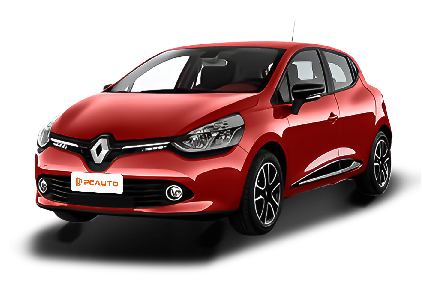
In the current Malaysian market, the all-new Renault Clio is priced roughly between RM 98,000 and RM 110,000, with the exact figure depending on the trim level and any ongoing promotions. For the latest quotes, your best bet is to hit up your local authorized dealer directly.
As a popular B-segment hatchback, the Clio has made a name for itself with its stylish design, nimble handling, and efficient powertrain – it’s a real gem for city driving. That turbocharged engine under the hood? It’s a star when it comes to fuel economy, which is always a plus. Malaysian buyers should also keep an eye on Renault’s aftersales packages, typically including a 5-year unlimited mileage warranty and free regular servicing. Trust me, that’ll take a big chunk out of your long-term ownership costs.
Sure, rivals like the Peugeot 208 and Volkswagen Polo are worth a look too, but the Clio edges them out with its solid range of personalization options and that fun-to-drive factor. One thing to note though – import car prices in Malaysia can swing with exchange rates and import duties, so it pays to stay updated on the latest dealer promos before you take the plunge.
Special Disclaimer: This content is published by users and does not represent the views or position of PCauto.
Related Q&A
Q
What motor oil is suitable for Renault Clio?
For all you Renault Clio owners in Malaysia asking about oil choices, here's the lowdown: stick with fully synthetic 5W-30 that meets Renault's RN0700 or RN0710 specs. This stuff does a solid job protecting your engine and handles our hot tropical weather like a champ. If you're rolling with a diesel, 5W-40 is your go-to. Quick heads-up though – post-2013 Clio models usually need lower viscosity oil to keep fuel economy in check, while older rides should follow the API SL or SM guidelines in your owner's manual.
Given Malaysia's sweltering heat, I'd recommend changing your oil every 8,000 to 10,000 km or 6 months – way better for engine health than the factory's 15,000 km suggestion. When shopping, brands like Total, ELF, or Petronas are easy to find locally and all make oils that meet Renault's certifications. Oh, and don't skip regular oil level checks, especially if your Clio's over 5 years old. If you notice it's burning through oil faster than usual, that could mean aging piston rings or valve seals – best to get that checked out pronto.
Picking the right oil isn't just about making your engine last longer; it keeps performance sharp too – and that's doubly important if you've got a turbocharged model under the hood.
 SunnyOct 16, 2025
Q
How to open the bonnet of the Renault Clio?
To pop the hood of a Renault Clio, start by sitting in the driver's seat. Look near the left side of your footwell for a lever marked with the hood symbol – give it a good pull, and you'll hear the hood release with a faint pop. Then head to the front of the car, slip your fingers into the gap at the center of the hood's leading edge, and feel for the safety catch lever. Gently push it up while lifting the hood; if it feels a bit heavy, use the prop rod to hold it open.
Now, a quick heads-up: Clios from different years might have minor tweaks. For example, post-2012 third-gen models switched to a hidden lever design, but the basic drill remains the same. If you're a Malaysian owner, here's a pro tip: check the hood latch mechanism's lubrication regularly. Our hot, humid climate loves to make metal parts rust and stick, so a quick spray of rust remover every six months will keep things sliding smoothly.
Also, the Clio's engine bay is pretty tight on space. When you're topping up wiper fluid or checking the oil, take an extra second to get the filler caps right – mixing them up is easier than you think. And if the hood ever refuses to open, resist the urge to yank or pry at it. Your best bet is to call an authorized service center; forcing it could wreck the latch mechanism, and trust me, that's a bigger headache than waiting for a pro.
 SkyeOct 16, 2025
Q
How to turn off traction control system of Renault Clio?
To turn off the traction control system on a Renault Clio, you'll typically use a button somewhere on the center console or near the steering wheel. The exact spot can vary a bit depending on the model year, but keep an eye out for an icon labeled "ESC" or "TCS". Give that button a good long press for a few seconds—you’ll know it’s off when a notification pops up on the dashboard. That said, I’d strongly recommend leaving it on when the roads are wet or slippery; it’s a key safety net.
Traction control is a pretty crucial safety feature in modern cars, right? It stops the wheels from spinning unnecessarily and helps distribute power more effectively. This is especially handy here in Malaysia, where we get those sudden downpours. If you *do* need to fully disable it—like when you’re stuck in mud and need to rock the car out—grab the owner’s manual to double-check the steps. Some models might even require you to do this while the car’s stationary.
Just remember: with traction control off, you lose some of that electronic help. So you’ll need to be extra careful with the throttle and steering. Honestly, for everyday driving, it’s best to just leave it on.
 WaveOct 16, 2025
Q
How to reset the anti-pollution system of Renault Clio?
If you need to reset the "Check Anti-Pollution System" warning on your Renault Clio, start with the simple stuff first – try turning off the engine, waiting a few minutes, then restarting it. Sometimes that’s all it takes for the system to reset itself. If the warning’s still there though, you might need to check your exhaust system, oxygen sensors, or catalytic converter. Those are usually the usual suspects when this warning pops up.
Here in Malaysia’s hot and humid weather, it’s a good idea to keep up with regular maintenance on your exhaust system. That helps prevent carbon buildup and keeps sensors from getting all damp and finicky. If the problem sticks around, your best bet is to hook up an OBD-II scanner to read the fault codes, or swing by a professional workshop for a proper check. You want to make sure your emissions system’s up to spec, right?
Oh, and don’t sleep on the basics – changing your air filter regularly and using good-quality fuel can go a long way in avoiding these kinds of issues. Plus, it’ll help keep your engine running strong for longer.
 ShadowProwlOct 16, 2025
Q
What motor oil is required by Renault Clio 1.2?
When it comes to the Renault Clio 1.2 petrol, I'd recommend going with fully synthetic 5W-30 or 5W-40 engine oil that meets Renault's official specifications. This stuff offers solid high-temperature protection and smooth cold-start performance, which is perfect for Malaysia's hot and humid weather, and it also caters well to the needs of smaller-displacement petrol engines. When picking your oil, always check that it has certifications like API SN or ACEA A3/B4 – that's how you know you're getting the right quality and compatibility.
On top of that, regular oil and filter changes are key to keeping your engine running strong. I'd suggest doing it every 10,000 kilometers or 12 months, but definitely double-check your owner's manual for the exact interval. A quick heads-up though: your driving style and environment can affect oil life. If you're often stuck in traffic or driving in really hot conditions, you might want to shorten that change interval a bit.
Knowing the basics like this isn't just about good car care – it'll also help you avoid engine wear or performance issues that can pop up from using the wrong oil. Trust me, a little attention here goes a long way.
 IceStormOct 16, 2025
Q
How to check the mileage of Renault Clio?
The easiest way to check the mileage on a Renault Clio is to look at the odometer reading on the instrument cluster, usually positioned near the speedometer. It displays the total distance traveled numerically – in Malaysia, this is typically in kilometers, though some models might show miles. For newer Clios (those with color displays from around 2012 onwards), you can toggle through the display modes using the buttons on the right side of the steering wheel. Dive into the "Trip" menu to view either the trip distance or the overall total mileage.
If you're looking at a used Clio, don't just take the odometer at face value – it can be tampered with. Your best bet is to cross-reference with the service records, which you can pull up through the MyRenault system or by checking with an authorized Renault dealership. Pair that with a good physical inspection of the car's condition to get a clearer picture of the true mileage.
Another option? The OBD-II port, located under the steering wheel. Hook up a professional scanner there, and a tech can pull the original mileage data stored in the ECU. And if you're buying secondhand in Malaysia, hit up PUSPAKOM – their vehicle inspection report should include key mileage records too. Oh, and keeping up with regular servicing using the dealer's computer system? That helps keep the mileage data synced, which is smart for maintaining your Clio's value down the line.
 TitaniumStrikeOct 16, 2025
Q
How to turn off the service light of Renault Clio?
To turn off the service reminder light on a Renault Clio, you'll usually need to use the buttons on the instrument cluster. The exact steps can vary a bit depending on the model year. For newer Clio models, here's what you do: first, switch off the ignition. Then, press and hold the "reset" button on the dash. Next, turn the ignition on to the "ON" position without starting the engine. Wait until the service light starts flashing or shows a countdown, then let go of the button to reset it.
If you've got an older Clio, you might need to use the multi-function buttons on the steering wheel to navigate into the vehicle settings menu. Look for the "Service" option in there and reset it manually. I’d definitely recommend checking your owner’s manual for the precise steps, since there can be small differences between model years.
Also, regular servicing is super important for keeping your car in good shape. That service light is there to remind you to change things like oil and filters on time. Ignoring those reminders can lead to increased engine wear or reduced performance. Especially here in Malaysia with our hot and humid climate, changing the oil regularly and checking the cooling system are extra crucial – it helps extend your engine’s life and keeps it running at its best. If you’re not sure about the reset steps, just head to your nearest authorized Renault service center. They’ll reset the light professionally and can give your car a thorough check-up while they’re at it.
 IvyOct 16, 2025
Popular Cars
Model Year
Car Compare
Car Photo
Related Models
 Cars
CarsLatest Q&A
Q
Is AMT similar to automatic?
There are significant differences between AMT transmissions and automatic transmissions (AT) in terms of core structure and driving experience. AMT is essentially an electronically automated version of a manual transmission, simulating manual clutch operation and gear shifting through a computerized control system while retaining the gear set structure of manual transmissions. As a result, it offers higher transmission efficiency, with fuel consumption approximately 8%-12% lower than AT, making it particularly suitable for highway or long-distance driving. However, it may exhibit jerking similar to manual transmissions during low-speed gear shifts, especially noticeable in congested traffic conditions.
AT transmissions rely on torque converters for power transfer, delivering smooth and seamless gear shifts that appeal to comfort-oriented users. However, their complex structure (incorporating planetary gear sets, hydraulic systems, etc.) results in higher maintenance costs. A single service may cost between 800 to 1,500 ringgit, whereas AMT only requires gear oil replacement at approximately 400 ringgit.
From a market perspective, AMT is predominantly used in budget vehicles or commercial models priced below 80,000 ringgit, while AT is typically featured in mid-to-high-end vehicles. Consumers should select based on actual needs: AMT suits those prioritizing fuel efficiency and low maintenance costs, while AT better serves those valuing comfort. Notably, recent advancements in AMT electronic control technology have significantly mitigated jerking issues, though test drives should still emphasize low-speed performance evaluation.
 AriaMar 26, 2026
Q
Which is better, DCT or AT?
DCT (Dual-Clutch Transmission) and AT (Automatic Transmission) each have their own advantages and disadvantages, and the choice should be based on personal driving needs. AT transmissions transfer power through a torque converter, offering excellent shift smoothness, making them suitable for urban commuting or novice drivers. However, they tend to have higher fuel consumption, and vehicles equipped with them are usually more expensive. DCT transmissions utilize a dual-clutch structure, featuring fast shift speeds and high power transmission efficiency, which provides a more direct driving experience—particularly suitable for users seeking a sporty feel. However, they may exhibit jerking at low speeds and have relatively high maintenance costs. If durability and comfort are priorities, AT is the more reliable choice; if power responsiveness and driving pleasure are preferred, wet DCT (such as Volkswagen DSG) performs better, though dry DCT models should be avoided in prolonged stop-and-go traffic conditions. Additionally, CVT transmissions excel in smoothness and fuel efficiency, making them ideal for daily commuting, but they lack driving excitement. It is recommended to test-drive before purchasing, as tuning varies significantly across brands, and real-world experience is more important than theoretical specifications.
FlutteringMar 26, 2026Q
Is Amt good or bad?
AMT gearboxes have a significant cost advantage in the local market, typically being around 5,000 Ringgit cheaper than models equipped with conventional automatic transmissions. Their fuel efficiency is comparable to manual transmissions, resulting in long-term fuel savings. Featuring a straightforward design, they achieve transmission efficiency exceeding 90% with relatively low maintenance costs, making them ideal for practicality-oriented consumers. However, their shifting logic contains inherent limitations: gear changes between 1st and 2nd cause 0.3-0.5 second power interruptions, while unintended upshifts on inclines may reduce engine speed by 15%-20%, compromising driving smoothness. For urban commuters or budget-conscious buyers, AMT offers excellent value, though those prioritizing premium driving dynamics should consider alternative transmission types. Some domestic models like the Perodua Axia employ enhanced AMT systems, where optimized shift programming has reduced gearshift shock by approximately 30%.
 RainbowsMar 26, 2026
Q
Which gives better mileage, CVT or AMT?
From the perspective of fuel economy, CVT transmissions generally perform better under urban driving conditions. Their continuously variable design allows the engine to consistently operate within the optimal speed range, significantly reducing fuel consumption during frequent starts and stops. Test data shows that their fuel consumption in urban driving conditions is 10% to 15% lower than that of comparable models. AMT transmissions, on the other hand, inherit the high transmission efficiency of manual transmissions, delivering fuel efficiency close to manual transmissions during high-speed cruising. This makes them particularly suitable for long-distance driving in large-displacement vehicles. However, due to power interruption during gear shifts, their overall fuel consumption may be 5% to 8% higher than CVTs.
The difference in fuel-saving characteristics between the two transmissions stems from their technical principles: CVTs achieve continuous variability through steel belts and pulleys, eliminating the fixed gear ratio limitations of traditional transmissions; AMTs simulate manual gear changes via electronic control systems while maintaining the mechanical efficiency of gear transmission. Notably, actual fuel consumption is also influenced by driving habits. Smooth acceleration and anticipatory deceleration can maximize the transmissions' fuel-saving potential. If the vehicle budget permits and urban commuting is the primary use, CVTs offer a more economical choice. For frequent highway driving with an emphasis on cost-effectiveness, AMTs are equally worth considering.
 RubyBlazeMar 26, 2026
Q
Which is cheaper, AMT or CVT?
In terms of gearbox cost, AMT is usually more economical than CVT. Essentially, AMT is a manual transmission equipped with an electronic control unit, featuring a simple structure and low maintenance costs. The unit price ranges from approximately 5,000 to 8,000 ringgit, making it suitable for budget-conscious consumers or those who prioritize long-term operating costs. CVT incurs higher manufacturing costs due to its precision steel belt transmission system and continuous variable transmission technology, with a unit price of about 7,000 to 10,000 ringgit. However, it delivers a smoother driving experience and superior fuel efficiency. The primary differences between the two lie in technical complexity: AMT retains the gear-shifting mechanism, resulting in noticeable shift shock; CVT achieves linear power output through stepless speed variation but requires periodic belt inspection and incurs higher maintenance expenses. For those prioritizing initial cost and basic transportation needs, AMT offers better value; if comfort and long-term fuel economy are priorities, CVT represents a more worthwhile investment. Note that actual prices may vary based on vehicle model, brand, and local supply chain factors.
ShadowProwlMar 26, 2026
Pros
Cons