
Q
Is Mercedes C-Class a luxury car?
 ShadowDancerMysteriousJun 09, 2025, 11:32 AM
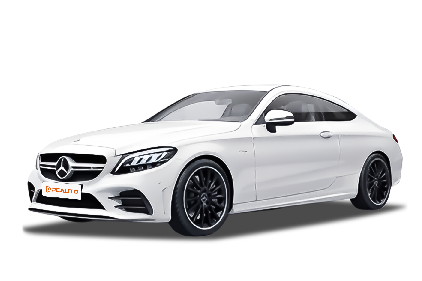
The Mercedes C-Class is indeed regarded as a luxury car. As a product of the well - known brand Mercedes - Benz, it boasts multiple luxury features. Its exterior design is stylish and smooth, with a focus on details, presenting an elegant and refined look. The entire cabin inside the car uses high - quality materials. From the soft - touch interior surfaces to the delicate seat decorations, it creates a sense of luxury.
It is also equipped with a series of advanced technologies and functions. Standard safety features such as multiple airbags, the Electronic Stability Program, and Active Brake Assist enhance the vehicle's protective capabilities. Comfort features like dual - zone automatic climate control, power - adjustable seats with memory function, and the Burmester sound system offer a luxurious driving experience.
In terms of performance, whether it's the AMG C 43 4MATIC with a 3.0 - liter turbocharged V6 engine or the C 63 S with a 4.0 - liter turbocharged V8 engine, the C - Class cars come with powerful engines and excellent handling performance. Even the base - model vehicles can provide a comfortable and outstanding driving and riding experience. The starting price of the AMG C 43 4MATIC is 558,270 Malaysian Ringgit, and the C 63 S starts at 794,682 Malaysian Ringgit, firmly positioning it in the luxury car market.
Special Disclaimer: This content is published by users and does not represent the views or position of PCauto.
Related Q&A
Q
Which model of Mercedes C-Class is the best?
Currently in Malaysia, the Mercedes - AMG C 63 S E Performance (chassis code W206) is the most powerful C - class model. It is equipped with a 2.0L four - cylinder turbo engine and a high - performance PHEV system, with a combined output of up to 680PS and a torque of 1,020Nm, it can accelerate from 0 to 100km/h in just 3.4 seconds. This C63 S inherits AMG's racing genes and is newly added with a rear - axle electric drive, a 4MATIC+ all - wheel - drive system, and an AMG dynamic handling configuration, which significantly improves the handling. At the same time, it has an all - electric range of about 13 kilometers (WLTP standard), meeting the needs of short - distance emission reduction. Compared with the previous V8 C63 S (510PS) of the W205 generation, although the new model has sparked controversy by switching to a four - cylinder engine, it comprehensively surpasses the previous one in terms of power data and acceleration performance and is more in line with the electrification trend. In terms of price, the C63 S E Performance is expected to be priced over RM900,000 in Malaysia (subject to configuration and taxes), belonging to the top - tier performance sedan category. If your budget is a bit lower but you still pursue high performance, you can consider the C43 AMG (408PS).
 ObsidianBladeJun 9, 2025
Q
How to activate start-stop function of Mercedes-Benz C-Class?
The engine start-stop function of Mercedes-Benz C-Class is typically enabled by default. To verify its status or reactivate it, find the button marked with an "A" inside a circular symbol in the cabin - usually located above the left side of the gear lever - and press it to toggle the feature. For touchscreen operation, navigate to the vehicle settings, select either energy management or eco mode, and ensure the start-stop function is checked.
Some variants additionally allow control through the Mercedes me app (requiring phone connection to the car's hotspot before accessing the "Settings" menu), through the instrument cluster display (specific procedures vary by model - consult the owner's manual), or through the central console's driving computer (press the "Menu/Back" or globe-shaped button on the steering wheel to enter settings, then locate the "Engine" or "Engine Start/Stop" option).
The system automatically shuts off the engine when stationary at traffic lights or in congestion after a few seconds of brake application, restarting upon releasing the brake to accelerate or gently turning the steering wheel, thereby reducing fuel consumption and emissions.
 DragonFangJun 9, 2025
Q
Does Mercedes C Class have a timing belt or chain?
The Mercedes C-Class uses a timing chain. The main timing drive methods for engines include timing belts, timing chains, timing gears, etc. Nowadays, most civilian gasoline vehicles use timing belts or chains. Among them, the timing chain is widely used because it requires no maintenance. The Mercedes C-Class models are equipped with timing chains. Compared with the timing belt, although it generates more noise, it has lower long-term usage costs as it doesn't need to be replaced regularly like a timing belt. Generally, you only need to check and adjust its tension every 100,000 kilometers or so. However, even though the timing chain is claimed to be maintenance-free, regular vehicle maintenance and inspections of relevant components are still necessary to ensure the normal operation of the engine.
 HelixTwistJun 9, 2025
Q
What audio system does Mercedes C Class have?
The Mercedes C-Class models are generally equipped with Harman Kardon or Burmester audio systems. Harman Kardon was founded in 1953 and is a division of Harman International Industries that specializes in producing home and car audio. Brands like BMW and Land Rover also frequently use its audio systems. It also owns several well - known brands such as JBL and AKG. The Burmester audio system was founded in Germany in 1978. As a high - end brand, it is renowned for its excellent sound quality and a pursuit of audiophile - level sound, and is a favorite among audio enthusiasts. Both of these brands can provide high - quality auditory enjoyment for passengers inside the car. For example, the 2018 Mercedes - Benz AMG C - Class Coupe is equipped with 21 speakers of Burmester and the Sound Plus function.
 QuantumLeapJun 9, 2025
Q
Is Mercedes C Class equipped with ADAS?
The Mercedes C Class is equipped with ADAS (Advanced Driver Assistance System). It has reached the Level 2 driver assistance level and adopts five exterior cameras, 12 ultrasonic radars, and one millimeter - wave radar. When driving on the highway, the car - following and full - speed adaptive cruise control functions are stable, which can automatically adjust the vehicle speed according to the speed of the vehicle in front, maintain a safe following distance, and relieve the driver's fatigue during long - distance driving. In addition, the Mercedes C Class also comes with systems such as active braking/active safety systems, forward collision warning, electronic stability control, and automatic parking. For example, the active braking system can automatically apply the brakes when necessary to reduce the risk of collision; the automatic parking system can help the driver easily complete the parking maneuver. However, when facing complex road conditions such as on - ramps and road construction, the system's response ability is limited. The driver still needs to stay focused and be ready to take over the vehicle manually at any time.
 EclipseShadowJun 9, 2025
Q
What suspension does the Mercedes C-Class have?
The Mercedes C-Class is equipped with multi-link independent suspensions both at the front and rear. The front and rear multi-link independent suspensions have numerous advantages in many aspects. They can effectively filter out road vibrations and bumps, providing a smoother driving and riding experience whether you're cruising on rough city streets or uneven rural roads. Additionally, this suspension setup enhances the vehicle's handling characteristics, allowing for better control during turns and maneuvers. The use of this suspension in the C-Class means that passengers can enjoy a more comfortable journey, while drivers can experience superior driving dynamics. For car enthusiasts, this suspension system is also a hallmark of the vehicle's precision engineering, which helps to improve the overall performance and reputation of the Mercedes C-Class.
 SlashHunterJun 9, 2025
Q
Does Mercedes C-Class have spare wheel?
The Mercedes C-Class doesn't provide spare tire. Instead, it's typically equipped with run - flat tires. These tires are designed to keep going even when they lose air pressure. With run - flat tires, the vehicle can still keep moving for a certain distance after the loss of tire pressure, without the need to install a spare tire right away, which provides a certain level of convenience and peace of mind for drivers, as they don't have to worry about changing a tire by the roadside immediately. To some extent, this also helps to reduce the vehicle's weight, which may potentially improve fuel efficiency. These run - flat tires usually have special markings like RSC to indicate their technical features.
 HappyOctopusJun 9, 2025
Q
How to open the sunroof of Mercedes C-Class?
To open the sunroof of Mercedes C-Class, find the SOS button inside the car and push it backward. You can decide the opening degree on your own. For some models without an SOS button, there will be a dedicated button for opening the sunroof in the car, which usually has a pattern similar to a sunroof , press it and then the sunroof will be automatically opened. Besides this opening method, in some models, there is a switch in the center of the roof to control the opening and closing of the sunroof. You can operate it by toggling this switch. After the vehicle is turned off, you can also point the key at the driver - side door and long - press the lock button to close all windows, including the sunroof. Alternatively, you can get close to the driver - side door and long - press the sensor on the outside of the door handle to close them. Knowing these ways to open and close the sunroof allows passengers and drivers to enjoy the comfort brought by the sunroof more freely, such as rapid temperature reduction, fog removal, and improved air circulation.
 HappySquidJun 9, 2025
Q
Is Mercedes C-Class equipped with LED lights?
Yes, the Mercedes C-Class is equipped with LED lights. Both the 2018 Mercedes-Benz AMG C-Class Coupe AMG C 43 4MATIC and the 2018 Mercedes-Benz AMG C-Class Coupe C 63 S come standard with LED headlights. Compared with traditional halogen lights, LED lights offer many advantages, such as better lighting effects, a more stylish appearance, and a longer service life. They can improve visibility on the road, especially when driving at night, in foggy or rainy conditions, ensuring safer driving. In addition, as a luxury car, the use of LED lights also improves the overall luxury of the Mercedes C-Class. In addition, equipped with other standard features like its comprehensive safety system and luxurious interior, the C-Class has become a popular choice among car enthusiasts in the sports car segment.
 HappyWhaleJun 9, 2025
Q
Does Mercedes C-class have touch screen?
Yes, the latest Mercedes-Benz C-Class (W206 generation) comes standard with an 11.9-inch central touchscreen across the entire lineup. It's equipped with the second-generation MBUX (Mercedes-Benz User Experience) infotainment system, whose high-definition screen supports touch operation and tactile feedback function, allowing you to control functions like navigation, audio, and vehicle settings. The screen also features voice control with "Hey Mercedes" and supports wireless Apple CarPlay and Android Auto connectivity, making it more intelligent and convenient to use.
Moreover, the screen of the Mercedes-Benz C-Class offers clear display and an intuitive UI design. It has a sensitive touch response, which better meets the technological needs of modern users compared to traditional knob controls. In Malaysia, whether it's the entry-level C 200 or the higher-performance C 300 or AMG versions, this touchscreen is standard equipment, providing both drivers and passengers with a more modern interactive experience.
 HappyManateeJun 9, 2025
Popular Cars
Model Year
Car Compare
Car Photo
Related Models
 Cars
CarsLatest Q&A
Q
Is AMT similar to automatic?
There are significant differences between AMT transmissions and automatic transmissions (AT) in terms of core structure and driving experience. AMT is essentially an electronically automated version of a manual transmission, simulating manual clutch operation and gear shifting through a computerized control system while retaining the gear set structure of manual transmissions. As a result, it offers higher transmission efficiency, with fuel consumption approximately 8%-12% lower than AT, making it particularly suitable for highway or long-distance driving. However, it may exhibit jerking similar to manual transmissions during low-speed gear shifts, especially noticeable in congested traffic conditions.
AT transmissions rely on torque converters for power transfer, delivering smooth and seamless gear shifts that appeal to comfort-oriented users. However, their complex structure (incorporating planetary gear sets, hydraulic systems, etc.) results in higher maintenance costs. A single service may cost between 800 to 1,500 ringgit, whereas AMT only requires gear oil replacement at approximately 400 ringgit.
From a market perspective, AMT is predominantly used in budget vehicles or commercial models priced below 80,000 ringgit, while AT is typically featured in mid-to-high-end vehicles. Consumers should select based on actual needs: AMT suits those prioritizing fuel efficiency and low maintenance costs, while AT better serves those valuing comfort. Notably, recent advancements in AMT electronic control technology have significantly mitigated jerking issues, though test drives should still emphasize low-speed performance evaluation.
 AriaMar 26, 2026
Q
Which is better, DCT or AT?
DCT (Dual-Clutch Transmission) and AT (Automatic Transmission) each have their own advantages and disadvantages, and the choice should be based on personal driving needs. AT transmissions transfer power through a torque converter, offering excellent shift smoothness, making them suitable for urban commuting or novice drivers. However, they tend to have higher fuel consumption, and vehicles equipped with them are usually more expensive. DCT transmissions utilize a dual-clutch structure, featuring fast shift speeds and high power transmission efficiency, which provides a more direct driving experience—particularly suitable for users seeking a sporty feel. However, they may exhibit jerking at low speeds and have relatively high maintenance costs. If durability and comfort are priorities, AT is the more reliable choice; if power responsiveness and driving pleasure are preferred, wet DCT (such as Volkswagen DSG) performs better, though dry DCT models should be avoided in prolonged stop-and-go traffic conditions. Additionally, CVT transmissions excel in smoothness and fuel efficiency, making them ideal for daily commuting, but they lack driving excitement. It is recommended to test-drive before purchasing, as tuning varies significantly across brands, and real-world experience is more important than theoretical specifications.
 FlutteringMar 26, 2026
Q
Is Amt good or bad?
AMT gearboxes have a significant cost advantage in the local market, typically being around 5,000 Ringgit cheaper than models equipped with conventional automatic transmissions. Their fuel efficiency is comparable to manual transmissions, resulting in long-term fuel savings. Featuring a straightforward design, they achieve transmission efficiency exceeding 90% with relatively low maintenance costs, making them ideal for practicality-oriented consumers. However, their shifting logic contains inherent limitations: gear changes between 1st and 2nd cause 0.3-0.5 second power interruptions, while unintended upshifts on inclines may reduce engine speed by 15%-20%, compromising driving smoothness. For urban commuters or budget-conscious buyers, AMT offers excellent value, though those prioritizing premium driving dynamics should consider alternative transmission types. Some domestic models like the Perodua Axia employ enhanced AMT systems, where optimized shift programming has reduced gearshift shock by approximately 30%.
 RainbowsMar 26, 2026
Q
Which gives better mileage, CVT or AMT?
From the perspective of fuel economy, CVT transmissions generally perform better under urban driving conditions. Their continuously variable design allows the engine to consistently operate within the optimal speed range, significantly reducing fuel consumption during frequent starts and stops. Test data shows that their fuel consumption in urban driving conditions is 10% to 15% lower than that of comparable models. AMT transmissions, on the other hand, inherit the high transmission efficiency of manual transmissions, delivering fuel efficiency close to manual transmissions during high-speed cruising. This makes them particularly suitable for long-distance driving in large-displacement vehicles. However, due to power interruption during gear shifts, their overall fuel consumption may be 5% to 8% higher than CVTs.
The difference in fuel-saving characteristics between the two transmissions stems from their technical principles: CVTs achieve continuous variability through steel belts and pulleys, eliminating the fixed gear ratio limitations of traditional transmissions; AMTs simulate manual gear changes via electronic control systems while maintaining the mechanical efficiency of gear transmission. Notably, actual fuel consumption is also influenced by driving habits. Smooth acceleration and anticipatory deceleration can maximize the transmissions' fuel-saving potential. If the vehicle budget permits and urban commuting is the primary use, CVTs offer a more economical choice. For frequent highway driving with an emphasis on cost-effectiveness, AMTs are equally worth considering.
 RubyBlazeMar 26, 2026
Q
Which is cheaper, AMT or CVT?
In terms of gearbox cost, AMT is usually more economical than CVT. Essentially, AMT is a manual transmission equipped with an electronic control unit, featuring a simple structure and low maintenance costs. The unit price ranges from approximately 5,000 to 8,000 ringgit, making it suitable for budget-conscious consumers or those who prioritize long-term operating costs. CVT incurs higher manufacturing costs due to its precision steel belt transmission system and continuous variable transmission technology, with a unit price of about 7,000 to 10,000 ringgit. However, it delivers a smoother driving experience and superior fuel efficiency. The primary differences between the two lie in technical complexity: AMT retains the gear-shifting mechanism, resulting in noticeable shift shock; CVT achieves linear power output through stepless speed variation but requires periodic belt inspection and incurs higher maintenance expenses. For those prioritizing initial cost and basic transportation needs, AMT offers better value; if comfort and long-term fuel economy are priorities, CVT represents a more worthwhile investment. Note that actual prices may vary based on vehicle model, brand, and local supply chain factors.
 ShadowProwlMar 26, 2026
Related News

What is the difference between the Mercedes-Benz E300 and E350?
MichaelMar 24, 2026

Mercedes-Benz halts the launch of L3-level autonomous driving, reverting to L2+ level
LienJan 16, 2026

Nvidia Announces Mercedes-Benz CLA as the First Vehicle with DRIVE AV Autonomous Driving Technology
MichaelJan 12, 2026

Brand New Mercedes-Benz GLC with EQ Technology Coming Soon: A Larger, Faster, and More Efficient Luxury All-Electric SUV
LienDec 11, 2025

Mercedes-Benz GLC200 4Matic debuts, offering a more accessible entry price at RM329,888
LienDec 11, 2025
View More
Pros
Cons