
Q
Is the Quadrifoglio being discontinued?
 AidAug 04, 2025, 02:08 PM
At present, Alfa Romeo has not officially announced the discontinuation of the Quadrifoglio models. As the high - performance representatives of the brand, models like the Giulia and Stelvio Quadrifoglio are still being continuously updated to meet market demand. Malaysian consumers can obtain the latest configuration and ordering information through authorized dealers. The iconic 2.9 - liter V6 twin - turbocharged engine and carbon fiber driveshaft technology of the Quadrifoglio continue Alfa Romeo's concept of balancing track and road performance. The local car owner community often shares their unique driving experiences and the modification potential of these models. If you're considering buying a high - performance car, it's advisable to keep an eye on the changes in Malaysia's import car tax system and the brand's annual promotional activities. At the same time, you can compare them with German or Japanese performance cars in the same class and choose the most suitable driving machine according to your personal preferences.
Special Disclaimer: This content is published by users and does not represent the views or position of PCauto.
Related Q&A
Q
Where is the Quadrifoglio engine made?
The Quadrifoglio engine is the exclusive power unit for Alfa Romeo's high - performance models. Currently, engines in this series are mainly produced at the VM Motori factory in Termoli, Italy. This factory belongs to the Stellantis Group and is well - known for its precision manufacturing of high - performance engines.
For Malaysian car enthusiasts, the most famous 2.9 - liter V6 twin - turbocharged engine in the Quadrifoglio series was once installed in the Giulia and Stelvio Quadrifoglio models. Its design incorporates Ferrari's technological genes and can unleash a powerful performance of 510 horsepower.
It's worth noting that although the Japanese cars dominate the Malaysian market, the craftsmanship of European high - performance engines still attracts local car lovers. These engines usually adopt racing technologies such as forged crankshafts and multi - spark plug ignition. In a hot climate, they need more frequent maintenance to stay in the best condition. It is recommended that car owners strictly follow the original factory's maintenance schedule and use the specified grade of engine oil to ensure the reliability of such precision power systems in the tropical environment.
 ShiningAug 4, 2025
Q
What body type is the Alfa Romeo Quadrifoglio?
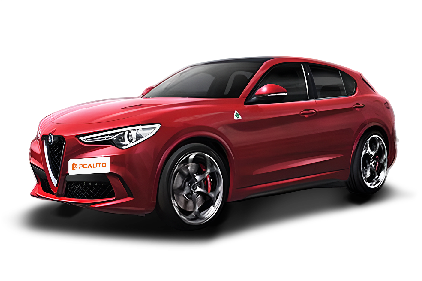
The Alfa Romeo Quadrifoglio is a high - performance vehicle that comes in two different body styles: a four - door sedan and a five - door hatchback, depending on the base model series. For example, the Giulia Quadrifoglio is designed as a four - door sedan, while the Stelvio Quadrifoglio is a high - performance SUV. However, when people mention the Quadrifoglio, they usually refer to the Giulia Quadrifoglio four - door sedan.
This car is renowned for its powerful 2.9 - liter V6 twin - turbocharged engine and precise handling, making it a perfect choice for Malaysian car enthusiasts who love the thrill of driving. In the Malaysian market, Alfa Romeo may be a niche brand, but its unique Italian design and outstanding performance have still attracted many loyal fans.
The Quadrifoglio version represents the top - tier performance of the brand. It is typically equipped with a more sporty suspension system, high - performance brakes, and exclusive exterior kits, catering to those owners who pursue speed and excitement while still wanting to maintain daily practicality.
Moreover, Alfa Romeo models in Malaysia are mainly sold through official import channels, ensuring the reliability of after - sales service and parts supply, allowing owners to enjoy the driving experience with greater peace of mind.
 DipAug 4, 2025
Q
What is the difference between Alfa Romeo Stelvio and Quadrifoglio?
The main differences between the Alfa Romeo Stelvio and the Quadrifoglio lie in performance and positioning. The Stelvio is a mid - size SUV from Alfa Romeo, offering a well - balanced daily driving experience. It is equipped with a 2.0 - liter turbocharged engine, which outputs around 280 horsepower. It's suitable for families or urban commuting.
On the other hand, the Quadrifoglio is the high - performance version of the Stelvio. It's designed for car enthusiasts who pursue the ultimate driving pleasure. It comes with a 2.9 - liter V6 twin - turbocharged engine that can unleash 505 horsepower. The 0 - 100 km/h acceleration takes only 3.8 seconds. It also features a more sporty suspension system, a four - wheel drive system, and exclusive exterior kits, such as carbon fiber materials and larger wheels.
In the Malaysian market, the Quadrifoglio is more suitable for consumers who love high - performance cars, while the regular Stelvio focuses more on practicality and comfort.
Alfa Romeo's Quadrifoglio series has its roots in the brand's long - standing racing tradition. The four - leaf clover logo symbolizes luck and performance, and this tradition is also reflected in models like the Giulia Quadrifoglio, showcasing the passion and craftsmanship of Italian cars.
Whether it's the Stelvio or the Quadrifoglio, they both inherit Alfa Romeo's unique driving feel and design aesthetics, and are suitable for Malaysian car owners with different needs.
 JaxAug 4, 2025
Q
How do you pronounce Alfa Romeo Quadrifoglio?
The correct pronunciation of "Alfa Romeo Quadrifoglio" is "Ā'ěrfǎ · Luóměiōu Kuādélǐfúlǐào". Among them, "Quadrifoglio" means "four - leaf clover" in Italian. It is the iconic symbol of Alfa Romeo's high - performance models, and Malaysian car enthusiasts often simply call it the "Four - Leaf Clover Edition". For car enthusiasts who are not familiar with Italian, it can be broken down into four syllables: "Kwa - dree - fol - yo", with the stress on "fol". This name is derived from the lucky symbol in Alfa Romeo's racing history. In 1923, the racing driver Ugo Sivocci painted a four - leaf clover on his racing car and won the championship. Since then, it has become the symbol of the brand's high - performance series. In the Malaysian market, the Quadrifoglio version usually represents the top - performance model of the car series. For example, the Giulia Quadrifoglio is equipped with a 2.9 - liter V6 twin - turbocharged engine, outputting up to 510 horsepower. Knowing these pronunciation and background knowledge can enable Malaysian car enthusiasts to discuss this Italian performance car more professionally, and also allow them to share the racing culture behind it more confidently at car gatherings or exhibitions.
 EveAug 4, 2025
Q
What is the difference between Alfa Giulia and Quadrifoglio?
The main differences between the Alfa Romeo Giulia and the Quadrifoglio lie in performance and positioning. The Giulia is a luxury sports sedan under the brand, offering 2.0 - liter turbocharged and 2.2 - liter diesel engine versions. It's suitable for daily driving while still providing a sporty feel. On the other hand, the Quadrifoglio is a high - performance version equipped with a 2.9 - liter V6 twin - turbocharged engine, delivering up to 510 horsepower. It's designed specifically for car enthusiasts who pursue the ultimate driving experience.
In terms of appearance, the Quadrifoglio comes with an exclusive aerodynamic kit, a four - leaf clover logo, and larger wheels. Inside the cabin, carbon fiber and high - end materials are used to enhance the sporty atmosphere. The chassis and suspension have also been strengthened to handle higher performance limits.
In the Malaysian market, the Giulia is more suitable for urban commuting, while the Quadrifoglio is better for track days or performance - loving customers. Both models inherit Alfa Romeo's Italian design aesthetics and driving pleasure, but they offer differentiated choices for consumers with different needs.
 XenaAug 5, 2025
Q
Is the Alfa Romeo Quadrifoglio a reliable car?
As a high-performance sedan, the reliability of the Alfa Romeo Giulia Quadrifoglio needs to be evaluated in the context of Malaysia's usage environment. The 2.9-liter V6 twin-turbocharged engine in this car is derived from Ferrari technology. It offers excellent power performance but comes with relatively high maintenance costs, making it suitable for owners who pursue driving pleasure.
In Malaysia's hot and rainy climate, it is recommended to pay special attention to regular inspections of the cooling system and electronic devices. Since the local after-sales network is relatively limited, owners may need to plan maintenance matters in advance.
Compared with daily family cars, the reliability of such high-performance models depends more on the owner's driving habits and maintenance awareness. The road conditions in Malaysia are diverse, and aggressive driving may accelerate the wear and tear of the chassis and suspension components.
If you are considering buying a used Quadrifoglio, it is advisable to conduct a comprehensive inspection through official channels or professional technicians. After all, the condition of such high-performance cars is closely related to how the previous owner used them. Although its maintenance cost is higher than that of ordinary sedans, for owners who truly love driving, the unique Italian handling charm provided by the Quadrifoglio is irreplaceable.
 TiaAug 5, 2025
Q
How fast is an Alfa Romeo Quadrifoglio?
As the high - performance flagship sedan of the brand, the Alfa Romeo Giulia Quadrifoglio is equipped with a 2.9 - liter V6 twin - turbocharged engine, which can deliver 510 horsepower and 600 Nm of torque. Paired with an 8 - speed automatic transmission and a rear - wheel drive system, the official 0 - 100km/h acceleration takes only 3.9 seconds, and the top speed is limited to 307km/h. This performance is comparable to that of German high - performance sedans in the same class.
For Malaysian car enthusiasts, the carbon fiber driveshaft and active suspension system of the Quadrifoglio are the highlights. They can balance the intense driving on the track and the comfort on daily roads. However, it should be noted that rear - wheel drive cars with high horsepower require more careful control of the throttle in tropical rainy weather.
The standard mechanical limited - slip differential and the aluminum alloy body structure of the car make its cornering performance particularly agile. This kind of driving pleasure is exactly the essence of the Alfa Romeo brand. Although the maintenance cost is relatively high, it is still a worthy choice for car owners who pursue the pure Italian driving experience.
 HappyFishAug 5, 2025
Q
Did they stop making the Quadrifoglio?
Currently, Alfa Romeo hasn't officially announced the discontinuation of the Quadrifoglio high - performance version models. This series still serves as the brand's flagship performance models and is available for sale in some markets around the world. However, for the specific supply situation in the Malaysian market, you need to consult the local authorized dealers.
As the high - performance logo of Alfa Romeo, Quadrifoglio can be traced back to the four - leaf clover totem of the 1923 Targa Florio race victory. The current Giulia and Stelvio Quadrifoglio are both equipped with a 2.9 - liter V6 twin - turbocharged engine, which can generate 510 horsepower. Its carbon fiber driveshaft and rear axle limited - slip differential showcase the unique engineering of Italian performance cars.
For Malaysian car enthusiasts, although high - performance models are relatively expensive due to tax factors, Alfa Romeo dealers still introduce limited - edition models irregularly. It is recommended to follow local auto shows or the brand's official channels to get the latest updates. Meanwhile, there is also an active Alfa Romeo owners' club in Malaysia, where you can exchange experiences on vehicle maintenance and driving.
 BlazingAug 5, 2025
Q
How much HP does an Alfa Romeo Quadrifoglio have?
As the high-performance flagship sedan of the brand, the Alfa Romeo Giulia Quadrifoglio is equipped with a 2.9-liter V6 twin-turbocharged engine, which can generate 510 horsepower and 600 Nm of torque. Paired with an 8-speed automatic transmission and a rear-wheel drive system, it can accelerate from 0 to 100 km/h in just 3.9 seconds and reach a top speed of 307 km/h. Its carbon fiber driveshaft and active suspension system are highlights of the track-oriented tuning.
For car enthusiasts in Malaysia, although this Italian performance car has not been introduced through official channels, it can be purchased through parallel import. It should be noted that the local hot climate places high requirements on the heat dissipation of the turbocharged engine, so it is recommended to choose an upgraded cooling system. Competitors in the same class, such as the BMW M3 (510 hp) and the Mercedes-AMG C63 S (503 hp), have comparable power performance. However, the Quadrifoglio stands out with its 50:50 body weight distribution and an engine design based on Ferrari technology. Its iconic four-leaf clover badge symbolizes Alfa Romeo's century-old racing heritage, making it suitable for performance car enthusiasts who pursue a unique Italian style.
 JopAug 5, 2025
Q
How much does a Quadrifoglio cost?
The Alfa Romeo Giulia Quadrifoglio is priced approximately between RM800,000 and RM900,000 in Malaysia. The exact price may vary depending on the configuration, optional extras, and dealer promotions. This high - performance sedan is powered by a 2.9 - liter V6 twin - turbocharged engine, with a maximum power output of up to 510 horsepower. It can accelerate from 0 to 100 km/h in just 3.9 seconds, making it a standout in its class.
For Malaysian car enthusiasts, the Quadrifoglio not only represents the essence of the Italian luxury brand but also offers an excellent driving experience and a unique design style. In the Malaysian market, similar high - performance models include the BMW M3 and the Mercedes - AMG C 63, but the Quadrifoglio stands out with its distinct Italian charm and racing pedigree.
It's worth noting that the maintenance and repair costs of high - performance cars are usually high. Potential buyers are advised to understand the related expenses in advance. Also, the hot climate in Malaysia may pose higher requirements for the cooling system of high - performance cars, so regular maintenance is particularly important.
 GopAug 5, 2025
Popular Cars
Model Year
Car Compare
Car Photo
Related Models
 Cars
CarsLatest Q&A
Q
Is AMT similar to automatic?
There are significant differences between AMT transmissions and automatic transmissions (AT) in terms of core structure and driving experience. AMT is essentially an electronically automated version of a manual transmission, simulating manual clutch operation and gear shifting through a computerized control system while retaining the gear set structure of manual transmissions. As a result, it offers higher transmission efficiency, with fuel consumption approximately 8%-12% lower than AT, making it particularly suitable for highway or long-distance driving. However, it may exhibit jerking similar to manual transmissions during low-speed gear shifts, especially noticeable in congested traffic conditions.
AT transmissions rely on torque converters for power transfer, delivering smooth and seamless gear shifts that appeal to comfort-oriented users. However, their complex structure (incorporating planetary gear sets, hydraulic systems, etc.) results in higher maintenance costs. A single service may cost between 800 to 1,500 ringgit, whereas AMT only requires gear oil replacement at approximately 400 ringgit.
From a market perspective, AMT is predominantly used in budget vehicles or commercial models priced below 80,000 ringgit, while AT is typically featured in mid-to-high-end vehicles. Consumers should select based on actual needs: AMT suits those prioritizing fuel efficiency and low maintenance costs, while AT better serves those valuing comfort. Notably, recent advancements in AMT electronic control technology have significantly mitigated jerking issues, though test drives should still emphasize low-speed performance evaluation.
 AriaMar 26, 2026
Q
Which is better, DCT or AT?
DCT (Dual-Clutch Transmission) and AT (Automatic Transmission) each have their own advantages and disadvantages, and the choice should be based on personal driving needs. AT transmissions transfer power through a torque converter, offering excellent shift smoothness, making them suitable for urban commuting or novice drivers. However, they tend to have higher fuel consumption, and vehicles equipped with them are usually more expensive. DCT transmissions utilize a dual-clutch structure, featuring fast shift speeds and high power transmission efficiency, which provides a more direct driving experience—particularly suitable for users seeking a sporty feel. However, they may exhibit jerking at low speeds and have relatively high maintenance costs. If durability and comfort are priorities, AT is the more reliable choice; if power responsiveness and driving pleasure are preferred, wet DCT (such as Volkswagen DSG) performs better, though dry DCT models should be avoided in prolonged stop-and-go traffic conditions. Additionally, CVT transmissions excel in smoothness and fuel efficiency, making them ideal for daily commuting, but they lack driving excitement. It is recommended to test-drive before purchasing, as tuning varies significantly across brands, and real-world experience is more important than theoretical specifications.
FlutteringMar 26, 2026Q
Is Amt good or bad?
AMT gearboxes have a significant cost advantage in the local market, typically being around 5,000 Ringgit cheaper than models equipped with conventional automatic transmissions. Their fuel efficiency is comparable to manual transmissions, resulting in long-term fuel savings. Featuring a straightforward design, they achieve transmission efficiency exceeding 90% with relatively low maintenance costs, making them ideal for practicality-oriented consumers. However, their shifting logic contains inherent limitations: gear changes between 1st and 2nd cause 0.3-0.5 second power interruptions, while unintended upshifts on inclines may reduce engine speed by 15%-20%, compromising driving smoothness. For urban commuters or budget-conscious buyers, AMT offers excellent value, though those prioritizing premium driving dynamics should consider alternative transmission types. Some domestic models like the Perodua Axia employ enhanced AMT systems, where optimized shift programming has reduced gearshift shock by approximately 30%.
 RainbowsMar 26, 2026
Q
Which gives better mileage, CVT or AMT?
From the perspective of fuel economy, CVT transmissions generally perform better under urban driving conditions. Their continuously variable design allows the engine to consistently operate within the optimal speed range, significantly reducing fuel consumption during frequent starts and stops. Test data shows that their fuel consumption in urban driving conditions is 10% to 15% lower than that of comparable models. AMT transmissions, on the other hand, inherit the high transmission efficiency of manual transmissions, delivering fuel efficiency close to manual transmissions during high-speed cruising. This makes them particularly suitable for long-distance driving in large-displacement vehicles. However, due to power interruption during gear shifts, their overall fuel consumption may be 5% to 8% higher than CVTs.
The difference in fuel-saving characteristics between the two transmissions stems from their technical principles: CVTs achieve continuous variability through steel belts and pulleys, eliminating the fixed gear ratio limitations of traditional transmissions; AMTs simulate manual gear changes via electronic control systems while maintaining the mechanical efficiency of gear transmission. Notably, actual fuel consumption is also influenced by driving habits. Smooth acceleration and anticipatory deceleration can maximize the transmissions' fuel-saving potential. If the vehicle budget permits and urban commuting is the primary use, CVTs offer a more economical choice. For frequent highway driving with an emphasis on cost-effectiveness, AMTs are equally worth considering.
 RubyBlazeMar 26, 2026
Q
Which is cheaper, AMT or CVT?
In terms of gearbox cost, AMT is usually more economical than CVT. Essentially, AMT is a manual transmission equipped with an electronic control unit, featuring a simple structure and low maintenance costs. The unit price ranges from approximately 5,000 to 8,000 ringgit, making it suitable for budget-conscious consumers or those who prioritize long-term operating costs. CVT incurs higher manufacturing costs due to its precision steel belt transmission system and continuous variable transmission technology, with a unit price of about 7,000 to 10,000 ringgit. However, it delivers a smoother driving experience and superior fuel efficiency. The primary differences between the two lie in technical complexity: AMT retains the gear-shifting mechanism, resulting in noticeable shift shock; CVT achieves linear power output through stepless speed variation but requires periodic belt inspection and incurs higher maintenance expenses. For those prioritizing initial cost and basic transportation needs, AMT offers better value; if comfort and long-term fuel economy are priorities, CVT represents a more worthwhile investment. Note that actual prices may vary based on vehicle model, brand, and local supply chain factors.
 ShadowProwlMar 26, 2026
Pros
Cons