
Q
Which car is the fastest in the world?
 ArtistBrushCreativityOct 17, 2025, 02:55 PM
Right now, the fastest production car in the world is the Bugatti Chiron Super Sport 300+. This beast can hit a mind-blowing 490 km/h, thanks to its 8.0-liter quad-turbo W16 engine cranking out a massive 1,600 horsepower, and aerodynamics tweaked specifically for ultimate speed.
For Malaysian car enthusiasts, while these hypercars are pretty rare sights on local roads, there are still some solid performers that make more sense here – think Proton X50 and Perodua Ativa. They’re better suited to our local driving conditions and daily needs.
Sure, hypercars are all about that incredible speed, but when you’re actually behind the wheel, safety and road conditions can’t be ignored. Malaysia’s highway speed limits are generally 110 km/h, so even if you’ve got a high-performance machine, sticking to the rules is a must.
On top of that, the electric vehicle scene is throwing up some serious contenders too. Take the Tesla Roadster, for example – it rockets from 0-100 km/h in just 1.9 seconds. That really shows how quickly EV tech is advancing, and it might just smash more speed records in the future.
Special Disclaimer: This content is published by users and does not represent the views or position of PCauto.
Related Q&A
Q
When was McLaren P1 released?
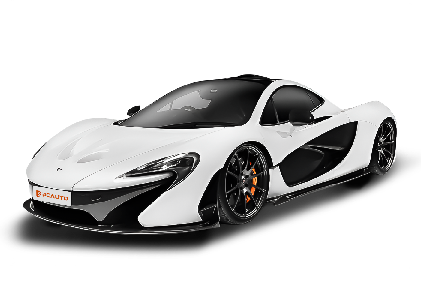
The McLaren P1 stands as one of the most talked-about hybrid hypercars to ever hit the scene. Launched back in 2013 as the spiritual successor to the legendary McLaren F1, it represented the absolute cutting edge of automotive engineering at the time. Under the hood (well, behind the driver actually), you've got a beastly 3.8-liter twin-turbo V8 paired with an electric motor, cranking out a combined 903 horsepower. That translates to a blistering 0-100 km/h sprint in just 2.8 seconds, and while its top speed is electronically capped at 350 km/h, there's no denying the raw speed on tap.
What really sets the P1 apart is its advanced aerodynamics – think active rear wing and adaptive suspension systems that work in harmony to keep this rocket glued to the tarmac, even when pushing those extreme limits. For Malaysian petrolheads, the P1 isn't just a car; it's a dream machine. Its exclusivity and mind-blowing performance make it the ultimate trophy for collectors and hypercar fanatics alike. Sure, that eye-watering price tag and limited production run (only 375 units worldwide) mean it's out of reach for most, but there's no arguing its place in automotive history.
Beyond its own legacy, the P1 paved the way for McLaren's future hybrid endeavors, like the Speedtail and Artura, proving the brand can blend environmental consciousness with mind-bending performance in one seriously impressive package.
 LeoOct 17, 2025
Q
When was the McLaren P1 released?
The McLaren P1 stands as an iconic hybrid hypercar, first unveiled back in 2013. As a flagship model for the McLaren brand, it's a beast that marries cutting-edge F1 racing tech with a green mindset. Under the hood, you've got a 3.8-liter twin-turbo V8 engine paired with an electric motor, cranking out a combined 903 horsepower. That translates to a blistering 0-100 km/h sprint in just 2.8 seconds, and a top speed electronically capped at 350 km/h.
Only 375 units of this machine were ever built worldwide. Thanks to its mind-blowing performance and forward-thinking hybrid tech, it's become the stuff of dreams for collectors and car fanatics alike. For Malaysian petrolheads, the P1 isn't just a showcase of engineering excellence; it also highlights the supercar industry's steps toward cutting emissions, even if it comes with a sky-high price tag and is as rare as hen's teeth. Despite that, its reputation globally is absolutely stellar.
If Malaysian car enthusiasts want to catch a glimpse of this legend, they'll probably have to keep an eye on international motor shows or private collection events—this beauty is extremely hard to spot in the local market.
 SkyOct 17, 2025
Q
When was the McLaren P1 made?
The McLaren P1 stands as an iconic hybrid hypercar, rolling off the production line from 2013 to 2015 with a strict global limit of just 375 units. Under its sculpted hood lies a potent hybrid setup: a 3.8-liter twin-turbo V8 engine paired with an electric motor, churning out a combined 903 horsepower. This translates to blistering performance – 0-100 km/h in a mere 2.8 seconds and a top speed of 350 km/h – showcasing McLaren's masterful blend of raw performance and cutting-edge green technology.
For Malaysian petrolheads, the P1 isn't just a hypercar legend; it's a pioneer in hybrid tech. Its KERS energy recovery system later trickled down to more accessible McLaren models, like the Sports Series range. Sure, you don't spot P1s cruising Malaysian streets every day, but their status among global collectors and supercar enthusiasts is off the charts – and their resale values? They stay sky-high.
It's worth noting McLaren's been ramping up efforts in Southeast Asia lately, Malaysia included. So, here's hoping we'll see more of their limited-edition beasts making their way to local shores. Definitely something for us car fans to keep our eyes peeled for.
 SunshineDayHappyOct 17, 2025
Q
How fast is McLaren P1?
The McLaren P1 is an absolute beast of a hybrid hypercar with mind-blowing speed. It tops out at 350 km/h and rockets from 0-100 km/h in just 2.8 seconds, serving up some serious performance credentials. That punch comes from its 3.8-liter twin-turbo V8 paired with an electric motor, cranking out a combined 916 horsepower. For Malaysian petrolheads, the P1 isn't just a showcase of cutting-edge engineering—it's right at home stretching its legs on premium local circuits like Sepang International Circuit, where you can really feel its raw capability. What's cool too is how the P1's hybrid setup signals the supercar world's shift toward greener tech. Sure, these machines might not be the most practical daily drivers on Malaysian roads, but their blend of innovation and outright speed keeps car enthusiasts talking nonstop. If hypercars get your engine revving, dive into other models in this league—check out how they balance power with efficiency, or how those sleek aerodynamic designs keep them glued to the tarmac at silly speeds.
 FriendshipBondTightOct 17, 2025
Q
How much horsepower does a McLaren P1 have?
The McLaren P1, an iconic hybrid hypercar, pairs a 3.8-liter twin-turbo V8 with an electric motor, churning out a combined 903 horsepower and 900 Nm of torque. It blasts from 0-100 km/h in just 2.8 seconds, with top speed electronically capped at 350 km/h. Launched in 2013 with a limited run of 375 units, its innovative IPAS (Instant Power Assist System) and active DRS rear wing seriously up its dynamic game, while the hybrid setup adds an eco-friendly edge too. For Malaysian enthusiasts, the P1's extreme performance stays rock-solid even in tropical heat, thanks to its advanced thermal management. Plus, that carbon fiber monocoque chassis handles our twisty local roads like a dream. Let's not forget—it's part of the "Holy Trinity" of hybrid hypercars alongside the Ferrari LaFerrari and Porsche 918 Spyder, representing the absolute pinnacle of automotive engineering. Even though all new units are long sold out, it remains a highly coveted gem in the global collector's market.
 JoyOct 17, 2025
Q
What engine does McLaren P1 have?
The McLaren P1 is powered by a 3.8-liter twin-turbocharged V8 petrol engine paired with an electric motor, forming a hybrid powertrain that delivers a staggering combined output of 916 horsepower and a peak torque of 900 Newton-meters. This setup isn't just about mind-blowing acceleration—hitting 0-100 km/h in a mere 2.8 seconds—it's also a showcase of McLaren's engineering brilliance in hybrid technology. What's really cool here is that the P1's electric motor isn't a standalone driver; instead, it works in tandem with the engine, chipping in extra oomph through the Instant Power Assist System, or IPAS. That was a pretty innovative move in the supercar world back then.
For Malaysian petrolheads, spotting a P1 on local roads is like finding a needle in a haystack, but its tech DNA is all over later McLarens like the Senna and Speedtail. More than that, the P1's hybrid system was a clear signal that even supercar brands were getting serious about the whole eco-friendly shift. And hey, even when the mercury's soaring—like it does here in Malaysia—its clever cooling setup keeps everything running like a dream. For us folks who live and breathe high-performance machines, the P1 stands as a fascinating example of how hybrid tech has evolved in the supercar realm.
 AvaOct 17, 2025
Q
How much is McLaren P1?
So, let's talk about the McLaren P1's price tag in Malaysia. This limited-production hybrid hypercar rolled out of the factory with an original sticker price of around $1 million. But here's the thing – only 375 were ever made, and they sold out ages ago. So now, on the used market, you're looking at a price that dances around based on condition, mileage, and just how rare the specific example is. Generally, you'd be shelling out anywhere from $2 million to $3 million. And if you're bringing one into Malaysia? You've got to factor in those extra costs: import duties (which can hit over 100% depending on engine displacement), registration fees, and insurance – they all add up.
Now, the P1, when it dropped in 2013, was a total game-changer for "Hyper-GT" cars. Under the hood (well, behind the seats), there's a 3.8-liter twin-turbo V8 paired with an electric motor, cranking out a combined 903 horsepower. That translates to a blistering 0-100km/h sprint in just 2.8 seconds. Tech-wise, its innovative IPAS (Instant Power Assist System) and that Monocage carbon fiber monocoque chassis are still benchmarks the industry looks up to.
But here's the heads-up for Malaysian buyers: our hot and humid climate can be tough on high-performance rides like this. The battery pack and cooling systems really need some extra TLC. So, if you're thinking about picking one up, go through a reputable specialist importer to make sure the car's got all the local certifications sorted – like the VTA approval. And don't forget to budget for maintenance. Keeping a P1 in tip-top shape here? You're probably looking at around RM150,000 to RM200,000 a year. Just part of the privilege of owning a legend, right?
 IvyOct 17, 2025
Q
Which car is the world's safest?
Based on the latest data from leading global safety assessment bodies like Euro NCAP and IIHS, some of the safest cars you can buy right now include models like the Volvo XC90, Mercedes-Benz EQS, and Tesla Model Y. These rides have all scored the full five-star rating in crash tests and come packed with advanced active safety tech – think automatic emergency braking, lane keeping assist, and blind spot monitoring. That makes them especially well-suited for Malaysia's rainy weather and tricky road conditions, where staying safe behind the wheel is a top priority.
But here's the thing – a car's safety isn't just about its design. Driver awareness plays a huge role too. Simple stuff like buckling up properly and using child safety seats correctly can drastically cut down accident risks. For Malaysian car shoppers, beyond just looking at crash test ratings, it's smart to consider local-specific features. Things like tyres that handle tropical downpours well, a robust cooling system for our hot climate, and models that meet ASEAN NCAP standards. These little details can really make a difference in keeping you safe on the road.
Oh, and let's not forget regular vehicle maintenance. Making sure your brakes are in tip-top shape and your airbags are functioning properly is another key part of staying safe out there.
 HappyMusselOct 17, 2025
Q
Can a car reach speeds of 400 miles per hour?
Your average production car on the market these days tops out somewhere between 250 and 300 km/h. Hitting 400 mph (that's roughly 643 km/h) though? That's a whole different ballgame—you're talking purpose-built speed demons or heavily modified monsters. We're talking mega-horsepower engines, featherlight bodies, and aerodynamics so sharp they could cut the wind. Think land speed record breakers like Thrust SSC and Bloodhound LSR, machines that've broken the sound barrier or come tantalizingly close. But let's be clear: these are experimental beasts, not something you'd use to run errands.
For Malaysian petrolheads, sure, local speed limits and traffic conditions mean you'll never get to unleash that kind of velocity on the road. But digging into the tech behind these extreme vehicles? That's still super fascinating. Like, how do they use special tires, advanced stability systems, and cutting-edge fuel management to handle the chaos of those mind-bending speeds? And it's always cool to keep an eye on international events like drag races or salt flat speed challenges—they're like a showcase of the absolute bleeding edge of automotive engineering.
 WriterPageStoryOct 17, 2025
Q
Which car is very rare?
In Malaysia, some seriously rare rides include limited-edition supercars like the Ferrari LaFerrari Aperta and Lamborghini Centenario, or classic gems such as the Nissan Skyline GT-R R34. These models are tough to spot because they were either made in tiny numbers or are just plain old – you might only find a handful floating around the local market. Then there are the niche brands: stuff like the Alfa Romeo 8C Competizione or Lotus Exige Sport 380, which are also pretty scarce due to limited imports.
Rare cars often become collector favorites thanks to their unique designs, blistering performance, or historical significance, and their values usually just keep going up over time. Here in Malaysia, the tropical weather is a real nightmare for maintaining older cars, so a well-preserved classic is even harder to come by. If you're keen to check out these rare beauties, keep an eye on local high-end car shows or classic car club events. Just bear in mind, some limited-edition models might not be road-legal here due to regulations – they’re strictly for show or track days only.
 DesignerArtCreationOct 17, 2025
Popular Cars
Model Year
Car Compare
Car Photo
Related Models
 Cars
CarsLatest Q&A
Q
Is AMT similar to automatic?
There are significant differences between AMT transmissions and automatic transmissions (AT) in terms of core structure and driving experience. AMT is essentially an electronically automated version of a manual transmission, simulating manual clutch operation and gear shifting through a computerized control system while retaining the gear set structure of manual transmissions. As a result, it offers higher transmission efficiency, with fuel consumption approximately 8%-12% lower than AT, making it particularly suitable for highway or long-distance driving. However, it may exhibit jerking similar to manual transmissions during low-speed gear shifts, especially noticeable in congested traffic conditions.
AT transmissions rely on torque converters for power transfer, delivering smooth and seamless gear shifts that appeal to comfort-oriented users. However, their complex structure (incorporating planetary gear sets, hydraulic systems, etc.) results in higher maintenance costs. A single service may cost between 800 to 1,500 ringgit, whereas AMT only requires gear oil replacement at approximately 400 ringgit.
From a market perspective, AMT is predominantly used in budget vehicles or commercial models priced below 80,000 ringgit, while AT is typically featured in mid-to-high-end vehicles. Consumers should select based on actual needs: AMT suits those prioritizing fuel efficiency and low maintenance costs, while AT better serves those valuing comfort. Notably, recent advancements in AMT electronic control technology have significantly mitigated jerking issues, though test drives should still emphasize low-speed performance evaluation.
 AriaMar 26, 2026
Q
Which is better, DCT or AT?
DCT (Dual-Clutch Transmission) and AT (Automatic Transmission) each have their own advantages and disadvantages, and the choice should be based on personal driving needs. AT transmissions transfer power through a torque converter, offering excellent shift smoothness, making them suitable for urban commuting or novice drivers. However, they tend to have higher fuel consumption, and vehicles equipped with them are usually more expensive. DCT transmissions utilize a dual-clutch structure, featuring fast shift speeds and high power transmission efficiency, which provides a more direct driving experience—particularly suitable for users seeking a sporty feel. However, they may exhibit jerking at low speeds and have relatively high maintenance costs. If durability and comfort are priorities, AT is the more reliable choice; if power responsiveness and driving pleasure are preferred, wet DCT (such as Volkswagen DSG) performs better, though dry DCT models should be avoided in prolonged stop-and-go traffic conditions. Additionally, CVT transmissions excel in smoothness and fuel efficiency, making them ideal for daily commuting, but they lack driving excitement. It is recommended to test-drive before purchasing, as tuning varies significantly across brands, and real-world experience is more important than theoretical specifications.
 FlutteringMar 26, 2026
Q
Is Amt good or bad?
AMT gearboxes have a significant cost advantage in the local market, typically being around 5,000 Ringgit cheaper than models equipped with conventional automatic transmissions. Their fuel efficiency is comparable to manual transmissions, resulting in long-term fuel savings. Featuring a straightforward design, they achieve transmission efficiency exceeding 90% with relatively low maintenance costs, making them ideal for practicality-oriented consumers. However, their shifting logic contains inherent limitations: gear changes between 1st and 2nd cause 0.3-0.5 second power interruptions, while unintended upshifts on inclines may reduce engine speed by 15%-20%, compromising driving smoothness. For urban commuters or budget-conscious buyers, AMT offers excellent value, though those prioritizing premium driving dynamics should consider alternative transmission types. Some domestic models like the Perodua Axia employ enhanced AMT systems, where optimized shift programming has reduced gearshift shock by approximately 30%.
 RainbowsMar 26, 2026
Q
Which gives better mileage, CVT or AMT?
From the perspective of fuel economy, CVT transmissions generally perform better under urban driving conditions. Their continuously variable design allows the engine to consistently operate within the optimal speed range, significantly reducing fuel consumption during frequent starts and stops. Test data shows that their fuel consumption in urban driving conditions is 10% to 15% lower than that of comparable models. AMT transmissions, on the other hand, inherit the high transmission efficiency of manual transmissions, delivering fuel efficiency close to manual transmissions during high-speed cruising. This makes them particularly suitable for long-distance driving in large-displacement vehicles. However, due to power interruption during gear shifts, their overall fuel consumption may be 5% to 8% higher than CVTs.
The difference in fuel-saving characteristics between the two transmissions stems from their technical principles: CVTs achieve continuous variability through steel belts and pulleys, eliminating the fixed gear ratio limitations of traditional transmissions; AMTs simulate manual gear changes via electronic control systems while maintaining the mechanical efficiency of gear transmission. Notably, actual fuel consumption is also influenced by driving habits. Smooth acceleration and anticipatory deceleration can maximize the transmissions' fuel-saving potential. If the vehicle budget permits and urban commuting is the primary use, CVTs offer a more economical choice. For frequent highway driving with an emphasis on cost-effectiveness, AMTs are equally worth considering.
 RubyBlazeMar 26, 2026
Q
Which is cheaper, AMT or CVT?
In terms of gearbox cost, AMT is usually more economical than CVT. Essentially, AMT is a manual transmission equipped with an electronic control unit, featuring a simple structure and low maintenance costs. The unit price ranges from approximately 5,000 to 8,000 ringgit, making it suitable for budget-conscious consumers or those who prioritize long-term operating costs. CVT incurs higher manufacturing costs due to its precision steel belt transmission system and continuous variable transmission technology, with a unit price of about 7,000 to 10,000 ringgit. However, it delivers a smoother driving experience and superior fuel efficiency. The primary differences between the two lie in technical complexity: AMT retains the gear-shifting mechanism, resulting in noticeable shift shock; CVT achieves linear power output through stepless speed variation but requires periodic belt inspection and incurs higher maintenance expenses. For those prioritizing initial cost and basic transportation needs, AMT offers better value; if comfort and long-term fuel economy are priorities, CVT represents a more worthwhile investment. Note that actual prices may vary based on vehicle model, brand, and local supply chain factors.
 ShadowProwlMar 26, 2026
Pros
Cons