
Q
When was Dodge Charger released?
 StrongerOct 16, 2025, 06:10 PM
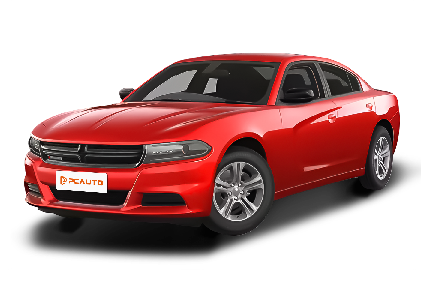
The Dodge Charger first hit the scene back in 1966, and man, did it make a statement. As a classic American muscle car, it quickly became the poster child for power and style. That first-gen model packed some serious V8 heat, like the legendary 7.0-liter Hemi, setting the bar high for what a high-performance ride should be.
Over in Malaysia, you don't see Chargers cruising around every day—they're pretty rare birds. But when you do spot one, heads turn. Its bold, in-your-face design and brute force under the hood still hook a solid group of local gearheads.
Through the years, the Charger's gone through some major evolutions. The latest model? It's like they took that classic muscle soul and injected it with 21st-century tech. We're talking advanced driver-assistance systems, more efficient powertrains—think 3.6L V6 and 5.7L V8 options—and then there's the beastly Hellcat trim, rocking a 6.2L supercharged V8 that cranks out over 700 horsepower. Insane, right?
For Malaysian car fans, the Charger isn't just a car—it's a symbol of that wild, unapologetic American muscle spirit. Yeah, the local market's mostly dominated by Japanese and European rides, but you'll catch the occasional imported Charger rolling around, especially in enthusiast circles. Whether it's a vintage classic or a modern rocket ship, the Charger's history and raw performance have cemented its spot as an icon in car culture. And let's be real—either way, it's all about that pure, unfiltered American driving thrill.
Special Disclaimer: This content is published by users and does not represent the views or position of PCauto.
Related Q&A
Q
Is the 2023 Dodge Charger GT fast?
The 2023 Dodge Charger GT performs well in terms of performance. It is equipped with a 3.6-liter V6 naturally aspirated engine, with a maximum output power of 300 horsepower and a peak torque of 264 lb-ft. Paired with an 8-speed automatic transmission, it can accelerate from 0 to 100 km/h in about 6 seconds. This is quite fast for a mid - to large - sized sedan, especially suitable for the urban roads and highway driving needs in Malaysia. Although it's not the fastest model in the Charger series (for example, the Hellcat version has stronger performance), the GT version strikes a good balance between power and fuel economy. Meanwhile, it also offers rear - wheel drive or all - wheel drive options to meet different driving preferences. If you're after stronger performance, you can consider the Charger R/T or Scat Pack versions. They are equipped with V8 engines, providing more power but also consuming more fuel. Given the hot climate in Malaysia, it is recommended to regularly maintain the engine and cooling system to ensure the vehicle stays in good condition in the long run.
 HappySep 5, 2025
Q
Are Dodge Chargers 4-door?
Yes, the Dodge Charger is a classic four - door muscle car. Since its launch in 1966, most models have adopted a four - door design. In particular, all current models (as of 2023) feature a four - door layout, which combines the performance of American muscle cars with family practicality.
For car enthusiasts in Malaysia, although the Dodge brand is relatively niche there, the Charger can still be seen through parallel imports. Its iconic HEMI V8 engine and four - door design not only provide furious acceleration but also make it suitable for family use.
It's worth noting that four - door muscle cars are relatively rare in the Southeast Asian market. These types of vehicles usually focus more on straight - line acceleration performance. Compared with the common Japanese or European four - door sedans in Malaysia, the Charger's wide - body design and rear - wheel drive layout require drivers to adapt to the local rainy - climate driving habits.
In addition, Dodge announced in 2023 that the Charger will be transformed into a pure - electric vehicle. Future versions may continue with the four - door design, but the power system will be completely overhauled. This might be an interesting option for Malaysian consumers who are concerned about environmental trends.
 DaxAug 14, 2025
Q
Are Dodge Chargers RWD or FWD?
The Dodge Charger is a classic American muscle car, primarily featuring rear-wheel drive (RWD). This design offers more powerful power output and a more engaging driving experience, making it a great fit for owners who pursue performance. In Malaysia, despite the variable road conditions and climate, rear-wheel-drive cars perform exceptionally well on dry roads. Some high-performance versions are even equipped with an all-wheel-drive (AWD) system to enhance stability on slippery surfaces. The Dodge Charger has never had a front-wheel-drive (FWD) version, which aligns with its muscle car positioning.
For Malaysian consumers considering a rear-wheel-drive model, it's important to pay attention to driving skills on rainy or slippery roads. You should control the throttle properly to avoid skidding. Meanwhile, rear-wheel-drive cars usually have a better front - rear weight distribution, offering more flexibility when cornering. However, their daily maintenance and tire wear might be slightly higher than those of front-wheel-drive cars. It's recommended to choose based on your personal driving habits and needs.
 AryAug 14, 2025
Q
Does the Dodge Charger have a 360 camera?
Yes, some high - end models of the Dodge Charger are indeed equipped with a 360 - degree panoramic camera system. This function provides a panoramic view around the vehicle through a combination of multiple cameras, which is especially useful for users in Malaysia. It allows for easier judgment of surrounding obstacles in narrow streets or crowded parking lots. Currently, the 360 - degree camera is mainly found in the Scat Pack or higher - spec versions of the Charger, but the specific configuration should be based on the configuration list provided by local dealers in Malaysia.
It's worth mentioning that the 360 - degree camera technology was initially used mainly in luxury models and has now gradually become popular in performance cars and family cars. It not only assists in parking but also provides a more comprehensive view at low speeds, reducing the risk of blind spots. Malaysian consumers should also note that these high - tech configurations may need to be optionally installed or bundled with specific packages. It is recommended to visit authorized dealers to personally experience the smoothness of the operation interface and the clarity of the images. At the same time, judge the practicality based on your own driving habits, because American muscle cars like the Charger, which are relatively wide in Malaysia, are in greater need of such auxiliary systems.
 VivAug 14, 2025
Q
Does the Dodge Charger have AWD?
The Dodge Charger does offer an all-wheel drive (AWD) version, but not all models come standard with this feature. It depends on the year and configuration. For example, the Charger GT and Charger R/T models from 2014 to 2021 could be optionally equipped with an AWD system, while high-performance versions like the Charger SRT Hellcat only offer rear-wheel drive (RWD) to maintain light weight and sporty performance. For Malaysian consumers, the AWD system can provide better traction and stability when driving on slippery roads or during the rainy season. However, it should be noted that AWD models may result in higher fuel consumption and maintenance costs.
In addition, as a representative of American muscle cars, the Dodge Charger's large-displacement V6 or V8 engines and classic design are quite niche in the local market. If you're considering a parallel import, you need to confirm whether it meets Malaysia's emission and certification standards. It is also recommended to learn about after-sales support and parts supply through official channels or authorized dealers.
 CloverPatchAug 14, 2025
Q
Does a Dodge Charger have horsepower?
Yes, the Dodge Charger does have powerful horsepower. The specific figures depend on the models of different years and configurations. For example, the latest Dodge Charger SRT Hellcat is equipped with a 6.2 - liter supercharged V8 engine, which can output up to 717 horsepower. The higher - performance Charger SRT Hellcat Redeye can even reach 797 horsepower, making it one of the rare high - performance four - door sedans in the Malaysian market. For Malaysian car enthusiasts, the Dodge Charger is not only famous for its classic American muscle car styling but also highly regarded for its powerful performance and unique rear - wheel or four - wheel drive configurations. In Malaysia, although such large - displacement models may face high import taxes and fuel costs, their excellent acceleration performance and unique driving experience still attract many performance - seeking car owners.
In addition, understanding horsepower data is important when choosing a car, but factors such as torque, gearbox tuning, and chassis settings should also be comprehensively considered, as these will all affect the actual driving experience. If you're interested in American muscle cars, you can also pay attention to other similar models like the Ford Mustang or Chevrolet Camaro. They also offer different levels of horsepower configurations to meet various driving needs.
 DaisyMeadowAug 14, 2025
Q
Does the Dodge Charger have traction control?
Yes, the Dodge Charger is indeed equipped with a Traction Control System (TCS). This feature is particularly useful in the driving environment of Malaysia. Especially on wet roads during rainy days or when making an emergency acceleration, the system will automatically monitor wheel slippage and adjust the engine output or apply braking force to ensure the vehicle remains stable. Traction control is an important part of modern automotive safety technology. Many Malaysian consumers will pay special attention to such configurations when purchasing high - performance cars like the Charger, as it can enhance driving safety.
In addition to traction control, the Charger may also be equipped with an Electronic Stability Program (ESC) and multiple driving modes to further meet the needs of different road conditions. In Malaysia's rainy climate and mixed urban road conditions, these systems can effectively reduce the risk of slippage and loss of control. It is recommended that car owners regularly check the system status to ensure normal functionality.
If you have any questions about the specific configuration of the model, you can inquire with the local authorized dealer for the latest specifications, as there may be slight differences in technical details among Chargers of different years or versions.
 HappySmileAug 14, 2025
Q
Do Dodge Chargers have lane assist?
Some models of the Dodge Charger are indeed equipped with the Lane Assist system. For example, in high - end versions like the Charger GT or R/T Scat Pack, an advanced driver assistance package is usually installed, which includes Lane Keep Assist and Lane Departure Warning functions. These systems use cameras to monitor lane markings. When the vehicle unintentionally drifts out of the lane, they provide steering wheel correction or vibration alerts. They are especially suitable for long - distance driving or on highways in Malaysia.
It should be noted that the lane assistance functions may vary among models of different years and configurations. It is recommended to carefully check the configuration list of the specific model or consult the local dealer before purchasing a car. For Malaysian consumers, this kind of driver assistance technology can effectively improve driving safety, especially in areas with frequent rain and fog. However, drivers still need to stay focused because the system is only an auxiliary tool and cannot completely replace manual operation.
If you're interested in this kind of technology, you can also learn about similar functions in models of other brands such as Toyota and Honda. They are usually named "Toyota Safety Sense" or "Honda Sensing". The principles are similar, but the operation details are slightly different.
 SilverStreamAug 14, 2025
Q
What is the safety rating of the Dodge Charger?
The safety ratings of the Dodge Charger vary depending on the specific year and configuration. The latest models have performed well in the tests conducted by the National Highway Traffic Safety Administration (NHTSA) and the Insurance Institute for Highway Safety (IIHS) in the United States. For example, the 2023 Charger received a five - star overall rating from the NHTSA, and the IIHS gave it a "Good" rating in many of its crash tests, especially excelling in the frontal offset crash and side - impact tests.
For Malaysian consumers, although there is no local official agency conducting similar tests, the Charger's US - spec safety features such as the multi - airbag system, electronic stability control, blind - spot monitoring, and automatic emergency braking can still provide a high level of safety for drivers.
It's worth noting that safety ratings are not the only thing to consider. The road conditions during actual driving, the vehicle's maintenance status, and driving habits are also equally important. It is recommended that Malaysian car owners consider their own needs when purchasing a car and also pay attention to the vehicle's active safety features, such as adaptive cruise control and lane - keeping assist. These technologies can further enhance driving safety, which is especially useful on Malaysia's complex urban and highway roads.
 LeafyBranchAug 14, 2025
Q
Is a Dodge Charger a drag car?
The Dodge Charger is indeed a model often used in drag racing. Especially its high - performance versions like the Charger SRT Hellcat, with its powerful HEMI V8 supercharged engine (capable of outputting over 700 horsepower) and an optimized rear - wheel drive system, have become a popular choice for drag racing. However, in essence, it's a high - performance muscle car that balances daily driving and track performance. It's not a pure competition vehicle specifically designed for drag racing (such as a dragster).
In Malaysia, due to the right - hand drive market restrictions, the Charger hasn't been officially introduced. But a small number of left - hand drive vehicles imported through parallel channels may appear on private tracks or in the modification circle. Local enthusiasts need to pay attention to the legal issues. If you're interested in drag racing, locally modified Japanese cars (such as the Mitsubishi Evolution or Nissan GT - R) are more common in Malaysia because there's better support for parts and tuning.
Although the Dodge Charger has high modification potential, one needs to consider the local maintenance network and fuel compatibility. It's recommended to conduct in - depth research before investing in modifications.
 EllaAug 14, 2025
Popular Cars
Model Year
Car Compare
Car Photo
Related Models
 Cars
CarsLatest Q&A
Q
Is AMT similar to automatic?
There are significant differences between AMT transmissions and automatic transmissions (AT) in terms of core structure and driving experience. AMT is essentially an electronically automated version of a manual transmission, simulating manual clutch operation and gear shifting through a computerized control system while retaining the gear set structure of manual transmissions. As a result, it offers higher transmission efficiency, with fuel consumption approximately 8%-12% lower than AT, making it particularly suitable for highway or long-distance driving. However, it may exhibit jerking similar to manual transmissions during low-speed gear shifts, especially noticeable in congested traffic conditions.
AT transmissions rely on torque converters for power transfer, delivering smooth and seamless gear shifts that appeal to comfort-oriented users. However, their complex structure (incorporating planetary gear sets, hydraulic systems, etc.) results in higher maintenance costs. A single service may cost between 800 to 1,500 ringgit, whereas AMT only requires gear oil replacement at approximately 400 ringgit.
From a market perspective, AMT is predominantly used in budget vehicles or commercial models priced below 80,000 ringgit, while AT is typically featured in mid-to-high-end vehicles. Consumers should select based on actual needs: AMT suits those prioritizing fuel efficiency and low maintenance costs, while AT better serves those valuing comfort. Notably, recent advancements in AMT electronic control technology have significantly mitigated jerking issues, though test drives should still emphasize low-speed performance evaluation.
 AriaMar 26, 2026
Q
Which is better, DCT or AT?
DCT (Dual-Clutch Transmission) and AT (Automatic Transmission) each have their own advantages and disadvantages, and the choice should be based on personal driving needs. AT transmissions transfer power through a torque converter, offering excellent shift smoothness, making them suitable for urban commuting or novice drivers. However, they tend to have higher fuel consumption, and vehicles equipped with them are usually more expensive. DCT transmissions utilize a dual-clutch structure, featuring fast shift speeds and high power transmission efficiency, which provides a more direct driving experience—particularly suitable for users seeking a sporty feel. However, they may exhibit jerking at low speeds and have relatively high maintenance costs. If durability and comfort are priorities, AT is the more reliable choice; if power responsiveness and driving pleasure are preferred, wet DCT (such as Volkswagen DSG) performs better, though dry DCT models should be avoided in prolonged stop-and-go traffic conditions. Additionally, CVT transmissions excel in smoothness and fuel efficiency, making them ideal for daily commuting, but they lack driving excitement. It is recommended to test-drive before purchasing, as tuning varies significantly across brands, and real-world experience is more important than theoretical specifications.
FlutteringMar 26, 2026Q
Is Amt good or bad?
AMT gearboxes have a significant cost advantage in the local market, typically being around 5,000 Ringgit cheaper than models equipped with conventional automatic transmissions. Their fuel efficiency is comparable to manual transmissions, resulting in long-term fuel savings. Featuring a straightforward design, they achieve transmission efficiency exceeding 90% with relatively low maintenance costs, making them ideal for practicality-oriented consumers. However, their shifting logic contains inherent limitations: gear changes between 1st and 2nd cause 0.3-0.5 second power interruptions, while unintended upshifts on inclines may reduce engine speed by 15%-20%, compromising driving smoothness. For urban commuters or budget-conscious buyers, AMT offers excellent value, though those prioritizing premium driving dynamics should consider alternative transmission types. Some domestic models like the Perodua Axia employ enhanced AMT systems, where optimized shift programming has reduced gearshift shock by approximately 30%.
 RainbowsMar 26, 2026
Q
Which gives better mileage, CVT or AMT?
From the perspective of fuel economy, CVT transmissions generally perform better under urban driving conditions. Their continuously variable design allows the engine to consistently operate within the optimal speed range, significantly reducing fuel consumption during frequent starts and stops. Test data shows that their fuel consumption in urban driving conditions is 10% to 15% lower than that of comparable models. AMT transmissions, on the other hand, inherit the high transmission efficiency of manual transmissions, delivering fuel efficiency close to manual transmissions during high-speed cruising. This makes them particularly suitable for long-distance driving in large-displacement vehicles. However, due to power interruption during gear shifts, their overall fuel consumption may be 5% to 8% higher than CVTs.
The difference in fuel-saving characteristics between the two transmissions stems from their technical principles: CVTs achieve continuous variability through steel belts and pulleys, eliminating the fixed gear ratio limitations of traditional transmissions; AMTs simulate manual gear changes via electronic control systems while maintaining the mechanical efficiency of gear transmission. Notably, actual fuel consumption is also influenced by driving habits. Smooth acceleration and anticipatory deceleration can maximize the transmissions' fuel-saving potential. If the vehicle budget permits and urban commuting is the primary use, CVTs offer a more economical choice. For frequent highway driving with an emphasis on cost-effectiveness, AMTs are equally worth considering.
 RubyBlazeMar 26, 2026
Q
Which is cheaper, AMT or CVT?
In terms of gearbox cost, AMT is usually more economical than CVT. Essentially, AMT is a manual transmission equipped with an electronic control unit, featuring a simple structure and low maintenance costs. The unit price ranges from approximately 5,000 to 8,000 ringgit, making it suitable for budget-conscious consumers or those who prioritize long-term operating costs. CVT incurs higher manufacturing costs due to its precision steel belt transmission system and continuous variable transmission technology, with a unit price of about 7,000 to 10,000 ringgit. However, it delivers a smoother driving experience and superior fuel efficiency. The primary differences between the two lie in technical complexity: AMT retains the gear-shifting mechanism, resulting in noticeable shift shock; CVT achieves linear power output through stepless speed variation but requires periodic belt inspection and incurs higher maintenance expenses. For those prioritizing initial cost and basic transportation needs, AMT offers better value; if comfort and long-term fuel economy are priorities, CVT represents a more worthwhile investment. Note that actual prices may vary based on vehicle model, brand, and local supply chain factors.
 ShadowProwlMar 26, 2026
Pros
Cons