Citroen Grand C4 SpaceTourer 2018 Review

 Share
Share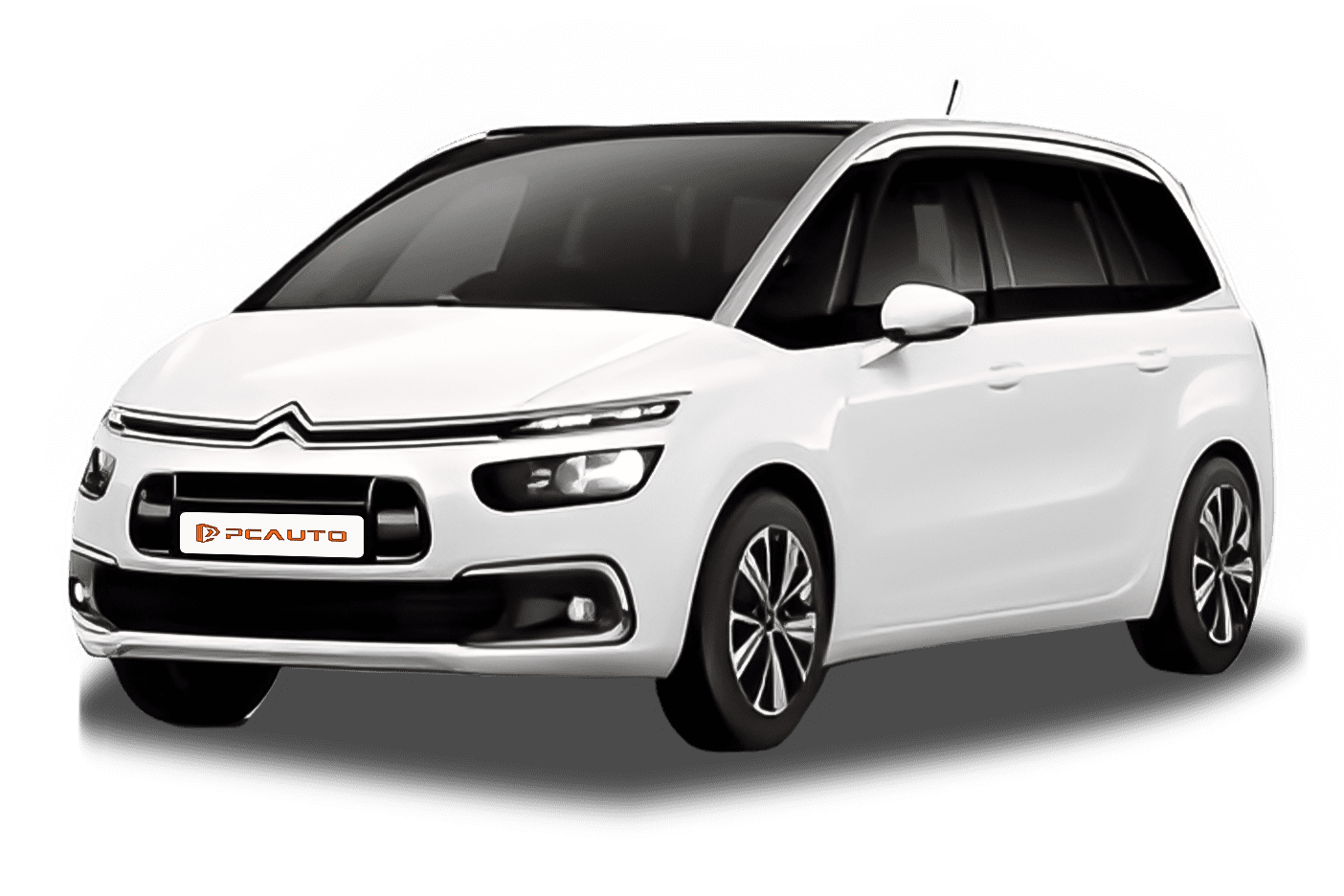
 Segment
 Body Type
 Capacity(L)
 Engine Power(PS)
 Transmission
 Driven Wheels
In recent years, the demand for 7-seater MPVs among Malaysian households has remained stable. This type of vehicle needs to cater to both the convenience of daily commuting as well as the practicality of space for multi-person outings. The 2018 Citroen Grand C4 SpaceTourer is a model that targets this specific market segment. Entering the market at a price of RM149,888, its core selling points revolve around its spacious 7-seater layout, 1.6T turbocharged engine, and practical configuration. Many consumers are curious to see whether this French MPV can stand out in a highly competitive market. The main purpose of this test drive is to comprehensively assess its spatial performance, driving quality, and configuration practicality through static experience and dynamic testing to determine if it meets the expectations of family users.
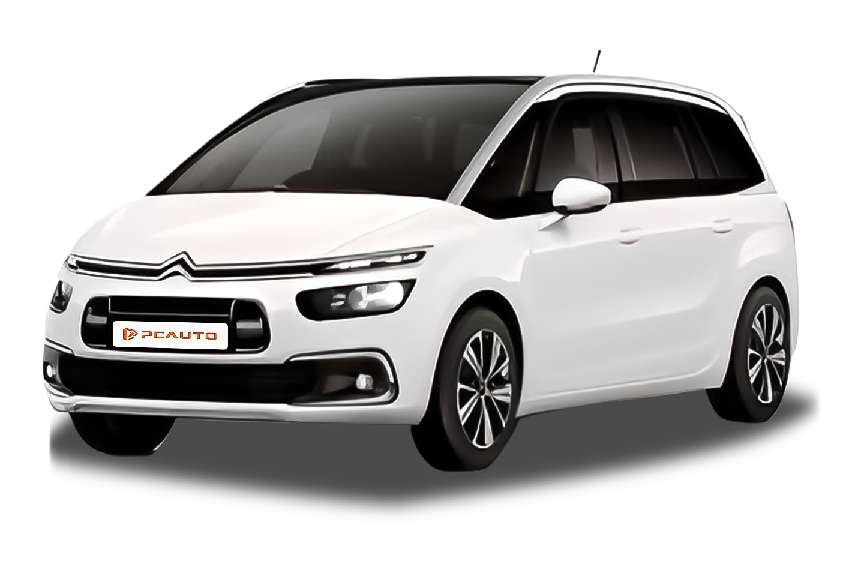
From the exterior, the Grand C4 SpaceTourer retains the family design style of Citroen. The overall lines are smooth and slightly rounded, with no overly aggressive design elements, yet it still maintains a distinct identity. At the front, the large grille is paired with chrome trim, connecting to the irregularly shaped LED headlights on both sides, visually widening the front proportions; the daytime running lights integrated into the headlights give a striking effect when lit. Along the sides of the car, the waistline runs from the front to the rear, paired with 17-inch alloy wheels (equipped on the test drive model), giving it a relatively stable appearance. The sliding door design adds convenience for rear passengers when getting in and out, which is one of the practical features of MPVs. At the rear, the L-shaped taillights also adopt LED technology, creating a visual echo with the front headlights. Meanwhile, the chrome trim below the tailgate adds a touch of refinement. The overall design is inclined towards practicality, with no excessive flashy elements.
Upon entering the interior, the cabin features a black color scheme with silver trims, offering a clean and family-oriented design aesthetic. The dashboard layout is clear, with the upper section wrapped in soft-touch materials providing a relatively pleasant tactile feel that's in line with expectations for vehicles in this price range. The center console is equipped with a 7-inch touchscreen that supports Bluetooth connectivity, Apple CarPlay, and Android Auto. The operation fluidity is moderate, and the menu layout is intuitive, with no noticeable lag during daily use. The steering wheel adopts a three-spoke design, with media control and call answering buttons on the left side, while the right side features cruise control functions. The button layout is reasonable, making it convenient for blind operation while driving. Regarding seating, the front seats are manually adjustable, with moderate cushion length and adequate backrest support, ensuring no significant discomfort during long drives. The second-row seats adopt an independent three-seat design, with the middle seatback foldable to serve as an armrest, enhancing practicality. The second-row legroom is spacious; for passengers with a height of 175cm, there are approximately two fist lengths of space between the knees and the front seats. The third-row seating, however, is relatively compact and more suitable for children or adults on short trips, as it could feel slightly cramped for long journeys. In terms of storage space, storage compartments are available on the inner sides of the front door panels, the central armrest console, and on both sides of the second-row seats. The trunk offers a capacity of approximately 165L in its 7-seater configuration, sufficient for placing two 20-inch suitcases. When the third-row seats are folded down, the capacity expands to 702L, significantly enhancing practicality.
Powertrain-wise, the Grand C4 SpaceTourer is equipped with a 1.6T turbocharged engine, delivering a maximum power of 167PS and a peak torque of 240N·m, paired with a 6-speed automatic manual gearbox, and features a front-engine, front-wheel-drive layout. During actual driving, the power response is quite active during the starting phase, with a throttle pedal that is tuned on the sensitive side, allowing decent power output with a light press. In congested urban traffic, following other vehicles is relatively easy. During acceleration, the gear shifting of the transmission is smooth without noticeable jolts. Once the speed exceeds 80 km/h, pressing the throttle deeply provides a decent power reserve. The performance during overtaking is acceptable without any significant struggle. In terms of driving modes, three options are available: Eco, Standard, and Sport. In Eco mode, throttle response becomes slightly more sluggish, making it suitable for highway cruising to reduce fuel consumption. In Sport mode, the transmission delays shifting, and the power output is more direct, making it ideal for scenarios requiring rapid acceleration.
In terms of handling and chassis performance, the steering wheel has moderate weight, minimal free play, and decent precision. It’s fairly agile during daily driving and doesn’t feel as heavy as traditional MPVs. The suspension setup consists of a front MacPherson independent suspension and a rear torsion-beam non-independent suspension, with tuning leaning toward comfort. It effectively filters vibrations from speed bumps or small road undulations in urban areas, leaving passengers with minimal sense of bumpiness in the cabin. However, when tackling larger potholes or uneven roads, the rear suspension's bouncing becomes slightly more apparent. Overall, its performance is in line with the positioning of a family MPV. At high speeds, the vehicle remains stable without noticeable free play in the steering wheel, and at speeds up to 120 km/h, it doesn’t exhibit a floating sensation.
As for fuel consumption, the test drive included both congested urban roads and highways. Under mixed driving conditions, the fuel consumption was approximately 8.2L per 100 kilometers. For a 1.6T 7-seater MPV, this fuel efficiency is average within its class and meets family users’ expectations of fuel economy. In terms of noise control, the engine noise is relatively minimal at idle, making the cabin quite quiet. At speeds below 80 km/h, wind and road noise are well-controlled and won’t affect conversations in the cabin. When the speed exceeds 100 km/h, wind noise increases slightly but remains within acceptable levels.
In conclusion, the 2018 Citroen Grand C4 SpaceTourer’s core strengths lie in its spacious interior, practical features, and smooth power output. Compared to competitors in its class, its standout features include the design of independent second-row seats and flexible storage solutions. Priced at 149,888 MYR, it offers decent value for money. However, the tight space in the third row and the rear suspension's performance on bumpy roads are areas for improvement. This model is more suited for families prioritizing practical and spacious vehicles, especially those who frequently need to carry 5-7 passengers for short trips. It can easily meet the needs of daily commuting or family outings over weekends. However, for users seeking extreme performance or luxurious features, it may not be the best choice. That said, for practical family users, its balanced performance is sufficient.
Overall, the 2018 Citroen Grand C4 SpaceTourer stands out as a practical family MPV with excellent space utilization, smooth power delivery, and moderate fuel efficiency. Its configuration is also adequate for daily use. If you are looking for an affordable, spacious 7-seater MPV, this model from France is worth considering.