Reference Only. Update Soon
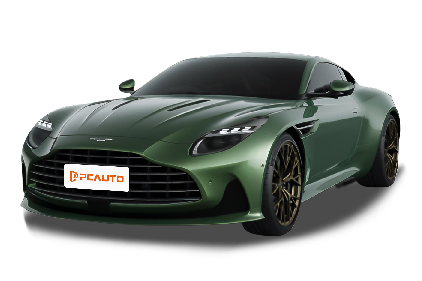
2023 Aston Martin DB12 V8
Price
RM 1,088,000
Select a Vehicle Variant
2023 Aston Martin DB12 V8 RM 1,088,000
Summary
Drivers love the 2023 Aston Martin DB12 V8, a Super Car Coupe launched in 2023. At RM 1,088,000, it’s great value. Carry 4 people easily – the roomy interior measures 4725mm long, 2060mm wide, and 1295mm tall. Ideal if you haul kids or gear but want easy city handling.
It cruises smoothly at up to 325km/h. With its 3998cc engine, you get lively acceleration without high fuel costs. For a versatile ride that’s stylish and dependable, the 2023 Aston Martin DB12 V8 ticks every box.
It cruises smoothly at up to 325km/h. With its 3998cc engine, you get lively acceleration without high fuel costs. For a versatile ride that’s stylish and dependable, the 2023 Aston Martin DB12 V8 ticks every box.
Core Specs

Segment
Super Car

Engine Capacity(cc)
3998

Transmission
AT

Fuel Comsumption (L/100km)
12.2

Fuel Tank(litres)
78

Top Speed(km/h)
325

Seats
4

Length(mm)
4725

Width(mm)
2060

Height(mm)
1295

Wheelbase(mm)
2805

Boot Volume(L)
-
Related Q&A
View More >Q
What is the difference between A-Class and CLA?
The A-Class is Mercedes-Benz's entry-level compact sedan, focusing on fuel efficiency for daily urban commutes, featuring a compact body and a young, stylish design. In contrast, the CLA is a compact four-door coupe that blends the practicality of a sedan with sporty aesthetics, showcasing a more dynamic and distinctive look with flowing exterior lines.
In terms of dimensions, the CLA is typically slightly longer than the A-Class, giving it a more elongated overall proportion. Under the hood, the A-Class offers engine options such as the 1.3-liter turbocharged engine and the 2.0-liter turbocharged engine. The CLA also comes with a variety of powertrain configurations, and some high-performance versions provide a more exhilarating driving experience.
When it comes to features, both models boast Mercedes-Benz's signature luxury and technological offerings; however, the CLA, being a coupe variant, may include more advanced sporty options in higher-end trims. Price-wise, the CLA is generally positioned slightly higher than the equivalent A-Class models due to its positioning and feature set.
In summary, the A-Class is ideal for those seeking practicality and an entry-level brand experience, while the CLA appeals to consumers who prioritize unique styling and good power performance.
 WrenMay 14, 2025
Q
What is the Mainentance Cost of Haval H6? Get Idea Here
The maintenance cost of the Haval H6 in Malaysia is relatively reasonable. According to the official recommended maintenance cycle and items, the cost of routine maintenance such as oil change and filter replacement is approximately between RM300 and RM500, specifically depending on the type of oil used and the pricing of the service center. For major maintenance like replacing brake fluid and transmission oil, the cost may reach RM800 to RM1,200. However, this type of maintenance is usually required only once every 2 to 3 years or after a certain number of kilometers.
The maintenance cycle of the Haval H6 is generally once every 10,000 kilometers or 6 months, which is similar to many SUVs in the same class. This helps car owners better plan their long - term vehicle usage costs. Additionally, Haval's after - sales service network in Malaysia is gradually improving. Many authorized service centers offer transparent price lists and warranty services, further reducing the concerns of car owners.
For Malaysian consumers, choosing the Haval H6 not only allows them to enjoy high-value configurations but also the maintenance cost is at a medium level among mainstream SUVs. It is suitable for users who focus on practicality and long - term ownership costs. If car owners want to further control the expenses, they can also pay attention to the maintenance packages or promotional activities launched by the official, which usually offer additional discounts or free inspection services.
 JopJul 14, 2025
Q
Does the 2019 Maserati Ghibli have a Ferrari engine?
In 2019, the Maserati Ghibli didn't directly use a Ferrari engine. However, the 3.0-liter V6 twin-turbocharged engine it was equipped with did have a technical connection with Ferrari. This engine was jointly developed by Maserati and Ferrari and produced at the Maranello factory. Some of its technologies borrowed from Ferrari's engine design concepts, such as direct fuel injection and the turbocharging system. But the overall tuning was more in line with Maserati's luxury GT style.
For consumers in Malaysia, the Ghibli's power performance is quite excellent. Its maximum power can reach 350 to 430 horsepower. Paired with an 8-speed ZF gearbox, it can balance daily driving and sporty performance. Meanwhile, in Malaysia's hot climate, it is recommended to regularly check the cooling system to ensure the stability of the turbocharged engine.
It's worth noting that although Maserati relied on Ferrari for engine technology for a long time, the brand has gradually shifted towards in - house research and development. For example, the new Neptune series of engines adopt a completely different design concept, which reflects Maserati's continuous evolution in the field of power technology.
 LavenderFieldSep 1, 2025
Q
What engine is in the 2025 Mercedes-AMG GT?
The 2025 Mercedes - AMG GT is expected to continue to be equipped with high - performance engines from the AMG series. Specifically, it may offer two powertrain configurations, including a 4.0 - liter V8 twin - turbocharged engine and a 3.0 - liter inline - six turbocharged hybrid system. The maximum power of the V8 version may exceed 600 horsepower, while the hybrid version strikes a balance between performance and fuel economy, meeting the Malaysian market's demand for both high - performance and environmental friendliness.
As a high - performance sports car under Mercedes - Benz, the engine technology of the AMG GT continues the AMG tradition of "one man, one engine". Each engine is hand - assembled by a dedicated engineer to ensure excellent quality and uniqueness. For Malaysian car enthusiasts, this car not only has strong power performance but also is equipped with advanced chassis tuning and aerodynamic design, which can adapt to the diverse local road conditions, such as urban congestion and high - speed cruising.
In addition, the driving mode selection system of the AMG GT allows the owner to switch between comfort, sport or track modes according to their needs, further enhancing the driving pleasure. If you are interested in this car, it is recommended to follow the specific configuration and price information officially released by Mercedes - Benz in Malaysia.
 WriterzzSep 17, 2025
Q
What engine is in the Proton X50 2025?
The 2025 Proton X50 gets a brand-new 1.5-liter four-cylinder turbocharged engine. Displacing 1499cc, this powerplant cranks out 181 horsepower and a maximum output of 133 kW at 5500 rpm, while serving up a healthy 290 Nm of peak torque between 2000 and 3500 rpm. Compared to the previous model, this new powertrain should deliver punchier performance and a smoother, more refined driving experience, all while cutting down on engine vibration and noise. Unlike some earlier Proton X50 variants that came with a three-cylinder engine, the 2025 model's four-cylinder setup is likely to better meet consumer expectations when it comes to engine performance and overall refinement.
 SwimmerOct 20, 2025
Q
Is Bezza safe?
The Perodua Bezza, one of Malaysia's best-selling entry-level sedans, delivers safety features that are pretty much par for the course in its price bracket. The base models come with dual airbags, ABS with EBD, while the higher trims step things up with active safety kit like VSC (Vehicle Stability Control) and TRC (Traction Control). It scored a 4-star rating in ASEAN NCAP crash tests, which means the body structure offers decent protection in a collision.
Now, it's worth keeping in mind that the Bezza is a lighter car with a front-wheel-drive layout. That can make it feel a bit less planted than more premium models at higher speeds or on slippery roads, so keeping a sensible speed and leaving a good safety gap is always a smart move.
For budget-conscious buyers, the Bezza's safety package covers the basics for city driving just fine. But if you want a bit more peace of mind, adding extras like rear parking sensors or a dashcam wouldn't hurt. And with Malaysia's rainy weather, don't sleep on tire maintenance—regularly checking tread depth and pressure goes a long way in keeping you safe. After all, even the best safety systems rely on good tire grip to work properly.
 DragonFangOct 23, 2025
Q
What countries sell Hyundai Staria?
The Hyundai Staria is a versatile MPV that's currently making waves in markets worldwide, including its home turf of South Korea, Australia, Singapore, Thailand, Vietnam, the Middle East, and select European countries. What really sets this people-mover apart is its head-turning exterior design paired with a cavernous interior – a combo that's winning over both family buyers and business users alike. While Malaysia hasn't officially welcomed the Staria yet, given the strong demand for MPVs across Southeast Asia, we might just see it hit local shores in the future. Under the hood, the Staria offers a solid choice of powertrains: a 2.2-liter diesel for those who prioritize torque, and a 3.5-liter gasoline engine for smoother performance. It also comes loaded with Hyundai's SmartSense safety suite, so you're covered on both security and comfort fronts. For Malaysian consumers keeping an eye on this model, your best bet is to stay tuned to Hyundai's regional updates. Alternatively, parallel import could be an option, but just a heads-up – after-sales service and warranty coverage might differ from official channels, so do your homework first.
 OlaOct 22, 2025
Q
Does tire pressure affect gas mileage?
Tire pressure does have a significant impact on fuel economy, and proper tire pressure can effectively reduce fuel consumption. When tire pressure is maintained within the standard range of 2.2 to 2.6 bar, the rolling resistance of the tires and the friction with the ground reach an optimal balance, resulting in the best fuel efficiency. If the tire pressure is 10% below the recommended value, fuel consumption may increase by approximately 2%. For example, when the standard tire pressure of 2.2 bar drops to 2.0 bar, fuel consumption rises by 2%, and when it drops as low as 1.4 bar, the increase in fuel consumption can reach 8%. Insufficient tire pressure causes increased tire deformation, enlarges the contact area with the ground, raises rolling resistance, while also accelerating shoulder wear and shortening tire lifespan. Conversely, although excessively high tire pressure theoretically reduces resistance, it decreases grip, increases the risk of tire blowouts, and leads to abnormal wear in the center of the tread. It is recommended to adjust the tire pressure according to the value specified in the vehicle manual (usually located on the door frame or fuel tank cap) and in combination with seasonal variations: set it to the lower limit of the recommended value (e.g., 2.3 bar) in summer, adjust it to the upper limit (e.g., 2.5 bar) in winter, and increase it by an additional 0.1 to 0.2 bar when the vehicle is fully loaded. Check the tire pressure at least once a month when the tires are cold, ensuring that all four tires maintain consistent pressure. This practice not only saves approximately 3.3% in fuel costs but also ensures driving safety and tire durability.
 MoonlightNightCalmJan 29, 2026
Q
What makes car seats comfortable?
The comfort of a car seat mainly depends on three aspects: ergonomic design, material selection, and functional configuration. High-quality seats feature a shape that conforms to the human body's curves, providing support for the waist, back, and neck to reduce fatigue during prolonged driving. Common materials include breathable fabrics, soft genuine leather, or cost-effective synthetic leather, each offering distinct characteristics in terms of tactile feel, durability, and ease of cleaning. Functionally, multi-directional power adjustment (including fore/aft, height, backrest angle, and lumbar support) accommodates different body types. Premium models are further equipped with memory, heating, ventilation, and even massage functions, while the seat's internal shock-absorbing structure effectively dampens road vibrations. Notably, seat comfort should be evaluated in conjunction with the suspension system. Vehicles with independent or active suspension systems can significantly improve the overall riding experience. A comprehensive evaluation of support and fit through at least a 30-minute test drive is recommended when purchasing a vehicle.
 PetalSoftFeb 12, 2026
Q
Is it expensive to replace a car bumper?
The cost of replacing a car bumper varies depending on the vehicle model, parts source, and repair channel. For ordinary family cars (models priced below 250,000 MYR), the total cost of an original equipment manufacturer (OEM) bumper typically ranges from 1,500 to 4,000 MYR (including painting and labor), while aftermarket parts cost approximately 600 to 2,500 MYR. For instance, replacing a Nissan Teana's bumper at a 4S dealership costs around 2,300 MYR. For luxury models such as the Audi A6L, the OEM front bumper costs about 3,500-4,000 MYR, and the rear bumper 4,500-5,000 MYR. High-end SUVs like the BMW X3 may incur costs as high as 8,000-15,000 MYR, primarily due to advanced materials and integrated technologies. Price variations also stem from paint type (standard paint costs 300-600 MYR, whereas metallic paint is pricier) and additional components (radars and cameras may add 20%-50% to the cost). It is advisable to prioritize 4S dealerships or certified repair shops to ensure quality. If repair expenses exceed the subsequent year's premium increase (approximately 10%-15% of the premium), filing an insurance claim may be considered. Minor damage can be addressed with touch-up paint (300-600 MYR), but extensive cracks necessitate replacement. Ultimately, comparing prices judiciously while balancing quality and cost is crucial.
 ToughFighterMar 24, 2026
Popular Cars
Model Year
Car Compare
Car Photo
Model List
Aston Martin DB12 is a Grand Tourer Coupe car launched by Aston Martin. PCauto has cataloged various variants of this car produced from 2023 to 2023.You can compare differences in detail at the parameter table.
Among the 1 variants of Aston Martin DB12, prices range from the affordable RM 1,088,000 to the most expensive RM 1,088,000.You can find different horsepower versions ranging from 680PS to 680PS.
Aston Martin DB12 offers 4.0T engines and AT transmission. Check the spec sheet for more details.
1 Model on Sale
2023