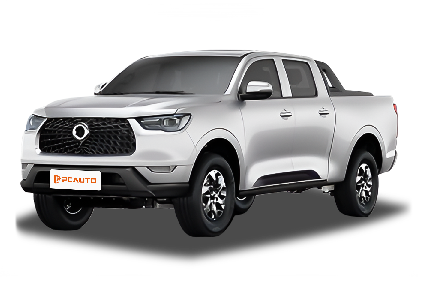
Reference Only. Update Soon
GWM Cannon Upcoming Version
Price
TBC
Select a Vehicle Variant
GWM Cannon Upcoming Version TBC
Summary
The GWM Cannon Upcoming Version, launched in (2021, is a smart-choice - Pickup priced from TBC. Fits 5 passengers with generous cabin space – check the dimensions: -mm L, -mm W, -mm H. Perfect if you need a family car that parks easily.
Enjoy stress-free highway driving thanks to its -km/h top speed. Its -cc engine balances pep and efficiency. For a reliable daily driver that doesn’t break the bank, the GWM Cannon Upcoming Version delivers style, space, and sensible performance.
Enjoy stress-free highway driving thanks to its -km/h top speed. Its -cc engine balances pep and efficiency. For a reliable daily driver that doesn’t break the bank, the GWM Cannon Upcoming Version delivers style, space, and sensible performance.
Core Specs

Segment
-

Engine Capacity(cc)
-

Transmission
AT

Fuel Comsumption (L/100km)
9.4

Fuel Tank(litres)
-

Top Speed(km/h)
-

Seats
5

Length(mm)
-

Width(mm)
-

Height(mm)
-

Wheelbase(mm)
-

Boot Volume(L)
-
Related Q&A
View More >Q
how long to charge tesla model 3
The charging time for the Tesla Model 3 depends on the charging method used and the battery capacity. When plugging into a common household socket in Malaysia (240V, single-phase), you'll get roughly 15 kilometers of range per hour, meaning a full charge from empty could take around 24 to 36 hours. Step up to a Wall Connector (11kW), though, and that time drops significantly to 6 to 8 hours. For the quickest fix, Tesla's Supercharger V3 (250kW) can take you from 20% to 80% in about 30 minutes – perfect for a quick top-up on the go.
Malaysia's climate is pretty hot, so here's a pro tip: try to avoid fast charging during the peak heat of the day to help preserve your battery's long-term health. On the flip side, Tesla's battery management system is pretty smart – it'll automatically adjust the charging rate to keep things safe, even when it's sweltering outside.
Local owners should also check out MyTNB's EV-specific electricity plans. They often offer discounted rates for overnight charging, which can save you some cash. Just keep in mind, real-world charging speeds can vary based on things like grid stability, how hot or cold it is outside, and even the current state of your battery. It's a good idea to keep your car's software updated too – Tesla regularly rolls out tweaks that can help optimize charging performance.
The good news is, Malaysia's government is pushing hard to expand the charging network. More stations are popping up all the time, so topping up your Model 3 is only going to get easier in the coming years.
 ArtistSep 28, 2025
Q
How many tons is Toyota Vios?
The Toyota Vios, a hot pick in Malaysia's budget-friendly sedan scene, tips the scales at a curb weight ranging roughly between 1.1 to 1.2 tonnes, depending on the year and trim. For instance, the 2023 1.5G variant comes in at around 1,130 kg, while the 1.5E is slightly lighter at about 1,105 kg. Keep in mind, these numbers can vary a touch based on specific configurations.
Malaysian drivers should note that a car's weight plays into both fuel economy and handling. A lighter body generally translates to better fuel efficiency, though it might not feel as planted as a heavier car at higher speeds. The Vios, built on Toyota's TNGA-B platform, strikes a decent balance between keeping weight down and maintaining body rigidity. Pair that with its 1.5L Dual VVT-i engine, and you've got a car that tries to give you both adequate pep and reasonable fuel consumption.
If you're in the market for one, your best bet is to check the Vehicle Ownership Certificate (VOC) or hit up your local dealer for the exact specs. Also, remember that road tax calculations in Malaysia can be linked to a car's weight, so that's something to factor in. On top of that, being mindful of how much you load up your Vios – avoiding constant overloading, for example – can help keep the suspension in good shape and ensure you're getting the best possible mileage.
 CuriousMindInvestigatorOct 13, 2025
Q
What is the Tyre Brand of Chery Tiggo 7 Pro?
The tire brands originally equipped on the Chery Tiggo 7 Pro in the Malaysian market may vary depending on the vehicle configuration or production year. Common tire brands include well - known international ones such as Continental, Goodyear, or Michelin. The specific details should be based on the specifications provided by local dealers.
As the only part of the vehicle that comes into contact with the road surface, tires are crucial for safety, handling, and comfort. It is recommended that car owners regularly check tire pressure (at least once a month) and tread depth (the legal minimum is 1.6 millimeters). They should pay more attention to the drainage performance during the rainy season.
If tire replacement is needed, in addition to the brands recommended by the manufacturer, cost - effective options like Bridgestone or the locally popular Silverstone can also be considered. However, it is necessary to ensure that the tire specifications (e.g., 215/55 R18) and load indices are consistent with the original ones.
In Malaysia's rainy climate, choosing tires with strong wet - grip performance (with AA or A - grade wet - road markings) can significantly improve driving safety. At the same time, avoid mixing tires of different brands or tread patterns, as this may affect the vehicle's dynamic stability.
 PetalSoftJul 21, 2025
Q
How many km per liter is a Mazda CX-9?
According to official data, the fuel economy of the Mazda CX 9 is roughly between 10 and 12 kilometers per liter of gasoline. The exact figure depends on driving conditions, road conditions, and vehicle configuration. For instance, the fuel consumption of the 2.5-liter turbocharged engine paired with a four-wheel-drive system is slightly higher than that of the front-wheel-drive version. In Malaysia, heavy traffic in the city may lead to higher fuel consumption, while driving on the highway can get closer to the ideal figure. Mazda's Skyactiv technology enhances fuel economy by optimizing engine efficiency and lightening the vehicle body, while maintaining power output. For consumers who are concerned about fuel consumption, it is recommended to regularly maintain tire pressure and engine condition and avoid aggressive driving. These habits can significantly affect the actual fuel-consumption performance. When compared with other SUVs in the same class, the CX-9's fuel consumption is at a medium level, but its handling and interior quality are still outstanding advantages, making it suitable for family users who pursue a great driving experience.
 HypnoticGlowAug 18, 2025
Q
How long does 2017 brz last?
The 2017 Subaru BRZ, when properly maintained and driven normally, can typically clock in 200,000 to 300,000 kilometers or even more. Its actual lifespan really hinges on how you drive it, how regularly you service it, and let's not forget Malaysia's unique road conditions and climate. Under the hood, you've got that FA20 2.0L flat-four engine, famous for its high-revving nature and solid reliability. But, to keep that engine purring smoothly for the long haul, it's smart to stick to regular oil changes, swap out spark plugs when needed, and don't overlook the timing chain – those are all crucial bits.
Here in Malaysia, with our hot and rainy weather, a couple of things need extra attention. Rust prevention is a big one, and keeping the cooling system in top shape is non-negotiable to avoid moisture and extreme heat taking a toll on the bodywork and electronics. Now, the BRZ's rear-wheel drive setup and lightweight body are what make it such a blast to drive, offering sharp handling. But, that sporty character does mean tires and suspension parts might wear a bit faster than your average family sedan. So, checking the suspension components every 50,000 kilometers is a good idea.
If you're planning on holding onto your BRZ for the long term, investing in original equipment or high-quality replacement parts and strictly following the official maintenance schedule will go a long way in extending its service life. As a sports car focused on driving enjoyment, the BRZ holds up well in terms of durability compared to its peers, making it a solid pick for Malaysian drivers who love getting behind the wheel.
 RexOct 21, 2025
Q
What is the most crashed car in 2024?
Looking at global and local Malaysian traffic accident stats for 2024, it's clear that higher collision rates tend to cluster around certain popular economy cars and SUVs. These models typically have huge market penetration and are often the first choice for new drivers or daily commuters, which partly explains their elevated accident numbers. But to get the real rankings, you'd need to dive into the annual reports from Malaysia's Road Transport Department (JPJ) or crunch insurance claim data.
Here in Malaysia, tricky road conditions – think city gridlock and those twisty suburban backroads – plus driving habits like the constant mix of motorcycles, all play into accident rates. My advice? No matter what you drive, prioritize those active safety features. Things like Autonomous Emergency Braking (AEB) and Electronic Stability Control (ESC) aren't just buzzwords; they're genuinely useful. And don't sleep on basics like regular tire checks and brake system maintenance.
Important to remember: a car's safety isn't just about accident stats. The ASEAN NCAP crash test ratings are a key reference point too. Take some locally-assembled (CKD) models, for example – they’re easy on the wallet, but many now offer solid protection thanks to smart structural tweaks. For a deeper dive into how specific models stack up, check out the latest safety tech upgrades from homegrown brands like Proton and Perodua. Or head over to the Malaysian Institute of Road Safety Research (MIROS) website – they’ve got plenty of publicly available info worth exploring.
 ShadowReaperOct 23, 2025
Q
How much is a 2014 Suzuki Alto?
If you're scouring Malaysia's used car market for a 2014 Suzuki Alto, you'll typically find prices hovering between RM15,000 and RM25,000. Of course, where exactly it lands in that range depends on the usual suspects: overall condition, mileage, service history, and trim level.
What really makes this little hatchback stand out is its wallet-friendly nature and impressive fuel sipping. It's a absolute gem for city commuting. Under the hood, you've got a peppy 1.0-liter three-cylinder engine that delivers smooth, predictable power while keeping those trips to the pump few and far between – we're talking around 5 liters per 100 km on average.
Running costs are easy on the budget too. Parts are readily available and affordable, which is no surprise given how many Altos are on Malaysian roads. That also means you've got a decent selection of used models to pick from. A pro tip though: always dig into the vehicle's history and give the mechanicals a thorough once-over before handing over cash. Splurging on a professional inspection to ensure everything's in good nick is never a bad idea.
On top of all that, its compact dimensions make weaving through city traffic and squeezing into tight parking spots a total breeze. All in all, it's a solid, value-for-money choice for anyone after an affordable entry-level runabout.
 DaisyMeadowOct 23, 2025
Q
Is the 2019 Yaris easy to park?
The 2019 Toyota Yaris is a solid pick for city driving in Malaysia. Its compact size and nimble handling make parking a breeze—at under 4 meters long with a tight turning radius, it weaves through tight parking lots and congested streets without breaking a sweat. Owners often praise the good visibility, and when paired with the mirrors and reverse sensors (some higher trims might even get a reverse camera), it’s a total lifesaver for parking, especially if you’re new to driving.
Think about it: if you’re regularly navigating cities like KL, a small car like the Yaris takes a lot of the stress out of parking. Malaysia’s older urban areas are full of those tiny, cramped parking spots, and a shorter car definitely has an easier time squeezing into them. Plus, the electric power steering makes the wheel feel super light when you’re inching around at low speeds.
But here’s the thing—while small cars rock for parking, they might not feel as planted as bigger vehicles when you’re cruising at highway speeds. So, just make sure to factor in your own driving style and what you really need before deciding.
 GoalGetterAchieverOct 27, 2025
Q
What happens if I don't put my parking brake on?
Parking without engaging the handbrake can cause your vehicle to roll due to road gradients or external forces, especially on slopes. Minor incidents may include scratches or collisions with surrounding objects, while more severe cases could lead to serious accidents endangering pedestrians and other vehicles. Additionally, consistently not using the handbrake can put extra strain on the transmission—particularly for automatic cars in Park (P) mode, where the transmission's locking mechanism bears the force of the rolling vehicle, potentially shortening its lifespan over time. It’s advisable to make using the handbrake a habit when parking, especially on slopes or uneven surfaces. You can also turn the wheels toward the curb as an added precaution. For vehicles with electronic parking brakes, they often activate automatically when shifted into P, but manually confirming is safer. Regularly checking the condition of the handbrake cables and brake pads is crucial too, to prevent insufficient braking force caused by wear and tear. If your car has a keyless start system, after turning off the engine, double-check that the handbrake is engaged—some models automatically apply the electronic parking brake when the engine stops, but it’s better to be sure.
 HelperHandJan 22, 2026
Q
What happens to EV after 5 years?
Electric vehicles can still function normally after five years of use, but battery performance will degrade to varying degrees depending on the type and usage conditions. Taking mainstream lithium batteries as an example, the capacity of ternary lithium batteries may decrease by 10%-30% after five years, while lithium iron phosphate batteries typically exhibit less degradation due to their longer cycle life (theoretical lifespan of 7-8 years). In daily commuting scenarios, even if the range drops from 500 kilometers to 350 kilometers, it can still meet most short-distance travel needs. Battery lifespan is significantly affected by charging habits. It is recommended to avoid charging when the battery level falls below 20%, minimize fast charging frequency, and ideally operate the vehicle in an environment around 20°C to prolong battery life. Manufacturers usually offer an 8-year or 150,000-kilometer battery warranty. If the battery health drops below 70% within five years, warranty replacement can be requested. The lifespan of core components such as motors generally exceeds 10 years, with regular inspections of the electronic control system and cooling devices being crucial. In the used car market, five-year-old electric vehicles typically retain about 40%-60% of their original value, depending on brand, battery health, and maintenance records. With proper use and regular maintenance, electric vehicles can reliably remain in service for over 8 years.
 YayJan 26, 2026
Popular Cars
Model Year
Car Compare
Car Photo
Model List
GWM Cannon is a Light Duty Pickup car launched by GWM. PCauto has cataloged various variants of this car produced from - to -.You can compare differences in detail at the parameter table.
Among the 0 variants of GWM Cannon, prices range from the affordable TBC to the most expensive TBC.You can find different horsepower versions ranging from - to -.
GWM Cannon offers - engines and - transmission. Check the spec sheet for more details.
0 Model on Sale
2021