Reference Only. Update Soon
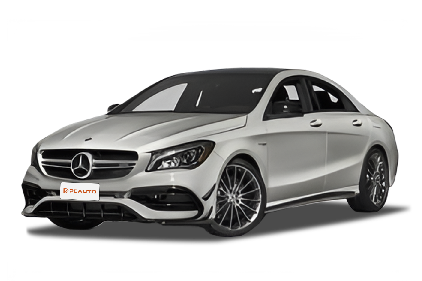
2023 Mercedes-Benz AMG CLA 45 S 4MATIC
Price
RM 527,888
Select a Vehicle Variant
2023 Mercedes-Benz AMG CLA 45 S 4MATIC RM 527,888
Summary
The 2023 Mercedes-Benz AMG CLA 45 S 4MATIC, launched in (2023, is a smart-choice C-Segment Sedan priced from RM 527,888. Fits 5 passengers with generous cabin space – check the dimensions: 4701mm L, 1999mm W, 1413mm H. Perfect if you need a family car that parks easily.
Enjoy stress-free highway driving thanks to its 270km/h top speed. Its 1991cc engine balances pep and efficiency. For a reliable daily driver that doesn’t break the bank, the 2023 Mercedes-Benz AMG CLA 45 S 4MATIC delivers style, space, and sensible performance.
Enjoy stress-free highway driving thanks to its 270km/h top speed. Its 1991cc engine balances pep and efficiency. For a reliable daily driver that doesn’t break the bank, the 2023 Mercedes-Benz AMG CLA 45 S 4MATIC delivers style, space, and sensible performance.
Core Specs

Segment
C-Segment

Engine Capacity(cc)
1991

Transmission
DCT

Fuel Comsumption (L/100km)
8.1

Fuel Tank(litres)
51

Top Speed(km/h)
270

Seats
5

Length(mm)
4701

Width(mm)
1999

Height(mm)
1413

Wheelbase(mm)
2729

Boot Volume(L)
460
Other Variants
Price
RM 527,888
Body
4701×1999×1413
Engine Power(PS)
421
Engine Torque(Nm)
500
TRANSMISSION
DCT
Fuel Consumption
8.1
Related Q&A
View More >Q
How much should car battery replacement cost?
The cost of car battery replacement typically ranges from 200 to 2000 Malaysian Ringgit, depending on the battery type, brand, capacity, and replacement channel. Lead-acid batteries used in conventional fuel vehicles are more economical. For mainstream brands such as Camel and Varta, 45-65 Ah batteries cost approximately 300-500 Malaysian Ringgit, while maintenance-free models cost around 500-700 Malaysian Ringgit. In contrast, AGM or EFB batteries designed for start-stop systems require higher technical specifications, resulting in prices ranging from 1000-2000 Malaysian Ringgit.
The replacement cost for lithium batteries in new energy vehicles is substantially higher. A 40kWh battery costs between 34,000 and 44,000 Malaysian Ringgit, with large-capacity models potentially exceeding 90,000 Malaysian Ringgit. However, most new energy vehicle manufacturers offer an 8-year or 120,000-kilometer warranty that covers battery degradation issues.
Regarding replacement channels, 4S dealerships generally charge 100-200 Malaysian Ringgit more than independent repair shops due to their provision of genuine parts and professional services. It is advisable for vehicle owners to select authorized service channels based on their vehicle requirements and to perform regular maintenance to prolong battery life—such as avoiding frequent short-distance trips and periodically inspecting electrode conditions.
 AvaFeb 13, 2026
Q
What is level 1, 2, 3, 4, 5 autonomous driving?
Autonomous driving technology is divided into five levels, L1 to L5, according to international standards, with each level representing a different degree of automation and responsibility allocation. L1 level is basic assisted driving, which can only perform a single function such as cruise control, and the driver needs to fully control the steering wheel and brakes. L2 level can achieve combined control, such as managing steering and acceleration/deceleration simultaneously, but the driver still needs to monitor road conditions in real-time. Level 3 is conditional autonomous driving, where the system can fully take over driving in specific scenarios, but the driver needs to intervene promptly when requested by the system. L4 level belongs to highly autonomous driving, which does not require manual intervention within limited areas, such as enclosed parks or fixed routes. Level 5 is fully autonomous driving, with vehicles that do not require a steering wheel and can adapt to all roads and environments. At present, most car models on the market only reach L2 level, L3 level technology is gradually being commercialized, while L4 and L5 levels are still in the testing or limited scenario application stage. It should be noted that driving responsibilities at L2 and below levels are always borne by the driver, while at L3 and above levels, responsibility allocation may involve the manufacturer or system supplier. The evolution of autonomous driving technology needs to balance safety, regulatory improvement, and infrastructure support. At present, consumers should rationally view manufacturer promotions and avoid excessive reliance on assisted driving functions in complex road conditions.
 GracefulFeb 5, 2026
Q
What is the life expectancy of a Mazda MX-30?
As an electric SUV that emphasizes environmental protection concepts, the expected lifespan of the Mazda MX-30 mainly depends on the service life of the battery pack and daily maintenance. Generally speaking, the lifespan of an electric vehicle battery pack ranges from 8 to 15 years, specifically depending on charging habits and environmental factors. The lithium-ion battery technology adopted by Mazda is relatively mature and can maintain relatively stable performance under normal use. In the hot and humid climate of Malaysia, it is recommended that car owners avoid frequent fast charging and long-term full-charge storage to extend the battery life. At the same time, it is also very important to regularly conduct battery health checks at an authorized service center.
In addition to the battery system, the overall manufacturing quality of the MX-30 continues Mazda's consistent high - precision standards. The anti-rust treatment of the vehicle body and the durability of parts have all undergone strict tests and can adapt to local road conditions. As long as regular maintenance is carried out according to the maintenance manual, including routine items such as replacing brake fluid and coolant, the overall service life of the vehicle can reach more than 10 years.
For Malaysian consumers considering purchasing an electric vehicle, they also need to pay attention to the coverage of local charging infrastructure. Although the MX-30's cruising range is suitable for urban commuting, long-distance travel may require planning charging stations in advance. Mazda's dealer network in Malaysia can also provide professional technical support and spare parts supply for car owners, further ensuring the service life of the vehicle.
 HappyDuckAug 18, 2025
Q
How long will a 2022 Land Cruiser last?
The 2022 Land Cruiser is renowned for its exceptional durability and reliability. Here in Malaysia, with its diverse road conditions, it can easily clock over 300,000 kilometers and often last more than 15 years with regular servicing and maintenance. It’s built on Toyota’s time-tested chassis tech and features an efficient engine design, which really shine when tackling Malaysia’s tropical climate and tricky terrain. The tough body structure and high-quality parts also play a big role in extending its lifespan. To keep your Land Cruiser in top shape for the long haul, stick strictly to the maintenance manual—regular oil changes, cooling system checks, and chassis component inspections are a must. And using genuine parts definitely helps maintain its performance. The Land Cruiser has always held strong resale value in the Malaysian market, which just goes to show how reliable it is over time. If you’re someone who drives long distances often or needs to handle rough roads, this is one trusty ride you can count on.
 LeafyTrailBlazerNov 5, 2025
Q
How much horsepower does a 2020 LX 570 have?
The 2020 Lexus LX 570 is equipped with a 5.7 - liter V8 naturally aspirated engine. It has a maximum horsepower of 383 hp and a peak torque of 403 lb - ft (approximately 546 N·m). It is paired with an 8 - speed automatic transmission, offering strong power performance and excellent off - road capabilities. This vehicle is quite popular in the Malaysian market. It is especially suitable for the local complex road conditions and long - distance driving needs. Its power system has been optimized, capable of handling both urban commuting and easily conquering wild terrains.
The Lexus LX 570 is also equipped with an advanced four - wheel drive system and multiple driving modes, which further enhance its maneuverability and adaptability. For Malaysian consumers, this car not only has abundant power but is also well - known for its reliability and luxurious configurations. It is a popular choice among high - end SUVs.
The advantage of the naturally aspirated engine lies in its linear power output and durability. Although it consumes slightly more fuel compared to turbocharged engines, its maintenance cost is relatively low, making it a good fit for owners who focus on long - term use.
 DriverSep 2, 2025
Q
honda city full tank how many km
The Honda City's full - tank range mainly depends on the specific model's fuel tank capacity and real - world fuel consumption. Take the popular 1.5L i - VTEC variant in Malaysia as an example. With its 40 - liter tank and the official combined fuel consumption figure of 5.4L/100km -- though in real - world driving you're looking at around 6 - 7L/100km -- the theoretical range can reach 600 - 740 kilometers. But the actual distance you'll cover can vary quite a bit based on driving habits, road conditions, and how much you're carrying. For instance, stuck in heavy city traffic, you might only get around 500 kilometers, while cruising steadily on the highway could see you push past 700 kilometers.
It's worth mentioning that the fifth - gen City's Earth Dreams technology effectively optimizes fuel efficiency. Owners can achieve even better fuel economy by keeping up with regular maintenance -- think replacing air filters and maintaining proper tire pressure. Also, using the MyHonda App to log refueling data is a smart way to understand your real - world range. Rivals like the Toyota Vios or Proton Persona offer similar range performance. The differences often come down to tank design -- the Vios has a 42 - liter tank, for example -- or hybrid tech, like the City e:HEV which can stretch to 900 kilometers on a full tank. When choosing, it really boils down to your daily commute distance and how convenient fuel stations are along your regular routes.
 HikerOct 10, 2025
Q
Does a Seat Leon have a VW engine?
The SEAT Leon is indeed equipped with Volkswagen Group engines. As a subsidiary brand of Volkswagen, its powertrain shares the technology platform with Volkswagen models. The car offers two turbocharged gasoline engines: a 1.8-liter and a 2.0-liter, both from Volkswagen's EA888 engine series. The 1.8T version is paired with a 7-speed dual-clutch transmission, while the 2.0T version comes with a 6-speed dual-clutch transmission, delivering 180 horsepower and 211 horsepower respectively. The high-performance CUPRA R version can even be tuned up to 293 horsepower. This powertrain combination not only inherits the proven reliability of Volkswagen's TSI+DSG technology but also enhances sporty characteristics through tuning. For instance, the 2.0T model features a broader torque plateau, and when combined with the multi-link rear suspension, it delivers more agile handling. Notably, through multiple generations of iterations, the EA888 engine incorporates technologies such as direct fuel injection and variable valve timing, delivering ample power while maintaining fuel efficiency. This is also one of the core advantages that enables the Leon to compete distinctively with the Golf GTI.
 IceStormMar 18, 2026
Q
How much should I pay for a 2018 Civic?
The used car price of a 2018 Honda Civic mainly depends on its condition, mileage, trim level, and regional factors. Typically, prices range from RM70,000 to RM100,000. A low-mileage 1.8L S variant is around RM75,000 to RM85,000, while the top-spec 1.5L Turbo RS might go above RM95,000. When comparing prices on used car platforms, it's advisable to thoroughly check maintenance records and accident history. Also, note that the Earth Dreams engine technology in this year's Civic is highly mature, but for turbo versions, ensure regular maintenance has been performed. In the same segment, this car holds its value well – a five-year-old model has a depreciation rate of about 40%, roughly 5% lower than some competitors. This is linked to its steady market demand and low failure rate. When inspecting the car, pay special attention to the smoothness of the CVT transmission and noise insulation, as these are details frequently mentioned by owners of this model year. Additionally, if the original factory's five-year unlimited mileage warranty is still valid, it will significantly boost the vehicle's residual value.
 FrostFangNov 19, 2025
Q
How much does it cost to replace a 2019 Toyota Camry transmission?
In Malaysia, replacing the transmission on a 2019 Toyota Camry will typically set you back between RM15,000 and RM30,000. The exact price hinges on a few key factors: whether you're dealing with a conventional automatic transmission or the hybrid system's gearbox, the choice between brand-new OEM parts versus remanufactured ones, and of course, the labor costs at the repair shop. Going with genuine parts and an authorized service center usually means higher bills, but you get the peace of mind that comes with a warranty. Third-party workshops might offer more budget-friendly options, but it's crucial to vet their reputation carefully – you don't want to save a few ringgit now only to face bigger issues later.
The transmission is the heart of your car, so proper maintenance goes a long way. Regular transmission fluid changes and avoiding aggressive driving can significantly extend its lifespan. If you start noticing rough shifts, delays when accelerating, or strange noises, don't ignore them – getting it checked promptly can prevent minor problems from snowballing into costly repairs. Malaysia's hot and humid weather can also speed up fluid degradation, so I recommend sticking to a service interval of 60,000 to 80,000 kilometers, or whatever Toyota specifies in the owner's manual.
When shopping around for repair services, take the time to compare quotes from different shops. Always ask about the source of their parts and get clear details on any warranty terms. A little homework upfront can help you strike the right balance between quality and value for money.
 HipsterChicStylistOct 27, 2025
Q
What Are the Difference Variants of Chery Tiggo 7 Pro?
Currently, there may be no public information indicating that the Chery Tiggo 7 Pro has different variant models locally. Based on the existing information, the 2024 Chery Tiggo 7 Pro is a Class C 5-seater SUV priced at RM 123,800. It is equipped with a turbocharged gasoline engine with a displacement of 1598 mL, delivering a maximum power of 145 kW and a maximum torque of 290 N·m. It is paired with a 7-speed DCT transmission and features front-wheel drive.
It comes with a rich array of configurations. In terms of safety, it is standard with 7 airbags, vehicle stability control, etc. For comfort, it offers dual-zone automatic air conditioning, ventilated seats, a Sony audio system, and so on. The technological features include a 24.6-inch central control large screen, ACC adaptive cruise control, etc.
If there are variants launched in the future, the differences may be reflected in aspects such as power (e.g., different power tuning or hybrid versions), configurations (e.g., adding or reducing certain comfort and technological features), and appearance (e.g., different wheel hub styles and body colors). You can follow the official channels for the latest news.
 PilotFlightJul 21, 2025
Popular Cars
Model Year
Car Compare
Car Photo
Model List
Mercedes-Benz AMG CLA is a Grand Tourer Sedan car launched by Mercedes-Benz. PCauto has cataloged various variants of this car produced from 2018 to 2023.You can compare differences in detail at the parameter table.
Among the 1 variants of Mercedes-Benz AMG CLA, prices range from the affordable RM 527,888 to the most expensive RM 527,888.You can find different horsepower versions ranging from 421PS to 421PS.
Mercedes-Benz AMG CLA offers 2.0T engines and DCT transmission. Check the spec sheet for more details.
1 Model on Sale
2023
2018