Reference Only. Update Soon
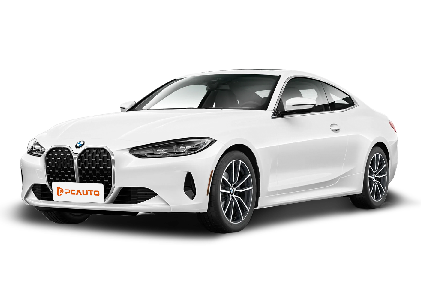
2021 Mercedes-Benz E-Class Coupe E300 AMG Line
Price
RM 533,888
Select a Vehicle Variant
2021 Mercedes-Benz E-Class Coupe E300 AMG Line RM 533,888
Summary
The 2021 Mercedes-Benz E-Class Coupe E300 AMG Line, launched in (2021, is a smart-choice Executive Coupe priced from RM 533,888. Fits 4 passengers with generous cabin space – check the dimensions: 4835mm L, 1860mm W, 1430mm H. Perfect if you need a family car that parks easily.
Enjoy stress-free highway driving thanks to its 250km/h top speed. Its 1991cc engine balances pep and efficiency. For a reliable daily driver that doesn’t break the bank, the 2021 Mercedes-Benz E-Class Coupe E300 AMG Line delivers style, space, and sensible performance.
Enjoy stress-free highway driving thanks to its 250km/h top speed. Its 1991cc engine balances pep and efficiency. For a reliable daily driver that doesn’t break the bank, the 2021 Mercedes-Benz E-Class Coupe E300 AMG Line delivers style, space, and sensible performance.
Core Specs

Segment
Executive

Engine Capacity(cc)
1991

Transmission
AT

Fuel Comsumption (L/100km)
7.1

Fuel Tank(litres)
66

Top Speed(km/h)
250

Seats
4

Length(mm)
4835

Width(mm)
1860

Height(mm)
1430

Wheelbase(mm)
2873

Boot Volume(L)
425
Other Variants
Price
RM 533,888
Body
4835×1860×1430
Engine Power(PS)
258
Engine Torque(Nm)
-
TRANSMISSION
AT
Fuel Consumption
7.1
Related Q&A
View More >Q
Which to buy? Ford Mustang vs Chevy Camaro?
The Ford Mustang and Chevrolet Camaro are both classic American muscle cars, each boasting a solid fan base in the Malaysian market. Ultimately, the choice between them boils down to personal taste and what you plan to use the car for.
The Mustang is known for its iconic looks and a relatively comfortable ride, making it a great pick if you want something that handles daily driving duties well but still turns heads on weekend cruises. The 2.3L EcoBoost turbo engine is the way to go if fuel efficiency is a priority, while the 5.0L V8 delivers that raw, unapologetic American exhaust note we all love.
On the flip side, the Camaro leans into more hard-core handling. Its Alpha platform gives it razor-sharp cornering abilities, perfect for drivers chasing that track-day thrill. The LT1 V8 under the Camaro's hood serves up power in a direct, no-nonsense way, though the trade-off is narrower visibility, which can be a bit of a hassle for everyday use.
Both cars have decent after-sales networks in Malaysia, but parts can sometimes take a while to come in, so it’s smart to check with your local dealer about support before you commit. And let’s not forget Malaysia’s hot weather – it’s tough on high-performance engines, so keeping a close eye on coolant levels and oil condition with regular checks is a must for maintenance.
If modern tech is your thing, the Mustang’s SYNC 3 infotainment system is more user-friendly and intuitive. The Camaro, however, offers more nuanced drive mode adjustments for those who like to fine-tune their driving experience.
At the end of the day, I’d strongly recommend test-driving both. They’ve got distinctly different personalities, and nothing beats getting behind the wheel to feel which one truly clicks with you.
 WanderlustOct 16, 2025
Q
What is passive security in a car?
The passive safety system of a car refers to protective measures designed and technological means to reduce harm to passengers and pedestrians in the event of an accident. Unlike active safety systems such as anti lock braking or electronic stability control, it mainly functions after a collision. Common passive safety configurations include high-strength body structures, airbags, pre tensioned seat belts, collapsible steering columns, and energy absorbing bumpers. These designs can effectively disperse impact forces and cushion them. For example, the body crush zone absorbs energy during a collision, while airbags reduce direct contact between occupants and hard objects inside the vehicle. In addition, some models are equipped with pedestrian protection engine covers or active pop-up designs to reduce the risk of injury to pedestrians. It is worth noting that passive safety performance is usually evaluated through collision testing according to international standards such as Euro NCAP or ASEAN NCAP, and consumers can refer to these ratings to understand the safety performance of the vehicle. With the advancement of technology, some emerging configurations such as central airbags or rear side airbags are gradually becoming popular, further enhancing all-round protection capabilities. Therefore, when choosing a car, in addition to focusing on power and configuration, attention should also be paid to these potentially life-saving safety design details.
 MysticGlowJan 23, 2026
Q
Is the 2020 GLC 300 a good car?
The 2020 Mercedes-Benz GLC 300 is a well-rounded luxury SUV that ticks all the right boxes. Its 2.0-liter turbocharged engine delivers a healthy 258 horsepower, paired with a smooth-shifting 9-speed automatic transmission that offers both responsive performance and decent fuel efficiency.
Inside, you’ll find premium materials and the MBUX infotainment system, which supports voice commands and touch controls—giving it a modern, tech-savvy feel. Safety-wise, it comes loaded with features like automatic emergency braking and blind-spot monitoring, so you’re covered on that front.
Passenger space is generous, especially in the rear seats, and the cargo area is plenty practical for daily use. Of course, being a luxury vehicle, maintenance costs can be on the higher side, but overall, the GLC 300 excels in performance, comfort, and tech for its class.
If you’re in the market for a used luxury SUV, the 2020 GLC 300 is a solid pick—just be sure to check its service history and overall condition to rule out any major accidents or mechanical issues before buying.
 SolarEclipseDec 1, 2025
Q
Can I upgrade my Toyota infotainment system?
Toyota's in-vehicle infotainment system does support upgrades currently, with specific plans depending on the vehicle's model year and configuration. New models such as the 2026 RAV4 will be equipped with the all-new Toyota Arene OS 2.0, featuring the Qualcomm 8155 chip and a 14-inch touchscreen. These models support 5G connectivity, offline voice control, and customizable interfaces, among other functions, and these upgrades significantly enhance operational smoothness and intelligent capabilities. For some models from 2021 to 2023 (e.g., Camry), hardware upgrades can be achieved by replacing the chip with the Qualcomm 8155 via third-party providers, but this requires simultaneous replacement of accessories like the rearview camera, with costs ranging from approximately 3,000 to 5,000 Malaysian Ringgit. Models such as the 2024 Avalon and Crown Kluger can receive new features like in-car KTV and customizable wake words through official OTA updates, without the need for additional hardware modifications. It is recommended that vehicle owners first check whether their vehicle is on the eligible upgrade list via the official Toyota App or authorized dealers, as some older models may not be compatible with the latest system due to hardware limitations. Notably, Toyota's current upgrades focus on optimizing localized experiences, including dialect recognition and smart home integration, and these features are also applicable in the Malaysian market.
 EonFeb 2, 2026
Q
how much is car insurance
In Malaysia, car insurance costs can vary quite a bit depending on several factors—think things like your car model, how old it is, engine size, your age as the driver, driving history, and the type of coverage you pick. Generally speaking, newer cars or high-value rides will hit you with higher premiums, while older vehicles or those with smaller engines tend to be easier on the wallet.
Comprehensive Insurance is pricier than Third-Party Insurance, obviously, but it’s got your back for more scenarios—like if your car gets damaged or stolen, you’re covered. There are ways to bring those costs down, though: fitting anti-theft devices or opting for a higher excess (that’s the amount you pay upfront if you make a claim) can help trim the premium.
One thing to keep in mind: different insurers will quote you different prices, so it’s smart to shop around and compare both the costs and what’s actually covered before you commit. And beyond just the price tag, make sure you really understand the coverage details and any exclusions. That way, if the worst happens, you won’t be left in the lurch when you need to claim.
The Malaysian car insurance market’s got plenty of options out there, so take the time to find a plan that fits both your needs and your budget.
MysticGlowSep 25, 2025Q
Where is Smart #1 from?
The Smart #1 is a fully electric SUV launched by the Smart brand. Initially, this brand was the result of a collaboration between Mercedes-Benz and the Swiss watch group Swatch. However, it has now transformed into a fully electric brand jointly owned by Mercedes-Benz and Geely Holding Group. Its R & D and production are mainly carried out in China, and it's sold in the global market.
The Smart #1 is built on the SEA vast fully electric platform developed by Geely. It features a highly modern design and advanced electric technology, making it highly suitable for urban driving. For consumers in Malaysia, the introduction of the Smart #1 represents a new option in the electric vehicle market. It not only boasts a stylish appearance and intelligent configurations but also offers good range performance, meeting the local urban commuting needs.
In recent years, the Malaysian government has been actively promoting the popularization of electric vehicles, including providing tax incentives and building charging facilities. Therefore, compact electric SUVs like the Smart #1 may attract more and more consumers who value environmental protection and technology. As more electric vehicles from international brands enter the Malaysian market, consumers will have more opportunities to experience the innovative technologies of different brands.
 LeoAug 5, 2025
Q
What is the 0 to 60 on a 2019 Porsche Macan S?
The 2019 Porsche Macan S sprints from 0 to 60 mph (96 km/h) in just 4.6 seconds, thanks to its 3.0-liter V6 twin-turbo engine pumping out 354 horsepower and 480 Nm of torque. Paired with a 7-speed PDK dual-clutch transmission and all-wheel drive, it delivers sharp throttle response and rock-solid stability.
In Sport mode, the Macan S turns downright feisty—gears snap off quick and buttery smooth, making it a joy for drivers who love to hustle. Beyond straight-line speed, this Porsche shines with laser-precise steering and a taut yet compliant chassis that doesn’t beat you up on daily drives. Want more? Opt for the Sport Chrono package to dial up the adrenaline.
Porsche’s genius lies in balancing performance with everyday usability. The Macan S nails it as a luxury midsize SUV—practical enough for school runs yet packing enough soul to thrill on backroads. It’s that rare breed that does it all without compromise.
 ShadowWhipNov 28, 2025
Q
Why is the BMW 5 Series so heavy?
The weight of the BMW 5 Series is mainly related to its luxury positioning and safety features. As a high - end sedan, it uses a large amount of high - strength steel and aluminum alloy materials to enhance the body's rigidity. At the same time, it is equipped with a rich range of safety systems such as airbags and active braking, which all add to the weight.
In addition, to provide a comfortable driving and riding experience, the 5 Series is also equipped with luxury features like sound - insulating materials, electric seats, and high - end audio systems, further increasing the vehicle's weight. In Malaysia's hot climate, a powerful air - conditioning system is also an essential configuration.
Although the vehicle weight can affect fuel economy to some extent, BMW tries to balance this impact through efficient engines and lightweight design. For Malaysian consumers, the weight of the 5 Series actually reflects its high - quality and comprehensive performance. When buying a car, they can comprehensively consider their own needs. After all, luxury and safety are often the factors that high - end car owners value more.
 SweetRemembranceMemoryAug 6, 2025
Q
Where is Mazda 2 made?
The Mazda2 is produced in both Japan and Thailand. Japan serves as Mazda's core manufacturing hub, with the Hiroshima headquarters factory primarily producing models like the Mazda2, Mazda3, and Mazda6. Meanwhile, the assembly plant in Chonburi, Thailand, also produces the Mazda2 and Mazda3.
Mazda has established a global network of production facilities that adhere to uniform manufacturing processes and quality standards. Whether produced in Japan or Thailand, every Mazda2 guarantees the brand's hallmark quality and performance, delivering products that meet Mazda's high standards for consumers.
 MysticalJourneyMay 19, 2025
Q
What is the Tesla Model Y Boot Space? Here's the Boot Capacity
The Tesla Model Y is a midsize electric SUV that offers both practical and flexible storage. The rear trunk provides 854 liters of space, which expands to an impressive 2,158 liters when the rear seats are folded flat. This easily supports family road trips or daily cargo needs in Malaysia.
There’s also a 117-liter front trunk that’s perfect for storing small bags, groceries, or charging cables. Thanks to its electric-only platform with no traditional engine, the Model Y makes better use of interior space compared to most fuel-powered SUVs. Under the trunk floor, a hidden storage area gives you extra room for personal or private items.
For Malaysian drivers, the low trunk floor and wide-opening hatchback design make it easy to load larger items like strollers or luggage. In fact, its loading capacity even outperforms many traditional SUVs.
Electric vehicles often face height limits due to battery placement, but Tesla has addressed this by using a flat battery layout and a streamlined roof design. As a result, the Model Y offers a solid balance between headroom and cargo volume. This smart use of space reflects the design direction of many new-generation EVs, giving them an edge over conventional petrol cars.
 SilverlinJul 7, 2025
Popular Cars
Model Year
Car Compare
Car Photo
Model List
Mercedes-Benz E-Class Coupe is a Executive Coupe car launched by Mercedes-Benz. PCauto has cataloged various variants of this car produced from 2018 to 2021.You can compare differences in detail at the parameter table.
Among the 1 variants of Mercedes-Benz E-Class Coupe, prices range from the affordable RM 533,888 to the most expensive RM 533,888.You can find different horsepower versions ranging from 258PS to 258PS.
Mercedes-Benz E-Class Coupe offers 2.0T engines and AT transmission. Check the spec sheet for more details.
1 Model on Sale
2021
2018