
Q
What model of Isuzu MU-X rear differential oil is used
 TravelBugOct 10, 2025, 04:29 PM
When it comes to choosing rear differential oil for your Isuzu MU-X, it's recommended to use API GL-5 specification gear oil with an 85W-90 viscosity rating. This is the standard requirement for the rear axles of most Isuzu models, as it effectively protects the gears by ensuring proper lubrication and wear resistance even under heavy loads. For the exact product model, refer to your owner's manual or consult an authorized Isuzu service center to make sure it perfectly matches your vehicle's year and configuration.
To expand a bit, selecting the right gear oil boils down to two key factors: viscosity grade and API classification. The 85W-90 rating works well with Malaysia's tropical climate, while GL-5 is specifically formulated to handle the high-pressure conditions of rear differential gear sets. If you frequently tow heavy loads or go off-roading, consider using fully synthetic gear oil for enhanced durability.
Regular gear oil changes – typically every 40,000 to 60,000 kilometers – are crucial for extending the lifespan of your rear differential. Also, check the oil seals for leaks to prevent contaminants from entering and causing gear damage. While other models like the Toyota Fortuner or Mitsubishi Triton may have similar rear differential oil specifications, additive formulas can vary between brands, so mixing different oils isn't advisable. As always, prioritizing the manufacturer's recommendations is the best practice.
Special Disclaimer: This content is published by users and does not represent the views or position of PCauto.
Related Q&A
Q
how much is Isuzu MU-X
In the current Malaysian market, the Isuzu MU-X ranges roughly from RM 169,000 to RM 208,000, depending on the variant and specs. Keep in mind, actual prices might shift a bit with dealer promotions or optional extras, so your best bet is to hit up your nearest authorized Isuzu dealer for the latest numbers.
As a 7-seater SUV, the MU-X has built a solid rep for its tough chassis and reliable diesel heart. Under the hood, you'll find the 3.0L Blue Power turbo diesel engine, which dishes out great low-end torque and impressive fuel economy—perfect for Malaysian families tackling long highway drives or the occasional light off-road adventure.
Safety hasn't been skimped on either, with features like electronic stability control, multiple airbags, and a reverse camera all part of the package. Inside, it's all about practicality: there's plenty of room for passengers, and the seats fold in all sorts of ways to juggle people and cargo.
One thing worth mentioning is that the MU-X holds its value pretty well in the used car market. That's probably down to Isuzu's strong reputation for durability, especially from their commercial vehicle roots. If your budget's a bit tight, a well-maintained second-hand MU-X could be a smart alternative to consider.
 FearlessOct 11, 2025
Q
Isuzu MU-X how many seats
The Isuzu MU-X is a popular 7-seater SUV in the Malaysian market, perfect for family trips or when you need to carry a crowd. It's got that classic 2+3+2 seating setup – fold down the second row and you'll free up more luggage space, while the third row works well for kids or adults on shorter rides. What really stands out about this SUV is its tough chassis and reliable diesel engine, which make it a solid performer for Malaysia's varied road conditions – whether you're cruising around the city or tackling some light off-roading, it handles it all with ease. Safety-wise, the MU-X doesn't skimp either, coming with features like electronic stability control and multiple airbags to keep everyone on board protected. For Malaysian buyers eyeing a 7-seater SUV, the MU-X is a practical and budget-friendly pick. It offers plenty of room for passengers, impressive fuel efficiency, and low maintenance costs – ideal for folks who need to balance family needs with everyday usability. Plus, Isuzu has a wide after-sales service network across Malaysia, which adds extra convenience for owners down the line.
 AdventureSeekOct 11, 2025
Q
When did Isuzu MU-X start
The Isuzu MU-X first hit the scene back in 2013, making its debut in Thailand before rolling into Malaysian showrooms the following year, 2014. Slotted in as Isuzu's flagship seven-seater SUV for Southeast Asia, it stepped up to replace the outgoing Isuzu Alterra. Built tough on the D-Max pickup platform, the MU-X carries forward Isuzu's rock-solid reputation in diesel engine tech, packing either a 3.0-liter or 1.9-liter turbo diesel under the hood. These engines dish out impressive fuel efficiency and that legendary Isuzu durability, making it a perfect fit for Malaysia's long highway stretches and those trickier, rough-and-tumble roads.
Over the years, Isuzu hasn't just left the MU-X to gather dust – they've continuously upgraded,given it regular refreshes. We're talking tweaks to the exterior styling, sprucing up the interior with better tech, and beefing up the safety kit too. Think nice touches like Apple CarPlay and Android Auto integration, plus some advanced driver assistance systems thrown into the mix.
It's no surprise the MU-X has found a big fan base here in Malaysia. It's a hit with families who appreciate the space, and with off-road enthusiasts who trust that Isuzu reliability. When you combine its proven performance with a practical, roomy design, it's easy to see why it's a top pick in its segment. If you're in the market for a tough, no-nonsense SUV that can handle whatever you throw at it, the MU-X should definitely be on your shortlist. Do yourself a favor – head down to your nearest Isuzu dealer and take one for a spin to really get a feel for what it can do.
 ForestryOct 10, 2025
Q
What is the fuel consumption of Isuzu MU-X 2.5 in liters
The fuel economy of the Isuzu MU-X 2.5 can vary depending on driving conditions and vehicle setup. Official figures put its combined fuel consumption at around 7.5 to 8.5 liters per 100 kilometers, which works out to roughly 0.075 to 0.085 liters of diesel per kilometer. Of course, your actual mileage might differ based on factors like road conditions, driving style, and how much you're carrying.
Under the hood, you've got that 2.5-liter turbo diesel engine Isuzu's known for—tough as nails and packed with low-end torque, making it a solid fit for Malaysia's long highway stretches and those trickier off-road bits. Isuzu's engine tech has always had a focus on frugal fuel use, and when paired with the efficient gearbox, it helps keep those fuel costs in check.
If you're watching the pump, keeping up with regular maintenance goes a long way—stuff like swapping out the air filter and getting fresh oil changes to keep the engine running at its best. And let's not forget: easy on the throttle, avoiding sudden acceleration, that kind of smooth driving style can definitely help you squeeze more kilometers out of a tank.
The MU-X has built up a strong following in Malaysia's mid-size SUV scene, and it's not hard to see why. Beyond just reliable performance and wallet-friendly upkeep, it's got the space for the family and the off-road chops for weekend adventures. Now, if you're dead set on maximum fuel savings, you might want to check out the latest hybrid or electric SUVs. But for diesel fans, the MU-X still stands out as a practical, budget-conscious choice.
 LivelyzOct 10, 2025
Q
What is the fuel consumption of Isuzu MU-X 1.9 car in liters
The Isuzu MU-X 1.9 is powered by the 1.9-liter Blue Power turbo-diesel engine, which has built a solid reputation for fuel efficiency. Official figures peg the combined fuel consumption at around 6.5 to 7.5 liters per 100 kilometers, though real-world numbers will naturally swing based on your driving style, road conditions, and how much you're hauling. Expect it to creep up to 8-9 liters/100km in stop-and-go city traffic, while highway cruising can see it dip to around 6 liters/100km.
This engine isn't just about sipping fuel, though. It employs common-rail injection and variable geometry turbocharging to strike a nice balance between power delivery and efficiency. With 150 horsepower and a healthy 350 Nm of peak torque on tap, it's well-suited to Malaysia's diverse road conditions, whether you're navigating city streets or heading out on the open highway.
For diesel engine care, sticking to regular oil changes and fuel filter replacements is key. Also, always use good quality, specification-compliant diesel to keep that engine running efficiently for the long haul. If you're looking to squeeze out even better fuel economy, try maintaining smooth acceleration, avoiding harsh braking, and keeping those tires properly inflated – simple habits that go a long way.
As a seven-seater SUV, the MU-X offers decent space practicality and off-road capability for its class, making it a reliable pick for family users or those who frequently hit the road for long journeys.
 CuteypieOct 10, 2025
Q
Which type of 18 inch wheel rims tire is better to replace for Isuzu MU-X?
When it comes to tire choices for upgrading your Isuzu MU-X to 18-inch wheels, I'd recommend all-terrain (AT) tires that balance on-road comfort with off-pavement capability. Options like the Bridgestone Dueler A/T Revo 3, Toyo Open Country A/T III, or Michelin LTX Force are solid picks—they hold up well in Malaysia's tropical heat. Stick with sizes like 265/60R18 or 275/65R18 to keep the diameter within a 3% variance from stock, which helps maintain accurate speedo readings and proper gearing.
Crucial note: Make sure the new wheels' offset (ET value) matches the factory specs to avoid rubbing issues when turning or putting extra strain on the suspension. And don't skip a wheel alignment after the swap—it's a must. Since the MU-X is a body-on-frame, rugged SUV, stepping up to a taller sidewall (like the 65 aspect ratio) can really boost its off-road game by adding cushioning over rough terrain. Just be aware that chunkier tread patterns tend to generate more road noise at highway speeds—that's the trade-off for better grip off-road.
If your daily grind is mostly city driving, a highway-terrain (HT) tire like the Yokohama Geolandar H/T G056 might suit you better. Their low rolling resistance design can help eke out better fuel economy, which is always a plus. After any tire/wheel upgrade, getting PUSPAKOM certification is smart to keep things legal. Also, keep an eye on your TPMS readings regularly, and with Malaysia's frequent downpours, prioritize tires with good water evacuation grooves to maintain wet traction.
 QuirkyjoOct 10, 2025
Q
What is the model of Isuzu MU-X car remote control battery
If you're wondering about the remote battery type for your Isuzu MU-X, here's the lowdown: this SUV typically uses a CR2032 coin cell battery. It's a super common size—you can grab one at just about any supermarket, hardware store, or auto parts shop without hassle. Swapping it out is a breeze too: just pop open the remote case with a coin, watch the positive/negative orientation, and drop the new battery in. No special skills needed.
Pro tip: Check your battery every 1-2 years to avoid getting stranded with a dead remote. Stashing a spare in your glove box isn't a bad idea either. For remote care, keep it dry and away from extreme heat. Warning signs it's time for a new battery? If your range starts shrinking or the buttons feel unresponsive, that's your cue.
Heads up though—battery types can vary across car brands. CR2025 or CR1632 are also pretty common, so double-check your specific model if you're unsure. If a fresh battery still doesn't fix things, your remote might need re-pairing or there could be another issue. In that case, swing by an authorized Isuzu service center—their techs have the tools and know-how to sort it out quickly.
 CharmingOct 10, 2025
Q
How much tax does Isuzu MU-X 1.9 need to pay
Let's break down how taxes work for the Isuzu MU-X 1.9 under Malaysia's automotive tax structure. First off, the key factors here are engine displacement, vehicle category, and whether it's imported or locally assembled. Since it's packing a 1.9-liter diesel engine – which falls into the smaller displacement bracket – you're looking at relatively lower road tax compared to bigger-engined models. Typically, you're talking somewhere between RM200 to RM400 annually, though exact figures can vary slightly depending on the state you're registering it in.
Then there's the Sales and Services Tax (SST) when you buy the new vehicle. Right now, Malaysia's standard SST rate is 10%, but here's the thing – some locally assembled models might qualify for exemptions or reductions. My advice? Always check with your nearest Isuzu dealership for the latest tax incentives before signing on the dotted line.
Malaysia's car tax system also includes import duties and excise taxes, which fluctuate based on where the vehicle is sourced from and its engine size. Getting a handle on these tax specifics will help you budget more accurately for your new ride. And let's not forget – as a diesel-powered SUV, the Isuzu MU-X 1.9 brings solid fuel efficiency and that smaller displacement advantage to the table, making it a smart pick for buyers who prioritize practicality and keeping long-term running costs in check.
 EmeraldsOct 10, 2025
Popular Cars
Model Year
Car Compare
Car Photo
Related Models
 Cars
CarsLatest Q&A
Q
Is AMT similar to automatic?
There are significant differences between AMT transmissions and automatic transmissions (AT) in terms of core structure and driving experience. AMT is essentially an electronically automated version of a manual transmission, simulating manual clutch operation and gear shifting through a computerized control system while retaining the gear set structure of manual transmissions. As a result, it offers higher transmission efficiency, with fuel consumption approximately 8%-12% lower than AT, making it particularly suitable for highway or long-distance driving. However, it may exhibit jerking similar to manual transmissions during low-speed gear shifts, especially noticeable in congested traffic conditions.
AT transmissions rely on torque converters for power transfer, delivering smooth and seamless gear shifts that appeal to comfort-oriented users. However, their complex structure (incorporating planetary gear sets, hydraulic systems, etc.) results in higher maintenance costs. A single service may cost between 800 to 1,500 ringgit, whereas AMT only requires gear oil replacement at approximately 400 ringgit.
From a market perspective, AMT is predominantly used in budget vehicles or commercial models priced below 80,000 ringgit, while AT is typically featured in mid-to-high-end vehicles. Consumers should select based on actual needs: AMT suits those prioritizing fuel efficiency and low maintenance costs, while AT better serves those valuing comfort. Notably, recent advancements in AMT electronic control technology have significantly mitigated jerking issues, though test drives should still emphasize low-speed performance evaluation.
 AriaMar 26, 2026
Q
Which is better, DCT or AT?
DCT (Dual-Clutch Transmission) and AT (Automatic Transmission) each have their own advantages and disadvantages, and the choice should be based on personal driving needs. AT transmissions transfer power through a torque converter, offering excellent shift smoothness, making them suitable for urban commuting or novice drivers. However, they tend to have higher fuel consumption, and vehicles equipped with them are usually more expensive. DCT transmissions utilize a dual-clutch structure, featuring fast shift speeds and high power transmission efficiency, which provides a more direct driving experience—particularly suitable for users seeking a sporty feel. However, they may exhibit jerking at low speeds and have relatively high maintenance costs. If durability and comfort are priorities, AT is the more reliable choice; if power responsiveness and driving pleasure are preferred, wet DCT (such as Volkswagen DSG) performs better, though dry DCT models should be avoided in prolonged stop-and-go traffic conditions. Additionally, CVT transmissions excel in smoothness and fuel efficiency, making them ideal for daily commuting, but they lack driving excitement. It is recommended to test-drive before purchasing, as tuning varies significantly across brands, and real-world experience is more important than theoretical specifications.
 FlutteringMar 26, 2026
Q
Is Amt good or bad?
AMT gearboxes have a significant cost advantage in the local market, typically being around 5,000 Ringgit cheaper than models equipped with conventional automatic transmissions. Their fuel efficiency is comparable to manual transmissions, resulting in long-term fuel savings. Featuring a straightforward design, they achieve transmission efficiency exceeding 90% with relatively low maintenance costs, making them ideal for practicality-oriented consumers. However, their shifting logic contains inherent limitations: gear changes between 1st and 2nd cause 0.3-0.5 second power interruptions, while unintended upshifts on inclines may reduce engine speed by 15%-20%, compromising driving smoothness. For urban commuters or budget-conscious buyers, AMT offers excellent value, though those prioritizing premium driving dynamics should consider alternative transmission types. Some domestic models like the Perodua Axia employ enhanced AMT systems, where optimized shift programming has reduced gearshift shock by approximately 30%.
 RainbowsMar 26, 2026
Q
Which gives better mileage, CVT or AMT?
From the perspective of fuel economy, CVT transmissions generally perform better under urban driving conditions. Their continuously variable design allows the engine to consistently operate within the optimal speed range, significantly reducing fuel consumption during frequent starts and stops. Test data shows that their fuel consumption in urban driving conditions is 10% to 15% lower than that of comparable models. AMT transmissions, on the other hand, inherit the high transmission efficiency of manual transmissions, delivering fuel efficiency close to manual transmissions during high-speed cruising. This makes them particularly suitable for long-distance driving in large-displacement vehicles. However, due to power interruption during gear shifts, their overall fuel consumption may be 5% to 8% higher than CVTs.
The difference in fuel-saving characteristics between the two transmissions stems from their technical principles: CVTs achieve continuous variability through steel belts and pulleys, eliminating the fixed gear ratio limitations of traditional transmissions; AMTs simulate manual gear changes via electronic control systems while maintaining the mechanical efficiency of gear transmission. Notably, actual fuel consumption is also influenced by driving habits. Smooth acceleration and anticipatory deceleration can maximize the transmissions' fuel-saving potential. If the vehicle budget permits and urban commuting is the primary use, CVTs offer a more economical choice. For frequent highway driving with an emphasis on cost-effectiveness, AMTs are equally worth considering.
 RubyBlazeMar 26, 2026
Q
Which is cheaper, AMT or CVT?
In terms of gearbox cost, AMT is usually more economical than CVT. Essentially, AMT is a manual transmission equipped with an electronic control unit, featuring a simple structure and low maintenance costs. The unit price ranges from approximately 5,000 to 8,000 ringgit, making it suitable for budget-conscious consumers or those who prioritize long-term operating costs. CVT incurs higher manufacturing costs due to its precision steel belt transmission system and continuous variable transmission technology, with a unit price of about 7,000 to 10,000 ringgit. However, it delivers a smoother driving experience and superior fuel efficiency. The primary differences between the two lie in technical complexity: AMT retains the gear-shifting mechanism, resulting in noticeable shift shock; CVT achieves linear power output through stepless speed variation but requires periodic belt inspection and incurs higher maintenance expenses. For those prioritizing initial cost and basic transportation needs, AMT offers better value; if comfort and long-term fuel economy are priorities, CVT represents a more worthwhile investment. Note that actual prices may vary based on vehicle model, brand, and local supply chain factors.
 ShadowProwlMar 26, 2026
Related News

Why are people more willing to choose Toyota Hilux instead of Isuzu D-Max?
JamesNov 3, 2025
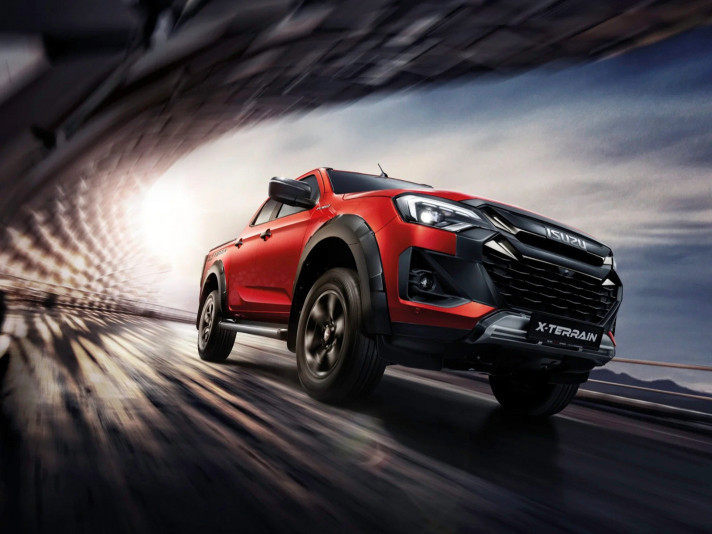
Isuzu D-Max continues to be one of Malaysia's best-selling pickup trucks, selling 3,081 units in the first half of the year
AshleyJul 30, 2025

Reviewing the Isuzu D-MAX: Does Its Splendid Design Match Its Off-Road Capability?
RobertApr 16, 2025
Reasons Why Pickups and SUVs Are Not Suitable for Electric Drive, Industry Secrets You Must Know Before Buying
JamesFeb 14, 2025

Isuzu launches the all-new MAXFORCE engine, more powerful!
AshleyNov 15, 2024
View More
Pros
Cons