
Q
How fast can a 2014 Chevy Malibu go?
 BuddyzzOct 22, 2025, 05:22 PM
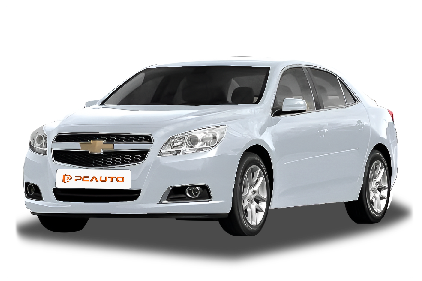
The 2014 Chevrolet Malibu tops out at around 201 km/h (125 mph), though actual performance hinges on the engine under the hood. Over in Malaysia, you'll typically find it packing either a 2.5L four-cylinder or a punchier 2.0L turbo – that turbocharged mill definitely delivers the stronger kick. For Malaysian drivers, that kind of speed is more than enough for highway jaunts, but remember to keep an eye on local limits, which usually cap out at 110 km/h on the expressways.
Beyond straight-line speed, the 2014 Malibu earns props for its comfy suspension and roomy cabin, making it a solid pick for families. Fuel economy isn't too shabby either; the 2.5L version sips around 8.7 liters per 100 km in mixed driving. If you're scoping out a used one, do yourself a favor and check the engine service records and transmission condition. Running it hard at high revs over time can take a toll on the powertrain, and Malaysia's hot climate is tough on cooling systems too – so regular coolant changes are a must.
Special Disclaimer: This content is published by users and does not represent the views or position of PCauto.
Related Q&A
Q
How much is a 2014 Chevy Malibu transmission?
The cost of a transmission for a 2014 Chevrolet Malibu can vary pretty widely depending on a few key factors: what type of transmission it is (like the 6-speed automatic), whether it's brand-new, remanufactured, or used, and where you end up buying it—think dealership, third-party supplier, or even a junkyard for a used unit. Here in Malaysia, if you're looking at a brand-new OEM transmission, you're probably looking at a price tag between RM8,000 and RM15,000. If you go the remanufactured or used route, you might be able to bring that down to around RM4,000 to RM8,000. But remember, that price usually doesn't include the labor cost for installation, which can add another RM1,000 to RM2,500, plus any extra parts that might be needed along the way.
My advice? Head to a Chevrolet authorized service center or a reputable transmission specialist shop to get a solid, accurate quote—they’ll know exactly what you need. And don’t sleep on regular maintenance! Changing your transmission fluid every 60,000 to 80,000 kilometers can really help extend its life. If you start feeling rough shifts or delays when changing gears, get it checked out ASAP. Small issues can turn into big, expensive problems fast if you ignore them. Also, with Malaysia’s hot and humid weather, keeping an eye on your cooling system is crucial—transmissions hate overheating, so make sure that system’s in good shape to keep things running smoothly.
 RubyRedGlowOct 22, 2025
Q
How much does a used Malibu cost?
In Malaysia, the price of a used Chevrolet Malibu can vary quite a bit depending on factors like the car's age, mileage, condition, and specs. Generally, you're looking at a range of around RM60,000 to RM120,000. For example, models from 2016 to 2018 with 50,000 to 80,000 kilometers on the clock tend to go for about RM70,000 to RM90,000. The newer ones, from 2019 to 2021, might set you back over RM100,000. When buying a used car, it's a good idea to check the service records and accident history. Sticking with reputable used car dealers or certified platforms can also help protect your interests.
The Chevrolet Malibu, as a midsize sedan, has its fans thanks to its comfort and space. But here's the thing to note: American used cars in Malaysia can come with higher maintenance costs and parts might be a bit harder to source. So, it's smart to scope out the service situation at nearby repair shops beforehand. Also, Malaysia's used car loan policies usually let you borrow 70% to 90% of the car's appraised value. The interest rate depends on the bank and your credit score, so shopping around before you buy could save you some cash.
 EmeraldGreenOct 22, 2025
Q
What engine does a 2014 Chevy Malibu have?
The 2014 Chevrolet Malibu hits the Malaysian market with two solid engine choices: a 2.5-liter naturally aspirated four-cylinder and a 2.0-liter turbocharged four-banger. The 2.5L puts out around 197 horsepower and 253 Nm of torque, which is perfect for your everyday commute and city driving needs. On the flip side, if you're craving more punch, the 2.0L turbo steps things up big time with a meaty 259 horsepower and a healthy 353 Nm of torque – that one's for the drivers who like a bit more fun behind the wheel. Both engines are mated to a 6-speed automatic transmission, delivering smooth shifts and decent fuel efficiency, which is always a plus. For Malaysian buyers, the 2.5L makes the most sense for daily city runs, while the 2.0L turbo is your go-to if you spend a lot of time on the highway or enjoy the occasional long road trip. It's worth noting that turbocharging tech is pretty much the norm these days in modern cars – it's a smart way to squeeze more power without bumping up engine size, all while keeping fuel consumption in check. No wonder so many automakers are jumping on that bandwagon.
 SapphireBlueOct 22, 2025
Q
Do Malibus hold their value?
The Chevrolet Malibu holds its value moderately well in the Malaysian market, with used car prices varying significantly based on factors like model year, trim level, mileage, and service history. As an American midsize sedan, it doesn't quite match the local visibility of its Japanese or German rivals, but its solid chassis tuning and spacious interior still appeal to a specific group of buyers. When properly maintained and in good condition, a 3-5 year-old Malibu typically retains around 50-60% of its original value. It's worth noting that Malaysian consumers generally prefer fuel-efficient and reliable Japanese cars, which indirectly impacts the resale market for American models. We'd advise owners to keep complete service records and avoid extensive modifications—both go a long way in preserving residual value. Additionally, sticking with popular colors like white or silver can help when it comes time to sell. Overall, while the Malibu isn't a top performer in terms of depreciation, it remains a practical choice for buyers who prioritize comfort and value for money.
 CherryBlossomOct 22, 2025
Q
How long can Malibu last?
The lifespan of a Chevrolet Malibu in Malaysia really boils down to how well you maintain it, your driving style, and the road conditions it's exposed to. Stick to the manufacturer's recommended service schedule—like getting the oil changed every 5,000 to 10,000 km and having key components inspected regularly—use genuine parts, and avoid aggressive driving, and you're looking at a solid 200,000 to 300,000 km or even 15+ years on the road. Malaysia's tropical heat can be tough on rubber parts like belts and bushings, as well as electrical components, so it's smart to shorten inspection intervals, pay extra attention to rust prevention, and try to park in covered spots to shield it from harsh sunlight and rain.
Under the hood, the Malibu's ECOTEC engine is pretty tried-and-true, and paired with either the 6-speed or 9-speed automatic transmission, it delivers a balanced level of reliability for a midsize sedan. That said, as it racks up the kilometers, keep a close eye on the cooling system and transmission fluid condition—those are key areas to watch. For Malaysian buyers, if you're scouring the used car market, post-2015 Malibus tend to hold up better over time thanks to more advanced direct-injection tech and improved anti-corrosion treatments. And making a habit of taking it to authorized service centers for computer diagnostics can help catch potential issues before they turn into big problems.
Bottom line? A car's longevity is *heavily* tied to its service history. Keeping complete maintenance records isn't just about extending its life—it'll also give your Malibu a much better resale value down the line.
 HelperHandSupportOct 22, 2025
Q
How long does a Malibu engine last?
The Chevrolet Malibu's engine typically lasts between 200,000 to 300,000 kilometers, depending on regular maintenance and driving habits. Malaysia's tropical climate can take a toll on the engine cooling system and rubber components, so it's advisable to replace coolant regularly and check hose sealing performance to extend engine life. Good maintenance practices like timely oil changes, using the right viscosity lubricants, and avoiding prolonged high-rev driving can significantly boost engine durability. Also, Malaysia's rainy and humid conditions tend to cause electrical and sensor issues, making regular checks of these parts important too. It's worth noting that turbocharged models require more frequent oil changes and cooling system maintenance to keep the turbo running properly. For Malaysian owners, choosing original or high-quality maintenance parts and following the manufacturer's recommended service intervals are key to keeping the engine running smoothly for the long haul.
 GamerZoneFunOct 22, 2025
Q
What's a 2014 Malibu worth?
If you're scouring the Malaysian used car market for a 2014 Chevrolet Malibu, you'll typically find prices hovering between RM40,000 to RM60,000. Of course, the exact figure hinges on factors like overall condition, mileage, trim level, and service history. Back in the day, this midsize sedan was all about comfort and practicality, packing either a 2.0L or 2.4L engine paired with a 6-speed automatic transmission. Fuel economy is pretty average, but that's par for the course—this one's a solid choice for family runabouts.
Step up to the LTZ trim, and you're looking at extra goodies like leather seats or a sunroof, which will naturally nudge the price north. Pro tip for buyers: Always get a PUSPAKOM inspection to check the engine and gearbox health, and don't skip a thorough accident history check. Malaysia's hot and humid weather can be tough on rubber components too, so pay extra attention to the condition of chassis bushings and the air conditioning system—you don't want to end up sweating it out later.
Sure, its Japanese rivals like the Honda Accord or Toyota Camry tend to hold their value better in the used market, but the Malibu's American-tuned chassis still has a trick up its sleeve: superior high-speed stability. If your budget is tight but you've got a soft spot for that American ride feel, this Chevy might just be worth adding to your shortlist.
 ThinkerThoughtReflectionOct 22, 2025
Q
Are 2014 Malibu reliable?
The 2014 Chevrolet Malibu lands somewhere in the middle of the pack when it comes to reliability. From what owners and expert reviews tell us, the 2.5L four-cylinder and 2.0L turbocharged engines are pretty solid pieces of kit – they've been around the block, so failure rate is relatively low. However, some owners have mentioned experiencing occasional rough shifting or hesitation from the transmission, especially at lower speeds. If you're a Malaysian looking at a used Malibu, I'd strongly advise giving the transmission a thorough check and going through the service records with a fine-tooth comb. Also, the car's electronic systems, like the touchscreen, can sometimes feel a bit laggy. And given our tropical climate here, don't skimp on maintaining that air conditioning system – it's a must.
On the upside, the Malibu does have good body rigidity, and back in the day, its standard six airbags and stability control system were right up there with the safety standards. It makes for a decent family car. Now, for Malaysian buyers, Japanese alternatives from the same year, like the Camry or Accord, might have a slight edge when it comes to sheer long-term durability. But the Malibu often comes with a more attractive price tag on the used market. If your budget is tight and you're okay with potentially slightly higher maintenance costs, it's still a contender worth considering. Just make sure you prioritize examples with complete service histories, and keep up with regular transmission fluid changes – that'll help keep it running smoothly for longer.
 WalkerPathLeisureOct 22, 2025
Q
Why does a 2014 Malibu have two Batteries?
The 2014 Malibu's dual-battery setup is all about supporting its advanced Start-Stop System. Here's how it works: when you pull to a temporary stop, the engine shuts off automatically to save fuel, then fires right back up as soon as you lift off the brake. The main battery handles the regular electrical demands—think starter motor and lights—while the auxiliary battery is dedicated solely to the Start-Stop function. This separation ensures those frequent restarts don’t disrupt other electronics, which is a big deal in a hot climate like Malaysia. High temperatures really take a toll on batteries, so having two batteries helps extend the overall electrical system’s lifespan and keeps things more reliable.
You’ll see similar setups in other hybrid or fuel-efficient models too. Some European cars, for example, pair a lithium battery with a traditional lead-acid one to handle the higher charge-discharge cycles. If you’re a Malaysian Malibu owner thinking about battery upgrades, go for a tropical climate-rated model—AGM batteries with better heat resistance are a solid choice. And don’t skip regular battery health checks; the heat and humidity here can sneak up on you with unexpected failures if you’re not careful.
 RiderJourneyHorizonOct 22, 2025
Q
What kind of transmission is in a 2014 Chevy Malibu?
The 2014 Chevrolet Malibu in Malaysia primarily offers two transmission options: a 6-speed automatic (models 6T40/6T45) and, in some variants like the hybrid, a CVT. The 6-speed auto is known for smooth shifts and durability, ideal for drivers who prefer that classic driving feel, while the CVT uses its stepless gearing to deliver better fuel economy—perfect for city commuting. For Malaysian buyers, our humid climate can affect transmission performance, so I’d recommend regular changes of the factory-specified fluid (like Dexron VI) and checking for TCM software updates every 60,000 km. Interesting note: the 2014 Malibu shares some transmission tech with the same period Chevrolet Cruze, but it’s tuned more for comfort. This modular setup actually helps keep maintenance costs down in Southeast Asia. If you’re eyeing a used model, have a pro hook up a diagnostic tool to check shift count data—it’ll give you a good sense of wear. Also, watch out for shift lag, common in tropical climates, which can usually be fixed by updating the transmission software.
 TravelBugWanderlustOct 22, 2025
Popular Cars
Model Year
Car Compare
Car Photo
Related Models
 Cars
CarsLatest Q&A
Q
Is AMT similar to automatic?
There are significant differences between AMT transmissions and automatic transmissions (AT) in terms of core structure and driving experience. AMT is essentially an electronically automated version of a manual transmission, simulating manual clutch operation and gear shifting through a computerized control system while retaining the gear set structure of manual transmissions. As a result, it offers higher transmission efficiency, with fuel consumption approximately 8%-12% lower than AT, making it particularly suitable for highway or long-distance driving. However, it may exhibit jerking similar to manual transmissions during low-speed gear shifts, especially noticeable in congested traffic conditions.
AT transmissions rely on torque converters for power transfer, delivering smooth and seamless gear shifts that appeal to comfort-oriented users. However, their complex structure (incorporating planetary gear sets, hydraulic systems, etc.) results in higher maintenance costs. A single service may cost between 800 to 1,500 ringgit, whereas AMT only requires gear oil replacement at approximately 400 ringgit.
From a market perspective, AMT is predominantly used in budget vehicles or commercial models priced below 80,000 ringgit, while AT is typically featured in mid-to-high-end vehicles. Consumers should select based on actual needs: AMT suits those prioritizing fuel efficiency and low maintenance costs, while AT better serves those valuing comfort. Notably, recent advancements in AMT electronic control technology have significantly mitigated jerking issues, though test drives should still emphasize low-speed performance evaluation.
 AriaMar 26, 2026
Q
Which is better, DCT or AT?
DCT (Dual-Clutch Transmission) and AT (Automatic Transmission) each have their own advantages and disadvantages, and the choice should be based on personal driving needs. AT transmissions transfer power through a torque converter, offering excellent shift smoothness, making them suitable for urban commuting or novice drivers. However, they tend to have higher fuel consumption, and vehicles equipped with them are usually more expensive. DCT transmissions utilize a dual-clutch structure, featuring fast shift speeds and high power transmission efficiency, which provides a more direct driving experience—particularly suitable for users seeking a sporty feel. However, they may exhibit jerking at low speeds and have relatively high maintenance costs. If durability and comfort are priorities, AT is the more reliable choice; if power responsiveness and driving pleasure are preferred, wet DCT (such as Volkswagen DSG) performs better, though dry DCT models should be avoided in prolonged stop-and-go traffic conditions. Additionally, CVT transmissions excel in smoothness and fuel efficiency, making them ideal for daily commuting, but they lack driving excitement. It is recommended to test-drive before purchasing, as tuning varies significantly across brands, and real-world experience is more important than theoretical specifications.
 FlutteringMar 26, 2026
Q
Is Amt good or bad?
AMT gearboxes have a significant cost advantage in the local market, typically being around 5,000 Ringgit cheaper than models equipped with conventional automatic transmissions. Their fuel efficiency is comparable to manual transmissions, resulting in long-term fuel savings. Featuring a straightforward design, they achieve transmission efficiency exceeding 90% with relatively low maintenance costs, making them ideal for practicality-oriented consumers. However, their shifting logic contains inherent limitations: gear changes between 1st and 2nd cause 0.3-0.5 second power interruptions, while unintended upshifts on inclines may reduce engine speed by 15%-20%, compromising driving smoothness. For urban commuters or budget-conscious buyers, AMT offers excellent value, though those prioritizing premium driving dynamics should consider alternative transmission types. Some domestic models like the Perodua Axia employ enhanced AMT systems, where optimized shift programming has reduced gearshift shock by approximately 30%.
 RainbowsMar 26, 2026
Q
Which gives better mileage, CVT or AMT?
From the perspective of fuel economy, CVT transmissions generally perform better under urban driving conditions. Their continuously variable design allows the engine to consistently operate within the optimal speed range, significantly reducing fuel consumption during frequent starts and stops. Test data shows that their fuel consumption in urban driving conditions is 10% to 15% lower than that of comparable models. AMT transmissions, on the other hand, inherit the high transmission efficiency of manual transmissions, delivering fuel efficiency close to manual transmissions during high-speed cruising. This makes them particularly suitable for long-distance driving in large-displacement vehicles. However, due to power interruption during gear shifts, their overall fuel consumption may be 5% to 8% higher than CVTs.
The difference in fuel-saving characteristics between the two transmissions stems from their technical principles: CVTs achieve continuous variability through steel belts and pulleys, eliminating the fixed gear ratio limitations of traditional transmissions; AMTs simulate manual gear changes via electronic control systems while maintaining the mechanical efficiency of gear transmission. Notably, actual fuel consumption is also influenced by driving habits. Smooth acceleration and anticipatory deceleration can maximize the transmissions' fuel-saving potential. If the vehicle budget permits and urban commuting is the primary use, CVTs offer a more economical choice. For frequent highway driving with an emphasis on cost-effectiveness, AMTs are equally worth considering.
 RubyBlazeMar 26, 2026
Q
Which is cheaper, AMT or CVT?
In terms of gearbox cost, AMT is usually more economical than CVT. Essentially, AMT is a manual transmission equipped with an electronic control unit, featuring a simple structure and low maintenance costs. The unit price ranges from approximately 5,000 to 8,000 ringgit, making it suitable for budget-conscious consumers or those who prioritize long-term operating costs. CVT incurs higher manufacturing costs due to its precision steel belt transmission system and continuous variable transmission technology, with a unit price of about 7,000 to 10,000 ringgit. However, it delivers a smoother driving experience and superior fuel efficiency. The primary differences between the two lie in technical complexity: AMT retains the gear-shifting mechanism, resulting in noticeable shift shock; CVT achieves linear power output through stepless speed variation but requires periodic belt inspection and incurs higher maintenance expenses. For those prioritizing initial cost and basic transportation needs, AMT offers better value; if comfort and long-term fuel economy are priorities, CVT represents a more worthwhile investment. Note that actual prices may vary based on vehicle model, brand, and local supply chain factors.
 ShadowProwlMar 26, 2026
Pros
Cons