
Q
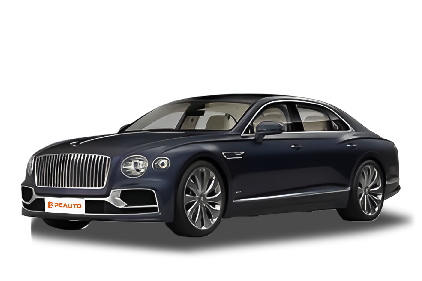
How to manually open the trunk of Bentley Flying Spur?
 SparkleOct 15, 2025, 05:33 PM
To manually open the Bentley Flying Spur's trunk, you'll typically use the emergency release lever located inside the boot. It's usually tucked under a panel in the trunk lining or near the latch mechanism—your owner's manual is the best bet for the exact spot (varies slightly by model year). For Malaysian owners, keep in mind our hot climate can affect electronic sensitivity; if the power tailgate isn't responding due to low battery or system glitches, the manual release is a handy backup. Pro tip: Regularly check the trunk struts and latch for proper lubrication to prevent sticking issues. If you're parking the car for an extended period, disconnecting the battery negative terminal helps avoid electronic system drain. Bentley builds these cars with both convenience and redundancy in mind, so if you run into trouble, reach out to authorized dealers like Bentley Kuala Lumpur for expert help—never force it open, you don't want to damage that paint or aluminum bodywork.
Special Disclaimer: This content is published by users and does not represent the views or position of PCauto.
Related Q&A
Q
How much does it cost to repair a Bentley Flying Spur?
In Malaysia, routine maintenance for a Bentley Flying Spur typically sets owners back between RM5,000 and RM10,000. The exact cost hinges on the service center's pricing and the specific parts needing replacement—think the brand and specs of consumables like engine oil and filters. For a major service, though, which might involve swapping out brake pads, changing transmission fluid, or conducting a more thorough inspection, you could be looking at RM20,000 or even more. Let’s face it, as a top-tier luxury brand, Bentley’s OEM parts and specialized technical services don’t come cheap.
It’s always smart to stick with authorized Bentley service centers for maintenance. Not only does this ensure your car’s performance stays up to snuff and your maintenance records remain integrity, but it also keeps that factory warranty valid—definitely not something to overlook.
As for timing, the Flying Spur’s maintenance interval is usually every 15,000 kilometers or once a year, whichever comes first. Sticking to that schedule isn’t just about prolonging the car’s life; it’s also key to keeping that incredible driving experience as sharp as the day you bought it.
And here’s a local tip for Malaysian owners: with our hot and humid climate, pay extra attention to checking the air conditioning system and electronic components. It’ll help make sure your Bentley runs reliably even when the mercury (and humidity) spikes.
 TedOct 15, 2025
Q
What's the body length of the Bentley Flying Spu?
Official figures put the Bentley Flying Spur at around 5,316mm long with a 3,194mm wheelbase, placing it firmly in the luxury limousine segment. Its defining traits – a supremely spacious cabin and elegantly stretched body lines – make it a perfect fit for Malaysia's discerning high-end buyers who value both comfort and prestige. As one of Bentley's flagship sedans, the Flying Spur isn't just about head-turning good looks; it packs serious performance with either a potent W12 or V8 engine under the hood. Pair that with advanced chassis tech and opulent interior appointments – think handcrafted leather seats and fine wood veneers – and you've got a car that delivers both thrills behind the wheel and first-class comfort for passengers.
In the Malaysian market, these luxury cruisers are a hit with business executives and elite users alike. They're equally at home handling daily commutes as they are devouring long highway miles, with exceptional sound insulation and adaptive suspension smoothing out whatever the local roads throw at them. And let's not forget the extensive customization options – owners can tailor their Flying Spur to their exact tastes, creating a truly one-of-a-kind statement piece that underscores their elite status.
 RippleOct 15, 2025
Q
What's the price of the Bentley Flying Spur?
The all-new Bentley Flying Spur comes with a range of prices in Malaysia, depending on the configuration and optional extras you go for. The base price starts at around RM1.5 million, and if you pile on the top-tier options, you could be looking at over RM2 million. For the most up-to-date figures, your best bet is to hit up an authorized Bentley dealer in Malaysia.
As a luxury four-door saloon, the Flying Spur doesn’t mess around when it comes to power. You’ve got the choice between a 6.0-litre W12 twin-turbo or a 4.0-litre V8 twin-turbo engine, both delivering that signature blend of brute force and silky-smooth driving. Then there’s the advanced air suspension and all-wheel steering—this thing nails that sweet spot between cloud-like comfort and sharp, engaging handling.
Malaysian buyers can really make it their own too. Think custom interior materials, bespoke wood veneers, and a killer sound system—whatever floats your boat to create a ride that’s totally one-of-a-kind.
It’s worth keeping in mind, though, that the Flying Spur is an imported luxury car here, so the price tag includes import duties, sales tax, and other extras. That’s part of why it sits in the higher bracket.
If you’re serious about getting one, beyond just the sticker price, check out the after-sales packages Bentley Malaysia offers. stuff like service plans and extended warranty options can save you hassle and keep your investment protected for the long haul. Smart move for any discerning owner.
ShadowOct 15, 2025Popular Cars
Model Year
Car Compare
Car Photo
Related Models
 Cars
CarsLatest Q&A
Q
Is AMT similar to automatic?
There are significant differences between AMT transmissions and automatic transmissions (AT) in terms of core structure and driving experience. AMT is essentially an electronically automated version of a manual transmission, simulating manual clutch operation and gear shifting through a computerized control system while retaining the gear set structure of manual transmissions. As a result, it offers higher transmission efficiency, with fuel consumption approximately 8%-12% lower than AT, making it particularly suitable for highway or long-distance driving. However, it may exhibit jerking similar to manual transmissions during low-speed gear shifts, especially noticeable in congested traffic conditions.
AT transmissions rely on torque converters for power transfer, delivering smooth and seamless gear shifts that appeal to comfort-oriented users. However, their complex structure (incorporating planetary gear sets, hydraulic systems, etc.) results in higher maintenance costs. A single service may cost between 800 to 1,500 ringgit, whereas AMT only requires gear oil replacement at approximately 400 ringgit.
From a market perspective, AMT is predominantly used in budget vehicles or commercial models priced below 80,000 ringgit, while AT is typically featured in mid-to-high-end vehicles. Consumers should select based on actual needs: AMT suits those prioritizing fuel efficiency and low maintenance costs, while AT better serves those valuing comfort. Notably, recent advancements in AMT electronic control technology have significantly mitigated jerking issues, though test drives should still emphasize low-speed performance evaluation.
 AriaMar 26, 2026
Q
Which is better, DCT or AT?
DCT (Dual-Clutch Transmission) and AT (Automatic Transmission) each have their own advantages and disadvantages, and the choice should be based on personal driving needs. AT transmissions transfer power through a torque converter, offering excellent shift smoothness, making them suitable for urban commuting or novice drivers. However, they tend to have higher fuel consumption, and vehicles equipped with them are usually more expensive. DCT transmissions utilize a dual-clutch structure, featuring fast shift speeds and high power transmission efficiency, which provides a more direct driving experience—particularly suitable for users seeking a sporty feel. However, they may exhibit jerking at low speeds and have relatively high maintenance costs. If durability and comfort are priorities, AT is the more reliable choice; if power responsiveness and driving pleasure are preferred, wet DCT (such as Volkswagen DSG) performs better, though dry DCT models should be avoided in prolonged stop-and-go traffic conditions. Additionally, CVT transmissions excel in smoothness and fuel efficiency, making them ideal for daily commuting, but they lack driving excitement. It is recommended to test-drive before purchasing, as tuning varies significantly across brands, and real-world experience is more important than theoretical specifications.
FlutteringMar 26, 2026Q
Is Amt good or bad?
AMT gearboxes have a significant cost advantage in the local market, typically being around 5,000 Ringgit cheaper than models equipped with conventional automatic transmissions. Their fuel efficiency is comparable to manual transmissions, resulting in long-term fuel savings. Featuring a straightforward design, they achieve transmission efficiency exceeding 90% with relatively low maintenance costs, making them ideal for practicality-oriented consumers. However, their shifting logic contains inherent limitations: gear changes between 1st and 2nd cause 0.3-0.5 second power interruptions, while unintended upshifts on inclines may reduce engine speed by 15%-20%, compromising driving smoothness. For urban commuters or budget-conscious buyers, AMT offers excellent value, though those prioritizing premium driving dynamics should consider alternative transmission types. Some domestic models like the Perodua Axia employ enhanced AMT systems, where optimized shift programming has reduced gearshift shock by approximately 30%.
 RainbowsMar 26, 2026
Q
Which gives better mileage, CVT or AMT?
From the perspective of fuel economy, CVT transmissions generally perform better under urban driving conditions. Their continuously variable design allows the engine to consistently operate within the optimal speed range, significantly reducing fuel consumption during frequent starts and stops. Test data shows that their fuel consumption in urban driving conditions is 10% to 15% lower than that of comparable models. AMT transmissions, on the other hand, inherit the high transmission efficiency of manual transmissions, delivering fuel efficiency close to manual transmissions during high-speed cruising. This makes them particularly suitable for long-distance driving in large-displacement vehicles. However, due to power interruption during gear shifts, their overall fuel consumption may be 5% to 8% higher than CVTs.
The difference in fuel-saving characteristics between the two transmissions stems from their technical principles: CVTs achieve continuous variability through steel belts and pulleys, eliminating the fixed gear ratio limitations of traditional transmissions; AMTs simulate manual gear changes via electronic control systems while maintaining the mechanical efficiency of gear transmission. Notably, actual fuel consumption is also influenced by driving habits. Smooth acceleration and anticipatory deceleration can maximize the transmissions' fuel-saving potential. If the vehicle budget permits and urban commuting is the primary use, CVTs offer a more economical choice. For frequent highway driving with an emphasis on cost-effectiveness, AMTs are equally worth considering.
 RubyBlazeMar 26, 2026
Q
Which is cheaper, AMT or CVT?
In terms of gearbox cost, AMT is usually more economical than CVT. Essentially, AMT is a manual transmission equipped with an electronic control unit, featuring a simple structure and low maintenance costs. The unit price ranges from approximately 5,000 to 8,000 ringgit, making it suitable for budget-conscious consumers or those who prioritize long-term operating costs. CVT incurs higher manufacturing costs due to its precision steel belt transmission system and continuous variable transmission technology, with a unit price of about 7,000 to 10,000 ringgit. However, it delivers a smoother driving experience and superior fuel efficiency. The primary differences between the two lie in technical complexity: AMT retains the gear-shifting mechanism, resulting in noticeable shift shock; CVT achieves linear power output through stepless speed variation but requires periodic belt inspection and incurs higher maintenance expenses. For those prioritizing initial cost and basic transportation needs, AMT offers better value; if comfort and long-term fuel economy are priorities, CVT represents a more worthwhile investment. Note that actual prices may vary based on vehicle model, brand, and local supply chain factors.
 ShadowProwlMar 26, 2026
Related News

In order to be lighter, Bentley Continental GT Supersports refuses electrification
MichaelNov 21, 2025

Bentley Batur Convertible Debuts with 740hp W12
WilliamAug 11, 2025
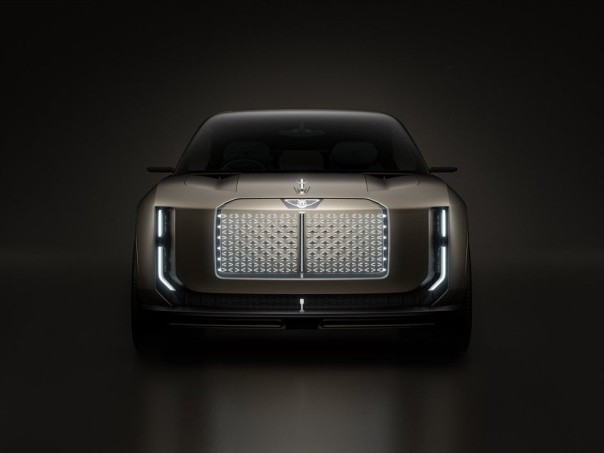
Bentley releases the EXP 15 concept car, inspired by the 1930 Blue Train
WilliamJul 16, 2025

Concept images of Bentley's first pure electric SUV revealed! Hitting the market in 2026!
JohnNov 27, 2024
Pros
Cons