
Q
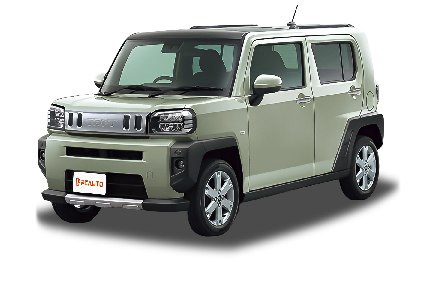
Is Daihatsu Taft the 4WD vehicle?
 SpiritualMay 20, 2025, 01:58 PM
The Daihatsu Taft currently sold in Malaysia is not a four-wheel drive model, but rather utilizes a front-wheel drive system. This compact SUV is equipped with a 1.0L turbocharged three-cylinder engine paired with a CVT transmission, primarily for urban daily use. Although it features elevated ground clearance and SUV styling, no four-wheel drive version is available.
It's important to note that the Daihatsu Taft (marketed as the Rocky in Japan) may have different configurations in different markets, but the model in Malaysia does not adopt four-wheel drive. For buyers requiring off-road capability, other brands like the Mitsubishi Triton or Toyota Fortuner - which offer four-wheel drive systems in their midsize/large SUVs - may be more suitable alternatives.
For city driving, however, the Taft's fuel efficiency and compact dimensions are more practical. Additionally, Daihatsu maintains a well-established after-sales service network in Malaysia with relatively affordable maintenance costs.
Special Disclaimer: This content is published by users and does not represent the views or position of PCauto.
Related Q&A
Q
Is Daihatsu as good as Toyota?
Daihatsu and Toyota are both well - known Japanese automotive brands and belong to the Toyota Group. Therefore, they share many similarities in technology sharing and quality control. Especially in the fields of small cars and energy - efficient models, Daihatsu performs exceptionally well. For example, the Daihatsu Ayla and Toyota Axia, which are common in the Malaysian market, are actually sibling models developed on the same platform, and the core components such as engine and transmission technology are also basically the same.
However, as a globally leading brand in terms of sales, Toyota has a more diverse product line, covering the full range of models from economy to luxury. Meanwhile, it may have more advantages in brand premium and after - sales service network. For Malaysian consumers, if they have a limited budget and focus on practicality and fuel economy, Daihatsu is a good option. On the other hand, if they pursue a more comprehensive brand guarantee and greater vehicle variety, Toyota might be more suitable.
Both brands inherit the high standards of Japanese cars in terms of reliability, but their market positioning is slightly different, allowing consumers to make choices based on their own needs. In addition, the hot climate and road conditions in Malaysia demand high vehicle durability. Japanese cars generally have strong adaptability and relatively low maintenance costs, which is also one of the reasons for their popularity in the local market.
 CreativeGeniusInnovatorFeb 16, 2026
Q
Is Daihatsu made by Toyota?
Yes, Daihatsu is a subsidiary of the Toyota Group. Since 1998, it has become a wholly - owned brand of Toyota. It mainly focuses on the research, development and production of small and compact cars. Especially in the Malaysian market, some Daihatsu models like Axia and certain models of Perodua (the second national car brand) use the technology platforms shared with Toyota. For example, the connection between Perodua Myvi and Toyota Passo reflects Toyota's technical support and resource integration for Daihatsu.
Daihatsu is very popular among Malaysian consumers for its features of being economical, practical, fuel - efficient and durable. And Toyota's endorsement has also enhanced Daihatsu's credibility in terms of quality and after - sales service. In Malaysia, Daihatsu has further expanded its market influence through cooperation with Perodua. For instance, models such as Perodua Bezza and Daihatsu Sirion all demonstrate the technical cooperation between the two sides.
For Malaysian consumers, choosing Daihatsu or Perodua models not only allows them to enjoy Toyota's mature technology, but also enables them to get cost - effective models that are more suitable for local road conditions and consumer needs. This is also an important part of Toyota Group's strategic layout in the Southeast Asian market.
 KindheartedSoulHelperFeb 16, 2026
Q
Is Daihatsu a Chinese brand?
Daihatsu is not a Chinese brand. Instead, it's a Japanese automaker established in 1907. As a subsidiary of the Toyota Group, it focuses on producing small and compact cars and has profound technological expertise, especially in the field of energy - saving and environmentally friendly models.
For Malaysian consumers, Daihatsu is a well - known brand. Models like the Daihatsu Myvi and Axia are extremely popular in the local market. These cars are renowned for their affordability, high fuel efficiency, and low maintenance costs, making them a perfect fit for Malaysia's urban road conditions and consumers' vehicle - using needs.
Daihatsu has always had a stable market performance in Malaysia. Through close cooperation with its local partner, Perodua, it has launched several models that cater to local consumers' preferences, further strengthening its market position.
Understanding the background and features of an automotive brand helps consumers make wiser car - buying decisions. Daihatsu's long - standing presence in the market and its positive user reviews also attest to the reliability and adaptability of its products.
 GentleSpiritSootherFeb 16, 2026
Q
What is the load capacity of a Daihatsu Taft?
The Daihatsu Taft is a classic compact SUV. Its loading capacity varies depending on the specific model and configuration. Generally speaking, its maximum load capacity is around 400 to 500 kilograms, which is suitable for daily family use or light cargo transportation needs. This vehicle is renowned for its robust body structure and reliable suspension system, capable of handling the common urban and rural road conditions in Malaysia while maintaining good fuel economy. For users who require a higher loading capacity, it is recommended to refer to the vehicle manual or consult the dealer for accurate data, and always pay attention not to overload to ensure driving safety. Additionally, the loading capacity is also affected by the vehicle's tires, suspension system, and the distribution of the cargo. Reasonably distributing the weight can further enhance driving stability. As an economical and practical model, the Daihatsu Taft is very popular in the Malaysian market, especially suitable for small families or users who need to balance daily commuting and occasional cargo - carrying needs.
 CuriousMindInvestigatorFeb 16, 2026
Q
How big is the Daihatsu Taft?
The Daihatsu Taft is a compact SUV with body dimensions approximately 3,995 mm in length, 1,695 mm in width, and 1,620 mm in height, along with a wheelbase of 2,525 mm. These dimensions make it extremely flexible for city driving in Malaysia. It's well - suited for narrow roads and crowded parking lots while still offering sufficient interior space to meet the daily needs of a family.
The Taft adopts Daihatsu's classic design language. It has a small yet practical exterior and a relatively high ground clearance, enabling it to handle Malaysia's diverse road conditions, including rural roads and light off - road scenarios.
In terms of power, the Taft is usually equipped with a 1.0 - liter or 1.2 - liter gasoline engine, which balances fuel economy and power performance, making it a great fit for Malaysia's driving environment.
Moreover, the Daihatsu Taft has relatively low maintenance costs and an abundant supply of spare parts. This is a significant advantage for Malaysian consumers who value practicality and economy.
If you're looking for a small SUV suitable for city commuting and occasional outings, the Taft is a worthy option. Its reliability and durability have a good reputation in the Southeast Asian market.
 BraveExplorerAdventurerFeb 16, 2026
Q
How much horsepower does a Daihatsu Taft have?
As a classic compact SUV, the power performance of the Daihatsu Taft varies depending on the specific model and year. Take the common version in the Malaysian market as an example. It is usually equipped with a 1.5-liter naturally aspirated gasoline engine with a maximum horsepower of about 80 to 90 hp. It is paired with a 5-speed manual or 4-speed automatic transmission, which is suitable for urban commuting and light off-road needs. This car is known for its economic practicality, with high fuel efficiency and relatively low maintenance costs, making it very suitable for daily use by Malaysian consumers.
It's worth mentioning that although horsepower is one of the important indicators for measuring a car's performance, the actual driving experience is also affected by factors such as torque output, vehicle weight, and transmission system tuning. Therefore, it is recommended to take a test drive before purchasing to feel its power performance. Under Malaysia's mountainous and hot climate conditions, the reliability and durability of the Daihatsu Taft have also been verified over a long period, making it a cost - effective choice.
LonelyHeartsHealerFeb 16, 2026Q
How much is a Daihatsu Taft?
The price of the Daihatsu Taft has not been announced yet and is marked as TBC. This vehicle comes in models such as the 2023 Daihatsu Taft X Turbo FWD CVT, 2023 Daihatsu Taft G Turbo FWD CVT, and 2023 Daihatsu Taft G FWD CVT. It belongs to the A-Segment category, measuring 3395mm in length, 1475mm in width, and 1630mm in height, with a wheelbase of 2460mm. The vehicle weighs between 830 - 840kg, has 5 doors and 4 seats, a fuel tank capacity of 30L, and an engine displacement of 658mL. It is equipped with a CVT transmission, features front-wheel drive, and uses a MacPherson independent front suspension and ventilated disc front brakes.
It has a rich set of safety features, with standard equipment including ABS anti-lock braking and vehicle stability control. The interior configuration is also quite comprehensive, including a multi-functional steering wheel, a 220V/230V power supply, keyless door locks, etc. The seats are flexible and changeable. There are two types of headlights - halogen and LED, and it also has automatic headlights, a single sunroof, rain-sensing wipers, and a touchscreen central control panel.
 WanderingSoulJourneyerFeb 16, 2026
Q
What is the fuel consumption of Daihatsu Taft?
As a compact SUV, the fuel economy of the Daihatsu Taft varies depending on the specific model and driving conditions. According to official data, the version equipped with a 1.0-liter turbocharged engine consumes about 5.8 liters per 100 kilometers in city driving, which can drop to 4.9 liters per 100 kilometers on the highway, and the combined fuel consumption is around 5.3 liters per 100 kilometers. It's suitable for daily commuting or long-distance driving for Malaysian users. If you choose the version with a 1.2-liter naturally aspirated engine, the fuel consumption may be slightly higher, but the power output is smoother.
Factors affecting fuel consumption include driving habits, road conditions, and vehicle maintenance. It is recommended to regularly maintain tire pressure and engine condition to optimize fuel efficiency. The fuel-saving performance of the Daihatsu Taft is related to its lightweight body design and efficient power system, meeting the needs of Malaysian consumers for economical and practical models. Meanwhile, the vehicle is also equipped with fuel-saving features such as start - stop technology, further reducing fuel consumption in congested traffic.
For users who focus on fuel economy, hybrid or electric vehicle options can also be considered. However, the traditional fuel version of the Taft still has advantages in terms of price and maintenance cost, especially suitable for buyers with limited budgets who need a reliable means of transportation.
 SparklingDewAdmirerFeb 16, 2026
Q
What is the top speed of the Daihatsu Taft?
The Daihatsu Taft is a classic compact SUV. Its design focuses on practicality and reliability. Although this model has been discontinued, according to historical data, its maximum speed is approximately between 120 and 130 kilometers per hour. The specific figure may vary depending on different years and configurations. For drivers in Malaysia, such a speed can fully meet the needs of daily urban commuting and occasional highway driving, especially in the local common traffic environment. It's worth mentioning that the Daihatsu Taft is known for its excellent fuel economy and durability, making it very suitable for Malaysia's changeable road conditions, including congested urban sections and rough rural paths. If you're interested in this car, you can pay attention to well - maintained models in the second - hand market. They usually offer high cost - effectiveness and relatively low maintenance costs. In addition, as a brand under the Toyota Group, Daihatsu has an abundant supply of spare parts in Malaysia, and maintenance is also relatively convenient.
 GlowingOrbCollectorFeb 16, 2026
Q
What is the lifespan of the Daihatsu Taft?
As a classic compact SUV, the service life of the Daihatsu Taft mainly depends on daily maintenance, driving habits, and usage environment. Under the typical climate and road conditions in Malaysia, if you regularly change the engine oil, filters, and vulnerable parts, and strictly follow the recommendations in the maintenance manual, it can usually travel 150,000 to 250,000 kilometers or last for more than 15 years. Its durable body structure and reliable 1.5 - liter engine technology (such as the DVVT system) can meet the needs of urban commuting and light off - road driving, and the stability of its electronic systems has also been verified by the market. It's worth noting that the tropical and rainy environment may accelerate the aging of rubber parts (such as suspension bushings and sealing strips). It is recommended to check the chassis parts every 5 years and pay attention to anti - rust treatment. Although models in the same class, such as the Perodua Aruz or Proton X50, use newer technologies, the mechanical simplicity of the Taft actually reduces long - term maintenance costs, making it suitable for users who focus on practicality. Malaysian car owners should give priority to choosing original parts to ensure compatibility and check the efficiency of the cooling system every 2 years, which is particularly crucial for extending the engine's service life.
 ShimmeringLightsWatcherFeb 16, 2026
Popular Cars
Model Year
Car Compare
Car Photo
Related Models
 Cars
CarsLatest Q&A
Q
Is AMT similar to automatic?
There are significant differences between AMT transmissions and automatic transmissions (AT) in terms of core structure and driving experience. AMT is essentially an electronically automated version of a manual transmission, simulating manual clutch operation and gear shifting through a computerized control system while retaining the gear set structure of manual transmissions. As a result, it offers higher transmission efficiency, with fuel consumption approximately 8%-12% lower than AT, making it particularly suitable for highway or long-distance driving. However, it may exhibit jerking similar to manual transmissions during low-speed gear shifts, especially noticeable in congested traffic conditions.
AT transmissions rely on torque converters for power transfer, delivering smooth and seamless gear shifts that appeal to comfort-oriented users. However, their complex structure (incorporating planetary gear sets, hydraulic systems, etc.) results in higher maintenance costs. A single service may cost between 800 to 1,500 ringgit, whereas AMT only requires gear oil replacement at approximately 400 ringgit.
From a market perspective, AMT is predominantly used in budget vehicles or commercial models priced below 80,000 ringgit, while AT is typically featured in mid-to-high-end vehicles. Consumers should select based on actual needs: AMT suits those prioritizing fuel efficiency and low maintenance costs, while AT better serves those valuing comfort. Notably, recent advancements in AMT electronic control technology have significantly mitigated jerking issues, though test drives should still emphasize low-speed performance evaluation.
 AriaMar 26, 2026
Q
Which is better, DCT or AT?
DCT (Dual-Clutch Transmission) and AT (Automatic Transmission) each have their own advantages and disadvantages, and the choice should be based on personal driving needs. AT transmissions transfer power through a torque converter, offering excellent shift smoothness, making them suitable for urban commuting or novice drivers. However, they tend to have higher fuel consumption, and vehicles equipped with them are usually more expensive. DCT transmissions utilize a dual-clutch structure, featuring fast shift speeds and high power transmission efficiency, which provides a more direct driving experience—particularly suitable for users seeking a sporty feel. However, they may exhibit jerking at low speeds and have relatively high maintenance costs. If durability and comfort are priorities, AT is the more reliable choice; if power responsiveness and driving pleasure are preferred, wet DCT (such as Volkswagen DSG) performs better, though dry DCT models should be avoided in prolonged stop-and-go traffic conditions. Additionally, CVT transmissions excel in smoothness and fuel efficiency, making them ideal for daily commuting, but they lack driving excitement. It is recommended to test-drive before purchasing, as tuning varies significantly across brands, and real-world experience is more important than theoretical specifications.
FlutteringMar 26, 2026Q
Is Amt good or bad?
AMT gearboxes have a significant cost advantage in the local market, typically being around 5,000 Ringgit cheaper than models equipped with conventional automatic transmissions. Their fuel efficiency is comparable to manual transmissions, resulting in long-term fuel savings. Featuring a straightforward design, they achieve transmission efficiency exceeding 90% with relatively low maintenance costs, making them ideal for practicality-oriented consumers. However, their shifting logic contains inherent limitations: gear changes between 1st and 2nd cause 0.3-0.5 second power interruptions, while unintended upshifts on inclines may reduce engine speed by 15%-20%, compromising driving smoothness. For urban commuters or budget-conscious buyers, AMT offers excellent value, though those prioritizing premium driving dynamics should consider alternative transmission types. Some domestic models like the Perodua Axia employ enhanced AMT systems, where optimized shift programming has reduced gearshift shock by approximately 30%.
 RainbowsMar 26, 2026
Q
Which gives better mileage, CVT or AMT?
From the perspective of fuel economy, CVT transmissions generally perform better under urban driving conditions. Their continuously variable design allows the engine to consistently operate within the optimal speed range, significantly reducing fuel consumption during frequent starts and stops. Test data shows that their fuel consumption in urban driving conditions is 10% to 15% lower than that of comparable models. AMT transmissions, on the other hand, inherit the high transmission efficiency of manual transmissions, delivering fuel efficiency close to manual transmissions during high-speed cruising. This makes them particularly suitable for long-distance driving in large-displacement vehicles. However, due to power interruption during gear shifts, their overall fuel consumption may be 5% to 8% higher than CVTs.
The difference in fuel-saving characteristics between the two transmissions stems from their technical principles: CVTs achieve continuous variability through steel belts and pulleys, eliminating the fixed gear ratio limitations of traditional transmissions; AMTs simulate manual gear changes via electronic control systems while maintaining the mechanical efficiency of gear transmission. Notably, actual fuel consumption is also influenced by driving habits. Smooth acceleration and anticipatory deceleration can maximize the transmissions' fuel-saving potential. If the vehicle budget permits and urban commuting is the primary use, CVTs offer a more economical choice. For frequent highway driving with an emphasis on cost-effectiveness, AMTs are equally worth considering.
 RubyBlazeMar 26, 2026
Q
Which is cheaper, AMT or CVT?
In terms of gearbox cost, AMT is usually more economical than CVT. Essentially, AMT is a manual transmission equipped with an electronic control unit, featuring a simple structure and low maintenance costs. The unit price ranges from approximately 5,000 to 8,000 ringgit, making it suitable for budget-conscious consumers or those who prioritize long-term operating costs. CVT incurs higher manufacturing costs due to its precision steel belt transmission system and continuous variable transmission technology, with a unit price of about 7,000 to 10,000 ringgit. However, it delivers a smoother driving experience and superior fuel efficiency. The primary differences between the two lie in technical complexity: AMT retains the gear-shifting mechanism, resulting in noticeable shift shock; CVT achieves linear power output through stepless speed variation but requires periodic belt inspection and incurs higher maintenance expenses. For those prioritizing initial cost and basic transportation needs, AMT offers better value; if comfort and long-term fuel economy are priorities, CVT represents a more worthwhile investment. Note that actual prices may vary based on vehicle model, brand, and local supply chain factors.
 ShadowProwlMar 26, 2026
Pros
Cons