
Q
What engine is in the 2018 Isuzu D-Max?
 AceNov 21, 2025, 05:47 PM
The 2018 Isuzu D-Max comes with two diesel engine options: the 3.0-liter 4JJ1-TC Hi-Power turbocharged diesel and the 2.5-liter 4JK1-TC Hi-Power turbocharged diesel. The 3.0-liter unit cranks out 177 horsepower and 380 Nm of peak torque, while the 2.5-liter engine delivers 136 horsepower and 320 Nm of torque. Both engines are mated to either a 6-speed manual or 6-speed automatic transmission, striking a balance between performance and fuel efficiency. As a pickup truck, the D-Max's engines feature Isuzu's exclusive common-rail fuel injection technology and variable geometry turbochargers, providing strong low-end torque that's perfect for hauling and off-roading, while also keeping noise levels in check. It's worth noting that both engines have stood the test of time in the market, boasting standout durability and reliability in their class, along with reasonably affordable maintenance costs – making them a solid pick for users who frequently drive long distances or need a workhorse for commercial use. Isuzu has deep technical expertise in diesel engines, and the D-Max's engine design prioritizes stability in tropical climates, ensuring it performs well even in hot and humid conditions.
Special Disclaimer: This content is published by users and does not represent the views or position of PCauto.
Related Q&A
Q
How much is a 2018 Isuzu D-Max?
The used car prices for the 2018 Isuzu D-Max can vary depending on factors like vehicle condition, mileage, specifications, and region. Currently, the market price ranges roughly from RM55,000 to RM85,000, with the exact price needing to be evaluated based on the actual vehicle's condition. This pickup truck is known for its durability and off-road performance, equipped with a 2.5L or 3.0L turbocharged diesel engine that delivers stable power output and decent fuel economy, making it suitable for daily use or light off-roading needs. The 2018 model comes with basic safety features such as ABS, EBD, and dual airbags, while some higher-spec versions may also include a reverse camera and touchscreen entertainment system. The D-Max has a high presence in the used car market, with relatively reasonable maintenance costs and ample availability of spare parts, which makes it a popular choice for consumers on a budget who need a reliable pickup truck. It is recommended to confirm the vehicle's condition through a professional inspection before purchasing and compare quotes from different sellers to get the best value for money.
 KindheartedSoulNov 24, 2025
Q
What is the fuel consumption of Isuzu D-Max 2018?
The fuel economy of the 2018 Isuzu D-Max varies depending on engine configuration and driving conditions. Models equipped with the 1.9-liter Blue Power turbo diesel engine have a combined fuel consumption of approximately 6.5 to 7.0 liters per 100 kilometers, while the 3.0-liter turbo diesel version averages around 7.5 to 8.0 liters per 100 kilometers. Actual fuel usage may be affected by load, road conditions, and driving habits. As a pickup truck known for its outstanding durability, the D-Max's diesel engines excel in strong low-end torque and fuel efficiency, making it suitable for daily commuting and cargo-hauling needs. Regular maintenance and proper driving techniques can further optimize fuel economy. If considering a used D-Max, it is advisable to inspect the condition of the engine and transmission system, as well-maintained vehicles tend to have fuel consumption closer to factory specifications. Additionally, referencing real-world feedback from owner forums can serve as a helpful supplementary evaluation.
 DaisyMeadowNov 24, 2025
Q
How big is the fuel tank on a 2018 DMAX?
The 2018 D-MAX has a 76-liter fuel tank, a design that meets long-distance driving or heavy-haul needs while still keeping an eye on fuel economy. Diesel engine models usually come with larger tanks because diesel vehicles are more fuel-efficient and have plenty of torque, making them great for frequent hauling or off-roading. It's worth noting that actual range can still be affected by driving habits, road conditions, and load. We recommend checking the fuel level regularly and planning refueling stops accordingly. Most pickups in this class have tanks ranging from 60 to 80 liters, so the D-MAX's 76 liters is above average for the segment—pretty handy for users who often hit construction sites or take long trips. If you want to save more fuel, keep your tire pressure at the right level, avoid sudden acceleration and hard braking, and maintain the fuel system on schedule.
 LeafyBranchNov 21, 2025
Q
How much is a 2018 D-Max?
The used car prices for the 2018 D-Max vary depending on factors like condition, mileage, trim level, and location. Current market rates are roughly between RM60,000 and RM90,000. Low-mileage, well-maintained high-spec models might edge closer to the upper end, while base trims or higher-mileage examples will be more affordable. This pickup comes with a 3.0T diesel engine, delivering reliable performance and strong off-road capabilities – perfect for users needing to balance cargo hauling with daily driving. Its modification potential is also a hit with enthusiasts. When buying, it's advisable to focus on checking for chassis rust, engine condition, and 4WD system status. If purchasing through a used car dealer, request an inspection report or arrange third-party testing. Additionally, the D-Max benefits from a comprehensive parts supply and service network, making post-purchase maintenance costs relatively reasonable. However, diesel vehicles do require regular fuel system cleaning and DPF maintenance to keep them running at their best. If your budget is tight, you could also consider same-year competitors like the Toyota Hilux or Mitsubishi Triton, but be sure to compare specs and service records thoroughly before deciding.
 LivelySpiritNov 21, 2025
Q
How big is the Isuzu DMAX 2018?
The 2018 Isuzu D-MAX measures 5295mm in length, 1860mm in width, and 1775mm in height, with a wheelbase of 3095mm. It's one of the roomier options in the midsize pickup segment, offering excellent cargo space and passenger comfort. The cargo bed checks in at 1485mm long, 1530mm wide, and 475mm high, making it ideal for everyday hauling needs. On top of that, its approach angle, departure angle, and ground clearance are all impressive, ensuring solid off-road capability when you need it. Under the hood, the 2018 D-MAX packs a 3.0-liter turbocharged diesel engine that cranks out 177 horsepower and 380 Nm of peak torque. It delivers strong performance while keeping fuel efficiency in check, handling all kinds of road conditions with ease. Inside, you'll find handy features like a multifunction steering wheel, touchscreen infotainment system, and airbags, which boost both the driving experience and safety. As a tough and reliable pickup, the 2018 D-MAX has always been a hit in the market, especially for users who need to balance work and play. Whether you're commuting in the city or heading out for an outdoor adventure, it handles it all without breaking a sweat.
 WilNov 21, 2025
Q
How many Litres of fuel does a D-Max take?
When it comes to the fuel tank capacity of the D-Max, the diesel variants of the Isuzu D-Max in the Malaysian market typically hold around 76 liters, though this can vary slightly depending on the specific model year and body type—like whether it's a single cab or double cab. For the exact figure, your best bet is to check your owner's manual or the label inside the fuel filler cap.
The D-Max is a pretty popular pickup here in Malaysia, and its fuel efficiency is definitely something to note. The diesel engine's strong low-end torque makes it great for hauling loads or long highway stretches. Planning your refueling stops smartly can really help with day-to-day usability.
One thing to keep in mind: the actual usable fuel volume might be a bit less than the stated capacity. That's totally normal—it's just the safety buffer built in to allow for fuel expansion. If you're someone who does regular off-roading or long-distance driving, especially in remote parts of East Malaysia, it pays to map out where the petrol stations are along your route. Oh, and don't forget to service your fuel filter regularly and drive sensibly—both go a long way in keeping those fuel consumption figures in check.
 SilenceOct 21, 2025
Q
What is the best hybrid vehicle for 2025?
The top contenders for Malaysia's best hybrid car in 2025 are likely to be the Toyota Corolla Cross Hybrid, Honda City RS e:HEV, and BYD Qin PLUS DM-i. These models are generating buzz thanks to their impressive fuel efficiency, proven hybrid tech, and ability to handle local road conditions like a champ. The Corolla Cross Hybrid is a hit with families, thanks to Toyota's reliable THS II hybrid system and strong resale value. On the flip side, the Honda City RS e:HEV is turning heads among younger drivers with its sportier drive and the efficient punch of the i-MMD system. For budget-conscious buyers, the BYD Qin PLUS DM-i is hard to ignore, offering longer all-electric range and a more competitive price tag. When shopping for a hybrid in Malaysia, folks should also think about how easy it is to get after-sales service, what the battery warranty covers, and how accessible charging facilities are. Sure, hybrids don't need to be plugged in, but good after-sales support can really cut down on long-term running costs. And let's not forget the government's tax incentives for hybrids – that's a big one too. Weighing all these factors together is the way to go to find the perfect fit.
 WanderOct 21, 2025
Q
Will the 2025 D-Max have a hybrid version?
Isuzu hasn't officially spilled the beans yet on whether the 2025 D-Max will get a hybrid makeover. But let's be real, with the global auto industry shifting hard towards new energy and Southeast Asia's growing hunger for fuel-sipping rides, it wouldn't be a total shock if the D-Max gets some electric assist down the line. Isuzu's been toying with mild hybrid systems in certain markets lately, right? And the D-Max is their bread-and-butter pickup. Slapping a hybrid setup in there could seriously boost fuel economy without watering down its legendary hauling and off-road grit – a big deal for Malaysian buyers who want both utility and to keep an eye on those fluctuating pump prices.
Now, hybrids come in flavors: mild (MHEV) and full (HEV). Mild hybrids use a 48V battery to help with start-stop and recapture some energy, which helps nudge fuel economy up a bit. Full hybrids can actually potter around on electric alone for short distances. If the D-Max goes hybrid, my bet is we'll see it first on the higher-spec trims.
Plus, the Malaysian government's been throwing tax breaks at energy-efficient cars lately, which could grease the wheels for a hybrid D-Max to roll in. If you're keen, keep your eyes peeled on Isuzu Malaysia's official site or hit up the local motor shows – that's where the latest deets are likely to drop.
 BreezeOct 21, 2025
Q
How much is an Isuzu D-MAX 2025?
The 2025 Isuzu D-MAX is expected to have a range of prices in Malaysia depending on trim levels and specifications. Looking at the current model's pricing as a guide, the base variant will likely start around RM90,000, while the top-spec version – possibly featuring the 3.0-liter diesel engine – could nudge closer to RM140,000. Of course, we’ll have to wait for Isuzu Malaysia’s official announcement for the exact figures.
The D-MAX has long been a favorite pickup here, known for its tough-as-nails durability, impressive payload capacity, and solid off-road chops – perfect for Malaysia’s diverse landscapes and hardworking commercial needs. The 2025 model is expected to carry forward that practical design philosophy but might get some nice upgrades, especially in the tech department. Think possibly a 360-degree camera system or more advanced active safety features to keep things modern.
And let’s not forget Isuzu’s diesel engine tech – it’s always been praised for good fuel efficiency and that healthy torque punch, which makes it ideal for long hauls or when you need to haul heavy loads. If you’re thinking about getting one, keep an eye out for official promotions – things like tax exemptions or attractive financing deals could sweeten the pot. It’s also worth cross-shopping with segment rivals like the Toyota Hilux or Mitsubishi Triton to make sure you’re getting the spec that best fits your needs.
 FrostyOct 21, 2025
Q
How much horsepower does a Isuzu D-Max 2025 have?
The 2025 Isuzu D-Max's engine options for the Malaysian market stay true to the brand's focus on durability and practicality. Horsepower figures vary by configuration, with the mainstream 1.9-liter turbo-diesel cranking out around 150 hp, while the more powerful 3.0-liter turbo-diesel ups the ante to approximately 190 hp. Both pair with either a 6-speed manual or automatic gearbox, balancing everyday driving with off-road capability.
What really stands out with the D-Max lineup is its diesel expertise—strong low-end torque. The 3.0-liter, for example, punches out a meaty 450 Nm of peak torque between 1,800-2,800 rpm, which is perfect for Malaysia’s varied terrain and hauling needs. If fuel efficiency is your priority, the 1.9-liter makes more sense, returning around 6.5 liters per 100 km under the NEDC cycle.
Also, expect the 2025 model to carry over Isuzu’s smart 4x4 system with a rear differential lock and a solid 3.5-ton towing capacity—features that keep it competitive in the pickup segment. If you’re regularly hitting the open road or need to move heavy loads, swing by an authorized dealer for a test drive. The chassis tuning and payload feel are best experienced firsthand, since real-world driving impressions can vary based on how you’ll actually use the truck.
 GlimmerOct 21, 2025
Popular Cars
Model Year
Car Compare
Car Photo
Related Models
 Cars
CarsLatest Q&A
Q
Is AMT similar to automatic?
There are significant differences between AMT transmissions and automatic transmissions (AT) in terms of core structure and driving experience. AMT is essentially an electronically automated version of a manual transmission, simulating manual clutch operation and gear shifting through a computerized control system while retaining the gear set structure of manual transmissions. As a result, it offers higher transmission efficiency, with fuel consumption approximately 8%-12% lower than AT, making it particularly suitable for highway or long-distance driving. However, it may exhibit jerking similar to manual transmissions during low-speed gear shifts, especially noticeable in congested traffic conditions.
AT transmissions rely on torque converters for power transfer, delivering smooth and seamless gear shifts that appeal to comfort-oriented users. However, their complex structure (incorporating planetary gear sets, hydraulic systems, etc.) results in higher maintenance costs. A single service may cost between 800 to 1,500 ringgit, whereas AMT only requires gear oil replacement at approximately 400 ringgit.
From a market perspective, AMT is predominantly used in budget vehicles or commercial models priced below 80,000 ringgit, while AT is typically featured in mid-to-high-end vehicles. Consumers should select based on actual needs: AMT suits those prioritizing fuel efficiency and low maintenance costs, while AT better serves those valuing comfort. Notably, recent advancements in AMT electronic control technology have significantly mitigated jerking issues, though test drives should still emphasize low-speed performance evaluation.
 AriaMar 26, 2026
Q
Which is better, DCT or AT?
DCT (Dual-Clutch Transmission) and AT (Automatic Transmission) each have their own advantages and disadvantages, and the choice should be based on personal driving needs. AT transmissions transfer power through a torque converter, offering excellent shift smoothness, making them suitable for urban commuting or novice drivers. However, they tend to have higher fuel consumption, and vehicles equipped with them are usually more expensive. DCT transmissions utilize a dual-clutch structure, featuring fast shift speeds and high power transmission efficiency, which provides a more direct driving experience—particularly suitable for users seeking a sporty feel. However, they may exhibit jerking at low speeds and have relatively high maintenance costs. If durability and comfort are priorities, AT is the more reliable choice; if power responsiveness and driving pleasure are preferred, wet DCT (such as Volkswagen DSG) performs better, though dry DCT models should be avoided in prolonged stop-and-go traffic conditions. Additionally, CVT transmissions excel in smoothness and fuel efficiency, making them ideal for daily commuting, but they lack driving excitement. It is recommended to test-drive before purchasing, as tuning varies significantly across brands, and real-world experience is more important than theoretical specifications.
 FlutteringMar 26, 2026
Q
Is Amt good or bad?
AMT gearboxes have a significant cost advantage in the local market, typically being around 5,000 Ringgit cheaper than models equipped with conventional automatic transmissions. Their fuel efficiency is comparable to manual transmissions, resulting in long-term fuel savings. Featuring a straightforward design, they achieve transmission efficiency exceeding 90% with relatively low maintenance costs, making them ideal for practicality-oriented consumers. However, their shifting logic contains inherent limitations: gear changes between 1st and 2nd cause 0.3-0.5 second power interruptions, while unintended upshifts on inclines may reduce engine speed by 15%-20%, compromising driving smoothness. For urban commuters or budget-conscious buyers, AMT offers excellent value, though those prioritizing premium driving dynamics should consider alternative transmission types. Some domestic models like the Perodua Axia employ enhanced AMT systems, where optimized shift programming has reduced gearshift shock by approximately 30%.
 RainbowsMar 26, 2026
Q
Which gives better mileage, CVT or AMT?
From the perspective of fuel economy, CVT transmissions generally perform better under urban driving conditions. Their continuously variable design allows the engine to consistently operate within the optimal speed range, significantly reducing fuel consumption during frequent starts and stops. Test data shows that their fuel consumption in urban driving conditions is 10% to 15% lower than that of comparable models. AMT transmissions, on the other hand, inherit the high transmission efficiency of manual transmissions, delivering fuel efficiency close to manual transmissions during high-speed cruising. This makes them particularly suitable for long-distance driving in large-displacement vehicles. However, due to power interruption during gear shifts, their overall fuel consumption may be 5% to 8% higher than CVTs.
The difference in fuel-saving characteristics between the two transmissions stems from their technical principles: CVTs achieve continuous variability through steel belts and pulleys, eliminating the fixed gear ratio limitations of traditional transmissions; AMTs simulate manual gear changes via electronic control systems while maintaining the mechanical efficiency of gear transmission. Notably, actual fuel consumption is also influenced by driving habits. Smooth acceleration and anticipatory deceleration can maximize the transmissions' fuel-saving potential. If the vehicle budget permits and urban commuting is the primary use, CVTs offer a more economical choice. For frequent highway driving with an emphasis on cost-effectiveness, AMTs are equally worth considering.
 RubyBlazeMar 26, 2026
Q
Which is cheaper, AMT or CVT?
In terms of gearbox cost, AMT is usually more economical than CVT. Essentially, AMT is a manual transmission equipped with an electronic control unit, featuring a simple structure and low maintenance costs. The unit price ranges from approximately 5,000 to 8,000 ringgit, making it suitable for budget-conscious consumers or those who prioritize long-term operating costs. CVT incurs higher manufacturing costs due to its precision steel belt transmission system and continuous variable transmission technology, with a unit price of about 7,000 to 10,000 ringgit. However, it delivers a smoother driving experience and superior fuel efficiency. The primary differences between the two lie in technical complexity: AMT retains the gear-shifting mechanism, resulting in noticeable shift shock; CVT achieves linear power output through stepless speed variation but requires periodic belt inspection and incurs higher maintenance expenses. For those prioritizing initial cost and basic transportation needs, AMT offers better value; if comfort and long-term fuel economy are priorities, CVT represents a more worthwhile investment. Note that actual prices may vary based on vehicle model, brand, and local supply chain factors.
 ShadowProwlMar 26, 2026
Related News
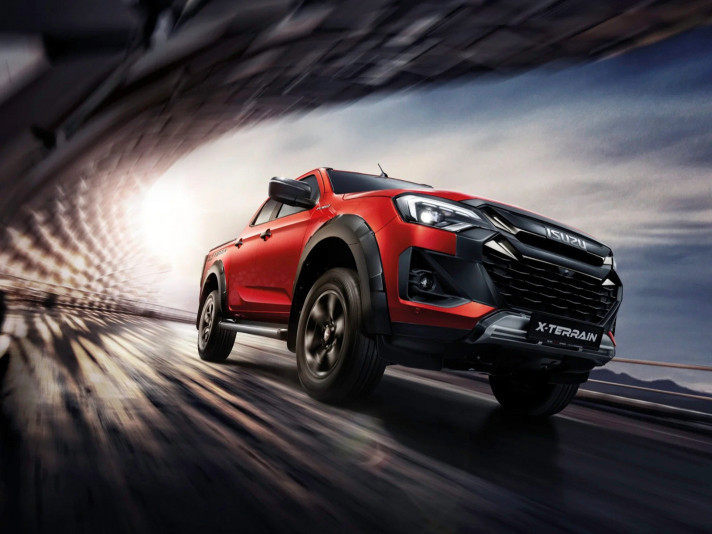
Isuzu D-Max continues to be one of Malaysia's best-selling pickup trucks, selling 3,081 units in the first half of the year
AshleyJul 30, 2025

Reviewing the Isuzu D-MAX: Does Its Splendid Design Match Its Off-Road Capability?
RobertApr 16, 2025
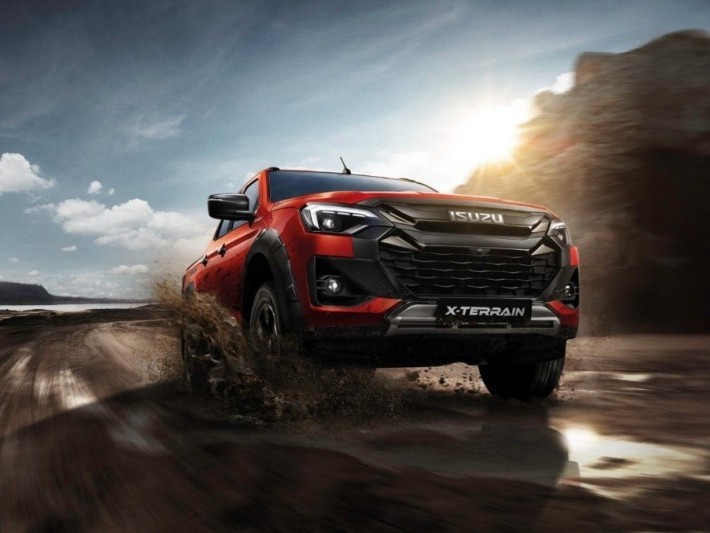
Isuzu D-MAX third generation model, seven options: market share 16.6%!
JamesSep 13, 2024

Why are people more willing to choose Toyota Hilux instead of Isuzu D-Max?
JamesNov 3, 2025
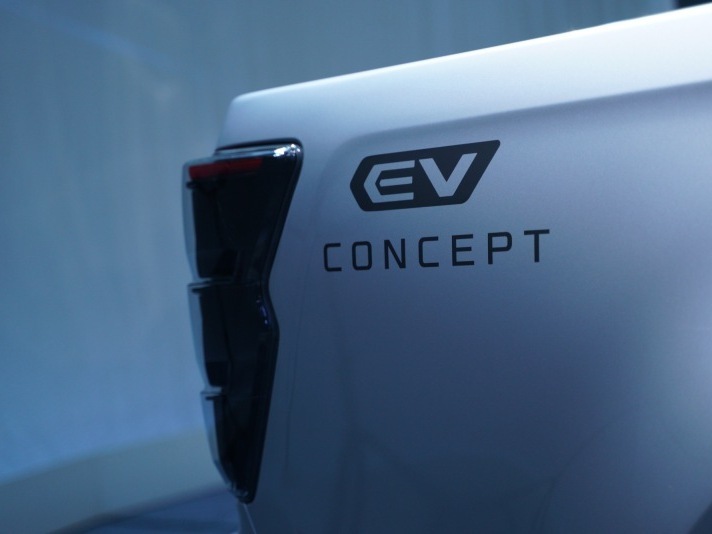
Reasons Why Pickups and SUVs Are Not Suitable for Electric Drive, Industry Secrets You Must Know Before Buying
JamesFeb 14, 2025
View More
Pros
Cons