
Q
What is the engine specs of Nissan Almera 2020?
 MistyMeadowWalkerOct 14, 2025, 06:07 PM
The 2020 Nissan Almera is powered by a 1.0-liter three-cylinder turbocharged petrol engine, codenamed HR10DET. This little powerplant kicks out 100 horsepower (74 kW) at 5000 rpm and a peak torque of 152 Nm that comes in between 2400-4000 rpm. It's mated to an Xtronic CVT gearbox, which delivers that smooth, seamless driving feel CVTs are known for, along with pretty decent fuel economy – Nissan claims around 5.2 liters per 100 km on the combined cycle.
What's neat about this engine is that it uses direct fuel injection and turbocharging to punch above its weight. So even with the small displacement, it serves up enough grunt for city commuting and everyday drives. Nissan has also put some work into taming the typical three-cylinder quirks – things like vibration are kept in check thanks to a balance shaft, making the Almera feel more refined than you might expect from a three-pot.
For Malaysian buyers, this small-displacement turbo engine isn't just about daily usability; it also qualifies for the government's tax incentives on cars with engine capacities below 1600cc, which helps bring down the overall cost of ownership. It's a smart move, really – turbo tech is everywhere these days because it lets automakers squeeze more power out of smaller engines without killing fuel efficiency. It's kind of their go-to solution for meeting stricter emissions regulations while still keeping cars fun to drive.
Special Disclaimer: This content is published by users and does not represent the views or position of PCauto.
Related Q&A
Q
How much is a Nissan Almera 2018?
The 2018 Nissan Almera typically ranges in price from RM 40,000 to RM 60,000 in Malaysia's used car market. The exact price depends on factors like condition, mileage, trim level, and local supply and demand. The higher-spec VL trim usually commands a premium over the base E or mid-tier VG versions.
As a practical and economical B-segment sedan, the Almera was pretty popular in Malaysia. The 2018 model came with a 1.5L naturally aspirated HR15DE engine, paired with either a 4-speed automatic or CVT gearbox depending on the variant. It's known for decent fuel efficiency, making it a solid choice for city driving. Interior space is a strong suit, especially rear legroom which stands out in its class, and the 490-liter trunk is family-friendly too.
If you're looking at a used one, definitely check the service records, accident history, and the condition of the engine and transmission. It's also worth comparing prices and specs with rivals from the same year, like the Toyota Vios or Honda City. But the Almera often offers good value in the used market, especially for budget-conscious buyers who still want a reliable Japanese brand.
 LovelyliNov 6, 2025
Q
What is the best selling Nissan in 2023?
The best-selling Nissan model in the Malaysian market for 2023 was the Nissan Almera. This B-segment sedan emerged as a popular pick among local buyers thanks to its budget-friendly price tag, impressive fuel efficiency, and practical features that cater perfectly to young families. Under the hood, the Almera packs a 1.0-liter turbocharged engine, churning out 122 horsepower and 152 Nm of torque, paired with a CVT gearbox. It strikes a nice balance between power and fuel economy, making it especially well-suited for Malaysia's urban driving conditions. The car also comes loaded with Nissan Intelligent Mobility safety tech, including a 360-degree around-view monitor and an intelligent forward collision warning system. It's worth highlighting that Malaysian consumers hold the Nissan brand in high regard, particularly for its reliable durability and extensive after-sales service network, which has helped Nissan maintain steady performance in the local market. Beyond the Almera, the Nissan Navara pickup truck and X-Trail SUV also enjoy considerable popularity, showcasing the brand's competitiveness across different market segments. With the growing trend towards new energy vehicles, Nissan is also gradually introducing its e-POWER hybrid technology in Malaysia, potentially offering consumers more diverse powertrain options in the future.
 SonOct 29, 2025
Q
What is the cheapest Nissan car in 2023?
The cheapest Nissan model in Malaysia for 2023 is the Nissan Almera. This entry-level four-door sedan has become a hit with budget-conscious buyers thanks to its affordable price tag and practical features. Its 1.0-liter turbocharged engine delivers excellent fuel efficiency, making it perfect for city driving, while standard tech like smart keyless entry and a 7-inch touchscreen add to its strong value proposition. When factoring in running costs, the Almera also boasts relatively low maintenance expenses, aligning with Malaysian consumers' demand for economical vehicles. On top of that, Nissan's well-established dealer network and convenient after-sales support in Malaysia provide extra peace of mind for owners. For buyers on a tight budget who still want brand reliability, the Almera is definitely worth considering. That said, rivals in the same segment like the Toyota Vios and Honda City each have their own strengths, so it's advisable for consumers to test drive and compare based on their personal needs before making a final decision.
 EmeraldGreenOct 29, 2025
Q
How much is Nissan Almera turbo 2023 in the Philippines?
The 2023 Nissan Almera Turbo is priced at around 848,000 Philippine pesos (approximately RM70,000, with exchange rates subject to fluctuation) in the Philippine market. This is the entry-level price for the 1.0-liter turbocharged variant, and higher-spec models will cost more accordingly. Under the hood, it packs a 1.0T three-cylinder turbo engine that cranks out 100 horsepower and 152 Nm of torque, paired with a CVT transmission. Fuel efficiency is a key selling point here, with an official rating of 23.3km/L. For Malaysian consumers, the Almera Turbo sits in a similar segment as local B-segment sedans like the Proton Saga and Perodua Bezza, but its turbocharged powerplant gives it a unique edge. It's worth noting that the Philippine-spec Almera Turbo might have slightly different features compared to the Malaysian version (locally known as the Nissan Almera). For instance, the smart key system that comes standard in the Philippines could be an optional extra in Malaysia. Additionally, the automotive tax structure in the Philippines differs from Malaysia, which affects the final selling price. If Malaysian buyers are considering parallel imports, they'll also need to factor in extra costs like import duties and AP permits, which typically make the car significantly more expensive than models from official local channels.
 GrinnyOct 29, 2025
Q
How much is the Nissan Almera 2023?
The 2023 Nissan Almera's price in Malaysia varies depending on the trim and configuration, generally ranging from RM 83,888 to RM 95,888. Exact prices might fluctuate slightly due to promotional offers or regional differences. This car comes with a 1.0L turbocharged engine paired with a CVT transmission, delivering solid performance along with impressive fuel efficiency—perfect for Malaysia's urban driving conditions. The 2023 Almera also packs plenty of tech features, like an 8-inch touchscreen, Apple CarPlay and Android Auto compatibility, plus several safety systems including Intelligent Forward Collision Warning and Lane Departure Warning, giving drivers added peace of mind. If you're in the market for an affordable sedan with a good amount of kit, the 2023 Nissan Almera is definitely worth considering. It's a good idea to head to your nearest Nissan dealership for a test drive and more details, and maybe also check out rivals like the Toyota Vios or Honda City to make the best choice for you.
 WittyRemarkOct 29, 2025
Q
Does the Nissan 2020 have good reviews?
The 2020 Nissan models made quite a splash in the Malaysian market, with standouts like the Nissan Serena and Nissan X-Trail really winning over buyers. Folks generally rave about their solid comfort, smart space management, and reliable performance. Take the Serena, for example – as a family-focused MPV, its roomy interior and super flexible seating setup have made it a hit with households. Then there's the X-Trail, which has earned plenty of praise for its steady, confident drive and top-notch safety features.
On top of that, Nissan's 2020 lineup doesn't skimp on fuel efficiency either – perfect for Malaysian drivers who prioritize daily usability and keeping running costs in check. Tech-wise, these models got a nice little upgrade too. Think smart keyless entry, reverse cameras, and some pretty advanced driver-assistance systems – all stuff that makes driving easier and safer day-to-day.
If you're in the market for a used or leftover 2020 Nissan, do yourself a favor: take it for a test drive and dig into the service records. You want to make sure the car's been well looked after. And hey, Nissan's got a pretty solid after-sales network here in Malaysia, which is definitely an added peace of mind for any owner.
 DandelionWishMakerOct 24, 2025
Q
What is the best Nissan in 2020?
Nissan had some real standouts in Malaysia back in 2020, with the Almera Turbo and Serena S-Hybrid leading the charge. Both brought something unique to the table that really clicked with local buyers that year.
The Almera Turbo, for starters, packed a punch with its 1.0-liter three-cylinder turbo engine. We're talking 100 horsepower and 152 Nm of torque – that's more zip than your typical naturally aspirated engines in the same class. And the best part? It sipped fuel at just 5.2L/100km, which was music to the ears of economy-focused Malaysians. Throw in standard kit like smart keyless entry, LED headlights, and Nissan's Intelligent Mobility safety tech, and suddenly the value proposition got even sweeter.
Then there was the Serena S-Hybrid, Nissan's answer for growing families. This 7-seater MPV paired a 2.0-liter engine with a hybrid system, striking a nice balance between meeting family needs and keeping fuel bills in check. Those power sliding doors on both sides? Total game-changer for loading kids and groceries. And the ProPILOT semi-autonomous driving assist? That was a big plus for parents looking to reduce the stress of long drives.
A shout-out too to how Nissan's models handled Malaysia's unique climate – hot, humid, and often rainy. Their air conditioning systems were up to the task of beating the heat, and the anti-rust treatments gave peace of mind against the elements. Oh, and let's not forget Nissan's 5-year unlimited mileage warranty – a solid selling point, especially for folks who clock up a lot of kilometers regularly. It just added that extra layer of reassurance.
 FireflyGlowTracerOct 24, 2025
Q
What is the resale value of a 2020 Nissan?
The resale value of 2020 Nissan models in Malaysia depends on factors like the specific model, mileage, maintenance history, and market supply and demand. Generally, popular models such as the Nissan Almera or X-Trail tend to hold their value better, retaining around 60% to 70% of their original purchase price. On the flip side, less popular models or those with high mileage might drop below 50% of their initial cost.
Nissan has a strong reputation in Malaysia's used car market, especially for its reliability and low maintenance costs. This helps Nissan models stay competitive when it's time to sell. Keeping detailed service records and using genuine parts can also make a big difference in boosting a used car's resale value.
If you're planning to sell your 2020 Nissan, it's a good idea to check prices on local used car platforms or with dealers first. Make sure the car looks good and runs well—both the exterior and mechanical condition—to get the best offer. Also, staying aware of market trends in Malaysia, like the growing demand for SUVs and fuel-efficient models, can help you pick the right time to sell.
 VelvetNightWandererOct 24, 2025
Q
What is the resale value of a Nissan Almera?
The resale value of the Nissan Almera in Malaysia's used car market hinges on several factors: age, mileage, maintenance upkeep, and market supply and demand. Generally speaking, a well-kept 2019 to 2021 Almera will fetch roughly 60% to 70% of its original price, with the exact figure depending on trim level and remaining warranty. The Almera holds steady in the used car scene thanks to its fuel-sipping nature and reliable family-car reputation – the 1.0L turbo variant, in particular, is a hit for its peppy yet efficient performance.
If you're looking to boost resale value, stick to regular servicing at authorized workshops and keep those service records pristine. Also, steer clear of major accidents or wild modifications. Malaysian used car buyers have always had a soft spot for Japanese brands, and the Almera benefits from that – parts are easy to come by, and repair costs won't break the bank, which definitely helps it hold value better.
On top of that, new car price fluctuations and trends in fuel efficiency can also nudge the used market one way or another. When you're gearing up to sell, it's smart to check real-time listings on local platforms like Carlist or Mudah to get a more accurate sense of what your Almera's actually worth.
 AmberSunsetWatcherFeb 18, 2026
Q
How much to tax a Nissan Almera?
In Malaysia, the road tax for the Nissan Almera hinges on its engine capacity. According to JPJ regulations, private cars with an engine capacity of 1.5L and below have an annual road tax of RM90, while those in the 1.6L to 1.8L range pay RM200 per year. The current Nissan Almera is powered by a 1.0L turbocharged engine (HR10DET) with a displacement of 999cc, placing it in the below 1.0L category, resulting in an incredibly low annual road tax of just RM20. This is part of the Malaysian government's incentive scheme to promote fuel-efficient, smaller-engine vehicles. It's worth noting that road tax fees can vary slightly depending on the vehicle's usage (private vs. commercial) or the state you're in, so it's always a good idea for owners to check the exact amount via the JPJ website or MyEG platform. Beyond road tax, car owners also need to keep up with their vehicle insurance payments, which include mandatory third-party coverage and optional comprehensive insurance. Insurance costs can fluctuate based on factors like the car's age, model, and market value, so it's advisable to consult with insurance companies or agents before buying to get an accurate quote.
 SilverLiningChaserFeb 18, 2026
Popular Cars
Model Year
Car Compare
Car Photo
Related Models
 Cars
CarsLatest Q&A
Q
Is AMT similar to automatic?
There are significant differences between AMT transmissions and automatic transmissions (AT) in terms of core structure and driving experience. AMT is essentially an electronically automated version of a manual transmission, simulating manual clutch operation and gear shifting through a computerized control system while retaining the gear set structure of manual transmissions. As a result, it offers higher transmission efficiency, with fuel consumption approximately 8%-12% lower than AT, making it particularly suitable for highway or long-distance driving. However, it may exhibit jerking similar to manual transmissions during low-speed gear shifts, especially noticeable in congested traffic conditions.
AT transmissions rely on torque converters for power transfer, delivering smooth and seamless gear shifts that appeal to comfort-oriented users. However, their complex structure (incorporating planetary gear sets, hydraulic systems, etc.) results in higher maintenance costs. A single service may cost between 800 to 1,500 ringgit, whereas AMT only requires gear oil replacement at approximately 400 ringgit.
From a market perspective, AMT is predominantly used in budget vehicles or commercial models priced below 80,000 ringgit, while AT is typically featured in mid-to-high-end vehicles. Consumers should select based on actual needs: AMT suits those prioritizing fuel efficiency and low maintenance costs, while AT better serves those valuing comfort. Notably, recent advancements in AMT electronic control technology have significantly mitigated jerking issues, though test drives should still emphasize low-speed performance evaluation.
 AriaMar 26, 2026
Q
Which is better, DCT or AT?
DCT (Dual-Clutch Transmission) and AT (Automatic Transmission) each have their own advantages and disadvantages, and the choice should be based on personal driving needs. AT transmissions transfer power through a torque converter, offering excellent shift smoothness, making them suitable for urban commuting or novice drivers. However, they tend to have higher fuel consumption, and vehicles equipped with them are usually more expensive. DCT transmissions utilize a dual-clutch structure, featuring fast shift speeds and high power transmission efficiency, which provides a more direct driving experience—particularly suitable for users seeking a sporty feel. However, they may exhibit jerking at low speeds and have relatively high maintenance costs. If durability and comfort are priorities, AT is the more reliable choice; if power responsiveness and driving pleasure are preferred, wet DCT (such as Volkswagen DSG) performs better, though dry DCT models should be avoided in prolonged stop-and-go traffic conditions. Additionally, CVT transmissions excel in smoothness and fuel efficiency, making them ideal for daily commuting, but they lack driving excitement. It is recommended to test-drive before purchasing, as tuning varies significantly across brands, and real-world experience is more important than theoretical specifications.
FlutteringMar 26, 2026Q
Is Amt good or bad?
AMT gearboxes have a significant cost advantage in the local market, typically being around 5,000 Ringgit cheaper than models equipped with conventional automatic transmissions. Their fuel efficiency is comparable to manual transmissions, resulting in long-term fuel savings. Featuring a straightforward design, they achieve transmission efficiency exceeding 90% with relatively low maintenance costs, making them ideal for practicality-oriented consumers. However, their shifting logic contains inherent limitations: gear changes between 1st and 2nd cause 0.3-0.5 second power interruptions, while unintended upshifts on inclines may reduce engine speed by 15%-20%, compromising driving smoothness. For urban commuters or budget-conscious buyers, AMT offers excellent value, though those prioritizing premium driving dynamics should consider alternative transmission types. Some domestic models like the Perodua Axia employ enhanced AMT systems, where optimized shift programming has reduced gearshift shock by approximately 30%.
 RainbowsMar 26, 2026
Q
Which gives better mileage, CVT or AMT?
From the perspective of fuel economy, CVT transmissions generally perform better under urban driving conditions. Their continuously variable design allows the engine to consistently operate within the optimal speed range, significantly reducing fuel consumption during frequent starts and stops. Test data shows that their fuel consumption in urban driving conditions is 10% to 15% lower than that of comparable models. AMT transmissions, on the other hand, inherit the high transmission efficiency of manual transmissions, delivering fuel efficiency close to manual transmissions during high-speed cruising. This makes them particularly suitable for long-distance driving in large-displacement vehicles. However, due to power interruption during gear shifts, their overall fuel consumption may be 5% to 8% higher than CVTs.
The difference in fuel-saving characteristics between the two transmissions stems from their technical principles: CVTs achieve continuous variability through steel belts and pulleys, eliminating the fixed gear ratio limitations of traditional transmissions; AMTs simulate manual gear changes via electronic control systems while maintaining the mechanical efficiency of gear transmission. Notably, actual fuel consumption is also influenced by driving habits. Smooth acceleration and anticipatory deceleration can maximize the transmissions' fuel-saving potential. If the vehicle budget permits and urban commuting is the primary use, CVTs offer a more economical choice. For frequent highway driving with an emphasis on cost-effectiveness, AMTs are equally worth considering.
 RubyBlazeMar 26, 2026
Q
Which is cheaper, AMT or CVT?
In terms of gearbox cost, AMT is usually more economical than CVT. Essentially, AMT is a manual transmission equipped with an electronic control unit, featuring a simple structure and low maintenance costs. The unit price ranges from approximately 5,000 to 8,000 ringgit, making it suitable for budget-conscious consumers or those who prioritize long-term operating costs. CVT incurs higher manufacturing costs due to its precision steel belt transmission system and continuous variable transmission technology, with a unit price of about 7,000 to 10,000 ringgit. However, it delivers a smoother driving experience and superior fuel efficiency. The primary differences between the two lie in technical complexity: AMT retains the gear-shifting mechanism, resulting in noticeable shift shock; CVT achieves linear power output through stepless speed variation but requires periodic belt inspection and incurs higher maintenance expenses. For those prioritizing initial cost and basic transportation needs, AMT offers better value; if comfort and long-term fuel economy are priorities, CVT represents a more worthwhile investment. Note that actual prices may vary based on vehicle model, brand, and local supply chain factors.
 ShadowProwlMar 26, 2026
Related News
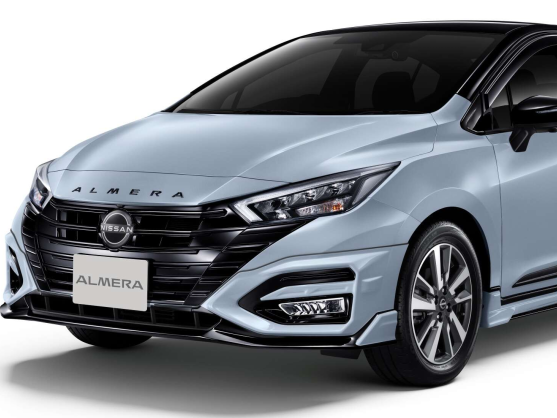
Nissan Almera: Smart Choice for Budget-Friendly Compact Sedans
AshleyMay 8, 2025
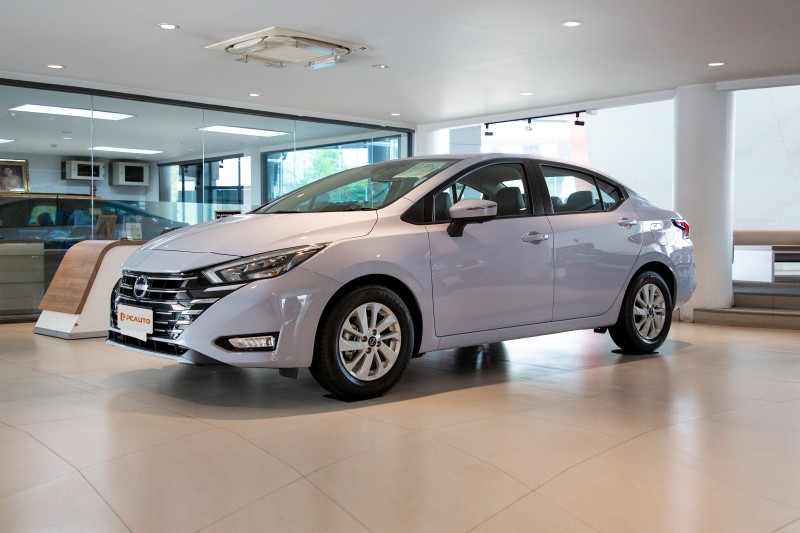
The starting price of Nissan Almera is THB 589,000, the first choice of entry-level car for family commuting?
JamesSep 14, 2024

The third-generation Nissan Leaf officially debuts: from a hatchback car to a crossover SUV with a 622 km range
WilliamMar 11, 2026

1000km full-tank range! 2026 Nissan Serena e-Power officially launched in Malaysia
JohnMar 5, 2026

2026 Nissan March: A Rebirth or the End of the Road for the B-Segment Hatchback?
JamesMar 4, 2026
View More
Pros
Cons