
Q
What is the resale value of a 2017 Colorado?
 SapphireBlueDec 10, 2025, 11:07 AM
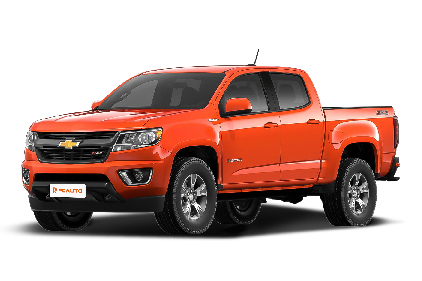
The resale value of a used 2017 Chevrolet Colorado depends on factors like condition, mileage, trim level, and service history. Current market prices typically range between RM60k to RM90k, with well-equipped 4WD models or low-mileage units holding their value better.
Known for its durability and practicality, this pickup comes with either a 2.5L or 3.6L engine—both proven reliable in local driving conditions. Good parts availability also helps with its strong resale value. Compared to sedans, pickups like the Colorado tend to depreciate slower, making them ideal for buyers who frequently haul loads or tackle rough terrain.
If you're selling, a complete service record and clean exterior can significantly boost buyer interest. For reference, check used prices of rivals like the Toyota Hilux or Ford Ranger, but final pricing should always be based on an actual inspection.
Potential buyers should pay extra attention to the chassis condition and engine noise—off-road use in previous ownership could affect long-term reliability.
Special Disclaimer: This content is published by users and does not represent the views or position of PCauto.
Related Q&A
Q
Does the 2017 Chevy Colorado have remote start?
The 2017 Chevy Colorado did come with remote start, but you'll wanna double-check the trim level since it's usually either standard on higher trims or an optional package. Here's how it works: press the lock button twice, then hold the start button on your key fob - that'll fire up the engine from about 200 feet away, perfect for cooling down or warming up the cabin in extreme weather.
Just a heads-up - the engine will automatically shut off after 10 minutes if you don't enter the vehicle, which helps save gas. Some owners report signal interference issues; if that happens, try moving closer or replacing the key fob battery. Compared to Japanese trucks like the Toyota Hilux or Mitsubishi Triton from the same year, factory remote start was much less common - most owners had to install aftermarket systems.
If you're looking at a used Colorado, definitely test the remote start function in person and verify the key fob is original. While super convenient, using remote start frequently might dent your fuel economy slightly, so use it when you really need it.
 KitDec 11, 2025
Q
Does a 2017 Colorado have Apple CarPlay?
The 2017 Chevrolet Colorado does offer Apple CarPlay compatibility, but it depends on the infotainment system version. Some base models may not come equipped with this feature. If your truck has Chevrolet's newer MyLink system, you can typically connect your iPhone via USB to access Apple CarPlay for navigation, music, and calls.
Not sure about your Colorado's setup? Check the owner's manual or contact your local Chevy dealer to confirm the system version. For vehicles without factory-installed Apple CarPlay, aftermarket upgrades or compatible modules are an option—just make sure to source them through reputable channels for reliable performance.
With in-car connectivity evolving fast, Android Auto is also becoming more common, and many newer models even support wireless connections for added convenience. If these tech features matter to you, keep an eye out for compatible used models or upgrade solutions when shopping around.
 FoxDec 11, 2025
Q
How good is a 2017 Chevy Colorado?
The 2017 Chevrolet Colorado is a dependable midsize pickup that strikes a good balance between daily driving and light off-road capability. It comes with either a 2.5L four-cylinder or a more powerful 3.6L V6 engine, the latter putting out 308 horsepower paired with a smooth-shifting 6-speed automatic transmission.
Inside, it’s all about function—hard plastics dominate, but the straightforward dashboard layout and standard 7-inch touchscreen with Apple CarPlay and Android Auto keep things practical. Safety-wise, you get basics like a rearview camera, tire pressure monitoring, and stability control, but don’t expect advanced driver aids.
Fuel economy is middling: around 12-13L/100km in the city and 9-10L on the highway. As a used buy, it holds its value decently, and maintenance won’t break the bank—though some owners report occasional steering rack noises.
Where the Colorado shines is utility: the bed space and towing capacity (up to 3.5 tons) make it solid for work and family use. That said, rivals like the Toyota Hilux and Ford Ranger might have better parts availability and service networks in some regions. Before buying, check for frame rust (these American trucks can struggle in humid climates) and test the transmission’s shift behavior—some units can feel a bit lazy.
BearDec 11, 2025Q
Can I start my 2017 Chevy with my phone?
Yes, select 2017 Chevy models support remote start via smartphone, but you'll need to verify if your vehicle has the factory-equipped Connected Access or OnStar service. You'll also need to install the MyChevrolet app – the feature works through Bluetooth or cellular connection, though in Malaysia you'd want to double-check mobile network compatibility.
GM's remote start tech is pretty solid these days. It lets you warm up or cool down the cabin beforehand, check fuel levels, door status, etc. Similar systems like Toyota's Remote Connect or FordPass have become common here too. If your car didn't come with this feature, ask your dealer about retrofitting an official module – just be aware that third-party mods might void warranty.
Different brands call it different things (NissanConnect, Hyundai Blue Link, etc.), but they all use encrypted signals for security. Pro tip: When setting up the app, have your VIN handy – some advanced features like geofencing or speed alerts may require a paid subscription.
 LeafDec 11, 2025
Q
How to remote start a 2017 Chevy?
To use remote start on a 2017 Chevy model, first make sure your vehicle has the factory-installed remote start system—usually indicated by a circular arrow button on the key fob. Press the lock button once, then hold the remote start button for about 4 seconds until the lights flash and the engine turns over. The climate control will also kick in to adjust the cabin temperature.
If your key fob doesn’t have this feature, you can opt for an aftermarket remote start module, but it’s best to have it installed by an authorized dealer to avoid compatibility issues or voiding your warranty.
A few things to keep in mind: The car must be in Park with enough fuel in the tank, and some models require the hood and doors to be fully closed. Once started remotely, the engine will shut off automatically after 10-15 minutes if you don’t get in and press the brake pedal—it’s an anti-theft feature.
For other makes or model years, the steps might vary, so check your owner’s manual or consult a pro for specifics.
 TiaDec 11, 2025
Q
How many miles will a 2017 Colorado last?
The 2017 Chevy Colorado can typically last 200,000 to 300,000 miles (roughly 320,000 to 480,000 km) when well-maintained, though its actual lifespan depends on driving habits, maintenance frequency, and operating conditions. Staying on top of oil changes, transmission fluid, coolant, and other critical consumables—plus addressing minor issues promptly—goes a long way in keeping it running. Diesel models tend to outlast gasoline versions due to their sturdier engine construction, but their emissions systems require extra attention.
Like most pickups, the Colorado is built tough. Its chassis and suspension handle varied terrain well, though heavy towing or frequent off-roading will wear components faster. Consider a thorough inspection every 100,000 miles (~160,000 km), focusing on the drivetrain and rust prevention. Competitors like the Toyota Hilux and Ford Ranger offer similar longevity, but real-world durability varies. If you’re buying used, scrutinize maintenance records and get a hands-on assessment—especially for high-mileage trucks where engine and transmission health are key.
 ZoeDec 11, 2025
Q
What is my 2017 Chevy Colorado worth?
The value of a 2017 Chevrolet Colorado depends on its condition, mileage, trim level, and market demand. Currently, pre-owned models are priced between RM60,000 to RM100,000, but a proper assessment is needed for an accurate figure.
This pickup comes with either a 2.5L or 3.6L gasoline engine—both deliver reliable performance for daily driving and light off-roading. Maintenance costs are reasonable, and parts are fairly easy to find.
Well-maintained trucks with low mileage, 4WD, or premium interiors will command higher prices. If you're buying or selling, it's best to get a professional inspection through a trusted dealership or used-car platform. Always check the service history and accident records to avoid surprises.
The Colorado holds up well in the used market thanks to its durability and versatility, making it a solid choice for buyers who need a capable, all-around truck.
 ActorStageDec 11, 2025
Q
How to put a 2017 Chevy Colorado in 4 wheel drive?
To switch the 2017 Chevrolet Colorado to four-wheel drive mode, first ensure that the vehicle is in a stationary or low-speed state (recommended below 5km/h), and then select the appropriate four-wheel drive mode according to driving needs: if conventional four-wheel drive (4H) is required, the knob can be directly turned from 2H to 4H while driving, and the system will automatically complete the switch; If encountering off-road or slippery roads and requiring low-speed four-wheel drive (4L), you need to park and shift the gearbox to neutral (N), then turn the knob to 4L and wait for the indicator light to turn on. Some models are equipped with Auto 4WD mode, which can automatically allocate front and rear axle power according to road conditions, suitable for changing road conditions. It should be noted that four-wheel drive mode will increase fuel consumption and affect road handling. It is recommended to use two wheel drive mode on dry paved roads to protect the transmission system. After long-term use of four-wheel drive, it is recommended to regularly check the transfer case oil and transmission shaft status. When operating in complex terrain, the traction control system (StabiliTrak) can be combined to improve the ability to get out of trouble. If there is a four-wheel drive fault light on the dashboard, it should be repaired in a timely manner to avoid damaging components.
SwimmerDec 11, 2025Q
Does a 2017 Chevy Colorado have a cabin filter?
The 2017 Chevrolet Colorado does come equipped with a cabin air filter (also known as an AC filter), typically located behind the glovebox or near the windshield air intake. Its primary job is to trap dust, pollen, and other airborne particles before they enter the cabin, keeping your AC system's air quality in check.
Chevrolet recommends replacing this filter every 15,000 to 20,000 miles or annually—whichever comes first. If you frequently drive in dusty or high-pollution areas, you might want to swap it out more often. For most owners, replacing the filter is a straightforward DIY task by following the owner’s manual, though a professional can handle it if you’re not comfortable.
Keep in mind: A clogged or old filter can hurt both air quality and AC performance. If you’ve noticed odd smells or weaker airflow, it’s probably time for a change. Also, double-check compatibility when buying a replacement, as filter specs or placement might vary slightly depending on the model year or trim level.
 CiaDec 11, 2025
Q
Does the 2017 Colorado have CarPlay?
The 2017 Chevrolet Colorado did offer Apple CarPlay on select higher trim levels, but keep in mind it wasn't standard across the entire lineup—availability depends on the specific configuration and regional variations. If you're shopping for a used Colorado, check for the CarPlay icon on the infotainment screen or simply plug in your iPhone to test compatibility.
As Apple's smart vehicle interface, CarPlay seamlessly integrates your iPhone for navigation, music, and calls, significantly improving convenience on the road. Similar systems like Android Auto have also become common in modern vehicles.
If the truck didn't come with CarPlay from the factory, you might explore upgrading the infotainment system through an authorized dealer, but be mindful of compatibility and warranty implications. For buyers who prioritize connectivity, this feature is worth verifying—either by reviewing the original equipment list or consulting a technician before purchase.
 TravelBugWanderlustDec 11, 2025
Popular Cars
Model Year
Car Compare
Car Photo
Related Models
 Cars
CarsLatest Q&A
Q
Is AMT similar to automatic?
There are significant differences between AMT transmissions and automatic transmissions (AT) in terms of core structure and driving experience. AMT is essentially an electronically automated version of a manual transmission, simulating manual clutch operation and gear shifting through a computerized control system while retaining the gear set structure of manual transmissions. As a result, it offers higher transmission efficiency, with fuel consumption approximately 8%-12% lower than AT, making it particularly suitable for highway or long-distance driving. However, it may exhibit jerking similar to manual transmissions during low-speed gear shifts, especially noticeable in congested traffic conditions.
AT transmissions rely on torque converters for power transfer, delivering smooth and seamless gear shifts that appeal to comfort-oriented users. However, their complex structure (incorporating planetary gear sets, hydraulic systems, etc.) results in higher maintenance costs. A single service may cost between 800 to 1,500 ringgit, whereas AMT only requires gear oil replacement at approximately 400 ringgit.
From a market perspective, AMT is predominantly used in budget vehicles or commercial models priced below 80,000 ringgit, while AT is typically featured in mid-to-high-end vehicles. Consumers should select based on actual needs: AMT suits those prioritizing fuel efficiency and low maintenance costs, while AT better serves those valuing comfort. Notably, recent advancements in AMT electronic control technology have significantly mitigated jerking issues, though test drives should still emphasize low-speed performance evaluation.
 AriaMar 26, 2026
Q
Which is better, DCT or AT?
DCT (Dual-Clutch Transmission) and AT (Automatic Transmission) each have their own advantages and disadvantages, and the choice should be based on personal driving needs. AT transmissions transfer power through a torque converter, offering excellent shift smoothness, making them suitable for urban commuting or novice drivers. However, they tend to have higher fuel consumption, and vehicles equipped with them are usually more expensive. DCT transmissions utilize a dual-clutch structure, featuring fast shift speeds and high power transmission efficiency, which provides a more direct driving experience—particularly suitable for users seeking a sporty feel. However, they may exhibit jerking at low speeds and have relatively high maintenance costs. If durability and comfort are priorities, AT is the more reliable choice; if power responsiveness and driving pleasure are preferred, wet DCT (such as Volkswagen DSG) performs better, though dry DCT models should be avoided in prolonged stop-and-go traffic conditions. Additionally, CVT transmissions excel in smoothness and fuel efficiency, making them ideal for daily commuting, but they lack driving excitement. It is recommended to test-drive before purchasing, as tuning varies significantly across brands, and real-world experience is more important than theoretical specifications.
FlutteringMar 26, 2026Q
Is Amt good or bad?
AMT gearboxes have a significant cost advantage in the local market, typically being around 5,000 Ringgit cheaper than models equipped with conventional automatic transmissions. Their fuel efficiency is comparable to manual transmissions, resulting in long-term fuel savings. Featuring a straightforward design, they achieve transmission efficiency exceeding 90% with relatively low maintenance costs, making them ideal for practicality-oriented consumers. However, their shifting logic contains inherent limitations: gear changes between 1st and 2nd cause 0.3-0.5 second power interruptions, while unintended upshifts on inclines may reduce engine speed by 15%-20%, compromising driving smoothness. For urban commuters or budget-conscious buyers, AMT offers excellent value, though those prioritizing premium driving dynamics should consider alternative transmission types. Some domestic models like the Perodua Axia employ enhanced AMT systems, where optimized shift programming has reduced gearshift shock by approximately 30%.
 RainbowsMar 26, 2026
Q
Which gives better mileage, CVT or AMT?
From the perspective of fuel economy, CVT transmissions generally perform better under urban driving conditions. Their continuously variable design allows the engine to consistently operate within the optimal speed range, significantly reducing fuel consumption during frequent starts and stops. Test data shows that their fuel consumption in urban driving conditions is 10% to 15% lower than that of comparable models. AMT transmissions, on the other hand, inherit the high transmission efficiency of manual transmissions, delivering fuel efficiency close to manual transmissions during high-speed cruising. This makes them particularly suitable for long-distance driving in large-displacement vehicles. However, due to power interruption during gear shifts, their overall fuel consumption may be 5% to 8% higher than CVTs.
The difference in fuel-saving characteristics between the two transmissions stems from their technical principles: CVTs achieve continuous variability through steel belts and pulleys, eliminating the fixed gear ratio limitations of traditional transmissions; AMTs simulate manual gear changes via electronic control systems while maintaining the mechanical efficiency of gear transmission. Notably, actual fuel consumption is also influenced by driving habits. Smooth acceleration and anticipatory deceleration can maximize the transmissions' fuel-saving potential. If the vehicle budget permits and urban commuting is the primary use, CVTs offer a more economical choice. For frequent highway driving with an emphasis on cost-effectiveness, AMTs are equally worth considering.
 RubyBlazeMar 26, 2026
Q
Which is cheaper, AMT or CVT?
In terms of gearbox cost, AMT is usually more economical than CVT. Essentially, AMT is a manual transmission equipped with an electronic control unit, featuring a simple structure and low maintenance costs. The unit price ranges from approximately 5,000 to 8,000 ringgit, making it suitable for budget-conscious consumers or those who prioritize long-term operating costs. CVT incurs higher manufacturing costs due to its precision steel belt transmission system and continuous variable transmission technology, with a unit price of about 7,000 to 10,000 ringgit. However, it delivers a smoother driving experience and superior fuel efficiency. The primary differences between the two lie in technical complexity: AMT retains the gear-shifting mechanism, resulting in noticeable shift shock; CVT achieves linear power output through stepless speed variation but requires periodic belt inspection and incurs higher maintenance expenses. For those prioritizing initial cost and basic transportation needs, AMT offers better value; if comfort and long-term fuel economy are priorities, CVT represents a more worthwhile investment. Note that actual prices may vary based on vehicle model, brand, and local supply chain factors.
 ShadowProwlMar 26, 2026
Pros
Cons