

2025 Mercedes-Benz G-Class G580 Review

 Share
Share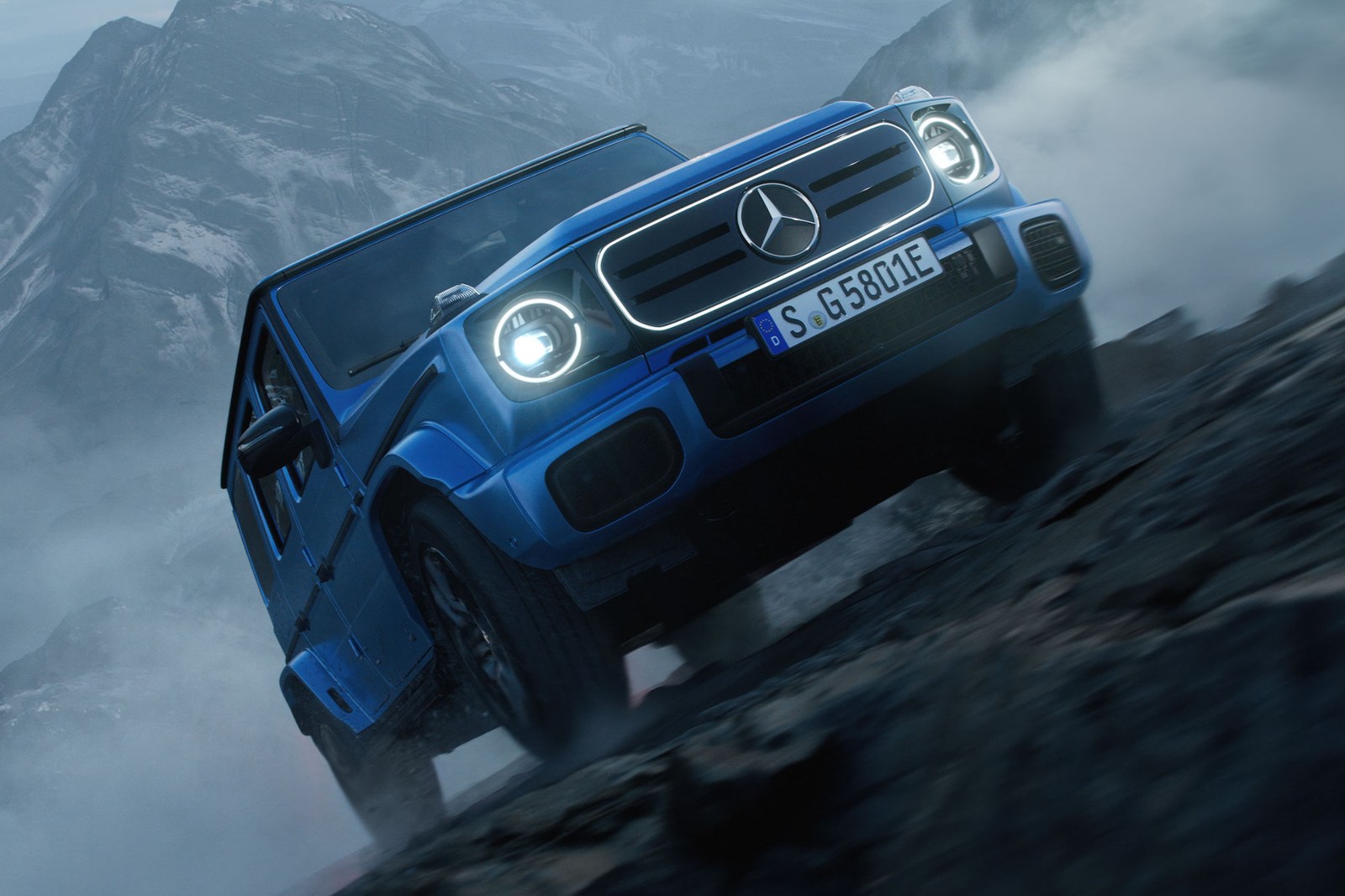
 Segment
 Body Type
 Motor Output(kW)
 Motor Torque(Nm)
 EV Range(km)
 Battery Capacity(kWh)
In the increasingly segmented market of luxury electric off-road vehicles, consumer demand for a "rugged exterior + electrified experience" is rising. As a classic off-road icon, the Mercedes-Benz G-Class naturally became the center of attention with its first fully electric version, the G580. This model retains the iconic boxy design of the G-Class but features a dual-motor system with 590 horsepower and an official range of 473 kilometers. So, is it a "sentimental electrified product" or a "truly capable luxury electric off-roader"? In this test drive, we focused on these two core questions and comprehensively tested its performance, both statically and dynamically.
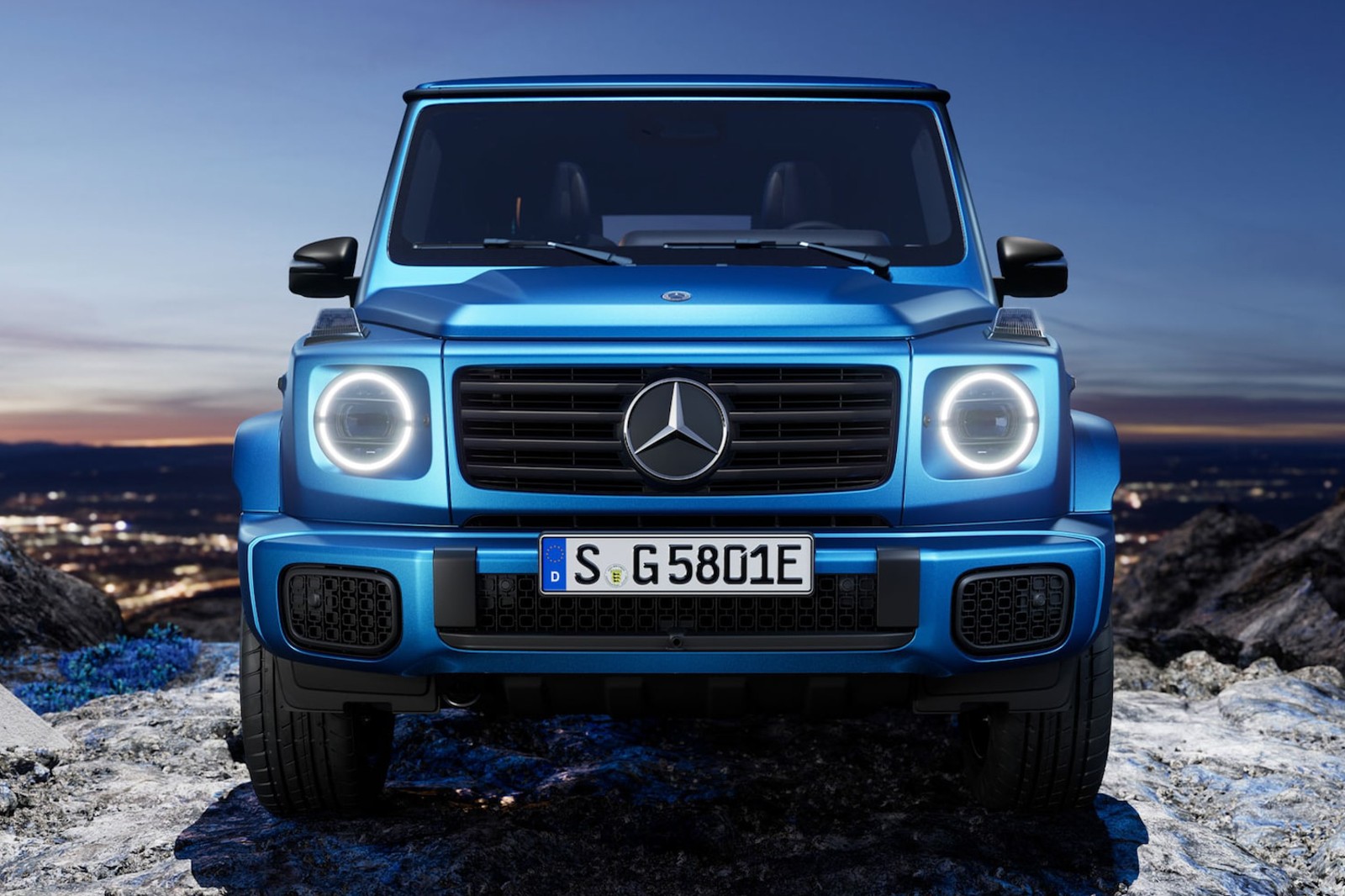
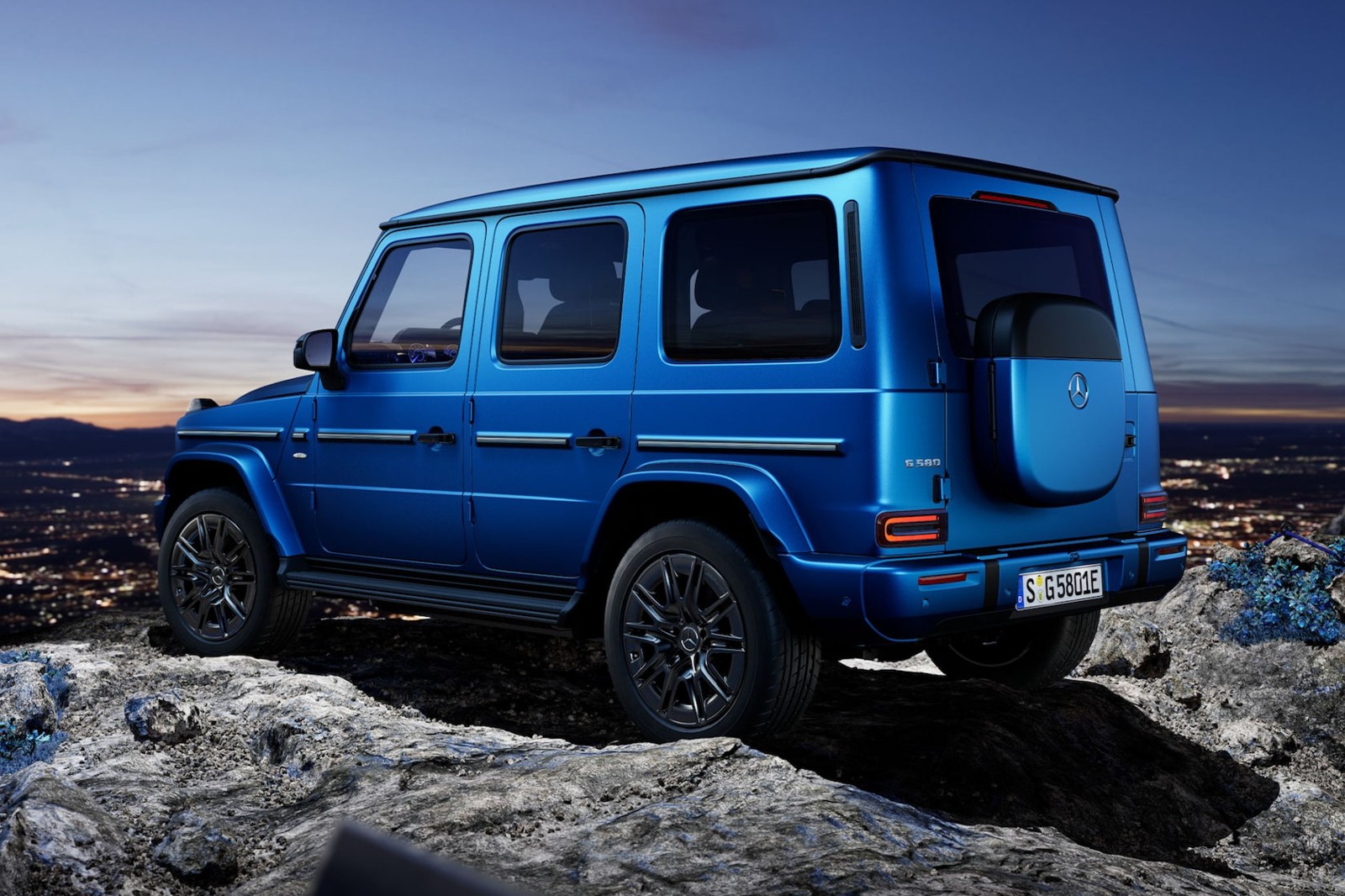
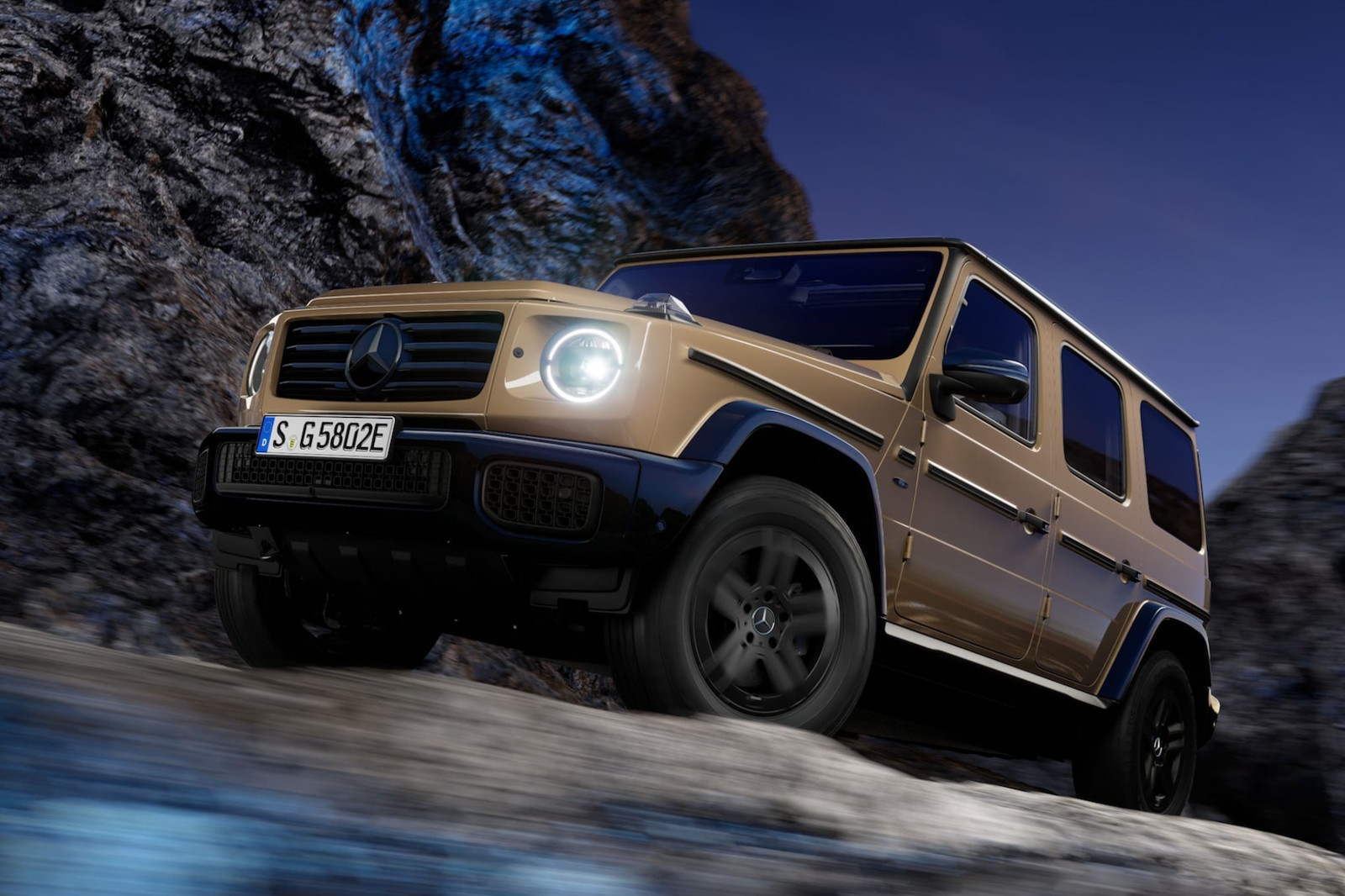
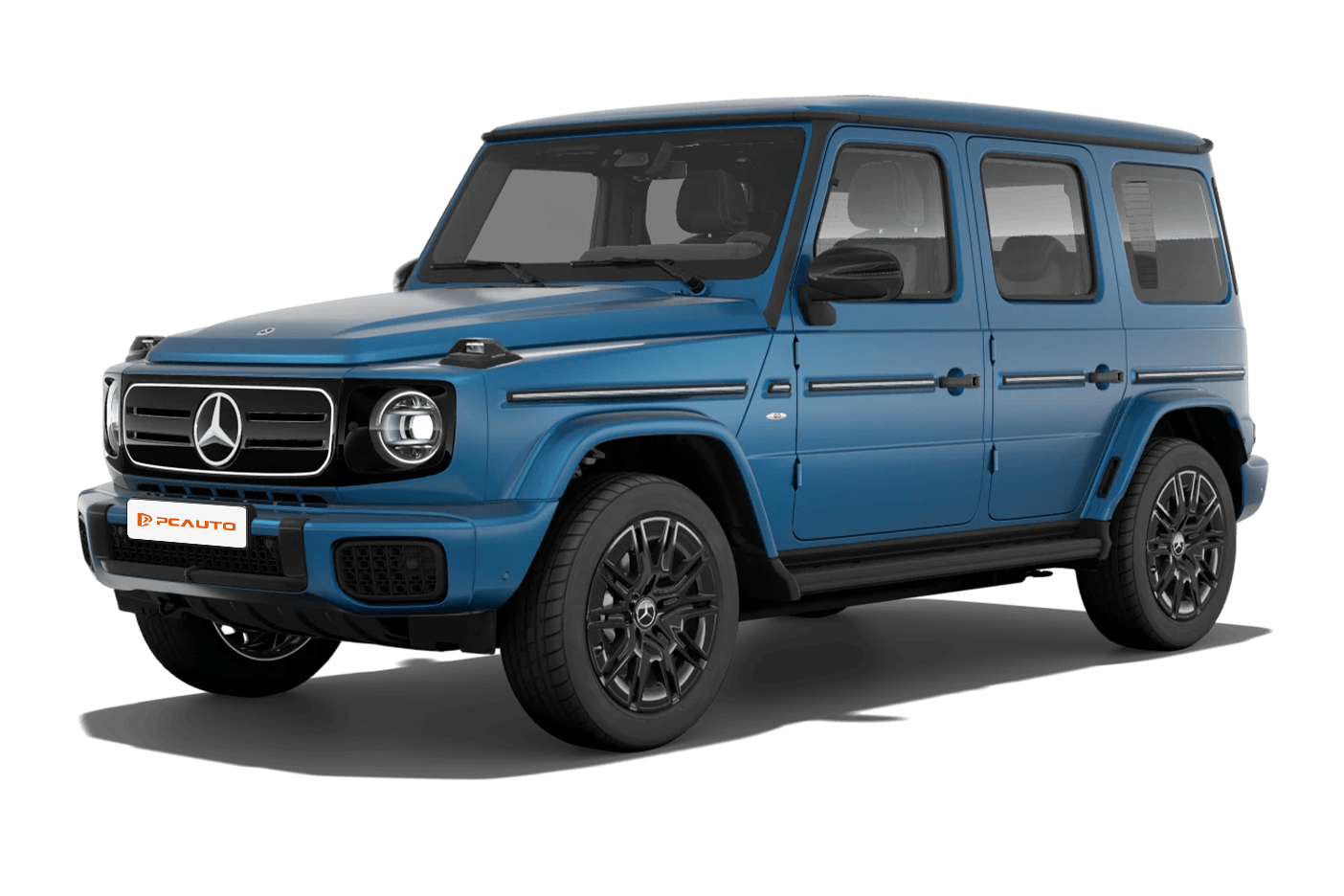
The exterior of the G580 almost replicates the rugged style of the gasoline version of the G-Class, with a boxy silhouette, vertical windshield, and exposed door hinges, making it highly recognizable. The adjustments in details are very restrained: the front grille is replaced with a closed design, adorned with three horizontal trim strips inside, and the central three-pointed star logo lights up for higher recognition; the trapezoidal skid plate, characteristic of off-road vehicles, is retained under the front bumper, although the material has been changed from metal to matte plastic, which does not affect the overall visual effect. The waistline along the side of the vehicle remains straight, with prominent wheel arches surrounded by black plastic, paired with 20-inch alloy wheels and 275/50 R20 tires, maintaining a strong off-road vibe. The rear retains the "little backpack" spare tire cover, but inside is now a charging port. The taillights continue the circular LED design of the gasoline version, providing clear lighting effects at night. Overall, the G580 preserves the classic essence of the G-Class while integrating design elements to convey its new identity as an electric vehicle.
Inside the vehicle, the familiar T-shaped center console layout remains, but the materials and sense of technology have been upgraded. The entire cabin is extensively wrapped in Nappa leather, with metallic trims and matte wood veneer added to the center console and door armrests, offering a refined touch. A dual-screen setup featuring a 12.3-inch fully digital instrument cluster and a 12.3-inch MBUX central touchscreen boasts high resolution and smooth touch responsiveness, supporting wireless connections for Apple CarPlay and Android Auto. In terms of core features, the front seats come with power adjustment and heating functions, offering excellent back support and well-padded cushions that remain comfortable even on long journeys. The rear seats support a 60:40 split-fold configuration with adjustable backrest angles, and legroom benefits from a 2890mm wheelbase, allowing a 175cm passenger to sit in the rear with two fist-widths of space between their knees and the front seat. For storage, the front door storage bins can accommodate two 500ml water bottles, the center armrest compartment is deep enough to hold a tablet, and the trunk offers a default capacity of 667 liters, which can be expanded to 1590 liters when the rear seats are folded down—ideal for family trips or light off-road cargo needs. Worth mentioning is the Burmester sound system, with 15 evenly distributed speakers, delivering deep bass and clear treble for an immersive audio experience.
In terms of performance, the G580 is powered by dual permanent magnet synchronous motors at the front and rear, with a combined output of 434kW (590PS) and a total torque of 1164N·m, achieving an official 0-100km/h acceleration in just 4.7 seconds. During actual driving, switching to Sport mode and stepping hard on the accelerator provides strong thrust, with instantaneous torque from the motors felt immediately upon start. There is almost no need to decelerate in advance during overtaking, as the power responds instantly; even in Comfort mode, the power delivery remains smooth, making it well-suited for daily urban commuting. As for the chassis, the front suspension adopts a double wishbone independent suspension system, while the rear suspension is a non-independent De Dion setup. The tuning is more on the firm side but does not compromise comfort: when going over speed bumps or uneven roads, the suspension quickly filters out most of the bumps, and the body avoids excessive bouncing. During high-speed cornering, the suspension provides adequate support, keeping body roll within a reasonable range, and with a minimum ground clearance of 250mm, passability is not an issue. However, as the vehicle weighs 3085kg, quick lane changes make the body feel less agile compared to sedans, necessitating advanced predictions while driving.
Battery life performance is a core concern for electric vehicles. We tested the range achievement rate of the G580 under mixed driving conditions: In a fully charged state, urban congested conditions (speeds of 20-40km/h) consumed around 26kWh/100km over 100km; on highways (speeds of 100-120km/h) the energy consumption increased to 32kWh/100km. Overall, the actual range is about 380km, achieving 80% of the official figure of 473km. Although slightly lower than the official range, considering its SUV body aerodynamics and off-road positioning, the performance can be considered average. In terms of charging speed, using a 150kW fast-charging station, it takes only 45 minutes to charge from 10% to 80%, which is slightly slower than the official stated 0.5 hours, but sufficient for daily energy replenishment; slow charging takes 12 hours, which is more suitable for overnight home charging.
In terms of driving and riding comfort, the G580 performs commendably. For sound insulation, the windows use double-layer laminated glass, and wind and tire noise are well controlled at high speeds, with only slight wind noise transmitted from the A-pillars at speeds above 120km/h. The noise from the electric motor is almost negligible, making the cabin as quiet as a luxury sedan. The seats provide good wrapping and support, ensuring the lower back does not feel sore even after long drives; the rear seats are equipped with air conditioning vents and USB charging ports to ensure passenger comfort. The energy recovery system offers three adjustable levels, with the highest level providing a noticeable drag effect when releasing the accelerator pedal, which is suitable for one-pedal driving in congested urban conditions; the lowest level mimics the gliding experience of a fuel-powered car, catering to different driving habits.
Overall, the G580 has several clear core advantages: First, it retains the classic design of the G-Class, meeting the nostalgic demands for a rugged off-road look; second, with electrification, it offers stronger performance with an acceleration of 0-100km/h in just 4.7 seconds, far surpassing the fuel-powered G500; third, its luxurious features, such as Burmester sound system, dual screens, and Nappa leather, align with its luxury position. Compared to other pure-electric off-road vehicles in the same class (such as the Rivian R1S), the G580 has a higher brand premium but slightly falls short in off-road performance (e.g., minimum ground clearance, approach and departure angles). However, it holds an advantage in range and luxury.
This car is suitable for two types of buyers: one is loyal G-Class fans who want to experience the smoothness and quick acceleration of electrification without giving up the classic design; the other is families who value luxury and practicality. For daily commuting, the cost-effectiveness of pure electric power is sufficient, and it can also handle short off-road trips on weekends. If you’re pursuing extreme off-road performance, the G580 might not be the best choice, but if you’re looking for a luxurious electric SUV that’s “suitable for commuting, presentable, and occasionally off-road capable,” it’s worth considering.
In summary, the G580 is a model that “balances nostalgia and electrification.” Rather than abandoning the G-Class’s legacy for the sake of electrification, it enhances the driving experience with the power of electric motors. As Mercedes-Benz’s first attempt in the pure electric off-road segment, it delivers a solid performance.
Mercedes-Benz G-Class Car Compare
Mercedes-Benz G-Class Loan Calculator
More Mercedes-Benz Reviews
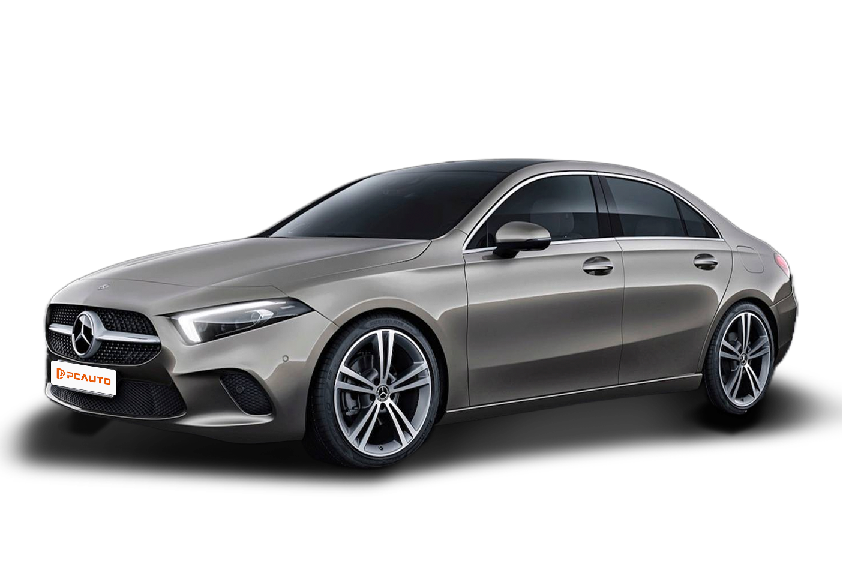
Cars With Similar Price And Features

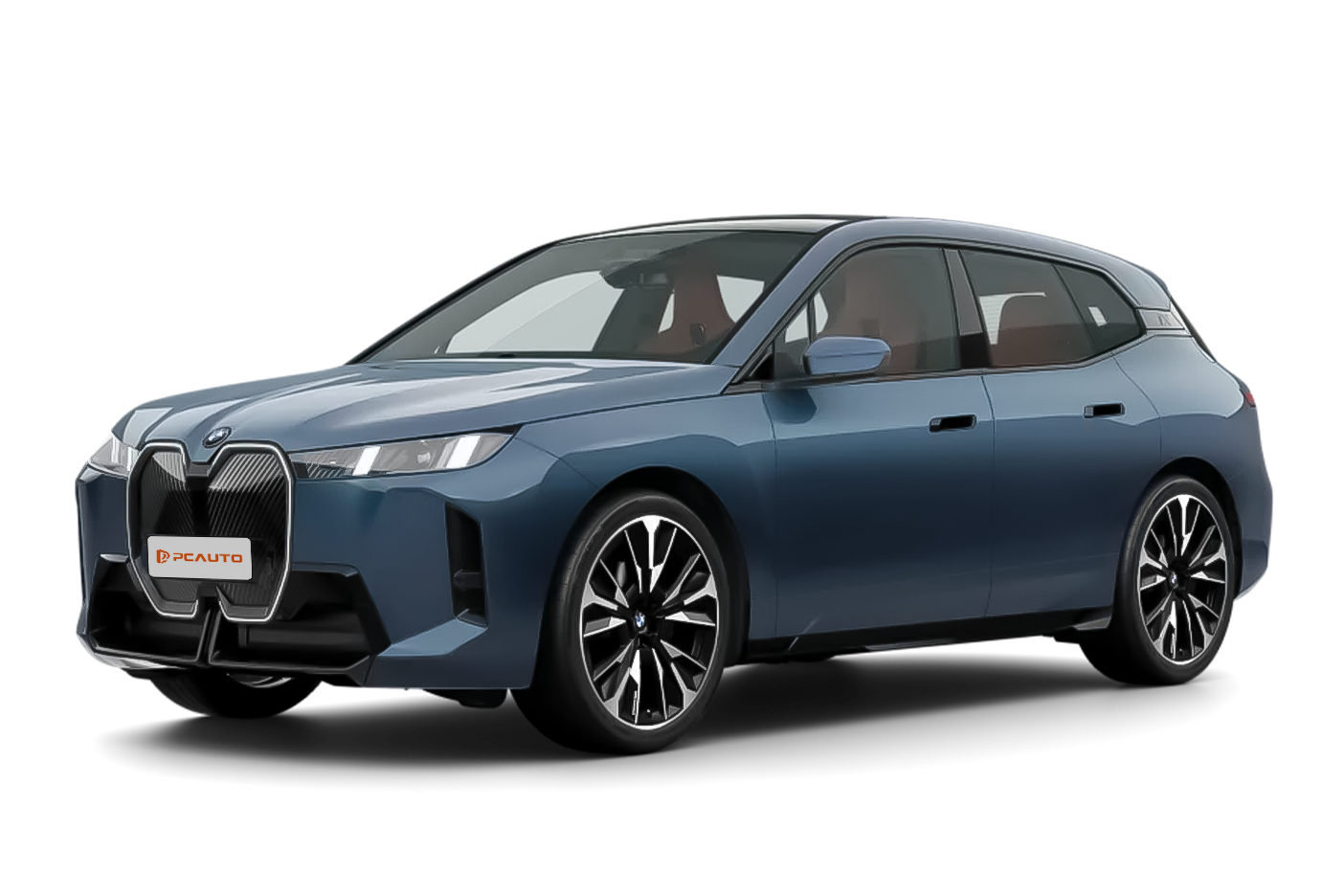
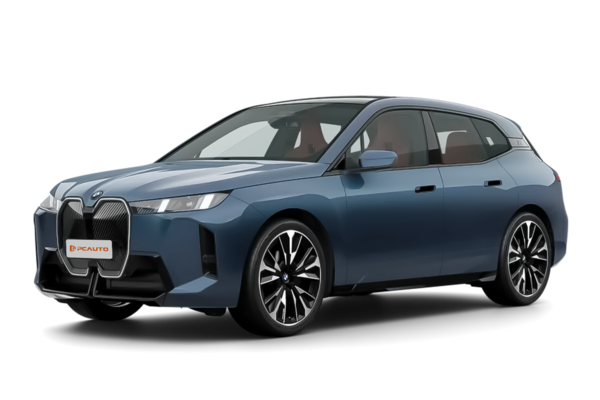
The 2025 BMW iX xDrive45 Sport is an Executive-class pure electric SUV that balances a 602km long range, signature driving dynamics, and luxurious intelligent features.
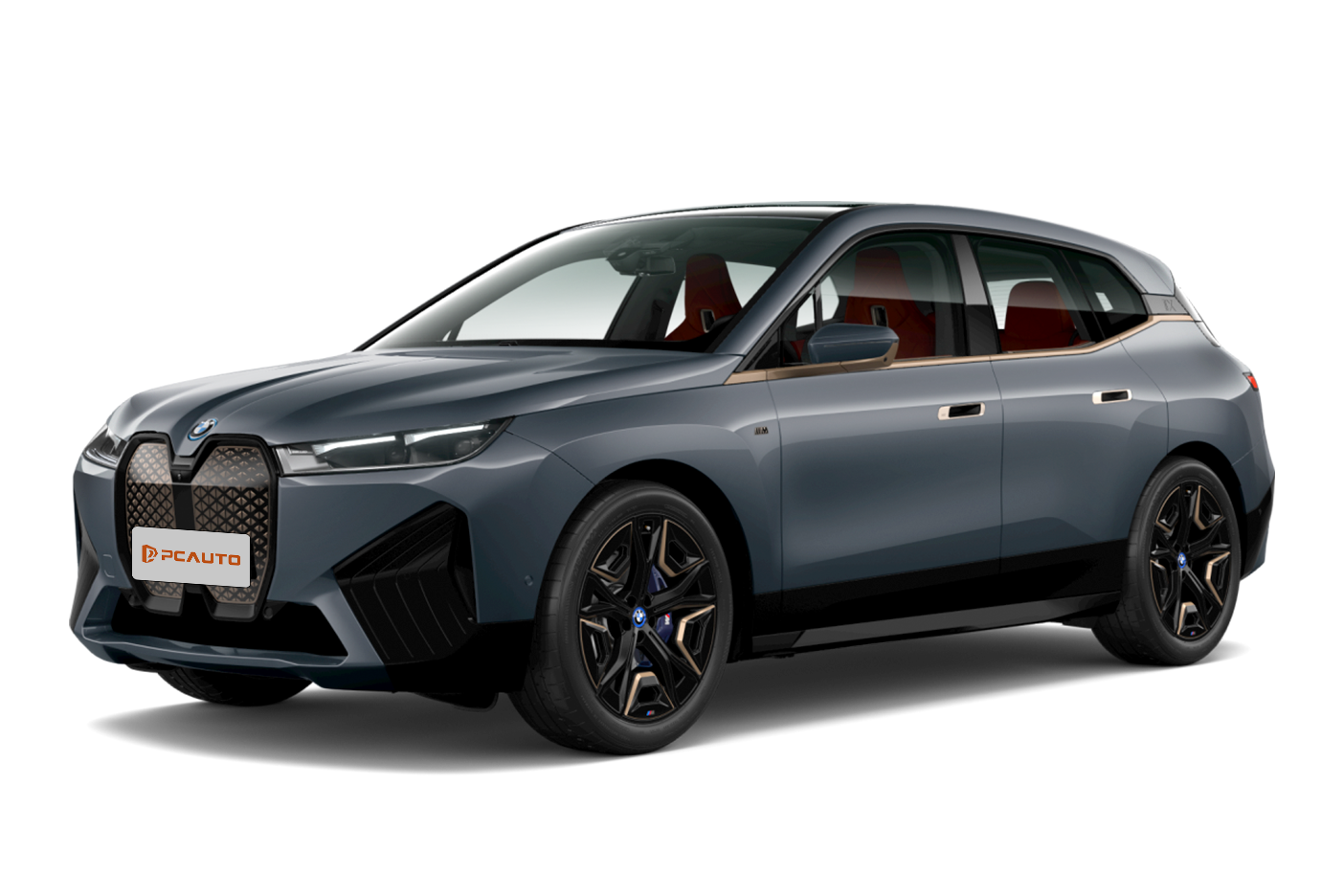
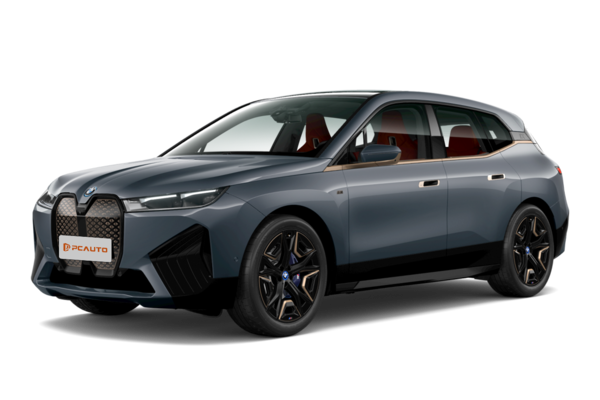
BMW iX M60 2024, as a high-end executive-level pure electric SUV, combines ultimate performance and luxurious experience with dual motors delivering 619 horsepower, 1110N·m torque, and a 561km range.
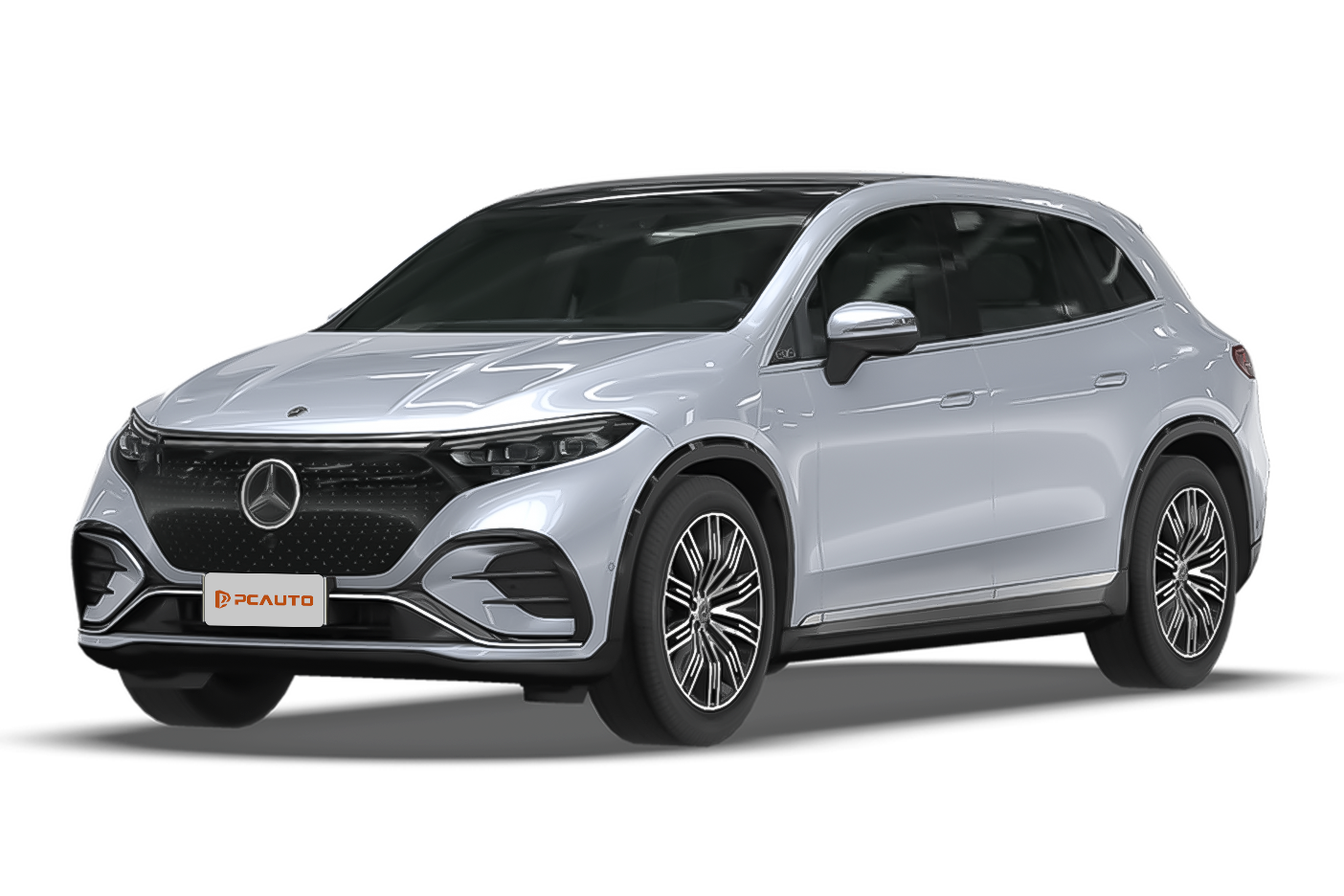
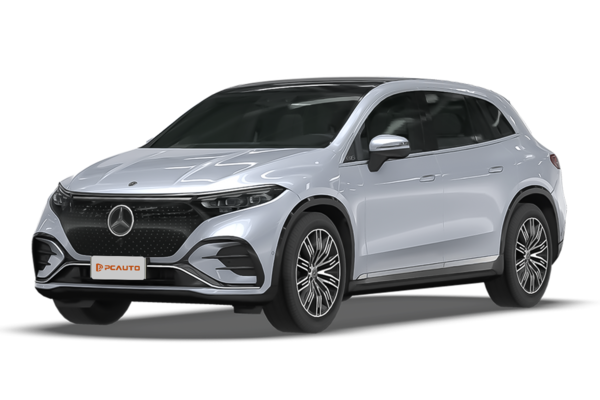
2024 Mercedes-Benz EQS EQS450 4Matic SUV is a luxurious executive-level electric SUV that balances seven-seat practicality, long range, and the MBUX Hyperscreen technology experience.