

Geely Emgrand GL Review

 Share
Share
 Segment
 Body Type
 Capacity(L)
 Engine Power(PS)
 Transmission
 Engine Torque(Nm)
In 2019, Malaysia's compact sedan market was highly competitive. Consumers focused on both practical space and smooth power delivery as well as value-for-money configurations. Many models in the A-segment sub-market tried to stand out with a single advantage. However, the 2019 Geely Emgrand GL 1.8+6DCT emphasizes "balance" as its core selling point, integrating the class-leading space brought by its 2700mm long wheelbase, the stable output of a 1.8L naturally aspirated engine, and the smooth shifting of a DCT transmission. This makes us curious whether it can establish a differentiated foothold among competitors in the same segment. The main purpose of this test is to verify whether the car's static performance meets the needs of household users, whether the driving dynamics can handle daily commutes and weekend outings, and whether its overall performance justifies its positioning.
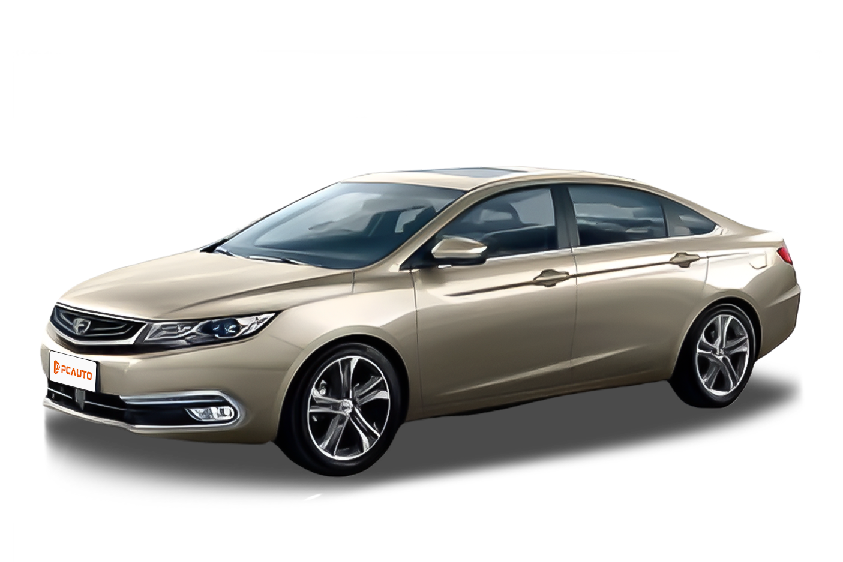
Approaching the 2019 Emgrand GL 1.8+6DCT, its overall exterior leans toward a stable family-oriented design without overly aggressive elements. The front features the family-style vertical chrome-plated grille, combined with angular halogen headlamps on both sides. Although the light source is not LED, the internal structure of the lamp group is clear, and the visibility upon lighting is acceptable. The side lines of the body are smooth, with a waistline extending from the front fender to the rear, crossing both doors, combined with 16-inch multi-spoke aluminum alloy wheels, visually elongating the car's proportions. At the rear, the horizontal design of the taillights extends to both sides and is connected by a chrome trim, enhancing the sense of width at the back. However, the rear bumper design is relatively simple, lacking sporty elements.
Sitting inside the car, the interior uses black as its primary tone, with certain areas accented by matte silver trim, creating a practical overall atmosphere. The dashboard is symmetrically arranged, with the upper part covered in hard plastic material, though its surface is textured to avoid a cheap feel. The inside armrest area of the door panel is wrapped in soft materials, offering decent tactile comfort during everyday use. The 10.25-inch central touchscreen is a highlight of the interior. The screen resolution is commendable, and the built-in intelligent system supports Bluetooth connectivity and basic navigation functions. Operation fluidity is moderate, though the response speed is slightly slower than some competitors in the same class. The seats are wrapped in faux leather and the front seats support manual adjustment. The seatbacks and cushions provide enough support for short trips, although lumbar support is somewhat lacking during long drives.
Space performance is one of Emgrand GL's main advantages. The car’s dimensions are 4725mm×1802mm×1478mm, and its wheelbase reaches 2700mm, putting it at the higher end in the A-segment category. In the front row, a 175cm-tall tester had a headroom clearance of a fist and two fingers, with ample legroom. The rear space is even more impressive; a tester of the same height had two fists of legroom and a fist of headroom. Even with three adult passengers in the rear seats, it does not feel crowded. Regarding storage capabilities, the front central armrest box has moderate capacity, able to hold a phone and wallet. The door panel storage slots can fit two water bottles. The trunk has a capacity of 680L, with a regular opening that can accommodate two 28-inch suitcases while still leaving space, meeting the needs of family trips. The rear row is equipped with air-conditioning vents and a USB charging port, demonstrating thoughtful attention to details.
Power-wise, this car is equipped with a 1.8L naturally aspirated engine, delivering a maximum horsepower of 133PS and a peak torque of 170N·m, paired with a 6-speed DCT dual-clutch transmission. During daily driving, the power output is smooth in the initial starting phase, without the abruptness of turbo intervention. A light press on the accelerator is sufficient for low-speed urban roads; during medium-speed cruising (60-80km/h), pressing the accelerator harder will prompt the transmission to downshift proactively, providing timely power response and making overtaking effortless; however, at high speeds (above 100km/h), the acceleration capability weakens, requiring advanced planning for overtaking. The transmission may encounter slight jerks during low-speed gear changes, especially in congested traffic with frequent stop-and-go conditions, but overall smoothness is above average among DCT models of the same class.
The handling and suspension are tuned towards comfort. The steering wheel is light and suitable for urban driving; however, the steering precision is average, with a slight amount of play. The front suspension adopts a MacPherson independent structure, while the rear suspension is a torsion beam non-independent setup. It performs well in filtering small bumps on urban roads, with minimal shaking of the vehicle body; when going over speed bumps or rough roads, the rear passengers may experience slight bouncing, but without transmitting excessively harsh vibrations. During emergency lane changes, body roll is kept within acceptable limits, with no significant instability, offering decent stability.
In fuel consumption tests, we covered 200 km under 50% urban congestion and 50% highway cruising. The actual fuel consumption was 7.8L/100km, slightly higher than the official figure of 6.9L/100km, mainly due to frequent stop-and-go in urban traffic increasing fuel usage. Regarding braking performance, the braking distance from 100km/h to 0 was approximately 42 meters, which is average. The brake pedal response is linear and without much play.
In terms of ride comfort, noise control performance is average. At high speeds (120 km/h), wind and tire noise become noticeably audible inside the cabin, affecting in-car conversations. Engine noise is more pronounced when the RPM exceeds 3000, but during daily driving, the RPM usually stays below 2000, which has minimal impact on comfort. The faux leather material of the seats offers average breathability, which may cause sweating during prolonged summer use, though the cushion length is adequate, providing good thigh support.
Overall, the 2019 Geely Emgrand GL 1.8+6DCT’s core highlights include its segment-leading interior space, stable naturally aspirated power delivery, and practical configuration combination. Compared to competitors in its class, its rear space is more spacious than the Proton Persona, and its power smoothness surpasses some models equipped with small-displacement turbo engines. However, its interior quality and the smoothness of its intelligent system are slightly inferior to the Honda City. This car is more suitable for family users who prioritize space practicality, especially those who frequently travel with a full load or take family trips on weekends. It might not be the best choice for users pursuing sporty handling or extreme fuel efficiency.
Overall, the 2019 Emgrand GL 1.8+6DCT is a “well-rounded” family sedan. It compensates for minor shortcomings in power and interior quality with spaciousness and meets the core needs of family users with its stable performance. If you are looking for a well-balanced compact family sedan, it is worth considering.
More Geely Reviews
Cars With Similar Price And Features
2
Rank in Sedan

2023 Perodua Bezza 1.0 G (M) is a high-value A-segment manual sedan, offering practical features and durability at an affordable price, balancing daily commuting with safety and convenience.
1
Rank in Sedan

2025 Proton Saga 1.5 Standard AT, as an entry-level automatic sedan, upgraded to a 1.5L engine, offering practical space, thoughtful features, and outstanding value for money, making it an affordable choice for families and commuters.