

Perodua Bezza 2023 Review

 Share
Share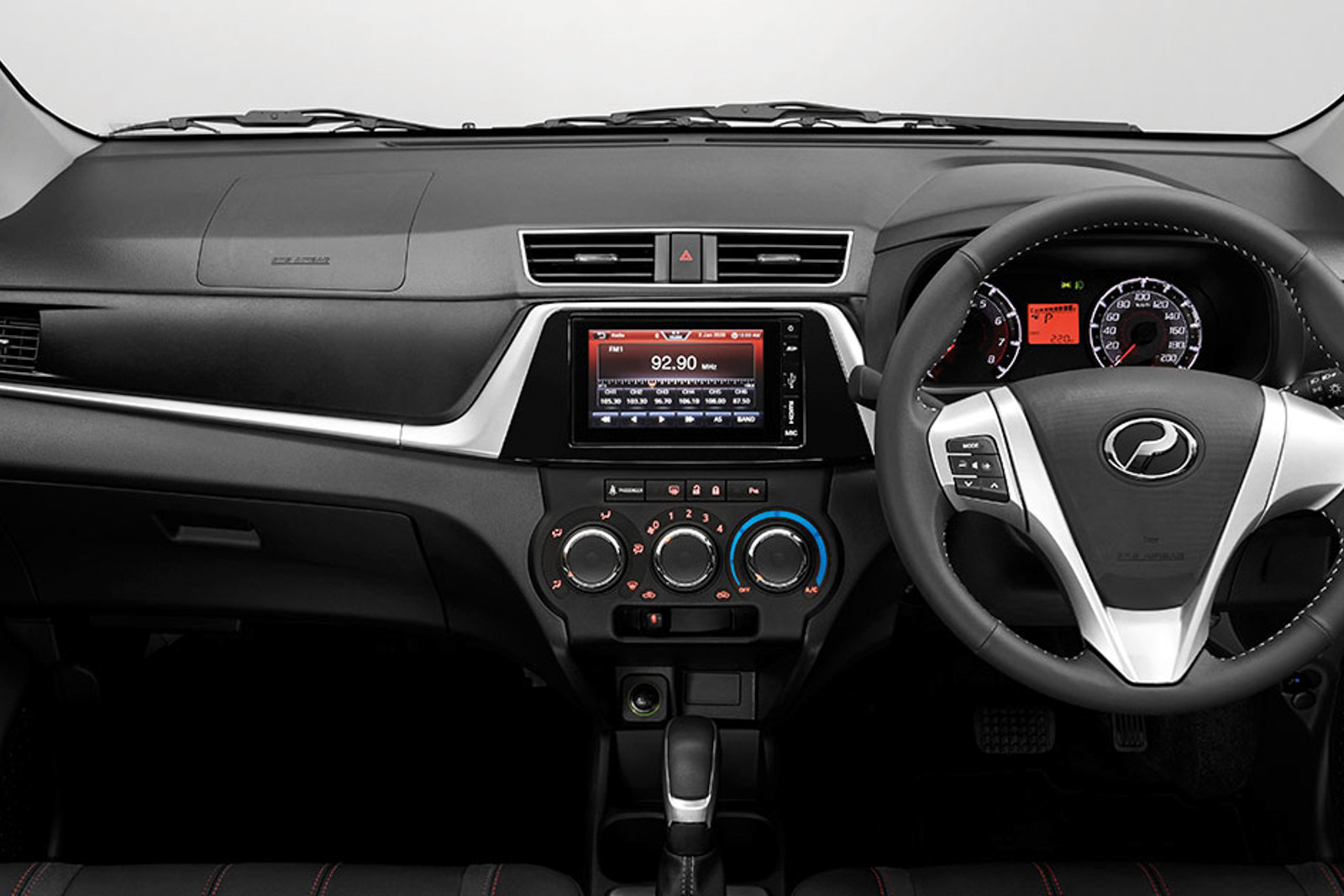
 Segment
 Body Type
 Capacity(L)
 Engine Power(PS)
 Engine Torque(Nm)
 Transmission
In Malaysia's A-segment sedan market, consumer demand for high value-for-money, practical space, and reliable performance remains clear. As the entry-level manual version of the series, the 2023 Perodua Bezza 1.0 G (M) enters the market at a price of RM 34,580 with a 5-year/150,000km warranty. Its core selling points are superior storage space, basic safety configurations, and low fuel consumption. This test will focus on verifying its static practicality and dynamic driving suitability in daily commuting scenarios.
The exterior design continues the simple style of the Bezza family, with the overall lines centered around practicality. The front utilizes Perodua's signature chrome strip connecting the LED headlights on both sides. The headlight design is sharply contoured and equipped with automatic lighting functionality, enhancing convenience for daily use. The car's side avoids overly complex lines, with a length of 4,170mm and a wheelbase of 2,455mm ensuring ample interior space. The rear design is conventional, with standard rear fog lamps and a trunk opening of moderate width, making it convenient for carrying large items. Overall, the exterior lacks standout design highlights but aligns with the practical positioning of A-segment models, with a recognition level that is average within the segment.
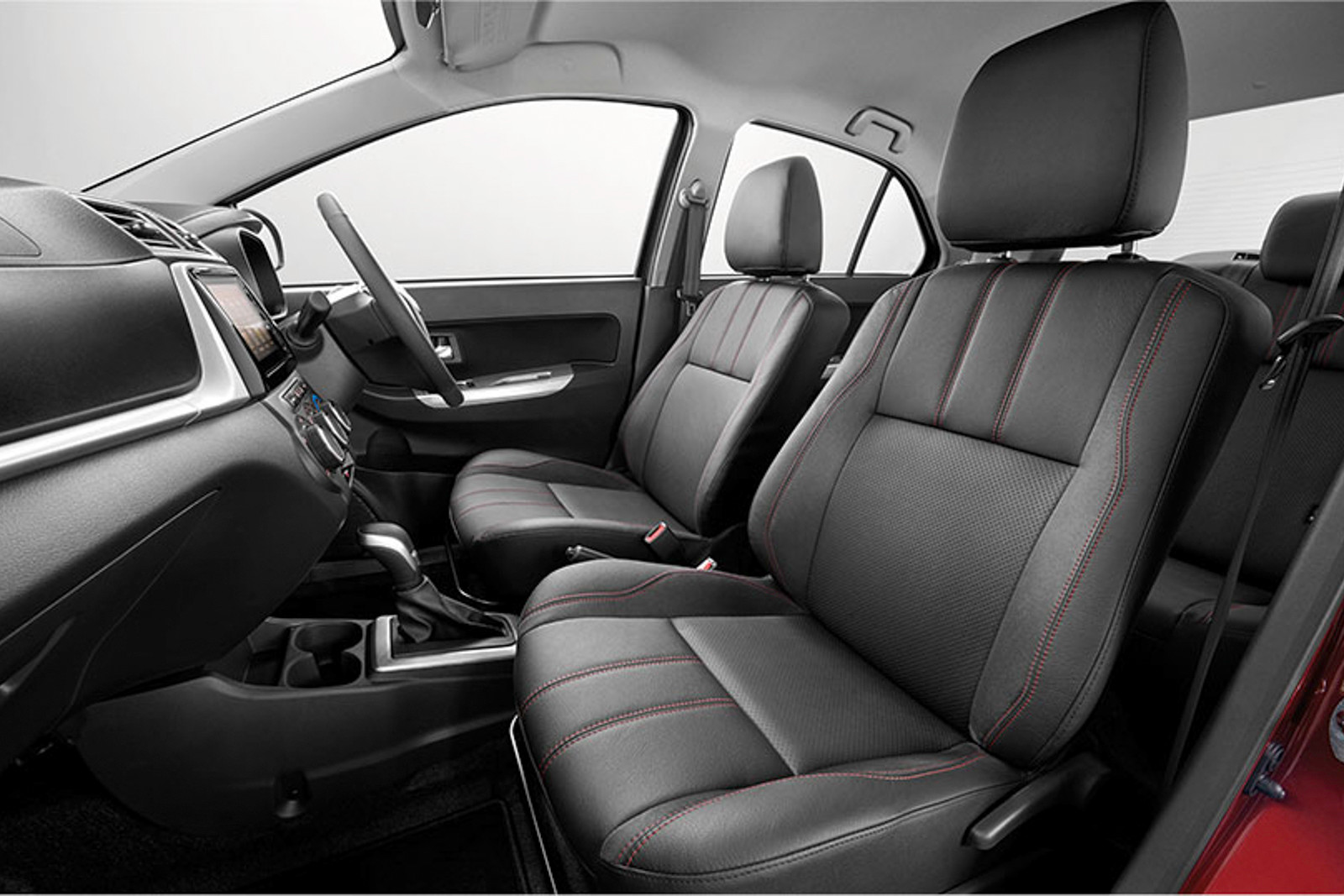
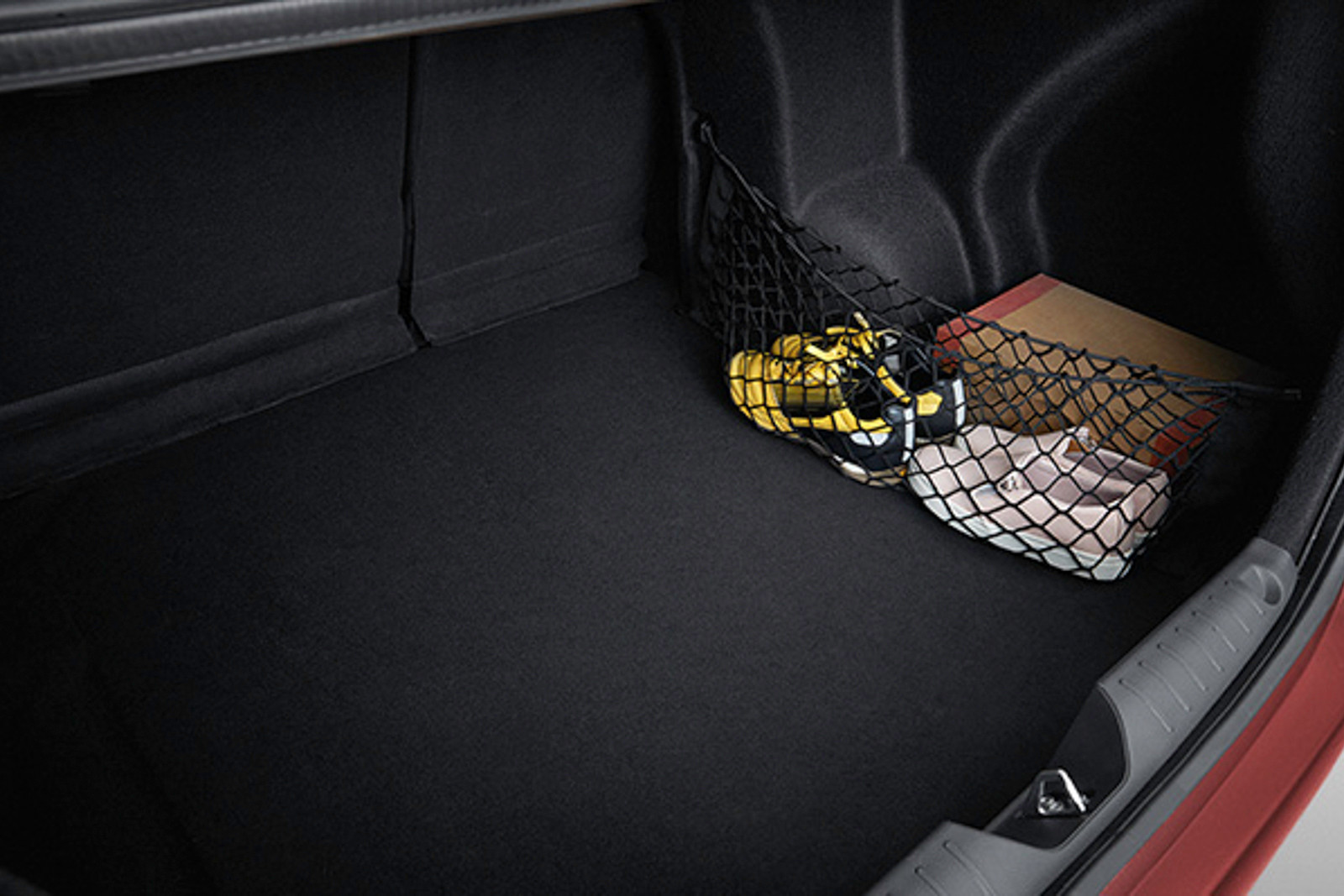
Upon opening the door, the interior features hard plastic materials, consistent with the cost control of entry-level models. The center console is clearly laid out, with manual air-conditioning knobs on the left, an audio system (2 speakers) in the middle, and a small storage compartment reserved on the right. A multifunction steering wheel is standard, allowing volume control and call answering, with a straightforward operational logic. The instrument panel uses a backlit analog design, displaying RPM, speed, and fuel level intuitively, with good visibility under strong daylight. The seats are fabric-covered, with manual adjustments for the front row, accommodating drivers up to 175cm tall. The rear seats support a 60:40 split folding configuration, and along with a trunk volume of 508L, can accommodate longer items like strollers or suitcases when folded down. The front door panels include storage slots for water bottles, while the central armrest box is relatively shallow and suitable only for small items.
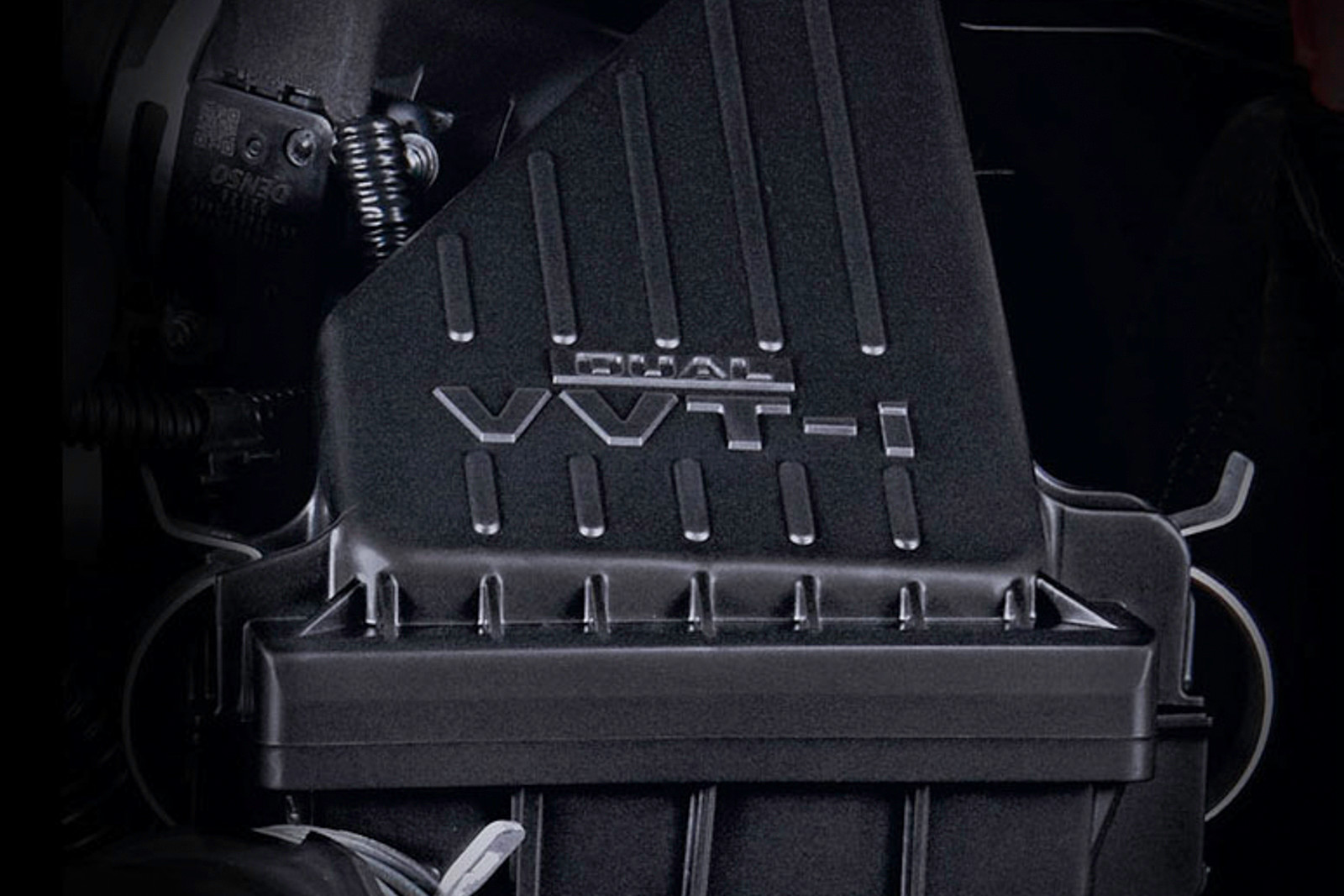
In terms of powertrain, a 1.0L three-cylinder naturally aspirated engine is used, with a maximum power output of 50kW (69PS) at 6,000rpm and a maximum torque of 91N·m at 4,400rpm, paired with a 5-speed manual gearbox. During takeoff, you need to keep the RPM above 2000 to get noticeable power output, making it suitable for urban low-speed traffic situations. Acceleration between 30-60km/h is smooth, with moderate shifting stroke and distinct gear positions, allowing even beginners to adapt quickly. Once the speed exceeds 80km/h, power reserves appear slightly insufficient, requiring downshifting to increase RPM for overtaking. However, on daily commutes in highway sections, this impact is minimal due to low usage frequency at high speeds.
Handling performance aligns with its family use positioning, featuring a front MacPherson independent suspension and a rear torsion beam non-independent suspension tuned for comfort. When driving over common city road bumps or uneven surfaces, the suspension absorbs most minor vibrations, ensuring rear passengers do not experience significant jolts. The steering is light with minimal play, making U-turns or parallel parking agile to handle. The manual transmission version does not include an automatic start-stop function, but idle speed remains stable at around 700rpm, maintaining good fuel efficiency. The tested combined fuel consumption is 4.6L/100km, slightly higher than the official figure of 4.4L due to urban traffic congestion. On highways, fuel consumption can drop to 4.2L/100km. With a 36L fuel tank, the range can exceed 780km, reducing refueling frequency.
In terms of driving and riding comfort, the fabric seats offer average support, but the padding is soft, making long rides less fatiguing. Noise control performance is average; below a speed of 60km/h, the main source of noise is tire noise, while above 80km/h, engine noise gradually permeates into the cabin but does not reach a level that affects conversations. The manual parking brake operates smoothly, and rear parking sensors come as standard, providing timely alerts about obstacle distances during low-speed reversing, compensating for the lack of a reversing camera. ISO FIX child seat mounts come as standard, making it suitable for families with children.
Overall, the 2023 Perodua Bezza 1.0 G (M)'s core advantages lie in its affordability, practicality, and fuel efficiency. Compared to the Proton Saga 1.3 Standard MT in the same class (RM 32,800), the Bezza offers a larger trunk capacity and features such as automatic headlights and keyless entry. Compared to the Myvi 1.0 G (RM 35,000), the sedan design provides more comfortable rear headroom. Its shortcomings mainly revolve around limited power and relatively hard interior materials, but considering its entry-level positioning, these compromises are within an acceptable range.
This car is suitable for consumers with a limited budget who prioritize practical daily commuting, especially young first-time car buyers or families needing a vehicle for daily errands. It can meet the demands of daily city commutes of up to 50km and can also handle occasional short road trips. For those seeking more power or richer features, the 1.3L version can be considered, but the 1.0 G (M) offers competitive value for money in the entry-level market.
The 2023 Perodua Bezza 1.0 G (M) is a practical sedan with a clear target audience. With space and fuel efficiency as its core selling points, it provides sufficient basic features within a limited budget, making it a reliable choice for daily city commuting.
Perodua Bezza Loan Calculator
More Perodua Reviews
Cars With Similar Price And Features
1
Rank in Sedan
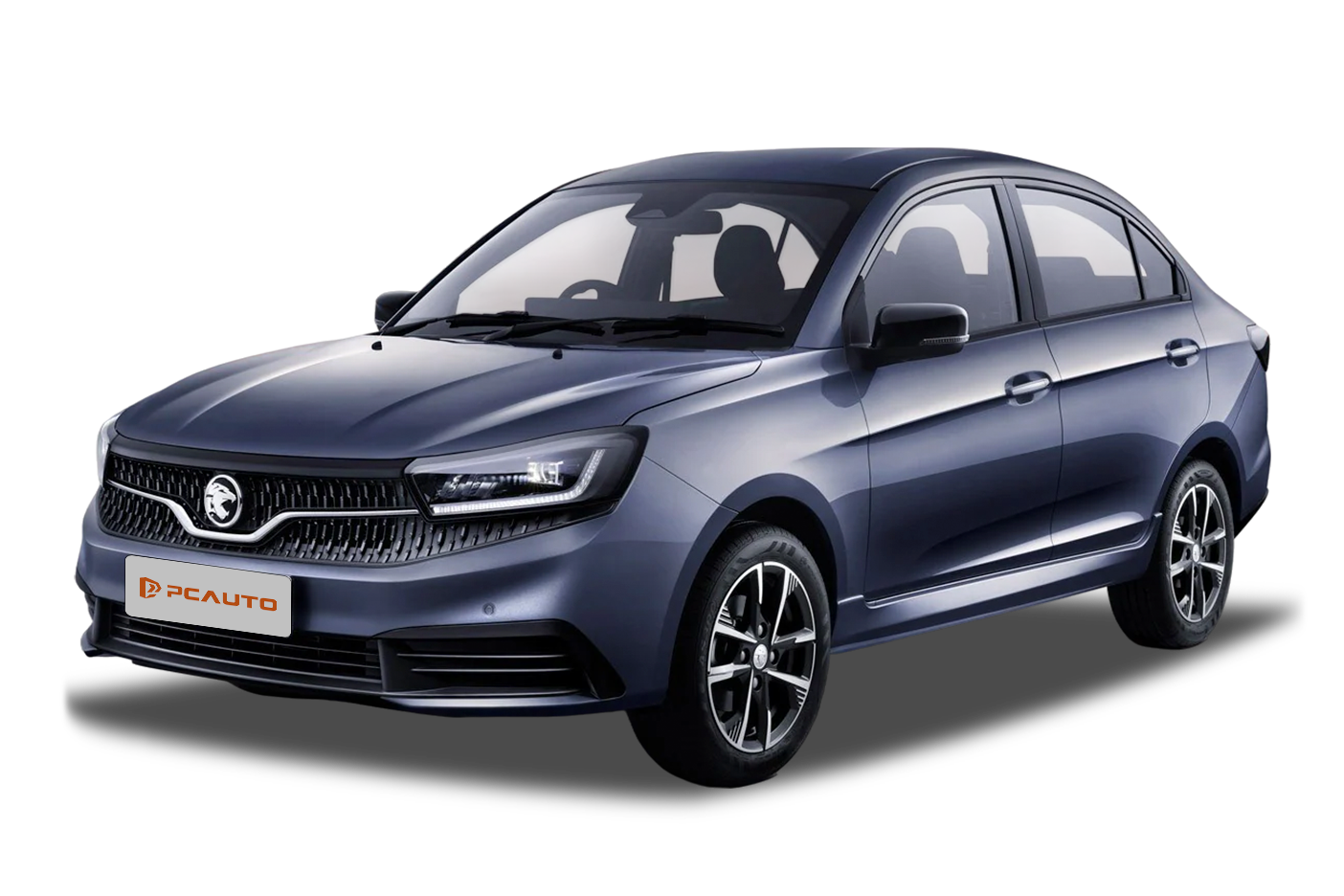
2025 Proton Saga 1.5 Standard AT, as an entry-level automatic sedan, upgraded to a 1.5L engine, offering practical space, thoughtful features, and outstanding value for money, making it an affordable choice for families and commuters.
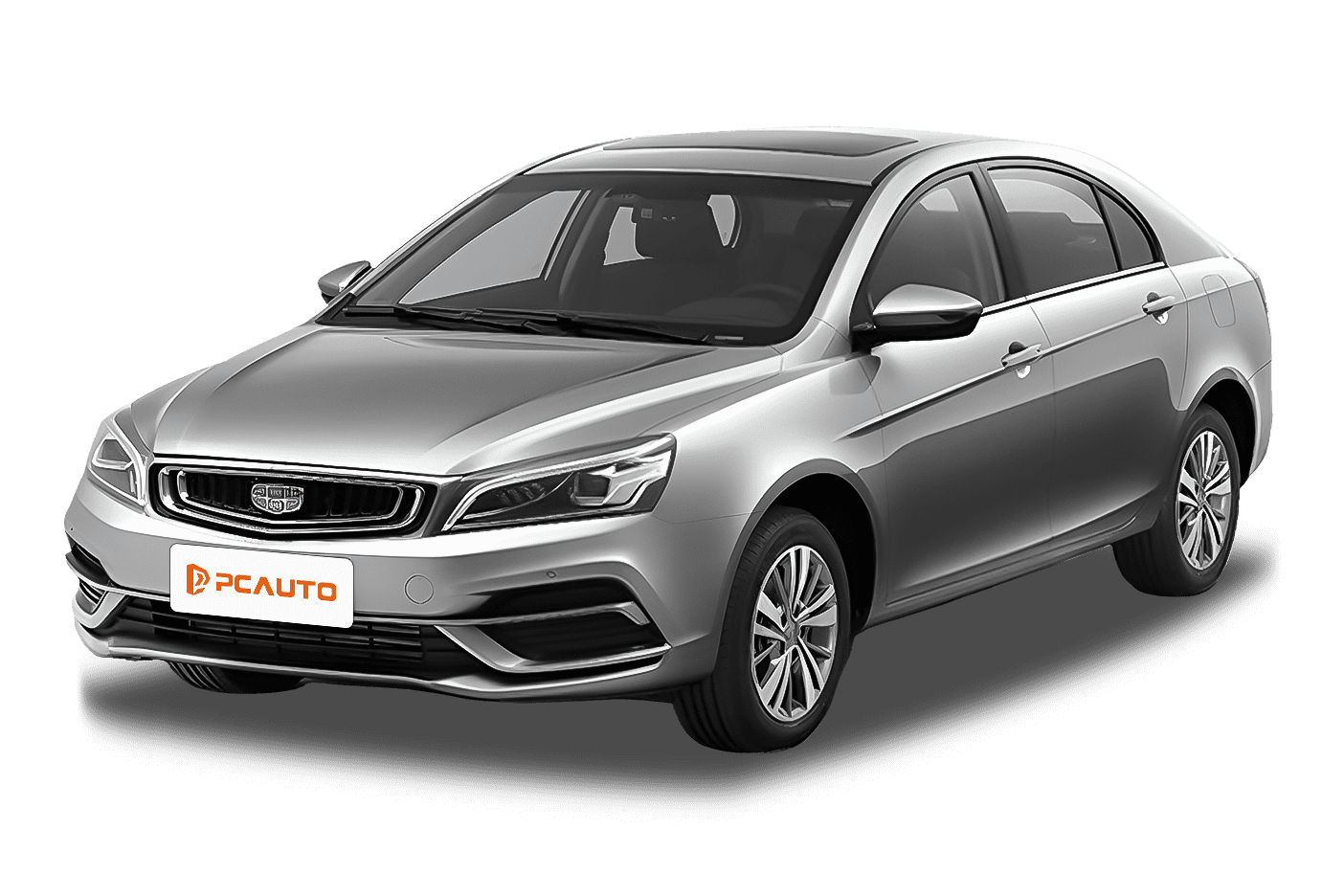
2019 Geely New Emgrand 1.5L-CVT is a balanced family sedan with practical space, rich safety features, and fuel efficiency, meeting the needs of daily commuting and short trips.