

Porsche Taycan Review

 Share
Share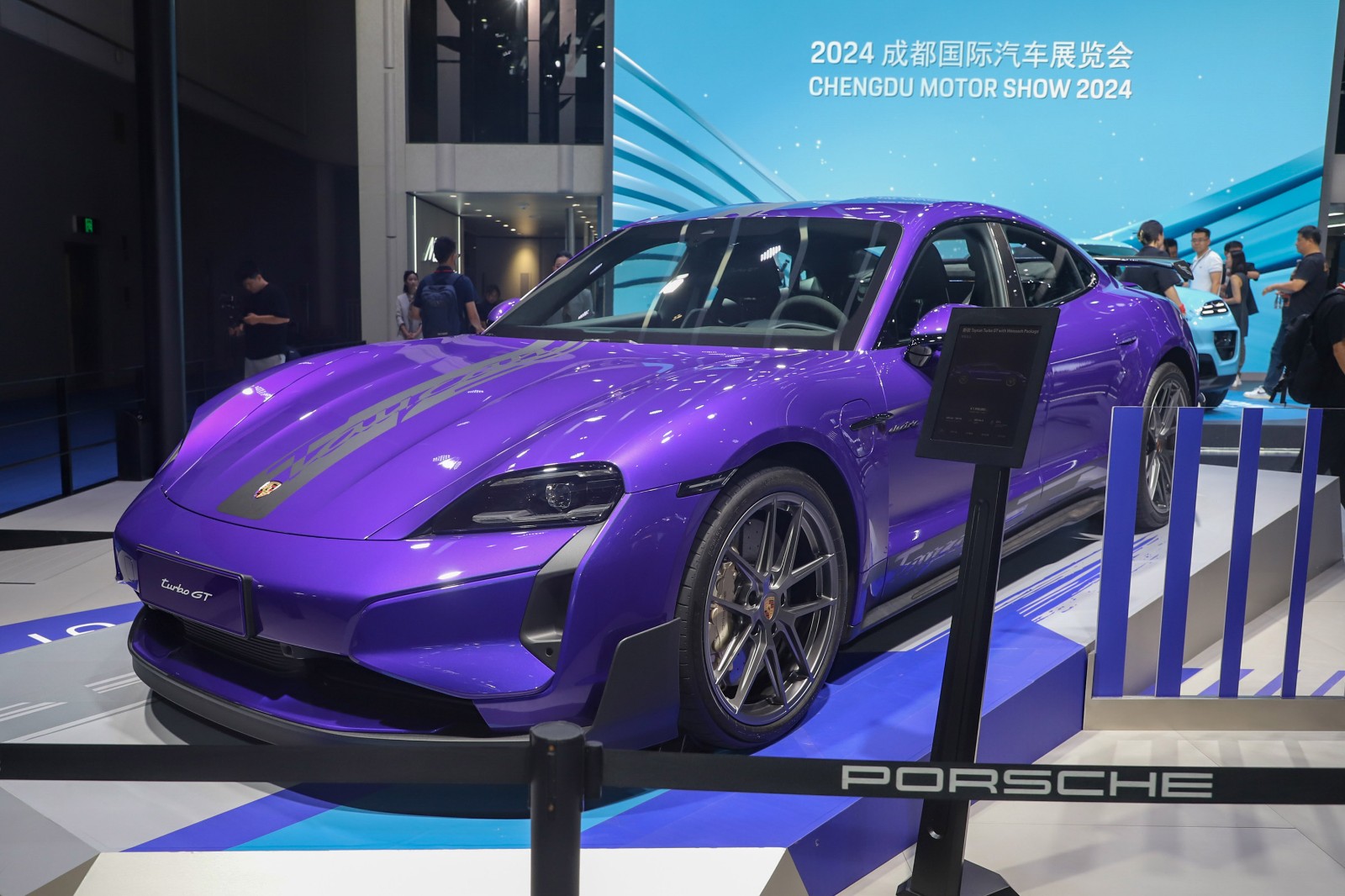
 Segment
 Body Type
 Motor Output(kW)
 Motor Torque(Nm)
 EV Range(km)
 Battery Capacity(kWh)
As the competition in the electric sports car market becomes increasingly intense, consumers are no longer satisfied with mere acceleration performance but pay more attention to the balance between brand identity, daily practicality, and battery range. As Porsche's first all-electric model, the 2024 Taycan series has optimized its range, configuration, and driving quality while maintaining the brand's sporty character. In particular, the price adjustment of the entry-level models and the performance upgrades of the high-end variants ensure its competitiveness in the luxury electric sports car segment. This time, we focused on test-driving the 2024 Taycan Rear-Wheel Drive (RWD) version, the 4S Cross Turismo, and the Turbo GT models. The main objective was to evaluate the actual performance of different configurations in scenarios like daily commuting, long-distance travel, and track driving to provide a reference for users with varying needs.
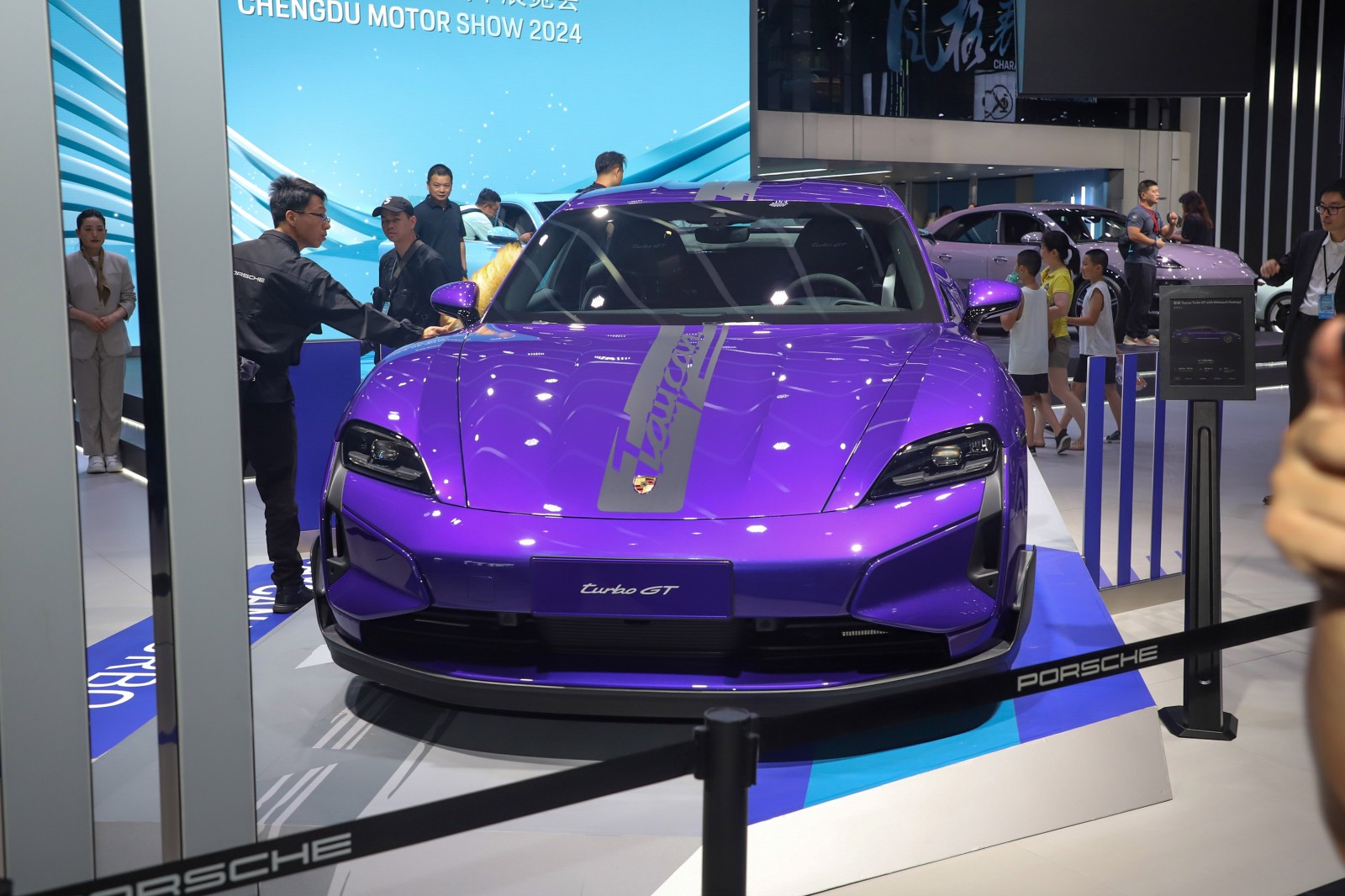
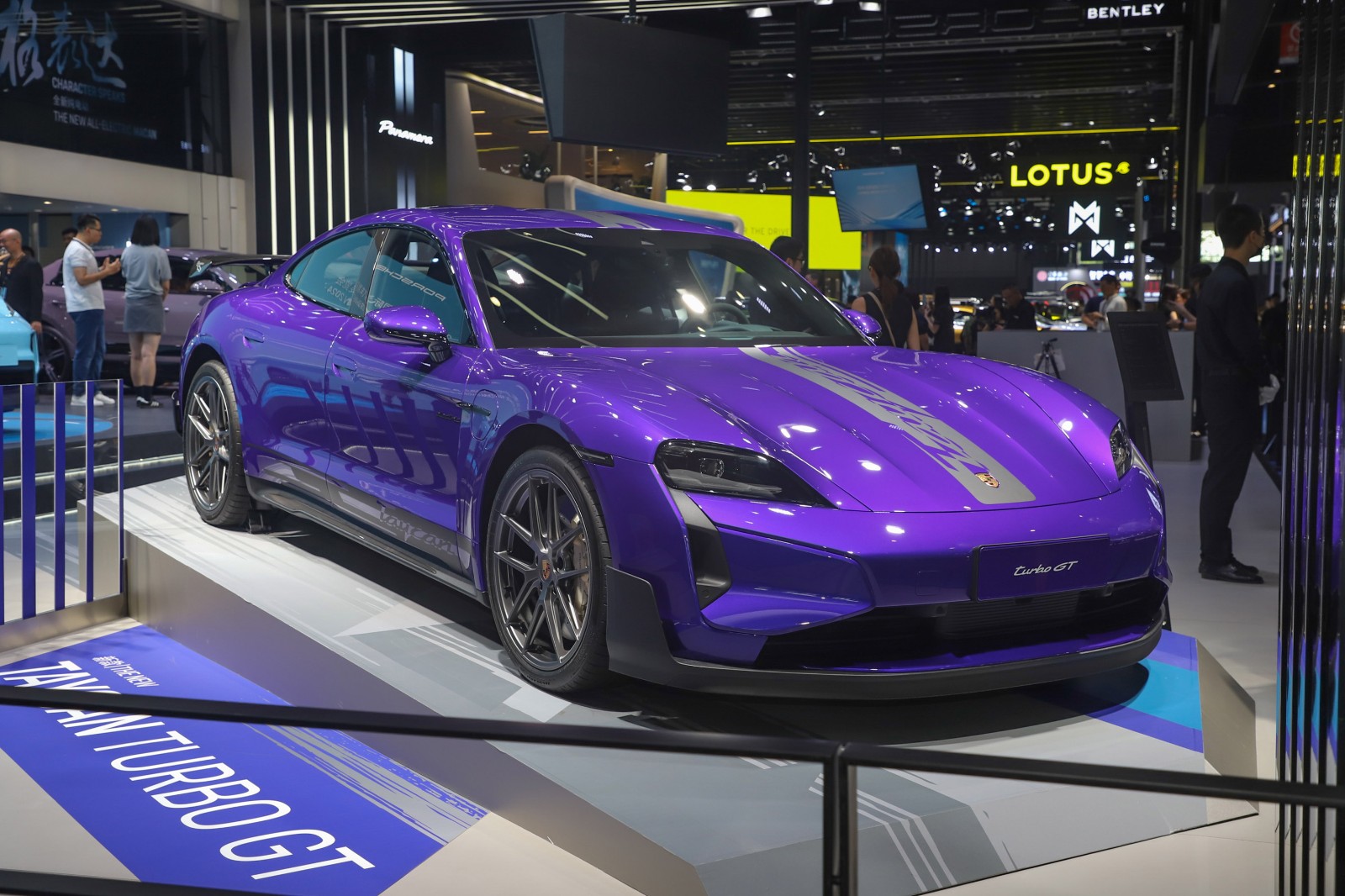
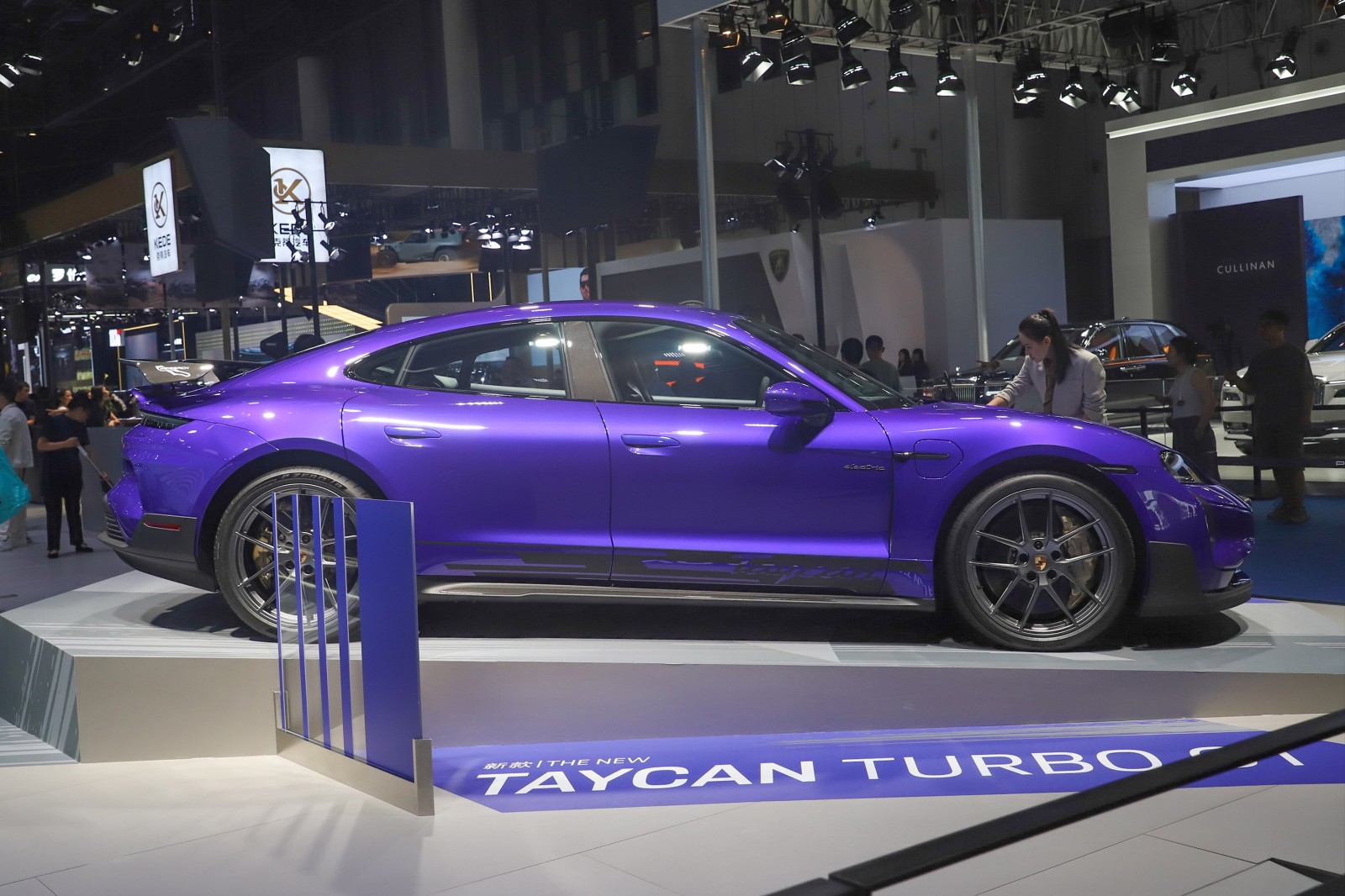
The 2024 Taycan series continues Porsche's iconic fastback design, with overall smooth lines and muscular contours. The front features matrix LED headlights paired with the signature quad daytime running lights, making it highly recognizable; the front bumper's air intake design not only optimizes aerodynamics but also enhances the sporty vibe. On the side, the RWD and 4S versions come with 19-inch wheels paired with wide tires (front 225/55 R19, rear 275/45 R19), giving a stable visual impression; the Cross Turismo variant, with its 146mm minimum ground clearance and five-door wagon design, adds practicality. At the rear, the continuous LED tail light is a classic Taycan design that extends the visual width when illuminated, while the diffuser-style rear bumper reinforces its performance-oriented stance.
Inside the cabin, the Taycan balances Porsche’s hallmarks of luxury and technology. The center console adopts a three-screen design, with a 10.9-inch central touchscreen offering smooth operation and supporting CarPlay connectivity; the fully-digital instrument cluster displays key information like range and power output with a clear interface. In terms of materials, most models feature leather-wrapped surfaces, while Turbo and higher trims come standard with Burmester sound systems, enhancing the auditory experience. As for features, all models are equipped with power-adjustable front seats, automatic climate control, and keyless entry as standard. The Cross Turismo variant offers additional features like rear-seat touchscreen controls and a 360-degree panoramic camera, while the Turbo GT adopts lightweight designs by sacrificing some comfort features to focus more on track performance.
In terms of space, the Taycan series has a wheelbase of approximately 2900mm, providing ample front-row seating space where a 180cm tall passenger would still have about a fistful of headroom remaining. The legroom for rear seats is around two fists, while headroom is slightly limited due to the fastback design, though it meets daily passenger needs. Regarding storage capacity, the luggage space for the RWD and 4S versions has not been specifically disclosed, but the Cross Turismo version can expand its trunk volume up to 1296 liters when the rear seats are folded down, making it ideal for long trips or transporting large items. All models come standard with rear air conditioning vents and ISOFIX child seat anchors, offering good practicality.
In terms of power, the 2024 Taycan rear-wheel-drive version is equipped with a single rear permanent magnet synchronous motor, delivering a maximum output of 300kW (408PS) and maximum torque of 410N·m, with an official 0-100km/h acceleration time of 4.8 seconds. During actual driving, the start-up is smooth in Normal mode, and the power response is quick when stepping on the accelerator deeply. There's no need to wait for a turbo to kick in when overtaking, providing an immediate push-back sensation. The 4S Cross Turismo adopts a dual-motor layout, with a total output of 440kW (598PS) and torque of 650N·m, offering stronger acceleration performance. The all-wheel-drive system provides stable traction on slippery roads. The Turbo GT represents the performance pinnacle, with a total output of 760kW (1034PS) and torque of 1110N·m, achieving 0-100km/h acceleration in just 2.3 seconds. In Track mode, the power output is aggressive, making it suitable for extreme driving.
In terms of handling and chassis performance, it aligns with Porsche's tuning style. The entire series features a front double-wishbone and rear multi-link independent suspension. Both the rear-wheel-drive version and the 4S models' suspension in Comfort mode can filter out most road bumps, while in Sport mode, the support is significantly enhanced, and body roll is excellently controlled during cornering. The Cross Turismo version's suspension tuning leans towards comfort, making it suitable for long-distance cruising. The Turbo GT, on the other hand, has a stiffer suspension, paired with 21-inch wide tires, delivering precise steering in corners and excellent body follow-through behavior.
In terms of range and charging, the rear-wheel-drive version is equipped with an 89kWh battery, offering an official range of 590km. During actual city commuting, energy consumption is approximately 18kWh/100km, achieving about 85% of the stated range. On the highway, energy consumption increases to 22kWh/100km, for a range of about 450km. The Cross Turismo version, equipped with a 105kWh battery, has an official range of 610km and an actual city range of about 520km. The entire series supports fast charging, taking just 0.3 hours to charge to 80%, making daily charging convenient. The Turbo GT's range is relatively shorter, with an official figure of 554km, and its energy consumption significantly increases during track driving. However, the fast-charging speed remains consistent.
In terms of ride comfort, most models have excellent soundproofing performance, with wind and tire noise during high-speed driving kept within a reasonable range. The Cross Turismo version has slightly higher wind resistance due to its body shape, but it does not affect the riding experience. As for seat comfort, all models feature electrically adjustable seats with good support, making long drives less tiring. The Turbo GT's seats emphasize better wrap-around support, catering to spirited driving.
Overall, the core strengths of the 2024 Porsche Taycan series lie in its brand heritage, balance between performance and practicality. Compared with competing models like the Tesla Model S, the Taycan offers superior handling quality and luxury configurations. The Cross Turismo version's station wagon design fills the market gap for luxury electric station wagons.
In terms of target audience, the rear-wheel-drive and 4S models are suitable for users focusing on daily commuting and occasional sporty driving, offering exceptional value within the price range of RM 575,000-RM 700,000. The Cross Turismo version is ideal for consumers needing to balance family outings and long-distance travel. The Turbo GT and Weissach package versions cater to performance enthusiasts, with their extreme acceleration and track performance meeting professional driving needs.
Overall, the 2024 Porsche Taycan series, with its various configurations, addresses all scenarios from daily commuting to track driving, making it a premium choice in the luxury electric sports car market that balances brand, performance, and practicality.