

Reference Only. Update Soon
2021 JMC Vigus Pro 2.0 TDCi 4x4
Price
RM 98,888
Select a Vehicle Variant
2023 JMC Vigus Pro White Series 2.0L 4WD 8AT RM 99,888
Summary
Get the 2021 JMC Vigus Pro 2.0 TDCi 4x4 – a practical 4x4 Pickup since 2021. Starts at RM 98,888. Seats 5 comfortably in its spacious cabin (5305x1905x1835mm). Big enough for families, nimble enough for cities.
Zippy on highways with a -km/h max speed. The 1998cc engine is both strong and efficient. Want a no-fuss car that looks good? The 2021 JMC Vigus Pro 2.0 TDCi 4x4 packs value, modern design, and everyday performance together.
Zippy on highways with a -km/h max speed. The 1998cc engine is both strong and efficient. Want a no-fuss car that looks good? The 2021 JMC Vigus Pro 2.0 TDCi 4x4 packs value, modern design, and everyday performance together.
Core Specs

Segment
4x4

Engine Capacity(cc)
1998

Transmission
AT

Fuel Comsumption (L/100km)
7.8

Fuel Tank(litres)
68

Top Speed(km/h)
-

Seats
5

Length(mm)
5305

Width(mm)
1905

Height(mm)
1835

Wheelbase(mm)
3085

Boot Volume(L)
-
Other Variants
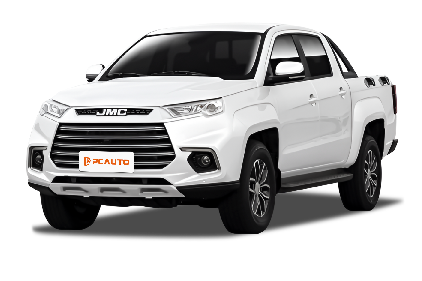
Price
RM 98,888
Body
5305×1905×1835
Engine Power(PS)
141
Engine Torque(Nm)
-
TRANSMISSION
AT
Fuel Consumption
7.8
JMC Vigus Pro Dealers
Related Q&A
View More >Q
Which country made JMC Vigus Pro?
The JMC Vigus Pro is a pickup truck model produced by Jiangling Motors Corporation (JMC), a Chinese automaker. Headquartered in Nanchang, Jiangxi Province, China, JMC is a well - known enterprise with years of experience in manufacturing commercial and passenger vehicles. This model is mainly designed for the Southeast Asian market, including Malaysia. It combines practicality and comfort, is equipped with a high - efficiency diesel engine and a sturdy chassis, and is suitable for commercial transportation or outdoor leisure needs.
For Malaysian users, the competitive advantages of the JMC Vigus Pro lie in its high cost - effectiveness, strong cargo - carrying capacity, and durability in adapting to local road conditions. Meanwhile, JMC provides after - sales support in Malaysia through an official dealer network to ensure service convenience.
It's worth noting that there is a strong demand for pickup trucks in the Southeast Asian market, so many international brands such as Toyota and Isuzu have also launched similar models. However, thanks to the cost advantages of Chinese manufacturing and the gradually increasing recognition of its quality, the JMC Vigus Pro has become a strong competitor in this niche market.
 BlackoutFeb 9, 2026
Q
How much is JMC Vigus Pro in Malaysia?
The JMC Vigus Pro comes in different models in Malaysia, with varying prices. The price of the 2023 JMC Vigus Pro White Series 2.0L 4WD 8AT is RM 99,888, while the 2021 JMC Vigus Pro 2.0 TDCi 4x4 is priced at RM 98,888. Both of these vehicles are diesel - powered 4x4 models. They have a length of 5305mm, a width of 1905mm, a height of 1835mm, a wheelbase of 3085mm, and can seat 5 people.
In terms of the power system, they both adopt the turbo - charged intake form, and the engine has a maximum horsepower of 141PS. Regarding the configuration, a lot of safety and practical features come as standard, such as ABS anti - lock braking system, electronic stability control, dual airbags, and ISO FIX child seat interfaces, which provide convenience and safety for your trips.
 WildfireFeb 9, 2026
Q
What is the engine of JMC Vigus Pro?
The JMC Vigus Pro is equipped with a diesel engine with a displacement of 2.0L, a maximum horsepower of 141PS, and a peak torque of 340Nm. This engine uses a turbo - charged intake system and has 4 cylinders. It's reported that the engine technology comes from Ford (since JMC and Ford are partners in China). It is paired with an 8 - speed automatic transmission provided by ZF, which is quite rare among vehicles in the same class. This power combination not only ensures the vehicle's power output in daily use, meeting the needs of carrying passengers and cargo, but also gives it certain off - road capabilities. Under different road conditions, for example, when driving on city roads, the power output is smooth and stable; when facing rough rural roads, it also has enough torque and horsepower to handle the situation.
 ArcticFreezeFeb 9, 2026
Q
What is the mileage of JMC Vigus Pro?
The official combined fuel consumption of different models of JMC Vigus Pro is 7.8L/100km. Take the 2023 JMC Vigus Pro White Series 2.0L 4WD 8AT as an example. The fuel type of this vehicle is diesel. Such fuel - consumption performance is quite impressive for a 4x4 vehicle with a length of 5305mm and a weight of 1995kg. The 2021 JMC Vigus Pro 2.0 TDCi 4x4 also has the same fuel - consumption data. The actual mileage of the vehicle will vary due to various factors such as driving habits, road conditions, and vehicle load. For instance, if you often drive aggressively, frequently start and stop, or drive on congested roads, the fuel consumption will increase and the actual drivable mileage will decrease. On the other hand, with good driving habits like driving smoothly and maintaining an appropriate speed, the vehicle's mileage performance may be closer to the official data.
 ZephyrBreezeFeb 9, 2026
Q
What is the fuel consumption of JMC Vigus Pro?
As a pickup truck model that focuses on practicality and economy, the fuel economy of the JMC Vigus Pro is a key concern for many Malaysian consumers. According to official data, the 2.0T diesel engine equipped in the JMC Vigus Pro has a fuel consumption of approximately 8.5 liters per 100 kilometers under combined driving conditions. This figure is above average among diesel pickups in the same class, making it suitable for daily cargo - carrying or long - distance driving needs.
Malaysian users should note that the actual fuel consumption will be affected by factors such as driving habits, road conditions (such as urban congestion or suburban highways), and vehicle load. It is recommended to regularly maintain the vehicle and keep the tire pressure reasonable to optimize fuel efficiency.
In addition, the low - speed and high - torque characteristics of the diesel engine give it an edge when carrying heavy loads or climbing hills. The chassis tuning of the JMC Vigus Pro also balances comfort and load - carrying capacity, making it suitable for the diverse local driving scenarios.
If you have higher requirements for fuel consumption, you can pay attention to the driving mode options provided by the vehicle (such as the eco - mode). Such functions can further reduce fuel consumption. At the same time, it is advisable to refer to the domestic oil price fluctuation trend in Malaysia and comprehensively evaluate the vehicle - using cost based on your own driving mileage.
 ToughFighterFeb 9, 2026
Q
What is the fuel tank capacity of JMC Vigus Pro?
The fuel tank capacity of the JMC Vigus Pro is 68 liters. This design can meet the needs of daily commuting and long - distance driving, making it suitable for Malaysian users in different road conditions. As a practical pickup truck, the Vigus Pro not only has a relatively large fuel tank capacity but also comes with an efficient fuel system, which helps optimize fuel consumption and reduce the cost of vehicle use. For users who often need to carry goods or travel long distances, the large fuel tank capacity can reduce the frequency of refueling and enhance convenience.
In addition, under the hot and rainy climate conditions in Malaysia, it is recommended to regularly check the fuel tank and fuel system to ensure their tightness and cleanliness, so as to avoid potential problems caused by high temperatures or humidity. While understanding the fuel tank capacity, you can also pay attention to the official comprehensive fuel consumption data of the vehicle. By combining your own driving habits, you can better plan long - distance trips or estimate fuel expenses.
 FuryStrikeFeb 9, 2026
Popular Cars
Model Year
Car Compare
Car Photo
Model List
JMC Vigus Pro is a Light Duty Pickup car launched by JMC. PCauto has cataloged various variants of this car produced from 2021 to 2023.You can compare differences in detail at the parameter table.
Among the 2 variants of JMC Vigus Pro, prices range from the affordable RM 98,888 to the most expensive RM 99,888.You can find different horsepower versions ranging from 141PS to 141PS.
JMC Vigus Pro offers 2.0T engines and AT transmission. Check the spec sheet for more details.
1 Model on Sale
2023
2021