Reference Only. Update Soon
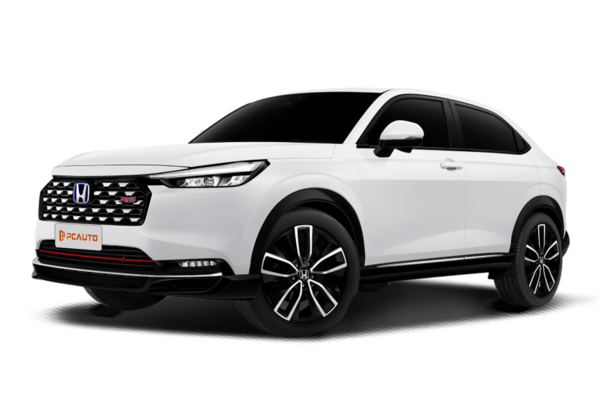
2020 Land Rover Discovery Sport R-Dynamic High Spec
Price
RM 409,800
Select a Vehicle Variant
2020 Land Rover Discovery Sport R-Dynamic RM 379,800
Summary
Meet the 2020 Land Rover Discovery Sport R-Dynamic High Spec – a D-Segment SUV launched in 2020. Starting at RM 409,800, it seats 7 people comfortably. Its size (4597mm long, 2069mm wide, 1727mm tall) means plenty of room inside. Great for families needing space that's still easy to drive in town.
It handles highways easily with a top speed of 207km/h. The 1999cc engine gives good power and fuel economy. Whether it’s daily drives or weekend trips, this car offers great value, modern looks, and solid performance all in one package.
It handles highways easily with a top speed of 207km/h. The 1999cc engine gives good power and fuel economy. Whether it’s daily drives or weekend trips, this car offers great value, modern looks, and solid performance all in one package.
Core Specs

Segment
D-Segment

Engine Capacity(cc)
1999

Transmission
AT

Fuel Comsumption (L/100km)
10.5

Fuel Tank(litres)
67

Top Speed(km/h)
207

Seats
7

Length(mm)
4597

Width(mm)
2069

Height(mm)
1727

Wheelbase(mm)
2741

Boot Volume(L)
-
Other Variants
Price
RM 409,800
Body
4597×2069×1727
Engine Power(PS)
200
Engine Torque(Nm)
-
TRANSMISSION
AT
Fuel Consumption
10.5
Related Q&A
View More >Q
toyota made in which country
Toyota is a globally renowned Japanese automaker with its headquarters nestled in Toyota City, Aichi Prefecture, Japan. That said, while its primary production roots are in Japan, Toyota has spread its manufacturing footprint far and wide, with plants in the US, Thailand, China, Indonesia, and beyond – all to cater to the unique demands of diverse markets. Here in Malaysia, Toyota teams up with local players like UMW Toyota Motor for assembly and production. Fan favorites such as the Toyota Vios and Toyota Hilux roll off local assembly lines, a move that not only helps keep costs in check but also ensures these models are well-suited to Malaysian roads and preferences.
Toyota has built a rock-solid reputation worldwide for being reliable, fuel-efficient, and backed by an extensive after-sales network – and Malaysian consumers are clearly on board with that. What’s more, Toyota is a trailblazer when it comes to hybrid tech, with models like the Prius and Corolla Hybrid showcasing its innovative chops in the green car space. For Malaysians, choosing a Toyota means more than just getting a quality ride; it’s about the peace of mind that comes with top-notch after-sales support and readily available parts. That’s a big part of why Toyota stays a strong contender in the local market year after year.
 MaySep 28, 2025
Q
What is the fuel consumption of the Suzuki Swift?
The Suzuki Swift's fuel economy varies depending on its engine configuration and driving conditions. The 1.4-liter naturally aspirated version commonly found in the Malaysian market has official combined fuel consumption figures of around 5.4 to 5.7 liters per 100 kilometers. In real-world driving, you might see city fuel consumption creep up a bit to approximately 6.5 liters per 100km, while highway cruising can bring it down to under 5 liters per 100km. Of course, actual fuel usage will be influenced by driving habits, road conditions, and the vehicle's maintenance status.
As a lightweight hatchback, the Swift owes its fuel-sipping nature to efficient engine technology paired with a CVT transmission, making it a solid choice for city commutes. If you're looking to squeeze even more efficiency out of it, regular maintenance is key—think replacing the air filter and using the right viscosity engine oil. Also, avoiding aggressive acceleration or speeding helps, and in Malaysia's hot climate, using the air conditioning moderately strikes a good balance between fuel economy and comfort.
Rivals like the Perodua Myvi or Honda Jazz offer similar fuel efficiency, but the Swift holds its own in the local market with its nimble handling and the tried-and-tested reliability that Japanese cars are known for.
 SonOct 16, 2025
Q
Which country is GR86 made in?
The Toyota GR86 is a sports car manufactured by Toyota, made in Japan. The Japanese automotive industry is renowned worldwide for its exquisite craftsmanship, advanced technology, and stringent quality control systems. Numerous well-known automotive brands have emerged from Japan, and vehicles produced there are celebrated for their high quality, performance, and reliability.
The Toyota GR86 fully benefits from Japan's mature automotive manufacturing techniques and rigorous standards throughout its production process. It showcases high quality in areas such as the powertrain, chassis tuning, and body construction, providing drivers with an excellent handling experience and reliable performance assurance.
 YukiMay 16, 2025
Q
Is 570S faster than 650s?
No, the 570S is not faster than the 650S. Instead, the McLaren 650S has a higher top speed and shorter acceleration time. The 650S can reach a top speed of 340 km/h and accelerate from 0 to 100 km/h in just 3.0 seconds. In contrast, the 570S has a top speed of 328 km/h and an official 0-100 km/h acceleration time of 3.2 seconds. The differences in speed and acceleration are caused by the 650S's more powerful engine, which produces 650 horsepower, while the 570S's engine produces 570 horsepower. It's important to note that these are official figures, and actual performance may vary depending on driving conditions and other factors. However, in general, the 650S is faster. If you're looking for maximum speed and acceleration, the 650S would be the better choice. But if you prefer a more comfortable and practical sports car for everyday driving, the 570S may be better as it still offers impressive performance and is suitable for daily use.
 StrongWillMay 23, 2025
Q
Is the 2024 Mazda CX-5 petrol or diesel better?
The 2024 Mazda CX-5 is available in both gasoline and diesel variants in the Malaysian market. The optimal choice depends primarily on your driving needs. The gasoline model features 2.0L and 2.5L Skyactiv-G naturally aspirated engines, delivering smooth power output and lower maintenance costs. It excels for urban commuting and daily family use, particularly benefiting drivers who frequently make short trips. The diesel variant features a 2.2L Skyactiv-D turbocharged engine, delivering greater torque and superior fuel efficiency. It excels for long-distance driving or frequent cargo transport, though diesel vehicles typically carry higher purchase and maintenance costs. Given Malaysia's relatively low diesel prices, the diesel model may prove more economical over extended use for high-mileage drivers. Both models come standard with Mazda's i-Activsense safety suite, and their interior quality and handling performance are consistent. Note that diesel vehicles demand higher fuel quality standards; regular maintenance at authorized service centers is recommended. If you prioritize a quiet, comfortable driving experience, the gasoline model is preferable. For those focused on fuel efficiency and responsive power delivery, the diesel variant is worth considering.
 HappyThoughtsSunshineSep 19, 2025
Q
What is the most common problem with the 2020 Nissan Altima?
A common gripe with the 2020 Nissan Altima in Malaysia is a slight jerkiness from the transmission, particularly noticeable with CVT-equipped models during low-speed driving or acceleration. This lack of smoothness seems linked to higher transmission fluid temperatures in our tropical climate, so it's wise for owners to regularly check their transmission fluid condition and stick to the maintenance schedule outlined in the manual.
Another point some owners mention is occasional lag from the infotainment system – usually something a quick software update can fix. It's worth highlighting that CVT gearboxes in hot regions like Malaysia do demand more frequent maintenance. The heat tends to accelerate fluid degradation, and Nissan's CVTs are pretty sensitive to fluid condition. Keeping up with proper servicing can really help extend its lifespan.
Also, the Altima's ProPILOT driver assistance system might have its camera and radar affected by reduced visibility during Malaysia's frequent downpours. That's a common trait across most brands' driver aids, though, so staying alert behind the wheel is still a must.
All things considered, these aren't major flaws. With regular maintenance and the odd software tweak, they're easily manageable. The Altima still shines when it comes to comfort and fuel efficiency, making it a solid choice for those long drives around Malaysia.
 PurpleHazeDrifterOct 24, 2025
Q
How fast is a 2018 Volkswagen Passat?
The top speed of the 2018 Volkswagen Passat really depends on the trim and engine setup. In the Malaysian market, the common 1.8-liter TSI turbo version can hit around 210 km/h, while the higher-performance 2.0-liter TSI variant pushes that up to about 240 km/h. Of course, real-world numbers might vary a bit based on road conditions, how much you're carrying, and how well the car's been maintained.
Quick reality check though – Malaysia's highway speed limit is 110 km/h, so always stick to the rules to stay safe out there. As VW's midsize sedan offering, the Passat uses turbocharging and direct injection tech in its powertrains, balancing solid performance with decent fuel efficiency – perfect for those long drives across Malaysia.
If you're craving more punch, it's worth checking with local authorized dealers to see if they've brought in the R-Line sport trim or the 380TSI high-power models. These usually come with beefier engines and sport-tuned setups. For day-to-day driving, make sure you're regularly checking tire pressure and the brake system – both play a big role in keeping the car stable and safe, especially at higher speeds.
 HappyOct 24, 2025
Q
What is 100LL fuel used for?
100LL fuel is one of the most widely used aviation gasolines internationally, primarily for general aviation aircraft equipped with piston engines, including small aircraft such as private planes, trainer aircraft, and agricultural aircraft. Its "LL" stands for low lead content, with a lead content only half that of traditional 100-octane aviation gasoline. Tetraethyl lead is added to increase the octane rating, prevent engine knocking under high compression ratios, and ensure operational safety. This fuel is usually dyed blue for identification. Using it can effectively reduce lead and carbon deposits in the engine, lower failure rates, and enhance the safety of general aviation. Since the 1980s, aviation-developed countries have widely adopted 100LL aviation gasoline. It complies with strict international standards (such as ASTM D910), serves as the primary fuel choice for piston-engine aircraft, and still holds a significant position in the global general aviation sector.
 LuckyCloverDec 29, 2025
Q
What are the signs of a dirty car air filter?
When the car's air filter becomes dirty, several noticeable symptoms will appear, including unstable engine operation—manifested as a muffled sound, sluggish response, and lack of power during acceleration. Simultaneously, the exhaust emissions will become thick and black, resulting from incomplete fuel combustion due to insufficient air intake. Furthermore, if the filter paper remains grayish-black after removing surface dust, it indicates the filter can no longer effectively filter particles and requires immediate replacement. The air filter's replacement interval is typically every 15,000 kilometers, but should be reduced to under 10,000 kilometers in dusty conditions to maintain engine performance. The primary function of an air filter is to remove dust and particulates entering the engine, preventing wear on piston assemblies and cylinders. Regular maintenance not only enhances fuel efficiency but also prolongs engine life. Developing a routine inspection habit is advised, particularly when operating in dusty environments where filter condition requires special attention.
 DawnFeb 2, 2026
Q
What is MT and iMT and dual clutch AR?
MT is the abbreviation for manual transmission, which requires the driver to manually switch gear ratios using the clutch pedal and gear shift lever. It has a simple structure and low maintenance costs, making it suitable for users who pursue a sense of driving control. However, frequent operation in congested road sections reduces convenience. iMT (Intelligent Manual Transmission) is an improved system developed by Hyundai. It retains the shifting mechanism of the traditional MT but eliminates the clutch pedal, with the electronic control unit automatically completing the clutch operation. It maintains the sense of participation in manual shifting while reducing driving burden, and is currently applied to models such as the i20 and Venue. The Dual Clutch Transmission (DCT) uses two sets of clutches working alternately—one responsible for odd gears and the other pre-engaging even gears. It has a shifting speed close to that of a manual transmission and high fuel efficiency, and is divided into two types: dry (poor heat dissipation but direct transmission) and wet (oil-cooled and more durable), suitable for driving scenarios that emphasize performance and smoothness. These three transmissions each have their own characteristics: MT emphasizes pure control, iMT balances fun and convenience, and DCT focuses on efficient power transmission. When choosing, it is necessary to consider personal driving habits and actual needs.
 TwilightMysticGlimmerMar 25, 2026
Popular Cars
Model Year
Car Compare
Car Photo
Model List
Land Rover Discovery Sport is a D-Segment SUV car launched by Land Rover. PCauto has cataloged various variants of this car produced from 2017 to 2020.You can compare differences in detail at the parameter table.
Among the 2 variants of Land Rover Discovery Sport, prices range from the affordable RM 379,800 to the most expensive RM 409,800.You can find different horsepower versions ranging from 200PS to 200PS.
Land Rover Discovery Sport offers 2.0T engines and AT transmission. Check the spec sheet for more details.
2 Models on Sale
2020
2017
- 0-100km/h(s): 9
- Fuel Consumption: 10.5
- Engine Power(PS): 200
- Aspiration Form: Turbo
- Driven Wheels: All Wheel Drive
- 0-100km/h(s): 9
- Fuel Consumption: 10.5
- Engine Power(PS): 200
- Aspiration Form: Turbo
- Driven Wheels: All Wheel Drive
2020 Land Rover Discovery Sport R-Dynamic
RM 379,800
2020 Land Rover Discovery Sport R-Dynamic High Spec
RM 409,800