Reference Only. Update Soon
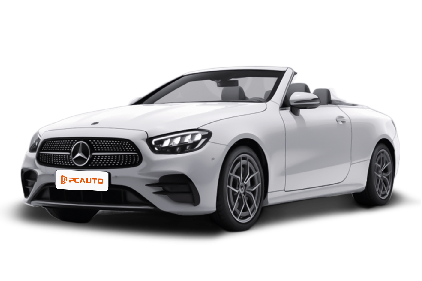
2018 Mercedes-Benz E-Class Cabriolet E 300 Cabriolet AMG Line
Price
RM 590,888
Select a Vehicle Variant
2018 Mercedes-Benz E-Class Cabriolet E 300 Cabriolet AMG Line RM 590,888
Summary
Get the 2018 Mercedes-Benz E-Class Cabriolet E 300 Cabriolet AMG Line – a practical Executive Convertible since 2018. Starts at RM 590,888. Seats 4 comfortably in its spacious cabin (4826x1860x1428mm). Big enough for families, nimble enough for cities.
Zippy on highways with a 250km/h max speed. The 1991cc engine is both strong and efficient. Want a no-fuss car that looks good? The 2018 Mercedes-Benz E-Class Cabriolet E 300 Cabriolet AMG Line packs value, modern design, and everyday performance together.
Zippy on highways with a 250km/h max speed. The 1991cc engine is both strong and efficient. Want a no-fuss car that looks good? The 2018 Mercedes-Benz E-Class Cabriolet E 300 Cabriolet AMG Line packs value, modern design, and everyday performance together.
Core Specs

Segment
Executive

Engine Capacity(cc)
1991

Transmission
AT

Fuel Comsumption (L/100km)
7.9

Fuel Tank(litres)
66

Top Speed(km/h)
250

Seats
4

Length(mm)
4826

Width(mm)
1860

Height(mm)
1428

Wheelbase(mm)
2873

Boot Volume(L)
385
Related Q&A
View More >Q
what type of car is mitsubishi xpander
The Mitsubishi Xpander is a 7-seater MPV that prioritizes practicality and family needs. Over in Malaysia, it's struck a chord with family buyers thanks to its flexible interior layout and wallet-friendly price tag. It blends a crossover-inspired design with a healthy 205mm of ground clearance, giving it that handy mix of MPV people-carrying ability and the sort of light off-road capability that makes sense for Malaysia's varied road conditions. Under the hood, you'll find a 1.5L MIVEC naturally aspirated engine (105PS/141Nm), paired with either a 4-speed auto or 5-speed manual gearbox. Let's be clear, this one's all about fuel efficiency rather than outright performance. The "2+3+2" seating arrangement folds down nicely when you need to haul bigger items, which is a big plus.
In terms of where it stands, the Xpander goes head-to-head with rivals like the Toyota Avanza and Honda BR-V. Its trump cards? Mitsubishi's solid reputation in Southeast Asia and an entry price that starts below the 100,000 ringgit mark. Tech-wise, it's pretty basic, but that's par for the course for budget-conscious buyers in this segment who value substance over flash.
It's worth mentioning that the 2023 facelift brought some nice upgrades, like LED headlamps, to keep it competitive. If you're in the market, my advice is to check out how it fits your family size and budget, and definitely take it for a test drive alongside the others before making up your mind.
 JopSep 28, 2025
Q
Is Perodua Myvi a Good Car? Learn the Pros and Cons Here
As one of the best-selling car models in Malaysia, the Perodua Myvi is truly an economical small car suitable for local consumers. Its advantages include excellent fuel economy, making it perfect for urban commuting. It has low maintenance costs and an ample supply of parts. The resale value of used cars is also relatively high. The 1.3L and 1.5L engines it's equipped with offer smooth power delivery, which is suitable for daily use. Moreover, its compact and flexible body size makes it very convenient on narrow roads or when parking. In terms of safety features, the high - end models are equipped with basic safety devices such as ABS, EBD, and dual airbags, meeting local requirements. The interior design is simple and practical, with high space utilization, making it suitable for small families.
Of course, it also has some drawbacks. For example, the noise control during high - speed driving is just average. The rear seat space may be a bit cramped for tall passengers. The suspension tuning is on the stiffer side, which affects comfort. The entry - level configuration is quite basic.
As a national car focusing on cost - effectiveness, the positioning of the Myvi in the Malaysian market is very clear. It may not be suitable for buyers seeking high - performance or luxury. However, it's a practical choice for consumers with a limited budget who value practicality and low operating costs. Given Malaysia's mountainous terrain and hot climate, it is recommended to regularly check the cooling system and braking system to ensure optimal performance. Meanwhile, choosing original - factory maintenance can better maintain the vehicle's condition.
 CharmingPersonalityGraceJul 16, 2025
Q
Does BYD TANG Support Apple CarPlay?
The BYD Tang supports Apple CarPlay. With this feature, drivers can use many functions on their iPhones in the car's central control system, such as playing music, navigating, making calls, reading text messages, and even watching online videos, which enhances driving convenience and safety. The central control display of the BYD Tang is equipped with the DiLink system, which is feature-rich, responsive, and easy to operate. It can be connected to the mobile phone via Bluetooth or USB mode. When using Bluetooth connection, click the Bluetooth icon on the screen to enter the settings. After turning on the Bluetooth function, you can set up automatic connection and other options. When using USB connection, turn on the USB function of your phone and connect it to the USB port in the car with a data cable, and the central display can read the media files in the phone. In addition, the central display also supports wireless Internet access. You can purchase system traffic or connect to the mobile phone's hotspot to get online.
 KindheartedSoulKindnessAug 7, 2025
Q
What are the colors of the 2025 Hyundai Santa Fe?
The 2025 Hyundai Santa Fe offers five stylish color options in the Malaysian market, each with its own distinct charm.
The Creamy White Pearl (WW2) is a classic pearlescent white that boasts an elegant sheen. It is an ideal choice for buyers who seek a noble and refined look. Moreover, this color can effectively reflect heat under Malaysia's scorching sun, keeping the interior of the car cool.
The Ecotronic Gray Pearl (PE2) is a fashionable gray shade with a pearlescent texture. It strikes a perfect balance between modernity and understatement, making it highly suitable for consumers who prefer neutral colors. Additionally, gray is relatively easy to maintain on a daily basis as it doesn't show dirt easily.
The Abyss Black Pearl (A2B) is a deep, lustrous black with a pearlescent glow. It exudes a sense of stability and grandeur, making it particularly well-suited for business settings. However, regular waxing is required to maintain the smoothness and glossiness of the paintwork.
The Ocado Green Pearl (RN2) is a unique green pearlescent paint that combines individuality with elegance. It is a great option for car owners who love distinctive colors. Furthermore, green blends harmoniously with the natural environment.
The Earthy Brass Matte (YBM) is a matte copper tone that creates a very avant-garde and sporty visual effect. This color is relatively rare in the market and appeals to consumers who value personalization and a sense of trendiness. Nevertheless, matte paint requires special care to prevent scratches.
Regardless of the color chosen, the color schemes of the Hyundai Santa Fe have fully taken into account the aesthetic preferences and practical needs of Malaysian consumers.
 CoraOct 14, 2025
Q
Who are the competitors of the MINI Countryman 2025?
The 2025 MINI Countryman, a stylish yet practical compact SUV, faces some stiff competition in Malaysia's market. The usual suspects from the luxury crowd include the Mercedes-Benz GLA, BMW X1, Audi Q3, and Volvo XC40 – all of which prioritize snappy design, tech-forward cabins, and a decent drive, aiming to please those young urban families out there. Then you’ve got the Japanese contenders: things like the Lexus UX and Toyota C-HR (especially the hybrid) that pull in buyers with their solid value and reputation for easy, affordable upkeep. If you’re leaning electric, keep an eye on the Volvo EX30 or the upcoming BMW iX1 – they’ll go head-to-head with the MINI Countryman SE electric variant.
It’s worth mentioning that Malaysian buyers are pretty particular about size and fuel economy, so you’ll find most rivals in this class packing efficient powertrains and cleverly flexible interiors. Where the Countryman tries to stand out, though, is with that iconic MINI personalization – you can really make it your own – and that go-kart-like handling feel. It’s definitely for the buyer who wants something with a bit more character than the usual runabout.
Pro tip: Before you sign on the dotted line, make sure to check out the warranty packages and local after-sales networks for each brand. You want to know you’re covered for the long haul, right?
 IronFistOct 15, 2025
Q
Do 2020 polos have cruise control?
The 2020 Volkswagen Polo does come with cruise control on some trims, especially the higher-spec ones like the Polo R-Line or Polo Beats. But the base models might not have it as standard—you’ll need to check the actual spec sheet or vehicle configuration for the Malaysian market to be sure. Cruise control is super handy on long drives; you set a steady speed using the buttons on the steering wheel, which takes the strain off your foot and can even help with fuel efficiency. It’s worth noting that the Polo’s cruise control is usually the traditional kind (not adaptive), so it won’t automatically adjust speed to keep a distance from the car in front—you still have to hit the brakes or gas yourself. In Malaysia, a lot of owners like to add factory or third-party cruise control kits, but it’s better to go through authorized dealers to make sure it’s compatible and doesn’t mess with your warranty. If you’re looking at a used 2020 Polo, you can check if it has cruise control by looking at the stalk or buttons on the left side of the steering wheel, or just fire up the car and test it out.
 ClimberPeakOct 21, 2025
Q
How long will a 2018 Civic last?
A 2018 Honda Civic can typically hit 200,000 to 300,000 kilometers—or even more—with regular maintenance and normal use. Its actual lifespan really comes down to how you drive, how often you service it, and the road conditions it faces. This car’s known for its solid engine and tough transmission, and keeping up with oil changes, brake fluid flushes, and transmission fluid services on schedule can seriously stretch its life. The electronics are pretty steady too, but over time, wear-and-tear parts like suspension bushings, shocks, or belts might need replacing—so a full checkup every 50,000 km is a good idea. If you stay on top of maintenance and avoid aggressive driving, this Civic could easily stick with you for over a decade. It’s worth noting that using genuine parts and certified service centers helps keep it reliable, and well-maintained Civics still hold strong appeal in the used car market—proof of their long-term dependability. For shoppers on a budget who want something durable, this is a solid pick.
 FopNov 19, 2025
Q
Which fuel type is most sustainable?
In Malaysia's sustainable fuel development framework, biodiesel and hydrogen energy are the key areas of focus for current and future development. Regarding biodiesel, the nationwide mandatory use of B10 blended fuel containing 10% palm biodiesel has been implemented, with some regions (such as Labuan and Langkawi) adopting higher-proportion B20 blends. Locations like Kuala Lumpur Airport are piloting upgrades to B20, while palm oil industry leaders are conducting B100 biodiesel tests. This fuel not only reduces reliance on fossil fuels but also promotes the development of smallholders and communities in the palm oil sector, aligning with the nation's net-zero emissions goals. Hydrogen energy has been designated as a national priority for clean energy development, particularly for hard-to-electrify sectors like heavy transport. The government plans to drive its adoption through clear policies, appropriate tariffs, and incentives to facilitate the transition to low-carbon transportation. Additionally, sustainable aviation fuel initiatives are progressing, utilizing feedstocks such as waste vegetable oil. Currently, biodiesel enjoys greater adoption in the automotive sector, while hydrogen energy represents a crucial strategic direction for future development. Both constitute vital components of Malaysia's sustainable fuel system, supporting the country's low-carbon transportation transition through existing implementation and future potential respectively.
 NatureBeautyAllAroundDec 29, 2025
Q
What's better, torque or RPM?
Torque and rotational speed are two key indicators of engine performance, each with its own importance, and a balance needs to be struck based on actual driving needs. Torque represents the rotational force output by the engine, directly affecting the vehicle's acceleration from standstill, climbing ability, and load-carrying capacity, with its unit typically expressed as Newton-meters (N·m). For instance, diesel engines generally exhibit low-speed high-torque characteristics, making them suitable for frequent urban stop-and-go scenarios or load-bearing applications. Rotational speed (RPM), referring to the number of crankshaft revolutions per minute, determines the power output frequency. Higher rotational speeds can enhance high-speed performance but may increase fuel consumption and wear. At constant power output, the two parameters exhibit an inverse relationship: lower gears with higher torque are optimal for hill climbing, while higher gears with lower rotational speeds favor high-speed cruising. For daily driving, vehicles with broad torque plateaus (e.g., sustaining peak torque output between 1500-4500 rpm) offer greater practicality by balancing power responsiveness and fuel efficiency. For high-speed performance or track applications, high-revving engines prove more advantageous. Thus, there exists no absolute superiority—selection should align with intended use: urban commuting prioritizes low-RPM high-torque characteristics, whereas high-speed or performance driving demands high-RPM capabilities.
 HappyBeetleJan 9, 2026
Q
What is the safety rating of Chery Tiggo 8?
Chery Tiggo 8 series models have achieved the highest five-star ratings in multiple international authoritative safety tests, including the Tiggo 8 Pro Max which passed the ANCAP test in May 2024 and the model that passed the Euro NCAP test in October 2025. Their adult occupant protection score reaches 82%, child protection 85%-86%, vulnerable road user protection 80%, and safety assist system score 78%-82%. The vehicle features a body structure with 65% high-strength steel, equipped with a 10-airbag system (including a central side airbag) and L2+ level intelligent driving assistance, featuring automatic emergency braking, lane keeping assist, and 540° panoramic imaging. The latest tests in 2026 show that both its fuel-powered and hybrid versions maintain the five-star standard, while the Super Hybrid technology ensures electrical safety through battery IP68 protection and a 2-millisecond high-voltage cut-off mechanism. These achievements demonstrate Tiggo 8's balanced capabilities in passive safety structure and active prevention technologies, providing consumers with comprehensive protection that meets stringent global standards.
 BreezeMar 13, 2026
Popular Cars
Model Year
Car Compare
Car Photo
Model List
Mercedes-Benz E-Class Cabriolet is a Executive Convertible car launched by Mercedes-Benz. PCauto has cataloged various variants of this car produced from - to -.You can compare differences in detail at the parameter table.
Among the 0 variants of Mercedes-Benz E-Class Cabriolet, prices range from the affordable TBC to the most expensive TBC.You can find different horsepower versions ranging from - to -.
Mercedes-Benz E-Class Cabriolet offers - engines and - transmission. Check the spec sheet for more details.
0 Model on Sale
2018