
Q
Do 2020 polos have cruise control?
 ClimberPeakOct 21, 2025, 05:49 PM
The 2020 Volkswagen Polo does come with cruise control on some trims, especially the higher-spec ones like the Polo R-Line or Polo Beats. But the base models might not have it as standard—you’ll need to check the actual spec sheet or vehicle configuration for the Malaysian market to be sure. Cruise control is super handy on long drives; you set a steady speed using the buttons on the steering wheel, which takes the strain off your foot and can even help with fuel efficiency. It’s worth noting that the Polo’s cruise control is usually the traditional kind (not adaptive), so it won’t automatically adjust speed to keep a distance from the car in front—you still have to hit the brakes or gas yourself. In Malaysia, a lot of owners like to add factory or third-party cruise control kits, but it’s better to go through authorized dealers to make sure it’s compatible and doesn’t mess with your warranty. If you’re looking at a used 2020 Polo, you can check if it has cruise control by looking at the stalk or buttons on the left side of the steering wheel, or just fire up the car and test it out.
Special Disclaimer: This content is published by users and does not represent the views or position of PCauto.
Related Q&A
Q
What is the fuel tank capacity of the 2020 Polo?
The 2020 Volkswagen Polo comes with a 40-liter fuel tank, a design that strikes a nice balance between daily commuting and longer drives – perfect for Malaysian drivers who split their time between city hops and interstate trips. As a compact hatchback, the Polo already boasts solid fuel efficiency, and with that 40-liter tank, you're looking at a range of roughly 500 to 600 kilometers, though your actual mileage will vary depending on driving conditions and which engine variant you go for.
Of course, tank size is just one part of the range equation. To really get the most out of every drop, owners should keep an eye on things like tire pressure and how often they blast the AC – little maintenance habits that can make a difference at the pump. With Malaysia's hot weather, it's also a good idea to regularly check the fuel system's seals to prevent evaporation losses when temperatures soar.
For the most accurate fuel consumption figures, your best bets are the certified specs from Malaysia's Road Transport Department (JPJ) or the localized test data available on Volkswagen Malaysia's official website.
 UmaOct 21, 2025
Q
What safety ratings did the 2020 Polo receive?
The 2020 Volkswagen Polo has earned a 5-star safety rating from Euro NCAP, Europe's leading crash test authority. This top score reflects its strong performance across all key areas: adult occupant protection, child occupant protection, pedestrian protection, and safety assist systems. It particularly excelled in adult occupant safety with an impressive 96% score, while its safety assist systems also scored a solid 76% – clear indicators of its robust active and passive safety credentials.
For Malaysian buyers, this rating positions the Polo as a serious contender in its segment, especially when it comes to safety. The car comes loaded with advanced safety features like multiple airbags, Electronic Stability Control (ESC), and Autonomous Emergency Braking (AEB) – all working together to keep drivers and passengers well-protected on the road.
It’s worth remembering that Euro NCAP’s testing is notoriously rigorous, so a 5-star rating is no easy feat and typically signals a standout performer in its class. This should definitely be high on your checklist when car shopping. That said, it’s also smart to consider Malaysia’s unique road conditions and your own driving habits to make sure the Polo’s safety setup aligns perfectly with your needs.
TedOct 21, 2025Q
What's the fuel economy of a 2020 Polo?
The 2020 Volkswagen Polo really shines when it comes to fuel economy in the Malaysian market. Let me break it down for you: the 1.6L MPI naturally aspirated engine paired with the 6-speed auto 'box returns around 6.5L/100km in the city, drops to roughly 5.0L/100km on the highway, and averages out at about 5.7L/100km. Of course, your actual mileage will vary depending on how you drive, the roads you're on, and how well you keep up with maintenance.
As a small hatchback, the Polo's fuel efficiency is pretty competitive in its class, and that's thanks to Volkswagen's engine tech and some smart lightweighting in the body design. For Malaysian buyers, picking the Polo means you get that solid German driving feel and save at the pump – especially handy in stop-start city traffic, where its efficiency really stands out.
Quick tip though: you can squeeze even more out of it by driving smoothly (easy on the gas, avoid harsh braking) and keeping up with regular service like oil changes and air filter replacements. Works for any car, really, and helps keep your running costs down.
 SueOct 21, 2025
Q
Do 2020 polos have CarPlay?
The 2020 Volkswagen Polo does offer Apple CarPlay functionality on select trims, though availability depends on the specific model and equipment level. In the Malaysian market, higher-spec variants typically come equipped with either MIB2 or MIB3 infotainment systems that support CarPlay. This lets you hook up your iPhone via USB to access navigation, music streaming, and hands-free calling features. Entry-level models, however, might require this as an optional extra or miss out entirely.
If you're a Polo owner wanting to confirm your car's setup, your best bets are checking the original owner's manual or reaching out to an authorized Malaysian Volkswagen dealer with your VIN for precise details. It's worth remembering that CarPlay is just one smart connectivity option – Android users can enjoy similar functionality through Android Auto. Both require a reliable original equipment (OE) USB cable for stable operation.
In recent years, as local consumer demand for smarter cockpits has grown, more new cars now come standard with wireless CarPlay and even wireless charging. If you're in the market for a used Polo, it's advisable to prioritize versions with the original factory head unit to ensure compatibility. Also, make sure the system software is updated to the latest version to avoid any connection issues.
 RexOct 21, 2025
Q
How to open bonnet on 2020 polo?
To open the hood on a 2020 Volkswagen Polo, start by sitting in the driver’s seat. Look around the driver’s footwell area for a lever marked with a hood icon—usually it’s down by the left side of the steering wheel or along the lower edge of the dashboard. Pull the lever outward firmly, and you’ll hear a noticeable click as the first hood latch releases. Next, head to the front of the car. Slide your fingers into the gap at the front - center of the hood, slightly to the right of the center. You’ll feel a secondary safety catch there—flip it up or push it sideways (the direction depends on the specific design) while gently lifting the hood. If the hood feels heavy once open, prop it up with the support rod to keep it secure. For Polo owners here in Malaysia, with our hot and humid weather, it’s smart to make checking under the hood a regular habit. Keep an eye on coolant, engine oil, and brake fluid levels, as they can take a hit in this climate. Also, clear out any leaves or debris that build up; they can clog drain holes and cause issues down the line. These simple checks go a long way in keeping your car running strong. If you run into any snags or want more tailored advice for local conditions, flip through your owner’s manual or swing by a Volkswagen Malaysia authorized service center. Their technicians know the ins and outs of these cars and can give you tips specific to our roads and weather.
 QuiOct 21, 2025
Q
What MK is a 2020 Polo?
The 2020 Volkswagen Polo is part of the sixth generation, codenamed MK6. This generation first hit the scene back in 2017, and the 2020 model is its mid-cycle refresh. It got a sportier exterior makeover and a more tech-forward cabin, packing VW's latest MIB infotainment system with Apple CarPlay and Android Auto – definitely a hit with young Malaysian buyers. Under the hood, the 2020 Polo offers a solid lineup: think 1.0-liter three-cylinder turbo and 1.5-liter four-cylinder turbo engines. They strike a nice balance between fuel efficiency and pep, perfect for Malaysia's urban jungle. Safety got a boost too on this sixth-gen Polo, with standard driver assists like automatic emergency braking and lane-keeping assist, making it that much safer on the road. What's really cool is that the Polo has always been a big favorite in Malaysia. Its compact size and nimble handling make zipping through crowded city streets a breeze, and that good old German build quality has earned it a ton of trust from buyers. So if you're in the market for an affordable, reliable hatchback, the 2020 Polo is definitely one to check out.
 PamOct 21, 2025
Q
What is the fuel consumption of the 2020 Polo?
The 2020 Volkswagen Polo's fuel economy in the Malaysian market varies depending on engine specs and driving conditions. The 1.6L naturally aspirated variant typically sips around 6.5-7.2L/100km in city driving, dropping to 5.0-5.8L/100km on highway cruises. Opt for the 1.0L TSI turbo engine, though, and you'll see even better efficiency – roughly 5.8-6.5L/100km around town and 4.5-5.2L/100km out on the open road. Keep in mind, real-world figures can fluctuate based on your driving style, road conditions, and how well you maintain the car.
For Malaysian buyers eyeing a compact car, it's not just about the official fuel stats. You've got to factor in our sweltering climate straining the AC and those stop-start traffic jams taking a toll on efficiency. My tip? Regularly check and replace the air filter, and keep those tires properly inflated – simple steps that go a long way in keeping fuel economy in check.
Volkswagen's EA211 engine series under the Polo's hood has also been tweaked to handle tropical climates, which is a plus. If you go for the DSG dual-clutch transmission model, that'll further smooth out power delivery and help with efficiency too. And if city commuting is your main grind, it's worth checking out the Energy Commission's (ST) EEV (Energy Efficient Vehicle) certification list as a handy reference when picking your ride.
 OliOct 21, 2025
Q
How to open petrol cap on VW Polo 2020?
To open the fuel filler cap on a 2020 Volkswagen Polo, first make sure the vehicle is unlocked. Then, press the right edge of the fuel cap – it should pop open automatically. After that, just twist the inner cap counterclockwise and you’re ready to refuel. A quick heads-up: some models lock the fuel cap when the car is locked, so if it won’t budge, double-check that the vehicle is unlocked first.
For our friends in Malaysia, the hot and rainy climate can take a toll on the fuel cap’s rubber seal over time. It’s a good idea to clean it regularly and hit it with a bit of silicone-based lubricant to keep it working smoothly.
Now, fuel cap designs can vary quite a bit between brands. Japanese cars often go for a pull-cord release under the dash, while European models like the Polo favor this push-to-open style. These differences usually come down to body structure safety and overall aesthetics.
If you ever struggle to open the fuel cap, resist the urge to force it open – you don’t want to break the locking mechanism. Your owner’s manual should have troubleshooting tips, or just give your authorized service center a call. And before you start pumping, take a second to check the label near the fuel cap for the recommended fuel grade – you don’t want to put the wrong stuff in there.
 NedOct 21, 2025
Q
How does the 2020 Polo compare to older models?
The 2020 Volkswagen Polo gets a solid upgrade over the previous generation, with a clear focus on boosting practicality and tech features for the Malaysian market. Styling-wise, the 2020 model rocks sharper lines, LED headlamps, and a bigger grille, giving it a much more youthful and sporty vibe compared to the older version.
The interior sees the most noticeable improvements. A 6.5-inch touchscreen comes standard (upgraded to 8 inches on higher trims) with Apple CarPlay/Android Auto support, a big step up from the old-school button-heavy setups in the previous Polo. Safety gets a boost too – ESC and multi-collision prevention are now standard across the range, features that were missing on some older models.
Under the hood, the Malaysian-spec 2020 Polo sticks with the reliable 1.6L MPI engine but with better fuel economy – city driving returns around 7% lower fuel consumption than before. Thanks to the MQB platform, the wheelbase is stretched by 94mm, translating to way more legroom in the back. Younger buyers might also dig the new optional Beats sound system.
VW hasn't forgotten about Malaysia's tropical climate either – the 2020 Polo gets better aircon cooling and UV-protected glass. If you're hunting for a used Polo, the 2014-2018 models still offer good value, but the 2020 version's edge in active safety and connectivity tech makes it the way to go for anyone wanting a more modern driving experience.
 MoeOct 21, 2025
Q
What engine is in the 2020 Polo?
The 2020 Volkswagen Polo in the Malaysian market primarily comes with a 1.0-liter three-cylinder turbocharged petrol engine, offered in two tunes: the entry-level 95hp TSI paired with a 5-speed manual gearbox, and the higher-output 115hp version mated to a 7-speed DSG dual-clutch transmission. Both engines feature direct fuel injection, striking a balance between fuel efficiency and performance, with a combined fuel consumption of approximately 4.7-5.0L/100km.
Notably, this 1.0 TSI small-displacement turbo engine is a standout from Volkswagen Group's EA211 series. It uses an aluminum cylinder block to reduce weight and is equipped with a variable valve timing system, delivering peak torque of 175-200Nm at low revs – making it perfectly suited for Malaysian city driving conditions.
Among its competitors, a similar small-displacement turbo strategy is adopted by the Honda Jazz RS (1.5L turbo) and the Toyota Yaris (1.5L naturally aspirated). However, the Polo's TSI engine showcases German engineering prowess in terms of torque delivery and transmission pairing. Its 7-speed DSG gearbox still leads the class in shift speed, though consumers should note the need for regular maintenance on the dual-clutch transmission to ensure long-term reliability.
 LiaOct 21, 2025
Popular Cars
Model Year
Car Compare
Car Photo
Related Models
 Cars
CarsLatest Q&A
Q
Is AMT similar to automatic?
There are significant differences between AMT transmissions and automatic transmissions (AT) in terms of core structure and driving experience. AMT is essentially an electronically automated version of a manual transmission, simulating manual clutch operation and gear shifting through a computerized control system while retaining the gear set structure of manual transmissions. As a result, it offers higher transmission efficiency, with fuel consumption approximately 8%-12% lower than AT, making it particularly suitable for highway or long-distance driving. However, it may exhibit jerking similar to manual transmissions during low-speed gear shifts, especially noticeable in congested traffic conditions.
AT transmissions rely on torque converters for power transfer, delivering smooth and seamless gear shifts that appeal to comfort-oriented users. However, their complex structure (incorporating planetary gear sets, hydraulic systems, etc.) results in higher maintenance costs. A single service may cost between 800 to 1,500 ringgit, whereas AMT only requires gear oil replacement at approximately 400 ringgit.
From a market perspective, AMT is predominantly used in budget vehicles or commercial models priced below 80,000 ringgit, while AT is typically featured in mid-to-high-end vehicles. Consumers should select based on actual needs: AMT suits those prioritizing fuel efficiency and low maintenance costs, while AT better serves those valuing comfort. Notably, recent advancements in AMT electronic control technology have significantly mitigated jerking issues, though test drives should still emphasize low-speed performance evaluation.
 AriaMar 26, 2026
Q
Which is better, DCT or AT?
DCT (Dual-Clutch Transmission) and AT (Automatic Transmission) each have their own advantages and disadvantages, and the choice should be based on personal driving needs. AT transmissions transfer power through a torque converter, offering excellent shift smoothness, making them suitable for urban commuting or novice drivers. However, they tend to have higher fuel consumption, and vehicles equipped with them are usually more expensive. DCT transmissions utilize a dual-clutch structure, featuring fast shift speeds and high power transmission efficiency, which provides a more direct driving experience—particularly suitable for users seeking a sporty feel. However, they may exhibit jerking at low speeds and have relatively high maintenance costs. If durability and comfort are priorities, AT is the more reliable choice; if power responsiveness and driving pleasure are preferred, wet DCT (such as Volkswagen DSG) performs better, though dry DCT models should be avoided in prolonged stop-and-go traffic conditions. Additionally, CVT transmissions excel in smoothness and fuel efficiency, making them ideal for daily commuting, but they lack driving excitement. It is recommended to test-drive before purchasing, as tuning varies significantly across brands, and real-world experience is more important than theoretical specifications.
FlutteringMar 26, 2026Q
Is Amt good or bad?
AMT gearboxes have a significant cost advantage in the local market, typically being around 5,000 Ringgit cheaper than models equipped with conventional automatic transmissions. Their fuel efficiency is comparable to manual transmissions, resulting in long-term fuel savings. Featuring a straightforward design, they achieve transmission efficiency exceeding 90% with relatively low maintenance costs, making them ideal for practicality-oriented consumers. However, their shifting logic contains inherent limitations: gear changes between 1st and 2nd cause 0.3-0.5 second power interruptions, while unintended upshifts on inclines may reduce engine speed by 15%-20%, compromising driving smoothness. For urban commuters or budget-conscious buyers, AMT offers excellent value, though those prioritizing premium driving dynamics should consider alternative transmission types. Some domestic models like the Perodua Axia employ enhanced AMT systems, where optimized shift programming has reduced gearshift shock by approximately 30%.
 RainbowsMar 26, 2026
Q
Which gives better mileage, CVT or AMT?
From the perspective of fuel economy, CVT transmissions generally perform better under urban driving conditions. Their continuously variable design allows the engine to consistently operate within the optimal speed range, significantly reducing fuel consumption during frequent starts and stops. Test data shows that their fuel consumption in urban driving conditions is 10% to 15% lower than that of comparable models. AMT transmissions, on the other hand, inherit the high transmission efficiency of manual transmissions, delivering fuel efficiency close to manual transmissions during high-speed cruising. This makes them particularly suitable for long-distance driving in large-displacement vehicles. However, due to power interruption during gear shifts, their overall fuel consumption may be 5% to 8% higher than CVTs.
The difference in fuel-saving characteristics between the two transmissions stems from their technical principles: CVTs achieve continuous variability through steel belts and pulleys, eliminating the fixed gear ratio limitations of traditional transmissions; AMTs simulate manual gear changes via electronic control systems while maintaining the mechanical efficiency of gear transmission. Notably, actual fuel consumption is also influenced by driving habits. Smooth acceleration and anticipatory deceleration can maximize the transmissions' fuel-saving potential. If the vehicle budget permits and urban commuting is the primary use, CVTs offer a more economical choice. For frequent highway driving with an emphasis on cost-effectiveness, AMTs are equally worth considering.
 RubyBlazeMar 26, 2026
Q
Which is cheaper, AMT or CVT?
In terms of gearbox cost, AMT is usually more economical than CVT. Essentially, AMT is a manual transmission equipped with an electronic control unit, featuring a simple structure and low maintenance costs. The unit price ranges from approximately 5,000 to 8,000 ringgit, making it suitable for budget-conscious consumers or those who prioritize long-term operating costs. CVT incurs higher manufacturing costs due to its precision steel belt transmission system and continuous variable transmission technology, with a unit price of about 7,000 to 10,000 ringgit. However, it delivers a smoother driving experience and superior fuel efficiency. The primary differences between the two lie in technical complexity: AMT retains the gear-shifting mechanism, resulting in noticeable shift shock; CVT achieves linear power output through stepless speed variation but requires periodic belt inspection and incurs higher maintenance expenses. For those prioritizing initial cost and basic transportation needs, AMT offers better value; if comfort and long-term fuel economy are priorities, CVT represents a more worthwhile investment. Note that actual prices may vary based on vehicle model, brand, and local supply chain factors.
 ShadowProwlMar 26, 2026
Related News

Volkswagen Tayron may enter Malaysia in the future to replace Tiguan Allspace
WilliamJan 27, 2026

Volkswagen ID. UNYX 08 debuted, featuring Xpeng intelligent technology for the first time
JohnDec 24, 2025

Because of lack of funds to upgrade the factory, Volkswagen postponed the release of ID.Golf and ID.Roc
JamesSep 17, 2025

Volkswagen Locks Vehicle Horsepower, Unlocks Full Power via Subscription
JohnAug 19, 2025
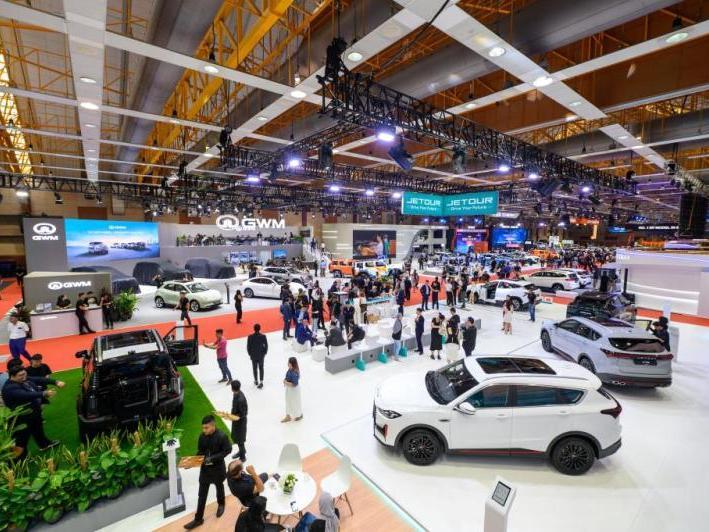
Summarizing the 2025 Malaysia Auto Show, a large number of new cars were launched in Malaysia this year.
MichaelMay 12, 2025
View More
Pros
Cons