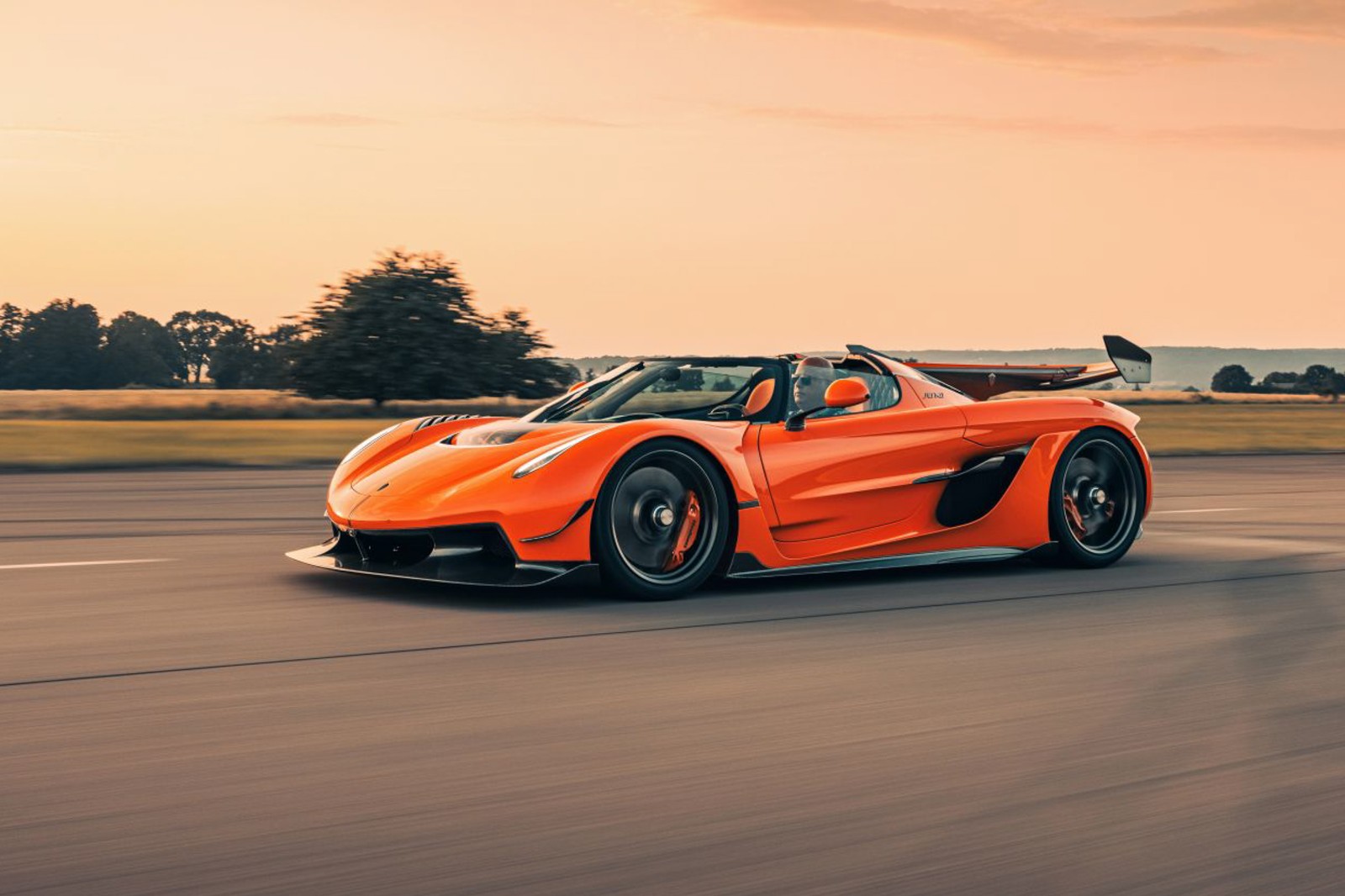
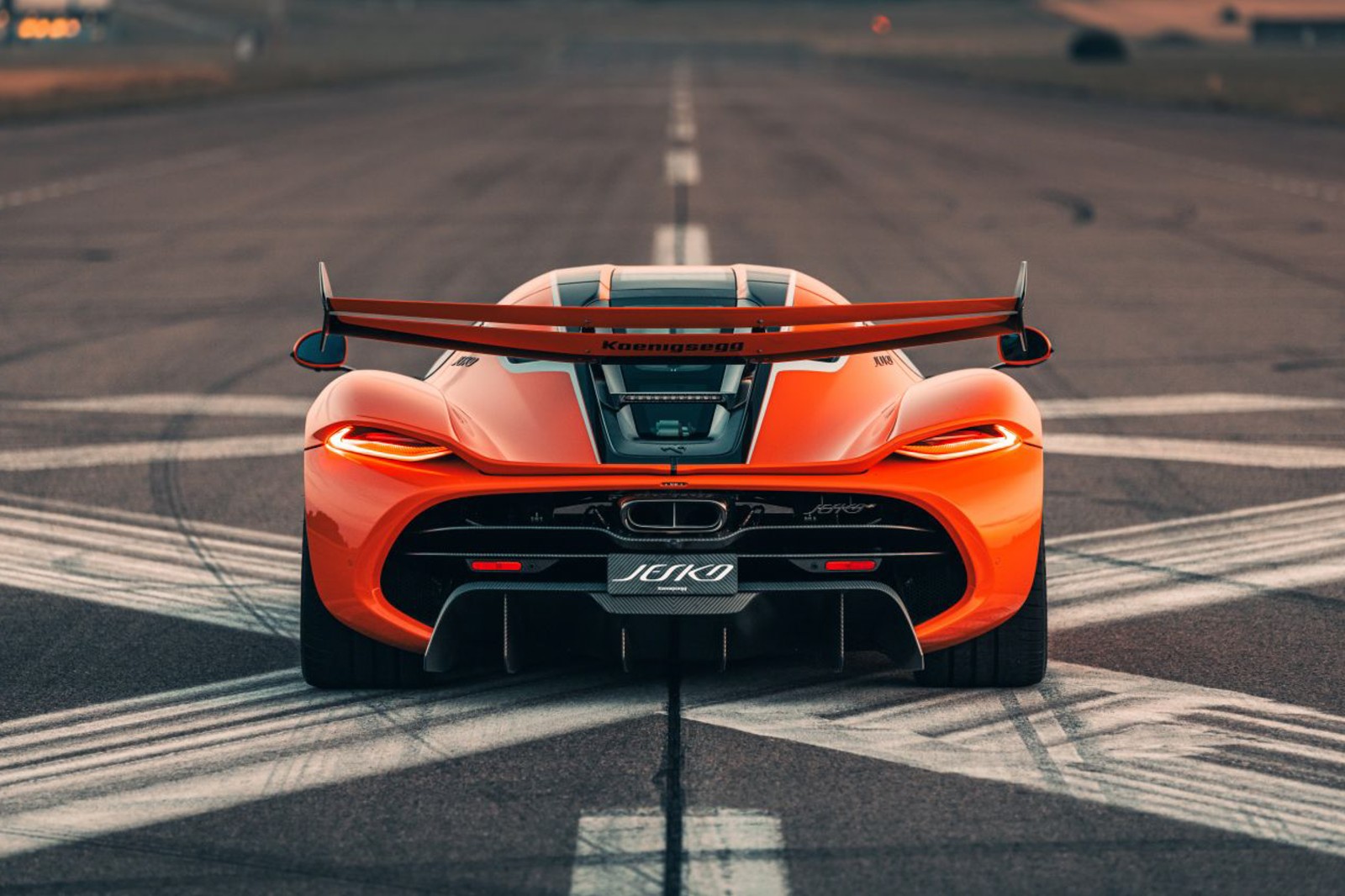
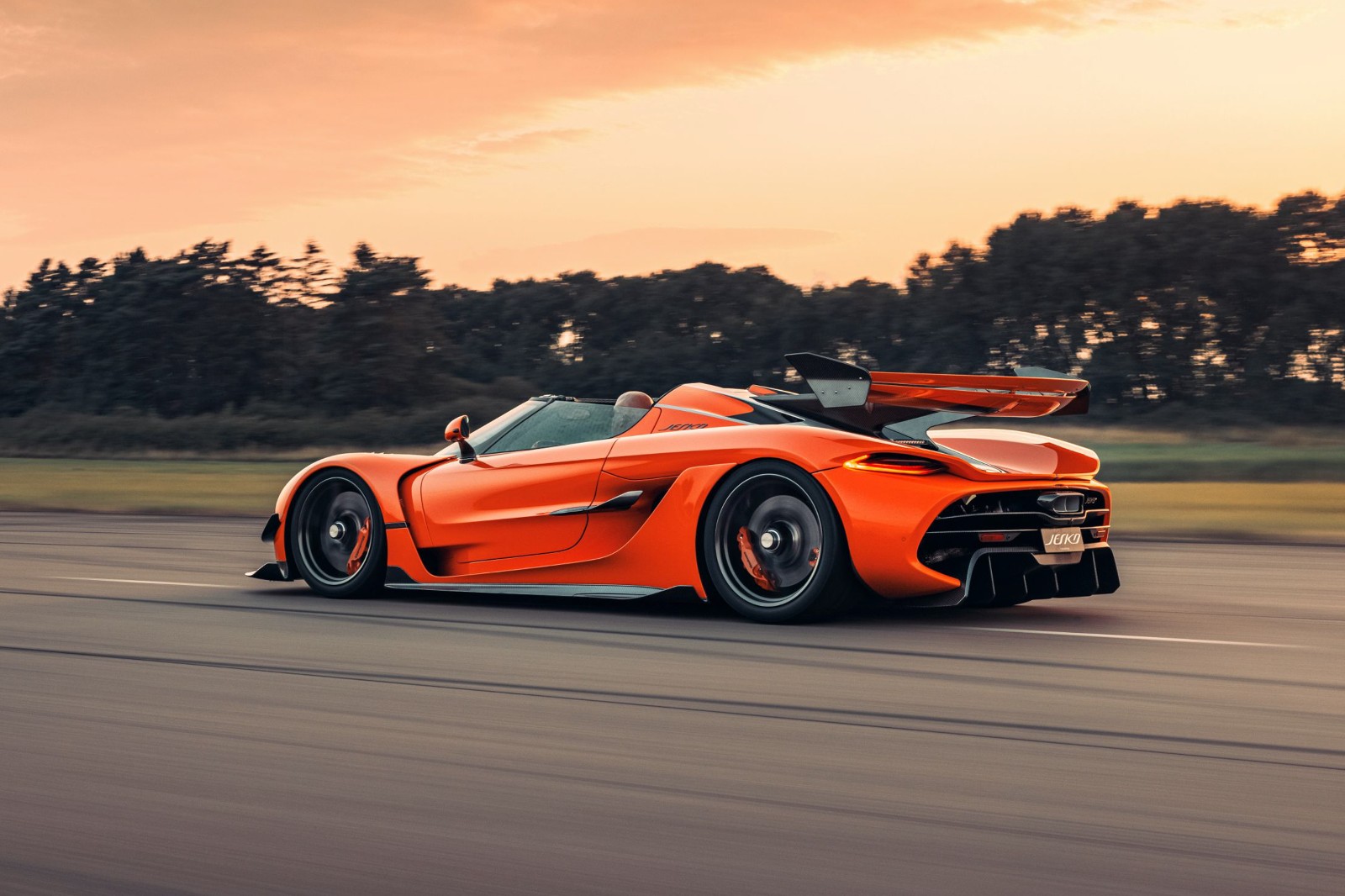
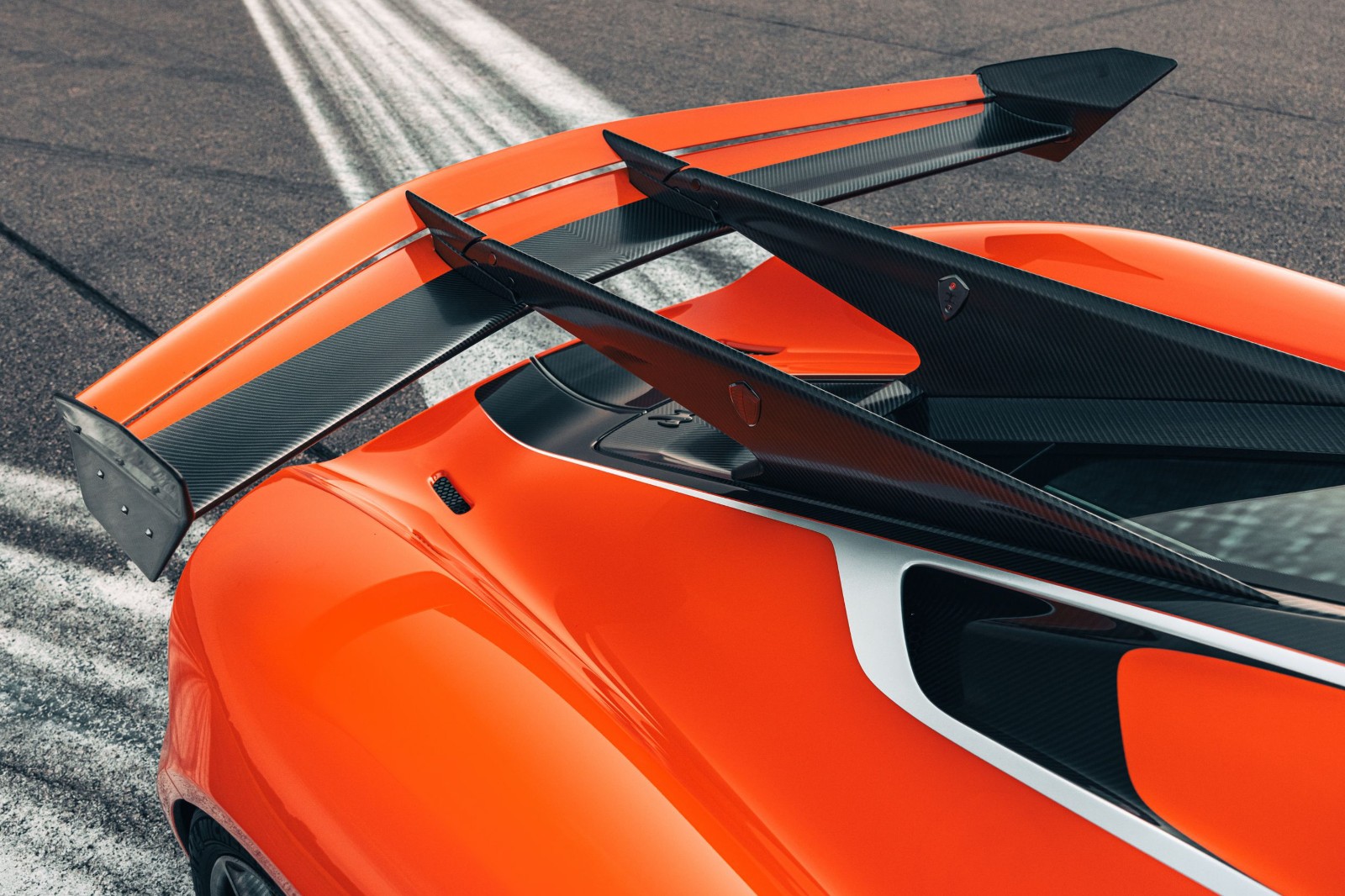
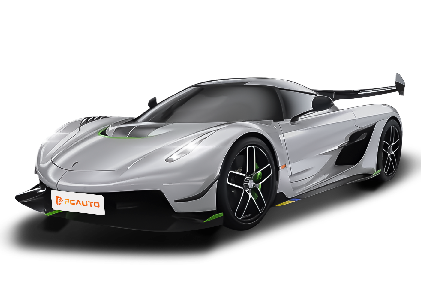
2023 Koenigsegg Jesko Attack 5.0L V8
Price
TBC
Select a Vehicle Variant
2023 Koenigsegg Jesko Attack 5.0L V8 TBC
Summary
The 2023 Koenigsegg Jesko Attack 5.0L V8, launched in (2023, is a smart-choice Super Car Coupe priced from TBC. Fits 2 passengers with generous cabin space – check the dimensions: 4760mm L, 2030mm W, 1210mm H. Perfect if you need a family car that parks easily.
Enjoy stress-free highway driving thanks to its 480km/h top speed. Its 4997cc engine balances pep and efficiency. For a reliable daily driver that doesn’t break the bank, the 2023 Koenigsegg Jesko Attack 5.0L V8 delivers style, space, and sensible performance.
Enjoy stress-free highway driving thanks to its 480km/h top speed. Its 4997cc engine balances pep and efficiency. For a reliable daily driver that doesn’t break the bank, the 2023 Koenigsegg Jesko Attack 5.0L V8 delivers style, space, and sensible performance.
Core Specs

Segment
Super Car

Engine Capacity(cc)
4997

Transmission
AT

Fuel Comsumption (L/100km)
18.09

Fuel Tank(litres)
72

Top Speed(km/h)
480

Seats
2

Length(mm)
4760

Width(mm)
2030

Height(mm)
1210

Wheelbase(mm)
2700

Boot Volume(L)
50 L front, 50 L rear
Other Variants
Price
TBC
Body
4760×2030×1210
Engine Power(PS)
1298
Engine Torque(Nm)
-
TRANSMISSION
AT
Fuel Consumption
18.09
Related Q&A
View More >Q
byd atto 3 made in which country
If you’re having trouble unlocking your Perodua Alza, here are some steps to try and fix the issue. First off, check if your remote key fob battery is dead—swap in a new one and give unlocking another shot. If that doesn’t work, grab your spare mechanical key to manually open the door. The keyhole is usually on the side or underneath the driver’s door handle; just pop the key in and turn it clockwise or counterclockwise to unlock.
Another thing to consider: some Alza models might have their anti-theft system accidentally trigger and lock up. In that case, try pressing the unlock button on the remote a few times in a row, or start the car to reset the system. If none of these tricks do the job, it’s best to reach out to a Perodua authorized service center for professional help. They can use diagnostic tools to check for electronic system glitches or hook you up with further repairs.
For day-to-day use, regularly checking your remote key battery level and keeping the fob away from moisture or extreme heat can go a long way in preventing unlock issues. And getting familiar with your car’s basic unlocking mechanisms and emergency workarounds? That’ll definitely save you hassle when you need it most.
 PupSep 23, 2025
Q
Why don't drivers use their turn signals?
The reasons why drivers do not use turn signals when changing lanes can be summarized as follows: First, some drivers have operational inertia and consider signaling a redundant step, which is more likely to be overlooked especially on familiar roads or those with sparse traffic, such as community exits or suburban highways. Second, drivers with poor driving etiquette are self-centered, forcing lane changes or weaving across multiple lanes, completely ignoring the safety of vehicles behind. This behavior is particularly common at highway exits or congested intersections. In addition, some drivers choose to change lanes suddenly out of fear that signaling their intention will cause vehicles behind to accelerate and block them; this psychology is especially evident on viaducts or congested roads during peak hours. It is worth noting that many drivers have a cognitive bias about the function of turn signals, mistakenly believing they only need to be used in heavy traffic. In fact, turn signals can effectively prevent blind spot accidents in scenarios such as night driving or exiting roundabouts. From a technical perspective, turn signals are designed to establish a communication mechanism between vehicles. Signaling 3 seconds in advance allows vehicles behind to predict and adjust their speed, which is actually more efficient than forced lane changes. Although traffic regulations clearly require signaling when changing lanes and set penalty clauses, the more critical point is to cultivate safety awareness. This simple action can reduce the lane change accident rate by 30% and is also a basic respect among road users. It is recommended that drivers develop the habit of using turn signals regardless of road conditions, while maintaining a safe following distance. When encountering vehicles that do not use turn signals, drivers should reduce risks through prediction and civilized reminders (such as flashing lights).
 GhostWalkerMar 23, 2026
Q
How reliable is the 2024 Aston Martin Vantage?
The 2024 Aston Martin Vantage shows promise in terms of reliability. Under the hood, you'll find a refined 4.0-liter twin-turbo V8 that delivers smoother power delivery and improved durability. They've also tweaked the gearbox and electronics to cut down on potential headaches. For folks in Malaysia, the car's ability to handle our tropical climate is a big plus – the cooling system and seals have been optimized for the heat and humidity, so it should stand up well to local weather conditions.
It's worth noting that Aston Martin has upped its game significantly when it comes to quality control lately. The 2024 model benefits from better build quality and stricter component checks, which is reassuring. Sure, supercars need a bit more TLC for daily use, but the Vantage strikes a nice balance that makes it more livable than some rivals in its class. Malaysian owners should pay extra attention to regular gearbox and brake system maintenance, and stick to official authorized service centers whenever possible – that’s the best way to keep the car in top shape for the long run. All things considered, if you follow the manufacturer’s recommended care routine, the 2024 Vantage should deliver the kind of reliable performance you’d expect from a luxury sports car.
 AmberGlowOct 20, 2025
Q
Why 10 and 2 for driving?
In the past, driving instruction often recommended placing both hands at the "10 and 2 o'clock" position on the steering wheel. This was because early vehicles lacked power steering, and this grip provided better leverage for turning, while the spoke design of older steering wheels also suited this hold. But with advancements in automotive technology, modern cars come standard with power steering and airbags, making this traditional position a potential hazard—if the airbag deploys, it could fling the driver's arms into their face, causing injury. These days, the "9 and 3 o'clock" or slightly lower "8 and 4 o'clock" grips are more recommended. These positions maintain control of the wheel while keeping arms clear of the airbag deployment path, making them safer in emergencies. Proper steering wheel grip is just one part of safe driving; you should also adjust your seat so your wrists rest naturally on the top of the wheel and keep your seatback at a comfortable angle. These details all boost driving safety. Ultimately, no matter which grip you choose, the key is to keep both hands on the wheel—avoid single-handed driving or bad habits—to react quickly in unexpected situations.
 InventJan 19, 2026
Q
Is Kia Optima expensive to fix?
In Malaysia, the maintenance costs of the Kia Optima are above the medium level, specifically depending on the model year, parts availability, and the type of maintenance. It may be slightly higher compared to Japanese cars in the same class, but it's still within a reasonable range. As a mid - size sedan, the prices of the Optima's original parts are relatively high, especially for imported components. However, local third - party repair shops usually offer more economical alternatives, such as using compatible parts or refurbished ones to reduce costs.
The costs of regular maintenance items like oil changes and filter replacements are similar to those of mainstream brands, ranging from about 300 to 500 Malaysian Ringgit. But if it involves complex repairs such as the gearbox or turbocharging system, the costs may rise significantly. It's worth noting that Kia's dealer network in Malaysia has been gradually improved in recent years. During the original factory warranty period, it's recommended to choose an authorized service center to safeguard your rights. Meanwhile, some repair shops also offer installment - payment options to relieve the financial pressure.
For long - term owners, it's advisable to purchase an extended warranty plan or a regular maintenance package, which can effectively control the later - stage costs. Generally speaking, although the maintenance expenses of the Optima are not the lowest, they are still competitive when compared with the configuration and driving experience it offers. Car owners can optimize their expenses by comparing quotes and making good use of insurance terms.
 SunnySoulSparkleFeb 16, 2026
Q
What is the difference between the BMW X3 2020 and 2021?
The main differences between the 2020 and 2021 BMW X3 lie in tech upgrades and powertrain refinements. The 2021 model gets the updated iDrive 7.0 infotainment system, standard 10.25-inch central display, and wireless Apple CarPlay support, whereas the 2020 version sticks with the older iDrive 6.0 and a smaller screen. The 2021 X3 also adds a 2.0T turbo engine assisted by a 48V mild-hybrid system, boosting fuel efficiency. Some trims further gain driver assistance features like adaptive cruise control and lane-keeping assist. Externally, the 2021 model only tweaks the grille and wheel designs slightly, keeping the overall profile unchanged. For used car shoppers, the 2021 version is the better pick – its hybrid tech cuts long-term running costs, and the newer infotainment system offers better support for local navigation and voice control. If budget’s tight, the 2020 model delivers a similar core driving experience, though note that some driver aids might be optional extras. Both model years retain BMW’s classic handling tune, ideal for drivers who prioritize behind-the-wheel fun.
ModelNov 24, 2025Q
How long do 2022 Camrys last?
The 2022 Toyota Camry, when properly maintained and driven under normal conditions, can typically clock in 200,000 to 300,000 kilometers or even more. That translates to roughly 15 to 20 years of service, though the actual lifespan hinges on your driving habits, the roads you tackle, and how religiously you stick to maintenance schedules. The Camry has long been lauded for its bulletproof powertrains and robust build quality. Whether you opt for the 2.5L four-cylinder, the 3.5L V6, or the hybrid variant, you're getting an engine known for minimal trouble and solid efficiency – traits that have earned it plenty of love in the market.
Now, here in Malaysia, our hot and humid climate can be a bit tough on batteries and rubber components. So, it's a good idea to keep a closer eye on your cooling system, tires, and air conditioning. And don't stray from the official service intervals – generally every 10,000 kilometers or 6 months, whichever comes first. Sticking to that will definitely help keep your Camry on the road longer.
Another plus for Camry owners in Malaysia is its strong resale value. A well-documented service history can really give that resale price a nice little boost when the time comes to upgrade. If you're planning to hold onto it for the long haul, make sure you're not skipping those crucial replacements – things like the timing belt, transmission fluid, and brake fluid. Neglecting these small items now could lead to big, costly headaches down the line.
For the hybrid models, there's good news on the battery front too. The battery pack is designed to last upwards of 10 years, and Toyota's got your back with a solid long-term warranty, which helps take some of the sting out of potential future maintenance costs. All in all, the Camry remains a smart, reliable bet for those seeking a car that goes the distance.
 EmeraldGreenForestGlowOct 28, 2025
Q
How to improve the fuel efficiency of Toyota Corolla?
To improve the fuel efficiency of Toyota Corolla, you can adopt several strategies. First of all, develop a smooth - driving habit. Avoid sudden acceleration and hard braking because these actions will increase the engine's workload and consume more fuel. Instead, you should gradually accelerate when starting and smoothly decelerate when stopping. Maintaining a steady speed, especially on the highway, also works. For example, keep your speed within the range where the engine operates most efficiently. For many Corolla models, this range is approximately 60 - 90 kilometers per hour.
Secondly, choose high - quality fuel. Premium fuel usually has better combustion performance, which allows the fuel in the engine to burn more completely, reducing waste and improving fuel economy.
Thirdly, make sure your vehicle is well - maintained. Replace the engine oil regularly as recommended because fresh oil can reduce internal engine friction. In addition, ensure that your tire pressure is at the appropriate level; under - inflated tires will increase rolling resistance, thus increasing fuel consumption.
Finally, lighten the vehicle load. Remove any unnecessary items from the trunk or the interior of the vehicle because the extra weight will make the engine use more energy to drive the vehicle. By following these suggestions, you can enhance the fuel efficiency of your Toyota Corolla and save on fuel costs over time.
 ShadowSprintJun 5, 2025
Q
How to charge the Xpeng G6?
For Xpeng G6 owners in Malaysia, you've got two solid charging options: home charging or public stations. For home use, you'll need to install a wall-mounted charger that meets local standards – we recommend going with at least 7kW to get the job done efficiently. Just plug in using the cable that comes with the car, and you're set. A full charge usually takes 6-8 hours, which makes it perfect for overnight top-ups while you sleep.
When you're out and about, DC fast chargers are the way to go. Look for units from providers like ChargeSini or Gentari with 120kW or higher output – these can take you from 30% to 80% battery in around 30 minutes. To start charging, just fire up the Xpeng app, scan the QR code, and pay right there on your phone.
Good news for Malaysian drivers: the G6 uses the Type 2 charging port as standard, so you won't need any adapters here – it's plug-and-play with local infrastructure. A quick safety reminder: always check the charging cable for any damage to the insulation before plugging in, and avoid charging outdoors during thunderstorms. If you're planning to leave the car parked for a while, keeping the battery between 50-70% is best for long-term battery health.
One standout feature for our tropical climate is Xpeng's X-HP intelligent thermal management system. It automatically preconditions the battery to optimize fast charging speeds, which is a big plus for maintaining battery life in hot weather. And don't forget – you can use the mobile app to schedule charging during off-peak electricity hours to save some cash on your utility bills.
 RexOct 17, 2025
Q
Do V24 engines exist?
Regarding the existence of V24 engines, there are currently no mass-produced passenger cars or mainstream car manufacturers using engines with this structure, V-type engines are usually dominated by even numbered cylinders, such as V6, V8, V12, etc., because of their higher balance of cylinder arrangement and engineering feasibility. On the other hand, 24 cylinder engines, due to their large size, complex structure, and poor fuel economy, are more commonly used in specific fields, such as ship power or historical racing prototypes. For example, in the 1930s, Bugatti experimentally developed V24 racing engines, but they were not widely used. For daily use, the choice of V-type engines mainly focuses on the more common 6 to 12 cylinder range, which can achieve a good balance between power output and fuel efficiency. If you are interested in multi cylinder engines, you can pay attention to the W16 or V12 engines installed in high-performance models or classic sports cars. Technology represents the high level of internal combustion engine engineering.
 JadeDec 24, 2025
Popular Cars
Model Year
Car Compare
Car Photo
Model List
Koenigsegg Jesko is a Super Car Coupe car launched by Koenigsegg. PCauto has cataloged various variants of this car produced from - to -.You can compare differences in detail at the parameter table.
Among the 0 variants of Koenigsegg Jesko, prices range from the affordable TBC to the most expensive TBC.You can find different horsepower versions ranging from - to -.
Koenigsegg Jesko offers - engines and - transmission. Check the spec sheet for more details.
0 Model on Sale
2023
- Fuel Consumption: 18.09
- Engine Power(PS): 1298
- Driven Wheels: All Wheel Drive
- Electronic Stability Control(ESC)
- Blind Spot Info System
- Fuel Consumption: 18.09
- Engine Power(PS): 1298
- Driven Wheels: All Wheel Drive
- Electronic Stability Control(ESC)
- Blind Spot Info System
2023 Koenigsegg Jesko Absolut 5.0L V8
TBCNot On Sale
2023 Koenigsegg Jesko Attack 5.0L V8
TBCNot On Sale