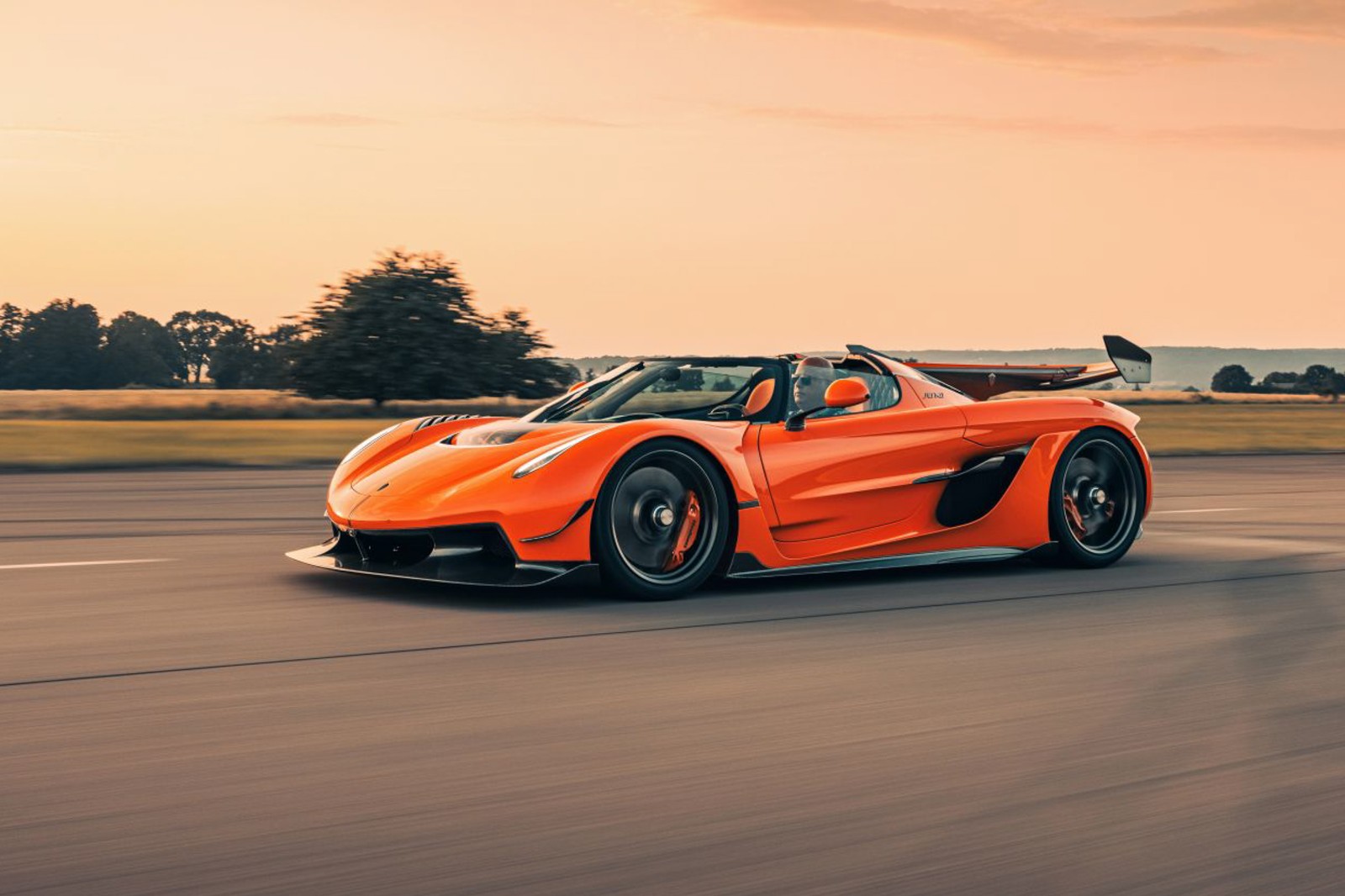
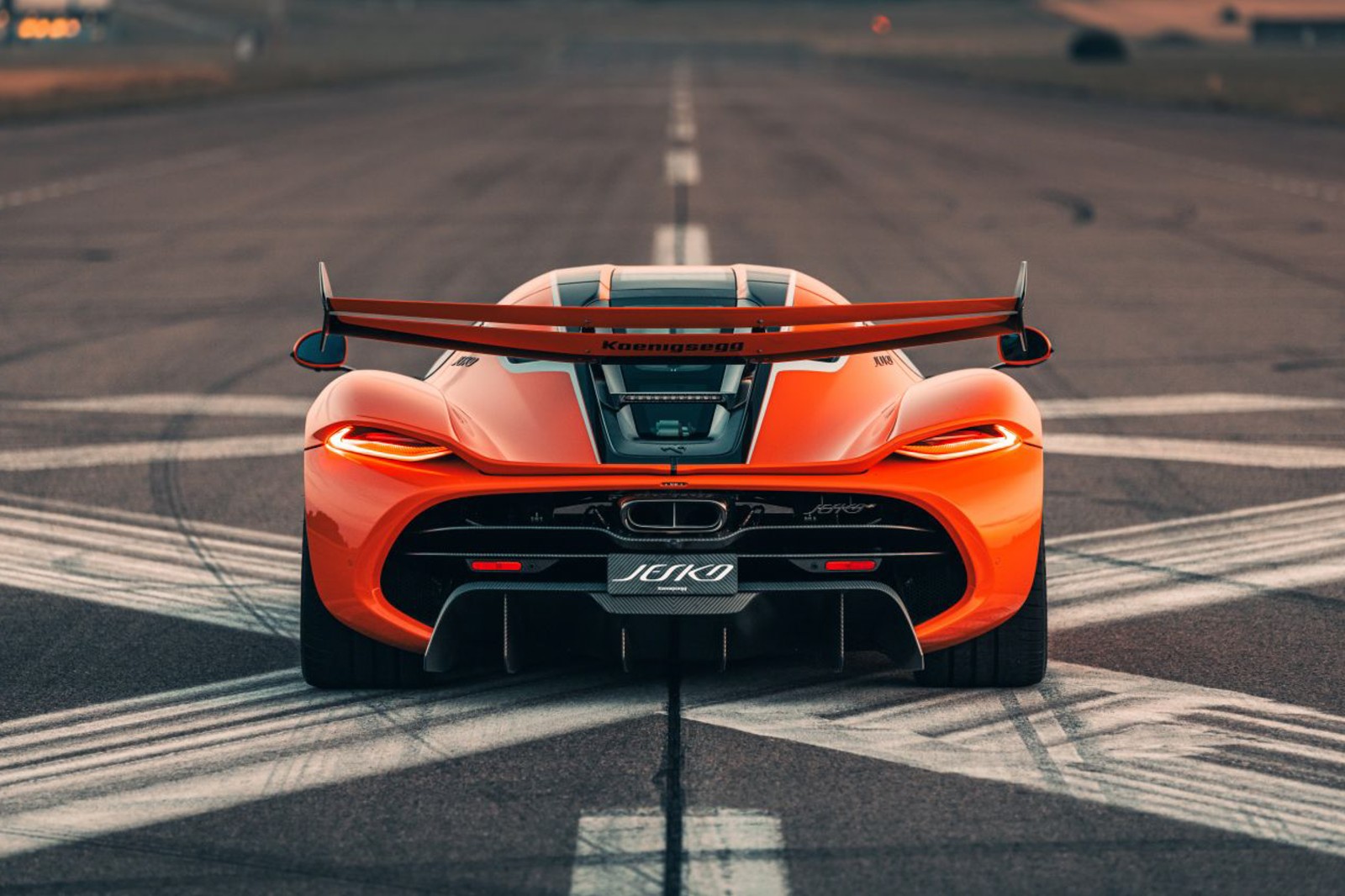
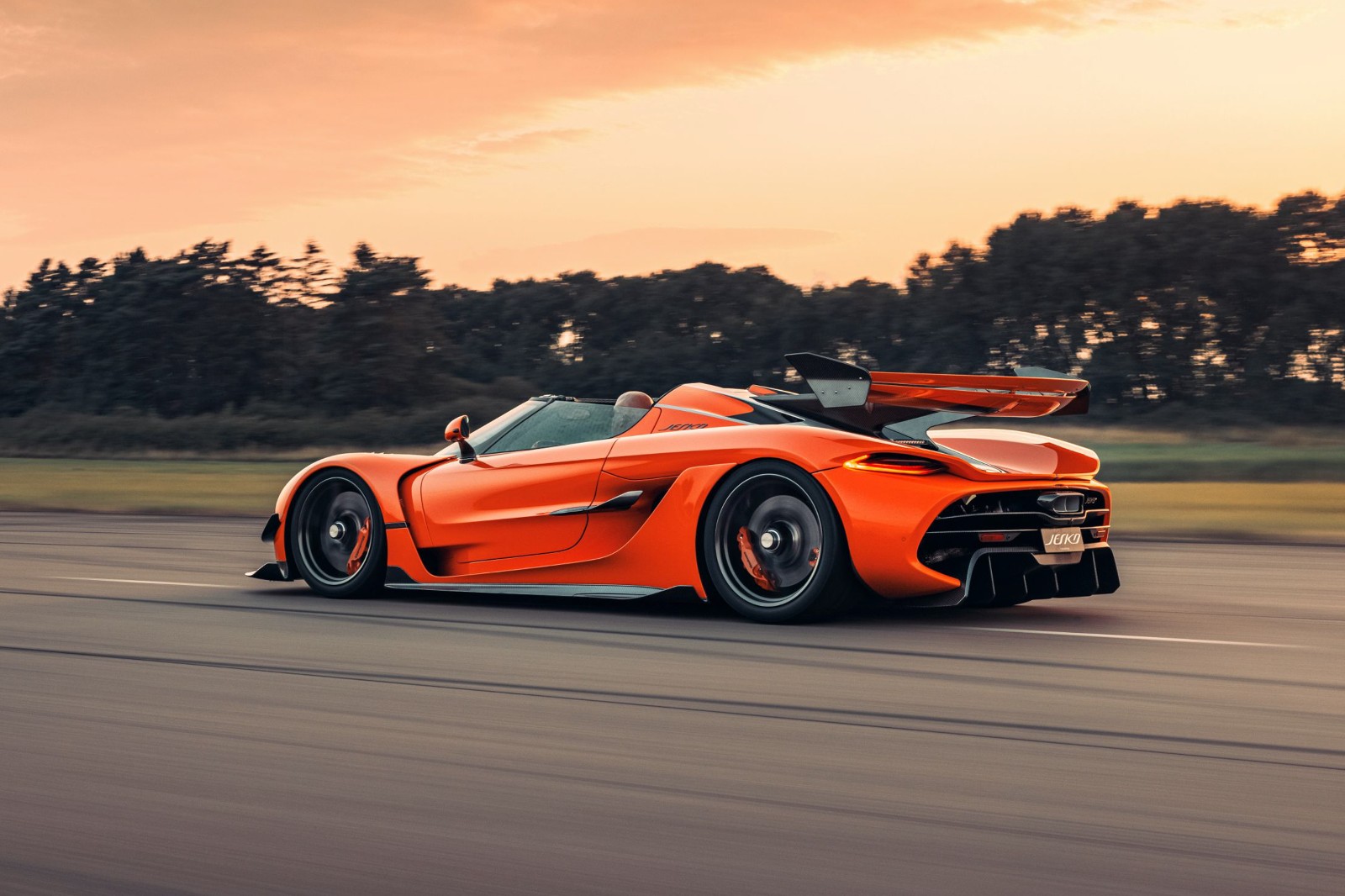
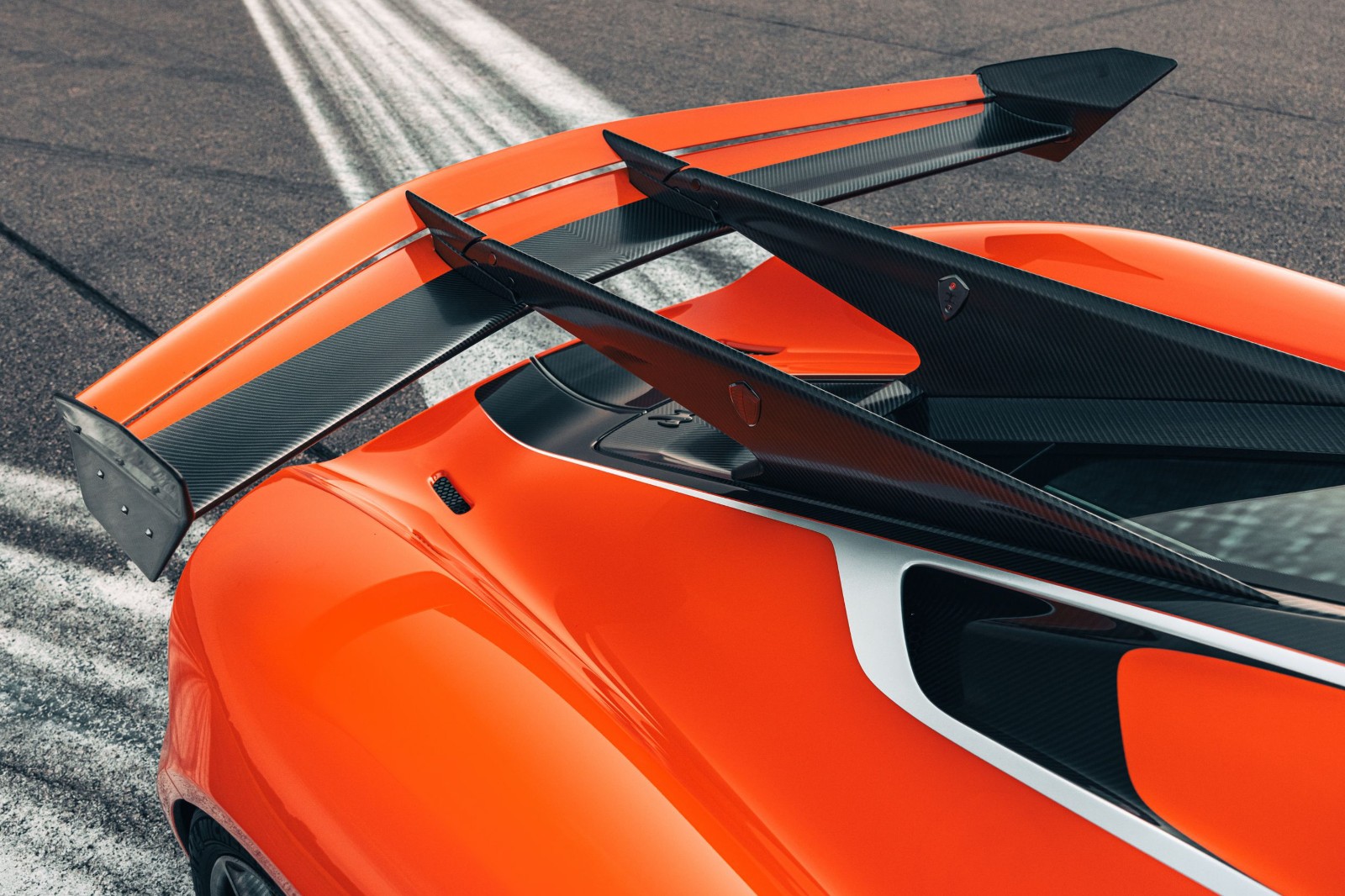
2023 Koenigsegg Jesko Attack 5.0L V8
Price
TBC
Select a Vehicle Variant
2023 Koenigsegg Jesko Attack 5.0L V8 TBC
Summary
The 2023 Koenigsegg Jesko Attack 5.0L V8, launched in (2023, is a smart-choice Super Car Coupe priced from TBC. Fits 2 passengers with generous cabin space – check the dimensions: 4760mm L, 2030mm W, 1210mm H. Perfect if you need a family car that parks easily.
Enjoy stress-free highway driving thanks to its 480km/h top speed. Its 4997cc engine balances pep and efficiency. For a reliable daily driver that doesn’t break the bank, the 2023 Koenigsegg Jesko Attack 5.0L V8 delivers style, space, and sensible performance.
Enjoy stress-free highway driving thanks to its 480km/h top speed. Its 4997cc engine balances pep and efficiency. For a reliable daily driver that doesn’t break the bank, the 2023 Koenigsegg Jesko Attack 5.0L V8 delivers style, space, and sensible performance.
Core Specs

Segment
Super Car

Engine Capacity(cc)
4997

Transmission
AT

Fuel Comsumption (L/100km)
18.09

Fuel Tank(litres)
72

Top Speed(km/h)
480

Seats
2

Length(mm)
4760

Width(mm)
2030

Height(mm)
1210

Wheelbase(mm)
2700

Boot Volume(L)
50 L front, 50 L rear
Other Variants
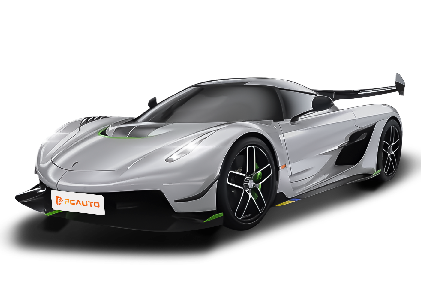
Price
TBC
Body
4760×2030×1210
Engine Power(PS)
1298
Engine Torque(Nm)
-
TRANSMISSION
AT
Fuel Consumption
18.09
Related Q&A
View More >Q
how to get physical road tax malaysia
In Malaysia, you can get your physical Road Tax through JPJ (Road Transport Department) counters, the MYEG online platform, or post offices. As a car owner, you'll need to bring your vehicle registration card (Geran), insurance certificate, and your old road tax (if renewing), then pay the applicable fee – which is calculated based on engine capacity and vehicle type. Once done, you'll receive a paper road tax sticker that needs to be stuck on your front windshield.
If you prefer doing it online, you can submit an application and make payment via MYEG or the JPJ official website. The road tax will then be mailed to your specified address, but make sure your insurance coverage period overlaps with your road tax validity. A crucial thing to note: Road Tax and Motor Insurance must be renewed simultaneously – you can't have one without the other, otherwise you might face a fine. Also, electric vehicles currently enjoy a government-preferred tax rate, while diesel vehicles are subject to an additional surcharge.
It's advisable to handle the road tax renewal one month before it expires to avoid getting penalized by law enforcement for delays. At the same time, regularly check for policy updates on the JPJ system. For example, the e-Road Tax introduced in recent years can serve as an alternative to the physical road tax, but you need to ensure your phone or in-car device can display a valid electronic copy for inspection purposes.
 ArtistzzSep 25, 2025
Q
How many miles can a fully fueled GR86 travel?
The fuel tank capacity of the GR86 is 50 liters. However, the actual mileage it can achieve will be influenced by various factors such as driving style, road conditions, and vehicle load. Taking the 2023 model as an example, it features a 2.4L naturally aspirated engine with a peak power RPM of 7000. While there isn't an official mileage figure provided, we can make a rough estimation based on common fuel consumption data.
Assuming the vehicle's combined fuel consumption is approximately 10L/100km, a full 50L tank would allow for a range of about 500km. Since 1 kilometer is roughly equal to 0.6214 miles, this translates to approximately 310.7 miles. However, this is merely an estimate. If driving habits are smooth and road conditions are favorable, the mileage could potentially be higher. Conversely, if the driving style is aggressive with frequent stops and starts, the mileage may decrease.
 ButterMay 16, 2025
Q
Is E-Class Mercedes a good choice?
The Mercedes E-Class is truly a great vehicle. It combines luxury, outstanding performance, and advanced functions. In terms of performance, models like the E200 and E350e are equipped with different powertrains to meet various needs. The gasoline hybrid system of the E200 strikes a balance between power and fuel efficiency, with a top speed of up to 240 km/h and an acceleration time from 0 - 100 km/h of 7.5 seconds. The gasoline plug - in hybrid configuration of the E350e delivers stronger power, accelerating from 0 - 100 km/h in just 6.4 seconds. It has an official pure - electric driving range of 118 km, making it a good choice for those looking to reduce fuel consumption.
The interior of the E - Class exudes luxury. It is equipped with features such as electric seat adjustment for both the front and rear rows, dual - zone or multi - zone automatic air conditioning, and uses high - quality materials, providing a comfortable driving and riding experience. The advanced MBUX multimedia system paired with a large - sized LCD screen puts various functions at your fingertips.
Safety is also one of its major highlights. Standard equipment includes multiple airbags, an anti - lock braking system (ABS), electronic stability control, and a series of driving assistance systems such as active braking, lane departure warning, and blind - spot monitoring. These functions help prevent accidents and protect the safety of passengers.
In addition, the E - Class has a stylish exterior design that has always been quite appealing. Whether it's for daily commuting or long - distance travel, the Mercedes E - Class is a reliable and comfortable choice.
 InventJun 3, 2025
Q
What Are The Specifications of Jaecoo J7?
The Jaecoo J7 has multiple versions. Take the 2025 Jaecoo J7 PHEV 2WD as an example. Its price is RM 158,800. The fuel type is Petrol Plug - in Hybrid (PHEV), and belongs to C - Segment. It has a length of 4500mm, a width of 1865mm, a height of 1670mm, and a wheelbase of 2672mm. It is equipped with a 1.5L engine with a maximum horsepower of 143PS, and the electric motor has a maximum horsepower of 204PS. The system's combined power is 347Ps, and the official pure - electric range is 106km. It is equipped with various safety features such as 8 airbags, ABS and electronic stability control. There are also comfortable features like a 14.8 - inch central control screen and a Sony Premium Audio System.
For the 2024 Jaecoo J7, the prices of the 2WD and AWD versions are RM 138,800 and RM 148,800 respectively. The fuel type is petrol, and it is powered by a 1.6T engine. It also has a variety of safety and comfort features. Different versions vary in aspects such as the drive system.
 GlowingOrbCollectorJun 20, 2025
Q
Is Mazda 3 Hatchback a Good Car? Learn the Pros and Cons Here
The Mazda 3 Hatchback is a compact hatchback that's quite popular in the Malaysian market. Its advantages include a stylish and dynamic exterior design, delicate interior craftsmanship, and excellent handling performance. The Skyactiv - technology engine it's equipped with strikes a good balance between fuel economy and power output. Meanwhile, the standard i - Activsense safety system offers leading active and passive safety features in its class.
However, the rear - seat space is relatively cramped, and the maintenance and repair costs are slightly higher than some Japanese competitors. The sporty suspension tuning might not meet the comfort needs of some consumers. For Malaysian consumers, this car is especially suitable for young people who pursue driving pleasure. Its Kodo design language also enjoys high popularity in the local car modification circle.
It's worth noting that in tropical climates, it's advisable to choose ventilated seats and regularly check the air - conditioning system. At the same time, the 5 - year warranty policy provided by the manufacturer can effectively reduce the cost of car ownership. Among models in the same class, you can also refer to the Toyota Corolla Hatchback or the Honda Civic Hatchback for a horizontal comparison. It's recommended to take a test drive and then make a choice according to your personal needs.
 DaxJul 7, 2025
Q
Should I buy a 2018 Hyundai Tucson?
The 2018 Hyundai Tucson is a solid SUV choice for Malaysian families. Under the hood, you'll find either a 2.0L naturally aspirated engine or a peppy 1.6T turbo – both deliver smooth power and decent fuel efficiency, making it equally at home in city traffic or on long highway drives. Step inside, and you're greeted with a spacious cabin; the rear legroom and boot capacity are particularly family-friendly, easily swallowing all your gear for weekend getaways.
When it comes to features, Hyundai hasn't skimped. Standard kit includes handy stuff like Apple CarPlay, Android Auto, and a reverse camera. Move up to the higher trims, and you'll score nice-to-haves like a panoramic sunroof and power tailgate, which really up the convenience factor. Safety-wise, it checks the boxes with six airbags, Electronic Stability Control (ESC), and hill-start assist – all the mainstream essentials you'd expect.
Now, a couple of things to note. Some owners mention the suspension is on the firmer side, which can take the edge off comfort on Malaysia's less-than-perfect road surfaces. Also, if resale value is a top priority, it doesn't quite match the retention rates of its Japanese rivals.
So, who is this Tucson for? If your budget is around RM100k, and you value bang for your buck with a good level of kit, the 2018 Tucson is definitely worth a look. Just be sure to check the service records and take it for a thorough test drive to ensure it's in good shape. Competitors like the Honda CR-V and Mazda CX-5 might have the edge in terms of resale value and driving dynamics, but the Tucson fights back with its feature list and price point – ideal for shoppers who prioritize practicality over badge prestige.
 SailorsoSep 18, 2025
Q
What are the changes for the Mazda CX-90 for 2025?
The 2025 Mazda CX-90 lands in Malaysia with some key upgrades, focusing mainly on its powertrain and tech features. Under the hood, you'll find a refined 3.3-liter inline-six turbocharged engine paired with a 48V mild-hybrid system. This setup not only boosts fuel efficiency but also cranks up the low-end torque, while keeping the signature i-Activ AWD and Kinematic Posture Control tech we know.
Inside, there's a new Terracotta Nappa leather seat option that looks premium. Every CX-90 now gets a standard 12.3-inch infotainment screen with wireless Apple CarPlay/Android Auto – finally, no more messy cords. Safety-wise, the i-Activsense suite has been updated to include traffic sign recognition and driver attention monitoring, which are nice additions.
What really sets the CX-90 apart from other Japanese SUVs in its class is its longitudinal engine layout and rear-wheel-drive architecture – that's pretty rare around here. This setup helps balance the weight distribution front to back, making the handling sharper and more precise, perfect for Malaysia's twisty mountain roads.
Mazda hasn't forgotten about our tropical climate either; they've tweaked the air conditioning to cool things down faster. Plus, there are now USB-C fast-charging ports in the back seat. Little touches like these show they've thought about what local buyers actually need.
 OnyxOct 23, 2025
Q
What is the meaning of number of cylinders?
The number of cylinders refers to the number of combustion chambers inside an engine and is one of the core indicators for measuring engine performance. As cylindrical hollow chambers, cylinders house pistons that reciprocate to convert thermal energy from fuel combustion into mechanical energy. The number of cylinders directly affects an engine's output power and torque; generally, more cylinders mean stronger power—for example, the explosive power of a V8 engine is significantly higher than that of a four-cylinder model, though this also increases manufacturing costs and fuel consumption. Among common configurations, three-cylinder engines (e.g., 1.0-liter displacement) are compact and cost-effective but require balance shaft technology to suppress vibration; four-cylinder engines (1.5-2.5 liters) have become the mainstream for family cars due to their balanced smoothness and fuel consumption; six-cylinder and above models (e.g., 3.0-liter V6) excel in linear power delivery and a rich exhaust note, making them widely used in mid-to-high-end vehicles. In terms of arrangement, inline structures have low maintenance costs, V-shaped layouts save space, and horizontally opposed designs enhance handling stability. Modern turbocharging technology allows four-cylinder engines to reach the power level of traditional six-cylinder engines, while three-cylinder engines also demonstrate excellent energy efficiency in hybrid systems. When choosing, one should consider displacement, technical tuning, and usage scenarios: four-cylinder engines are recommended for daily commuting, while six-cylinder or eight-cylinder configurations can be considered for those pursuing performance.
 BinJan 15, 2026
Q
Do you put petrol in a plug-in hybrid?
Plug-in hybrid electric vehicles (PHEVs) do require gasoline refueling, but the frequency of use depends on the driver's specific needs and usage scenarios. These models are equipped with two power systems: an internal combustion engine and an electric motor, and their batteries can be charged via an external power source. In pure electric mode, if the battery has sufficient charge (typically supporting a range of 50 to 120 kilometers), the vehicle can operate solely on the electric motor without consuming fuel. This mode is ideal for daily short-distance commutes and can significantly reduce operating costs, with electricity costs as low as approximately 0.1 Malaysian ringgit per kilometer. However, when the battery charge falls below a preset threshold (e.g., 30%) or during extended journeys, the system automatically switches to hybrid or fuel mode, relying on the gasoline engine to provide power or recharge the battery. The combined fuel consumption ranges from approximately 3.8 to 8 liters per 100 kilometers, with a total range exceeding 1,000 kilometers when fully charged and fueled. Notably, even when primarily operating in electric mode, it is advisable to refuel at least monthly and briefly run the engine to prevent fuel system degradation due to prolonged inactivity. Additionally, always use the fuel grade specified in the owner's manual (such as 95 octane gasoline) and avoid overfilling the tank. The key advantage of plug-in hybrids is their versatility: they enable low-carbon urban mobility in electric mode while eliminating range anxiety through the fuel system, offering an optimal balance between cost-efficiency and practicality.
 RainbowWingsFlyerFeb 2, 2026
Q
Does MT mean manual transmission?
Yes, MT is the abbreviation for Manual Transmission, referring to a traditional transmission system that requires the driver to manually operate gear engagement via the clutch pedal and gear shift lever to change the transmission ratio. It has a simple and reliable structure, primarily composed of gear sets, shafts, and synchronizers, commonly designed with 5 or 6 speeds. It features high transmission efficiency and lower maintenance costs, making it suitable for car owners who seek a sense of driving control or have budget constraints. Compared to automatic transmissions (such as AT and CVT), MT models are typically priced about 10,000 to 20,000 Ringgit lower and offer better fuel efficiency. However, they require adapting to frequent clutch and gear shift operations, which can pose challenges for novice drivers, particularly in congested traffic or when starting on inclines. Although automatic transmissions dominate the current market, MT still holds a niche user base due to its mechanical durability and driving engagement. Some performance models even retain manual options to cater to enthusiasts.
LilyMar 26, 2026Popular Cars
Model Year
Car Compare
Car Photo
Model List
Koenigsegg Jesko is a Super Car Coupe car launched by Koenigsegg. PCauto has cataloged various variants of this car produced from - to -.You can compare differences in detail at the parameter table.
Among the 0 variants of Koenigsegg Jesko, prices range from the affordable TBC to the most expensive TBC.You can find different horsepower versions ranging from - to -.
Koenigsegg Jesko offers - engines and - transmission. Check the spec sheet for more details.
0 Model on Sale
2023
- Fuel Consumption: 18.09
- Engine Power(PS): 1298
- Driven Wheels: All Wheel Drive
- Electronic Stability Control(ESC)
- Blind Spot Info System
- Fuel Consumption: 18.09
- Engine Power(PS): 1298
- Driven Wheels: All Wheel Drive
- Electronic Stability Control(ESC)
- Blind Spot Info System
2023 Koenigsegg Jesko Absolut 5.0L V8
TBCNot On Sale
2023 Koenigsegg Jesko Attack 5.0L V8
TBCNot On Sale