
Q
berapa cc mobil mitsubishi xpander
 OttoSep 23, 2025, 03:27 PM
The ORA Good Cat starts at around RM139,800 in Malaysia, with the exact price depending on the trim level and any ongoing promotions. This all-electric hatch from China's Great Wall Motors has been turning heads with its retro-futuristic styling and a solid dose of tech features. It comes with either a 47.8kWh or 63.1kWh battery pack, offering over 400km of range – more than enough for most urban commutes.
Malaysia's government incentives, including import duty and sales tax exemptions for EVs, definitely help make the Good Cat more accessible by bringing down the purchase cost. If you're considering one, it's worth shopping around different configurations to see which best fits your needs. Also, don't overlook checking out the charging infrastructure in your area – let's be real, an EV's practicality hinges a lot on how easy it is to top up.
The good news is Malaysia's charging network is gradually getting better. You'll find charging points popping up in major malls and public spaces these days. Looking ahead, EVs like the Good Cat aren't just about cutting down on emissions; they also save you money at the pump. It's a win-win – good for the planet and easy on the wallet.
Special Disclaimer: This content is published by users and does not represent the views or position of PCauto.
Related Q&A
Q
What engine is in the Mitsubishi Xpander 2023?
The 2023 Mitsubishi Xpander is powered by a 1.5-liter MIVEC four-cylinder naturally aspirated gasoline engine, delivering a maximum output of 105 horsepower and a peak torque of 141 Nm. It comes paired with either a 5-speed manual or a 4-speed automatic transmission. This engine prioritizes fuel efficiency and smoothness, making it ideal for daily family use. As a 7-seater MPV, the Xpander's engine is tuned to emphasize low-end torque, suiting city driving and load-carrying needs. It also features Mitsubishi's MIVEC variable valve timing technology, which optimizes power response and fuel consumption. Among its peers, many competitors like the Toyota Avanza or Honda BR-V also use naturally aspirated engines of similar displacement, but their tuning and technical focuses vary. The Xpander stands out for its high reliability and relatively low maintenance costs, appealing to practicality-minded consumers. For those seeking more power, Mitsubishi offers other models with turbocharging technology, but the Xpander is positioned more towards economy and practicality, targeting family users.
 BeeNov 19, 2025
Q
How much is the new Xpander 2023?
The official price of the all-new 2023 Mitsubishi Xpander ranges from RM99,980 to RM111,980, depending on the variant, including the standard Xpander, the high-spec Xpander, and the Xpander Cross. All models are powered by a 1.5L MIVEC naturally aspirated engine paired with a 4-speed automatic transmission, delivering a smooth driving experience. The Xpander is known for its spacious 7-seater cabin and flexible interior layout, making it ideal for families. The addition of the new ADAS advanced driver assistance system further enhances driving safety. This MPV stands out for its value-for-money proposition in its class, especially appealing to consumers who prioritize practicality and comfort. When purchasing, you can also check out the promotional offers from different dealers, such as free maintenance services or low-interest loans. If you're interested in the Xpander, it's advisable to visit a nearby showroom for a test drive to experience its handling and space firsthand. You might also want to compare it with other models in the same category, like the Toyota Avanza or Honda BR-V, to make a more comprehensive buying decision.
 KitNov 19, 2025
Q
What is the ground clearance of the Xpander 2020?
The 2020 Mitsubishi Xpander has a ground clearance of 205mm, a design that makes it perform exceptionally well on Malaysia's diverse road conditions, handling both city driving and occasional country roads with ease. The higher ground clearance not only improves the vehicle's off-road capability but also effectively prevents the undercarriage from scraping on rough roads, making it particularly suitable for water accumulation section that may appear during Malaysia's rainy season. Ground clearance is one of the key indicators for measuring the practicality of SUVs and MPVs; models typically ranging between 180mm and 220mm can balance comfort and off-road performance. As a 7-seater MPV, the Xpander maintains a spacious interior while also focusing on optimizing the chassis height, giving it a competitive edge among models in its class. For Malaysian consumers, choosing a model with appropriate ground clearance is especially important, as it directly relates to the convenience and safety of daily driving, especially when dealing with areas with poor road conditions.
 FrostFangOct 30, 2025
Q
What is the fuel consumption of the Mitsubishi Xpander Cross 2020?
According to official figures, the 2020 Mitsubishi Xpander Cross has a combined fuel consumption of approximately 6.5 to 6.9 liters per 100 kilometers, though the actual numbers can vary depending on driving habits, road conditions, and vehicle load. It’s powered by a 1.5-liter MIVEC naturally aspirated engine paired with a 4-speed automatic transmission, delivering smooth power and decent fuel efficiency—perfect for Malaysian family daily use. For owners looking to cut fuel costs further, regular vehicle maintenance, keeping tire pressure at the recommended level, and avoiding aggressive driving like sudden acceleration or hard braking can all help boost fuel efficiency. Plus, as a crossover MPV, the Xpander Cross doesn’t just shine in fuel economy; it also offers generous interior space and a higher ground clearance, making it ideal for Malaysia’s varied road conditions. Whether you’re commuting in the city or heading out for a weekend getaway, it handles it all with ease.
NitroBoostOct 30, 2025Q
How many seats are in the Mitsubishi Xpander 2020?
The 2020 Mitsubishi Xpander is a popular 7-seater MPV in the Malaysian market, featuring a 2+3+2 seating layout that can accommodate 7 passengers. The second-row seats fold down in a 60:40 split, while the third-row seats fold 50:50, offering flexible space configurations to meet different cargo needs. Under the hood, it's powered by a 1.5-liter MIVEC naturally aspirated engine, delivering 105 horsepower and 141 Nm of peak torque, paired with a 4-speed automatic transmission. It focuses on practicality and fuel efficiency, making it a great fit for family users. The Xpander also comes with basic features like a multifunction steering wheel and a touchscreen infotainment system. Its higher ground clearance (205mm) helps tackle some of Malaysia's rougher road conditions. Notably, the Xpander positions itself between compact MPVs and mid-size SUVs in the Southeast Asian market, competing with models like the Toyota Avanza and Honda BR-V. However, its unique exterior design and Mitsubishi's reputation for durability make it a top choice for many consumers.
 PlasmaPulseOct 30, 2025
Q
What size engine is in the Mitsubishi Xpander 2020?
The 2020 Mitsubishi Xpander is powered by a 1.5-liter MIVEC naturally aspirated petrol engine, model 4A91. This four-cylinder unit churns out 105 horsepower (77 kilowatts) and a peak torque of 141 Nm, paired with either a 5-speed manual or 4-speed automatic transmission. Its performance is ideal for daily family use, striking a good balance between fuel efficiency and reliability. This engine is widely used across multiple Mitsubishi models, boasting mature technology and low maintenance costs, making it well-suited for Malaysia's road conditions and climate. As a 7-seater MPV, the Xpander's engine is tuned to deliver strong low-end torque, perfect for city driving and carrying loads, aligning with the Southeast Asian market's preference for durability and practicality. It's worth noting that while naturally aspirated engines aren't as powerful as turbocharged ones, their simpler structure, easier maintenance, and lower long-term running costs are part of why the Xpander remains popular in Malaysia.
 ChromeCrusherOct 30, 2025
Q
Is Xpander 2024 3 cylinder?
Based on the current information, the 2024 Mitsubishi Xpander available in the Malaysian market is equipped with a 1.5 - liter MIVEC four - cylinder naturally aspirated engine, not a three - cylinder configuration. This engine delivers 105 horsepower and 141 Nm of torque, paired with either a 5 - speed manual or a 4 - speed automatic transmission. It focuses on providing smoothness and fuel efficiency for the family car market.
The doubts about a three - cylinder engine might stem from the fact that some brands have adopted three - cylinder technology in recent years for emission reduction purposes. However, the Xpander maintains a four - cylinder layout to ensure power stability. It's worth noting that although three - cylinder engines are smaller in size and more fuel - efficient, they usually require more advanced technical tuning for vibration suppression and high - speed performance. In contrast, the four - cylinder structure still has advantages in terms of durability and smoothness.
Malaysian consumers can make their choices according to their own needs when purchasing. If they prioritize low fuel consumption and are open to new technologies, they can look into three - cylinder models from other brands. If they prefer a more mature powertrain, the four - cylinder configuration of the Xpander remains a reliable option. It is recommended to take test drives to experience the differences.
 ForestTrailAdventureSep 1, 2025
Q
What is the ground clearance of the Xpander 2024?
The 2024 Mitsubishi Xpander has a ground clearance of 205 millimeters. This figure is relatively high among compact MPVs and allows the vehicle to adapt well to Malaysia's diverse road conditions, including urban roads and the rough terrains in the suburbs. The high ground clearance not only improves the vehicle's passability but also reduces the risk of chassis scratches, especially on flooded roads that may occur during the rainy season in Malaysia.
In addition to the ground clearance, the 2024 Xpander is also equipped with an optimized suspension system, which further enhances driving stability and comfort. For Malaysian consumers, this type of high - chassis MPV is very practical. It can meet the needs of family outings and handle complex road conditions.
If you often need to carry passengers or cargo and also pay attention to the vehicle's passability, the 2024 Xpander would be a great choice. Its space performance and practicality are also worth noting.
 RaySep 1, 2025
Q
Is the 2024 Mitsubishi Xpander a MPV or SUV?
The 2024 Mitsubishi Xpander falls into the MPV (Multi-Purpose Vehicle) category rather than the SUV (Sport Utility Vehicle) category. Its original design aim was to meet the needs of family users for spacious interiors and comfortable riding experiences. It features a three - row seat layout and sliding side doors, which are typical characteristics of MPVs. The Xpander has a relatively high ground clearance and crossover - style exterior kits, making it look somewhat like an SUV. However, in essence, it remains an MPV focused on practicality and versatility.
For consumers in Malaysia, the Xpander is an excellent family vehicle. It offers good comfort and convenience, whether for city driving or long - distance trips. The main differences between MPVs and SUVs lie in their body structures and uses. MPVs prioritize passenger space and cargo - loading flexibility, while SUVs emphasize off - road performance and driving visibility. Consumers can choose the appropriate model based on their actual needs.
The Xpander has always been very popular in the Malaysian market because it combines practicality, economy, and reliability, making it a great fit for local road conditions and family - use scenarios.
 SkySep 1, 2025
Q
What is the fuel consumption of the 2024 Mitsubishi Xpander?
The 2024 Mitsubishi Xpander offers a moderate fuel economy. According to official data, its combined fuel consumption is approximately 6.5 to 7.2 liters per 100 kilometers. The exact figure may vary slightly depending on driving habits, road conditions, and vehicle configurations (such as the 2WD or 4WD versions). This model is equipped with a 1.5-liter MIVEC naturally aspirated engine, paired with a 4-speed automatic or 5-speed manual transmission. The power is tuned to meet the practical needs of families.
For Malaysian users, the Xpander's fuel consumption is suitable for daily city commuting and medium - to short - distance trips, especially considering the common traffic congestion in the local area. It is recommended to perform regular maintenance (such as replacing the air filter and spark plugs) to optimize fuel efficiency. In addition, if you want to further reduce fuel consumption, you can try some fuel - saving driving techniques like smooth acceleration and reducing idling time.
Similar models in the same class, such as the Toyota Avanza or Honda BR - V, have a comparable fuel economy. However, the Xpander has an edge in terms of space flexibility and cost - effectiveness, making it a great choice for family users who value practicality.
 BuddyzzSep 1, 2025
Popular Cars
Model Year
Car Compare
Car Photo
Related Models
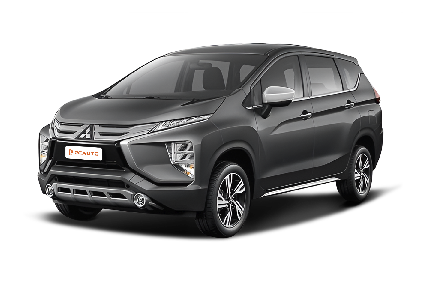
 Cars
CarsLatest Q&A
Q
Is AMT similar to automatic?
There are significant differences between AMT transmissions and automatic transmissions (AT) in terms of core structure and driving experience. AMT is essentially an electronically automated version of a manual transmission, simulating manual clutch operation and gear shifting through a computerized control system while retaining the gear set structure of manual transmissions. As a result, it offers higher transmission efficiency, with fuel consumption approximately 8%-12% lower than AT, making it particularly suitable for highway or long-distance driving. However, it may exhibit jerking similar to manual transmissions during low-speed gear shifts, especially noticeable in congested traffic conditions.
AT transmissions rely on torque converters for power transfer, delivering smooth and seamless gear shifts that appeal to comfort-oriented users. However, their complex structure (incorporating planetary gear sets, hydraulic systems, etc.) results in higher maintenance costs. A single service may cost between 800 to 1,500 ringgit, whereas AMT only requires gear oil replacement at approximately 400 ringgit.
From a market perspective, AMT is predominantly used in budget vehicles or commercial models priced below 80,000 ringgit, while AT is typically featured in mid-to-high-end vehicles. Consumers should select based on actual needs: AMT suits those prioritizing fuel efficiency and low maintenance costs, while AT better serves those valuing comfort. Notably, recent advancements in AMT electronic control technology have significantly mitigated jerking issues, though test drives should still emphasize low-speed performance evaluation.
 AriaMar 26, 2026
Q
Which is better, DCT or AT?
DCT (Dual-Clutch Transmission) and AT (Automatic Transmission) each have their own advantages and disadvantages, and the choice should be based on personal driving needs. AT transmissions transfer power through a torque converter, offering excellent shift smoothness, making them suitable for urban commuting or novice drivers. However, they tend to have higher fuel consumption, and vehicles equipped with them are usually more expensive. DCT transmissions utilize a dual-clutch structure, featuring fast shift speeds and high power transmission efficiency, which provides a more direct driving experience—particularly suitable for users seeking a sporty feel. However, they may exhibit jerking at low speeds and have relatively high maintenance costs. If durability and comfort are priorities, AT is the more reliable choice; if power responsiveness and driving pleasure are preferred, wet DCT (such as Volkswagen DSG) performs better, though dry DCT models should be avoided in prolonged stop-and-go traffic conditions. Additionally, CVT transmissions excel in smoothness and fuel efficiency, making them ideal for daily commuting, but they lack driving excitement. It is recommended to test-drive before purchasing, as tuning varies significantly across brands, and real-world experience is more important than theoretical specifications.
FlutteringMar 26, 2026Q
Is Amt good or bad?
AMT gearboxes have a significant cost advantage in the local market, typically being around 5,000 Ringgit cheaper than models equipped with conventional automatic transmissions. Their fuel efficiency is comparable to manual transmissions, resulting in long-term fuel savings. Featuring a straightforward design, they achieve transmission efficiency exceeding 90% with relatively low maintenance costs, making them ideal for practicality-oriented consumers. However, their shifting logic contains inherent limitations: gear changes between 1st and 2nd cause 0.3-0.5 second power interruptions, while unintended upshifts on inclines may reduce engine speed by 15%-20%, compromising driving smoothness. For urban commuters or budget-conscious buyers, AMT offers excellent value, though those prioritizing premium driving dynamics should consider alternative transmission types. Some domestic models like the Perodua Axia employ enhanced AMT systems, where optimized shift programming has reduced gearshift shock by approximately 30%.
 RainbowsMar 26, 2026
Q
Which gives better mileage, CVT or AMT?
From the perspective of fuel economy, CVT transmissions generally perform better under urban driving conditions. Their continuously variable design allows the engine to consistently operate within the optimal speed range, significantly reducing fuel consumption during frequent starts and stops. Test data shows that their fuel consumption in urban driving conditions is 10% to 15% lower than that of comparable models. AMT transmissions, on the other hand, inherit the high transmission efficiency of manual transmissions, delivering fuel efficiency close to manual transmissions during high-speed cruising. This makes them particularly suitable for long-distance driving in large-displacement vehicles. However, due to power interruption during gear shifts, their overall fuel consumption may be 5% to 8% higher than CVTs.
The difference in fuel-saving characteristics between the two transmissions stems from their technical principles: CVTs achieve continuous variability through steel belts and pulleys, eliminating the fixed gear ratio limitations of traditional transmissions; AMTs simulate manual gear changes via electronic control systems while maintaining the mechanical efficiency of gear transmission. Notably, actual fuel consumption is also influenced by driving habits. Smooth acceleration and anticipatory deceleration can maximize the transmissions' fuel-saving potential. If the vehicle budget permits and urban commuting is the primary use, CVTs offer a more economical choice. For frequent highway driving with an emphasis on cost-effectiveness, AMTs are equally worth considering.
 RubyBlazeMar 26, 2026
Q
Which is cheaper, AMT or CVT?
In terms of gearbox cost, AMT is usually more economical than CVT. Essentially, AMT is a manual transmission equipped with an electronic control unit, featuring a simple structure and low maintenance costs. The unit price ranges from approximately 5,000 to 8,000 ringgit, making it suitable for budget-conscious consumers or those who prioritize long-term operating costs. CVT incurs higher manufacturing costs due to its precision steel belt transmission system and continuous variable transmission technology, with a unit price of about 7,000 to 10,000 ringgit. However, it delivers a smoother driving experience and superior fuel efficiency. The primary differences between the two lie in technical complexity: AMT retains the gear-shifting mechanism, resulting in noticeable shift shock; CVT achieves linear power output through stepless speed variation but requires periodic belt inspection and incurs higher maintenance expenses. For those prioritizing initial cost and basic transportation needs, AMT offers better value; if comfort and long-term fuel economy are priorities, CVT represents a more worthwhile investment. Note that actual prices may vary based on vehicle model, brand, and local supply chain factors.
 ShadowProwlMar 26, 2026
Related News

Before buying a Mitsubishi Xpander, you must know these 5 common issues
AshleyMar 25, 2026
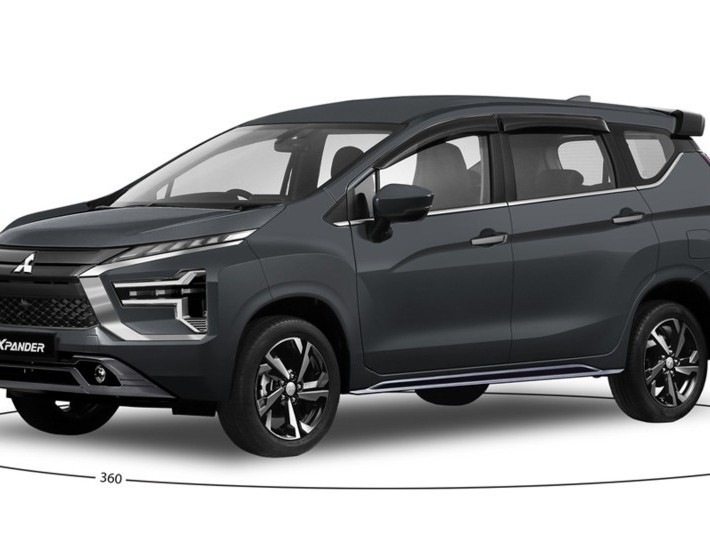
Mitsubishi Xpander On-Road Price: The Complete Pre-Purchase Guide
JamesApr 9, 2025

Mitsubishi Xpander Redesign: 4AT+1.5L Power Dated, Only 2 Safety Airbags!
JohnSep 24, 2024
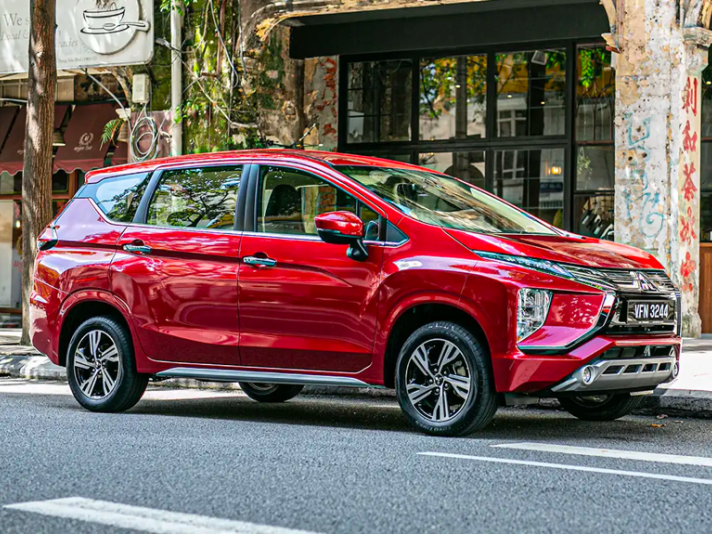
Mitsubishi Xpander: Priced at RM 100,980, a perfect combination of comfort, spaciousness and fashion
LienMay 30, 2024
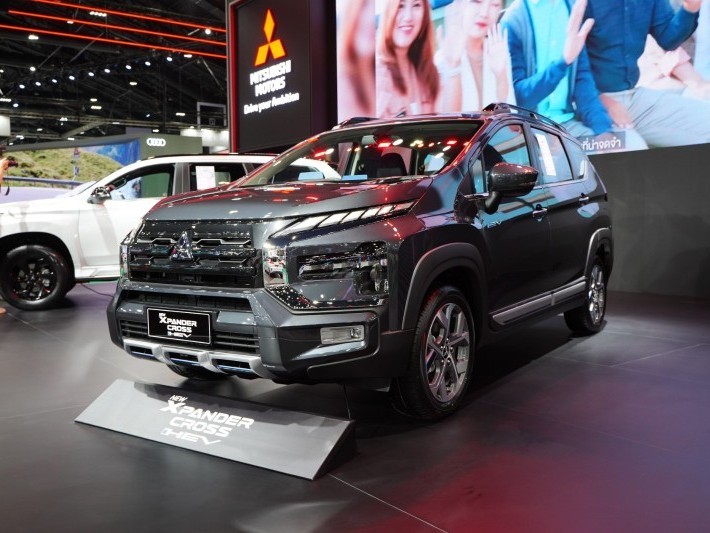
Bangkok Motor Show: MITSUBISHI XPANDER CROSS priced at 946,000 Thai Baht
Kevin WongMar 26, 2024
View More
Pros
Cons