
Q
How much does it cost to refill a hydrogen fuel cell car?
 MoonlightFeb 06, 2026, 04:56 PM
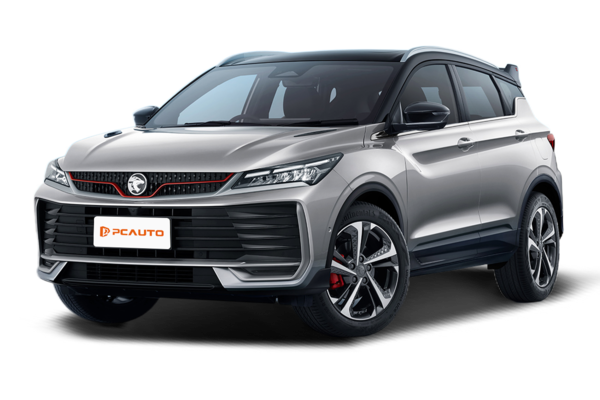
The hydrogen refueling cost for hydrogen fuel cell vehicles is currently approximately 45 to 80 Malaysian Ringgit per kilogram, with the specific price influenced by hydrogen production methods, transportation, and hydrogen refueling station operation costs. Taking the Haima 7X-H as an example, its 70MPa high-pressure hydrogen storage tank can be fully refueled in 3 to 5 minutes, offering a range of 800 kilometers and a hydrogen consumption of 0.87 kilograms per 100 kilometers. Based on the current preferential price of 16 Malaysian Ringgit per kilogram, the cost per kilometer is less than 0.2 Malaysian Ringgit. Compared with pure electric vehicles, hydrogen fuel cell vehicles have advantages in refueling speed and low-temperature performance, but the hydrogen production cost remains relatively high at this stage. For instance, the cost of hydrogen production via water electrolysis is about 30-40 Malaysian Ringgit per kilogram, and after accounting for transportation and hydrogen refueling station allocation costs, the terminal selling price may reach 50-80 Malaysian Ringgit per kilogram. With technological advancements and large-scale production, the stack cost is projected to decrease from the current 2000-3000 Malaysian Ringgit per kilowatt to below 1000 Malaysian Ringgit by 2030, while the hydrogen price is also expected to drop to 30 Malaysian Ringgit per kilogram. By then, the per-kilometer operating cost may approach that of conventional fuel vehicles. Currently, government subsidies play a crucial role in alleviating user costs. For example, some demonstration projects maintain hydrogen refueling prices at 25-35 Malaysian Ringgit per kilogram.
Special Disclaimer: This content is published by users and does not represent the views or position of PCauto.
Popular Models
 Cars
Cars
 Cars
Cars

 Cars
CarsPopular Cars
Model Year
Car Compare
Car Photo
Latest Q&A
Q
Do you put gas in a fuel cell car?
Hydrogen fuel cell vehicles do not require traditional gasoline; instead, they use hydrogen as fuel. Their working principle is to directly convert the chemical energy of hydrogen and oxygen into electrical energy through fuel cells, which drives the electric motor to propel the vehicle. Only water and a small amount of heat are produced during the reaction, achieving zero carbon emissions. Specifically, hydrogen is delivered from the high-pressure hydrogen storage tank to the anode of the fuel cell, where it decomposes into protons and electrons under the action of a catalyst. Protons pass through the exchange membrane to reach the cathode, while electrons form an electric current through the external circuit to drive the motor, and finally combine with oxygen at the cathode to produce water. The advantages of such vehicles include fast hydrogen refueling in 3 to 5 minutes, a driving range of over 600 kilometers, and an energy conversion efficiency of over 60%, which is much higher than that of traditional internal combustion engines. Currently, mass-produced models such as the Toyota Mirai are already available in the local market, but the hydrogen refueling station infrastructure still needs to be improved. It should be noted that hydrogen needs to be replenished in high-pressure or liquid form through dedicated hydrogen refueling stations, and its storage technology involves special equipment such as carbon fiber storage tanks, which is fundamentally different from the refueling method of gasoline vehicles. With the development of the hydrogen energy industry chain, the application of such clean energy vehicles in the commercial vehicle sector is gradually expanding.
 AstralFlightFeb 6, 2026
Q
Do hydrogen cars require oil change?
Hydrogen-powered vehicles do not require oil changes, and their maintenance differs significantly from that of traditional fuel vehicles. Vehicles using hydrogen fuel cell technology have a structure similar to pure electric vehicles, replacing internal combustion engines with electric motors, thus eliminating the need for replacing traditional consumables such as engine oil and spark plugs. The maintenance focus is on the fuel cell system, including regular checks of the sealing integrity of hydrogen storage devices, the performance status of fuel cell stacks, and the safety of high-voltage electrical components. Daily monitoring of pipeline connections, coolant levels, and high-voltage wiring harness conditions is required, with special attention given to the replacement cycle of hydrogen filters (approximately 60,000 kilometers). The unit price of this component ranges from about RM200 to RM2000, but replacement frequency is low. Taking local market models such as SAIC MAXUS MIFA Hydrogen as an example, the total maintenance cost for 60,000 kilometers is approximately RM1500, which is significantly lower than that of fuel vehicles with the same mileage. It is worth noting that hydrogen-powered vehicles must be stored in a ventilated environment, and if parked for extended periods, the fuel cell system should be activated for 30 minutes every two weeks to maintain system activity. Although these special requirements increase operational complexity, the overall maintenance costs remain competitively advantageous.
 CobaltCrushFeb 6, 2026
Q
What is the difference between fuel cell and diesel?
Fuel cells and diesel engines differ significantly in terms of power principle, energy efficiency, and environmental friendliness. Fuel cells generate electricity directly through the chemical reaction between hydrogen and oxygen to drive motors, with an energy conversion efficiency of over 30%, much higher than the 22%-24% of diesel engines. Moreover, they only emit water during operation, achieving zero pollution. Diesel engines, on the other hand, rely on burning diesel to obtain mechanical energy and require complex transmission systems to drive vehicles. Although they offer the advantages of convenient refueling and long driving range, they produce exhaust emissions. Technically, fuel cells employ static energy conversion, resulting in lower noise and vibration, and their short-term overload capacity reaches 200%. However, they face challenges such as high manufacturing costs and insufficient hydrogen refueling infrastructure. Diesel engines benefit from mature technology and an extensive maintenance network, but their efficiency is limited by the Carnot cycle. Currently, fuel cell vehicles like the Toyota Mirai can achieve a 600-kilometer range with just 3 minutes of hydrogen refueling, while diesel vehicles remain dominant in long-distance transportation. The two technologies complement each other in terms of energy structure, application scenarios, and technical maturity.
 FlareBurstFeb 6, 2026
Q
Is a hydrogen fuel cell AC or DC?
Hydrogen fuel cells directly generate direct current (DC) during chemical reactions. Their working principle involves hydrogen ions at the anode combining with oxygen ions at the cathode to form water, while electrons flow through an external circuit to create an electric current. This electrochemical reaction inherently results in DC output. Fuel cell systems are typically equipped with power conversion devices (such as inverters) to convert DC into alternating current (AC) for vehicle motors or other AC loads, but the core power generation process always produces DC output. Currently, the theoretical voltage of a single mainstream proton exchange membrane fuel cell (PEMFC) is 1.23V, with an actual operating voltage ranging from 0.5-1V. Voltage is increased through stacking multiple cells in series, and high-temperature fuel cells such as phosphate and molten carbonate types also operate on the DC generation principle. Notably, some hybrid power systems achieve AC-DC hybrid output through power distribution units, but this technology still relies on secondary conversion based on DC.
 HypnoticGlowFeb 6, 2026
Q
What is the difference between fuel cell and EV?
The core difference between fuel cell vehicles and pure electric vehicles lies in their energy conversion methods and driving principles. Fuel cell vehicles generate electricity in real-time through hydrogen-oxygen chemical reactions, with the electricity powering the motor. Their only emission is water vapor. Their advantages include that hydrogen refueling takes only 3 minutes to replenish energy, and their driving range generally exceeds 400 kilometers, approaching the level of traditional fuel vehicles. However, they are constrained by issues such as high hydrogen production costs and insufficient hydrogen refueling infrastructure. Pure electric vehicles, on the other hand, rely on pre-charged lithium battery packs for energy supply. Their charging time is relatively long (fast charging takes about 30 minutes to reach 80% capacity), and their driving range typically falls between 200 and 500 kilometers. Their advantages include extensive power grid coverage and lower operating costs, but they face challenges in recycling spent batteries. From a technical perspective, fuel cell vehicles demonstrate significant potential in long-range capability and rapid energy replenishment, while pure electric vehicles are more likely to achieve short-term adoption due to advancements in battery technology and cost reductions. Both are zero-emission technologies, but fuel cell vehicles depend more heavily on the maturity of the hydrogen energy supply chain and require a balance between hydrogen storage safety and economic feasibility.
 OmegaStrikeFeb 6, 2026
Latest News

2026 Volkswagen Golf 1.5 eTSI R-Line returns to Malaysia
RobertFeb 6, 2026

Xpeng launches the six-seat SUV GX, with ample trunk space even when fully loaded
Kevin WongFeb 6, 2026

Subaru plans to launch a new Forester in 2026, adding a 1.8L Turbo power version
Kevin WongFeb 6, 2026

Dongfeng Motors' Two Cars Land in Malaysia! 007 and Vigo Debut Together, Focusing on Practicality and Ease of Driving.
LienFeb 6, 2026

MINI launches three new JCW models, introducing the electric JCW for the first time
WilliamFeb 6, 2026
View More