
Q
How much horsepower does the Smart #1 have?
 CupAug 05, 2025, 10:22 AM
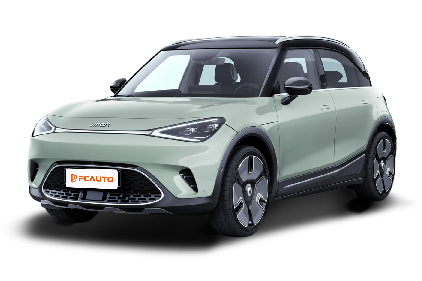
As a pure - electric SUV, the Smart #1 offers two powertrain versions in the Malaysian market. Among them, the high - performance BRABUS version has a maximum power of 428 horsepower, and it can accelerate from 0 - 100km/h in just 3.9 seconds. The regular rear - wheel - drive version has 272 horsepower, which meets the needs of daily driving. This vehicle is built on Geely's SEA vast platform and is equipped with a 66kWh ternary lithium battery pack. It has a WLTP range of up to 440 kilometers and supports 150kW fast charging. It can charge the battery from 10% to 80% in 30 minutes.
For Malaysian consumers, the intelligent features of the Smart #1 are also quite appealing, including a 12.8 - inch central control screen, an intelligent driving assistance system, and exclusive mobile app control functions. It's worth mentioning that electric vehicles in Malaysia enjoy exemptions from import duties and consumption taxes, which makes electric models like the Smart #1 more price - competitive. Meanwhile, the Malaysian government is actively expanding the charging infrastructure, and the usage environment for electric vehicles will be more convenient in the future.
Users with different driving needs can choose the appropriate version according to their own circumstances. The high - performance version is suitable for users who pursue driving pleasure, while the rear - wheel - drive version is more suitable for urban commuting.
Special Disclaimer: This content is published by users and does not represent the views or position of PCauto.
Related Q&A
Q
How big is Smart #1?
The Smart #1 is a compact all-electric SUV with a body measuring 4,270 mm in length, 1,822 mm in width, and 1,636 mm in height, along with a wheelbase of 2,750 mm. This size makes it extremely nimble on the urban roads of Malaysia while also offering a decent amount of interior space. Its design combines style and practicality, making it a great fit for young families or urban commuters. The trunk has a capacity of approximately 411 liters, which can be expanded further when the rear seats are folded down to meet the needs of daily shopping or short trips.
As an electric vehicle, the Smart #1 has been performing outstandingly in the Malaysian market. It offers high charging convenience and has sufficient range for daily use. Coupled with its compact body, it's perfect for navigating through busy cities like Kuala Lumpur. Moreover, its intelligent features and driving assistance systems enhance driving safety and convenience. It's an option that combines environmental friendliness and practicality.
 EepAug 5, 2025
Q
Is Smart #1 electric?
Yes, the Smart #1 is a pure-electric vehicle jointly developed by the Smart brand and Geely Auto. Built on Geely's SEA pure-electric platform, it's specifically designed for urban driving, making it an excellent fit for bustling Malaysian cities like Kuala Lumpur and Penang.
The Smart #1 comes with either a rear-mounted single motor or a dual-motor all-wheel-drive version. It can achieve a range of up to 440 kilometers (WLTP standard) and supports fast charging. It only takes about 30 minutes to charge the battery from 10% to 80%, eliminating the concerns of electric vehicle users about range and charging time.
This car is also equipped with advanced intelligent driving assistance systems such as adaptive cruise control and automatic parking, enhancing driving convenience and safety. For Malaysian consumers, apart from the environmental benefits of electric vehicles, they can also enjoy government incentives like tax breaks. The compact size and nimble handling of the Smart #1 are particularly suitable for the narrow streets and limited parking spaces in Malaysia.
Moreover, as the charging infrastructure in Malaysia continues to improve, the experience of using electric vehicles will be further enhanced. Models like the Smart #1 are expected to become the ideal choice for urban commuting.
 BopAug 5, 2025
Q
How many kWh to charge a Smart #1?
As a pure-electric SUV, the Smart #1 has a battery capacity of 66 kWh (for the NMC ternary lithium battery version). Considering the actual charging efficiency and losses, it usually takes about 70 - 75 kWh of electricity to charge the battery from 0% to 100%. The specific value may vary slightly depending on the charging environment temperature, battery status, and the power of the charging pile. In Malaysia, it takes about 6 - 7 hours to fully charge the vehicle using a common 11 kW AC charging pile. However, if using a 150 kW DC fast charger, it can charge the battery from 10% to 80% in 30 minutes, which is more suitable for long - distance travel needs.
For electric vehicle users, understanding charging efficiency and battery management is equally important. The Smart #1 is equipped with a heat pump air - conditioner and an intelligent temperature control system, which can optimize energy consumption and extend battery life. In Malaysia's hot climate, it is recommended to choose shaded charging or night - time charging to reduce the impact of high temperatures on the battery.
In addition, the Malaysian government is accelerating the expansion of public charging facilities. Users can find charging stations through local operators such as ChargeSini or JomCharge. Reasonably planning trips can further enhance the convenience of using electric vehicles.
 XoeAug 5, 2025
Q
How to reset smart #1?
To reset the smart #1, you can usually do it through the "Restore Factory Settings" option in the vehicle's infotainment system or the dashboard menu. The specific steps may vary depending on the model year and configuration. It is recommended to refer to the owner's manual or contact the authorized smart service center in Malaysia for accurate guidance. As an electric vehicle, the system reset of the smart #1 may involve the initialization of in - vehicle software, driving modes, or charging settings. Make sure the vehicle is parked and the battery is fully charged when performing the operation.
In Malaysia, local dealers provide technical support for smart models. If you encounter complex issues such as the system fault light coming on or abnormal performance, it is advisable to schedule a professional inspection promptly to avoid any improper operations that could affect the vehicle's warranty. Additionally, regularly updating the in - vehicle software can enhance the user experience. After some functions are reset, you may need to log in to your account again or configure your personal preferences. Familiarizing yourself with these operations will allow you to drive this stylish electric car more efficiently.
 VicAug 5, 2025
Q
What is the first service of Smart #1?
It is recommended that the first maintenance of the Smart #1 be carried out when the vehicle has traveled 10,000 kilometers or after 12 months (whichever comes first). This mainly includes basic items such as battery system checks, high - voltage component status inspections, tire and braking system checks, and in - vehicle software updates to ensure the normal operation of the core components of the electric vehicle. For Malaysian car owners, since the tropical climate may accelerate the wear and tear of the battery cooling system, it is advisable to pay extra attention to the coolant status and the efficiency of the air - conditioning system.
The maintenance intervals of electric vehicles are generally longer than those of fuel - powered vehicles, but regular inspections are still crucial. For example, the sealing of high - voltage wiring harnesses needs to be well - protected in high - temperature and high - humidity environments. If you often drive on rainy roads, you can check the chassis waterproof performance in advance, which is different from the maintenance logic of fuel - powered vehicles.
The maintenance of the Smart #1 can be completed through authorized service centers. Malaysian users can also use the APP to book the door - to - door pick - up and delivery service, which saves time. The maintenance cost of electric vehicles is usually lower than that of fuel - powered vehicles because there is no need to change the engine oil or spark plugs. However, monitoring the battery health is the key to long - term vehicle use. It is recommended to conduct a in - depth diagnosis every 20,000 kilometers.
 QuiAug 5, 2025
Q
Does Smart #1 have ventilated seats?
As an electric vehicle targeting young consumers, the Smart #1 indeed offers ventilated seats in the Malaysian market. However, it's important to note that this configuration usually comes with high - end versions or optional packages. It is recommended that consumers confirm the configuration list of specific models with local dealers before purchasing. The ventilated seat function promotes air circulation through built - in fans, which is especially suitable for the hot and humid climate in Malaysia and can effectively enhance the comfort of long - distance driving. Meanwhile, the vehicle is also equipped with a seat heating function, taking into account different usage scenarios. Some versions of electric vehicles in the same class, such as the Tesla Model Y or the BYD Atto 3, also offer similar configurations, but the implementation methods may vary. Some use a suction - type design to reduce noise. As a product of the cooperation between Geely and Mercedes - Benz, the seat system of the Smart #1 inherits the emphasis on ergonomics of European cars. In addition to the ventilation function, it usually also has multi - way electric adjustment and memory functions. These detailed designs are worthy of the attention of Malaysian consumers with sufficient budgets. After all, in a high - temperature environment, seat comfort can significantly affect the driving experience.
 PamAug 5, 2025
Q
What is the real-world range of the Smart #1?
As a pure-electric SUV, the actual range of the Smart #1 varies depending on factors such as driving conditions, road conditions, and climate. Official data shows that its WLTP range is approximately 440 kilometers. However, in actual use in Malaysia, due to the high temperature and frequent use of air conditioning, the range may slightly decrease to around 400 kilometers. This performance is sufficient for daily commuting and urban driving.
The Smart #1 is equipped with an efficient electric drive system and advanced battery management technology, which can optimize energy consumption. It also supports fast charging, allowing a large amount of electricity to be replenished in a short time, making it very suitable for the urban driving environment in Malaysia.
For Malaysian consumers considering electric vehicles, besides the range, they can also focus on the convenience of charging facilities. The charging network in Malaysia is expanding rapidly, and there are more and more charging stations in major cities and along highways, making the use of electric vehicles more convenient.
In addition, the low maintenance cost and environmental - friendly features of electric vehicles are also advantages worth considering. Especially against the backdrop of the Malaysian government's promotion of green travel policies, choosing an electric vehicle can not only save fuel costs but also reduce carbon emissions, being more friendly to the environment.
 OliAug 5, 2025
Q
What plug type is smart #1?
As a pure-electric SUV, the smart #1 uses a Type 2 (Mennekes) charging port in the Malaysian market. This is the mainstream AC charging standard in Europe and Malaysia, which is compatible with most local public charging piles and home wall-mounted chargers. At the same time, it supports the CCS2 (Combined Charging System) DC fast-charging port, which can meet the need for quick recharging. The charging infrastructure in Malaysia is gradually improving, and Type 2 and CCS2 have become the mainstream configurations. Users can easily find suitable charging stations through local charging networks such as MYEV or ChargeSini. For home charging, it is recommended to install a wall-mounted charging box with a power of over 7kW to optimize the charging efficiency. Also, note that the voltage in Malaysia is 240V single-phase electricity, which meets the charging requirements of Type 2. If you need to travel long distances, you can plan in advance to use DC fast-charging stations with a power of over 50kW along the way. Usually, it only takes 30 minutes to charge the vehicle to 80% of its capacity. There may be compatibility differences among charging piles of different brands. It is recommended to use the charging service providers recommended by the original manufacturer to ensure stability.
 NedAug 5, 2025
Q
How big is the boot on the Smart #1?
As a compact all-electric SUV, the Smart #1 comes with a trunk capacity of 411 liters (VDA standard), which is more than enough to meet the needs of daily shopping or short trips. When the rear seats are folded down, the space can be expanded to 986 liters, offering great flexibility and catering to the occasional need of Malaysian users to transport large items. It's worth mentioning that an electric tailgate comes as standard across all models, enhancing the convenience of use.
In the realm of electric vehicles in the same class, the trunk space of the Smart #1 ranks above average. For example, it's more practical than the Volvo EX30, which has a standard capacity of only 318 liters. In Malaysia's hot and rainy climate, the well - organized layout and anti - slip materials in the Smart #1's trunk are also commendable, making it convenient to place wet rain gear or easily rolling items.
Although the battery pack of an electric vehicle usually takes up some under - chassis space, the Smart #1 still maintains good loading capacity through clever design. This is a plus for Malaysian family users who value practicality.
 KipAug 5, 2025
Q
What is the top speed of the Smart #1 premium?
As a stylish all-electric SUV, the Smart #1 Premium can reach a top speed of 180 km/h. Such performance is more than enough to meet the needs of urban commuting and highway driving in Malaysia. Meanwhile, the instant torque output of the electric vehicle makes the acceleration more responsive. In Malaysia's hot climate, the battery thermal management system of the Smart #1 Premium can effectively maintain performance stability, and its WLTP range of about 430 kilometers is also suitable for local users' medium and short-distance trips. For Malaysian consumers considering electric vehicles, apart from paying attention to the top speed parameter, they should also understand the charging facilities. Currently, the charging pile network in major Malaysian cities is expanding rapidly. With the 130kW fast - charging function supported by the Smart #1 Premium, it only takes about 30 minutes to charge the battery from 10% to 80%, greatly improving the convenience of use. This car is also equipped with an intelligent driving assistance system, which can adapt to the complex road conditions in cities like Kuala Lumpur. It is recommended that interested consumers visit the authorized showrooms to experience its intelligent cockpit and actual driving performance.
 IvyAug 5, 2025
Popular Cars
Model Year
Car Compare
Car Photo
Related Models
 Cars
CarsLatest Q&A
Q
Is AMT similar to automatic?
There are significant differences between AMT transmissions and automatic transmissions (AT) in terms of core structure and driving experience. AMT is essentially an electronically automated version of a manual transmission, simulating manual clutch operation and gear shifting through a computerized control system while retaining the gear set structure of manual transmissions. As a result, it offers higher transmission efficiency, with fuel consumption approximately 8%-12% lower than AT, making it particularly suitable for highway or long-distance driving. However, it may exhibit jerking similar to manual transmissions during low-speed gear shifts, especially noticeable in congested traffic conditions.
AT transmissions rely on torque converters for power transfer, delivering smooth and seamless gear shifts that appeal to comfort-oriented users. However, their complex structure (incorporating planetary gear sets, hydraulic systems, etc.) results in higher maintenance costs. A single service may cost between 800 to 1,500 ringgit, whereas AMT only requires gear oil replacement at approximately 400 ringgit.
From a market perspective, AMT is predominantly used in budget vehicles or commercial models priced below 80,000 ringgit, while AT is typically featured in mid-to-high-end vehicles. Consumers should select based on actual needs: AMT suits those prioritizing fuel efficiency and low maintenance costs, while AT better serves those valuing comfort. Notably, recent advancements in AMT electronic control technology have significantly mitigated jerking issues, though test drives should still emphasize low-speed performance evaluation.
 AriaMar 26, 2026
Q
Which is better, DCT or AT?
DCT (Dual-Clutch Transmission) and AT (Automatic Transmission) each have their own advantages and disadvantages, and the choice should be based on personal driving needs. AT transmissions transfer power through a torque converter, offering excellent shift smoothness, making them suitable for urban commuting or novice drivers. However, they tend to have higher fuel consumption, and vehicles equipped with them are usually more expensive. DCT transmissions utilize a dual-clutch structure, featuring fast shift speeds and high power transmission efficiency, which provides a more direct driving experience—particularly suitable for users seeking a sporty feel. However, they may exhibit jerking at low speeds and have relatively high maintenance costs. If durability and comfort are priorities, AT is the more reliable choice; if power responsiveness and driving pleasure are preferred, wet DCT (such as Volkswagen DSG) performs better, though dry DCT models should be avoided in prolonged stop-and-go traffic conditions. Additionally, CVT transmissions excel in smoothness and fuel efficiency, making them ideal for daily commuting, but they lack driving excitement. It is recommended to test-drive before purchasing, as tuning varies significantly across brands, and real-world experience is more important than theoretical specifications.
 FlutteringMar 26, 2026
Q
Is Amt good or bad?
AMT gearboxes have a significant cost advantage in the local market, typically being around 5,000 Ringgit cheaper than models equipped with conventional automatic transmissions. Their fuel efficiency is comparable to manual transmissions, resulting in long-term fuel savings. Featuring a straightforward design, they achieve transmission efficiency exceeding 90% with relatively low maintenance costs, making them ideal for practicality-oriented consumers. However, their shifting logic contains inherent limitations: gear changes between 1st and 2nd cause 0.3-0.5 second power interruptions, while unintended upshifts on inclines may reduce engine speed by 15%-20%, compromising driving smoothness. For urban commuters or budget-conscious buyers, AMT offers excellent value, though those prioritizing premium driving dynamics should consider alternative transmission types. Some domestic models like the Perodua Axia employ enhanced AMT systems, where optimized shift programming has reduced gearshift shock by approximately 30%.
 RainbowsMar 26, 2026
Q
Which gives better mileage, CVT or AMT?
From the perspective of fuel economy, CVT transmissions generally perform better under urban driving conditions. Their continuously variable design allows the engine to consistently operate within the optimal speed range, significantly reducing fuel consumption during frequent starts and stops. Test data shows that their fuel consumption in urban driving conditions is 10% to 15% lower than that of comparable models. AMT transmissions, on the other hand, inherit the high transmission efficiency of manual transmissions, delivering fuel efficiency close to manual transmissions during high-speed cruising. This makes them particularly suitable for long-distance driving in large-displacement vehicles. However, due to power interruption during gear shifts, their overall fuel consumption may be 5% to 8% higher than CVTs.
The difference in fuel-saving characteristics between the two transmissions stems from their technical principles: CVTs achieve continuous variability through steel belts and pulleys, eliminating the fixed gear ratio limitations of traditional transmissions; AMTs simulate manual gear changes via electronic control systems while maintaining the mechanical efficiency of gear transmission. Notably, actual fuel consumption is also influenced by driving habits. Smooth acceleration and anticipatory deceleration can maximize the transmissions' fuel-saving potential. If the vehicle budget permits and urban commuting is the primary use, CVTs offer a more economical choice. For frequent highway driving with an emphasis on cost-effectiveness, AMTs are equally worth considering.
 RubyBlazeMar 26, 2026
Q
Which is cheaper, AMT or CVT?
In terms of gearbox cost, AMT is usually more economical than CVT. Essentially, AMT is a manual transmission equipped with an electronic control unit, featuring a simple structure and low maintenance costs. The unit price ranges from approximately 5,000 to 8,000 ringgit, making it suitable for budget-conscious consumers or those who prioritize long-term operating costs. CVT incurs higher manufacturing costs due to its precision steel belt transmission system and continuous variable transmission technology, with a unit price of about 7,000 to 10,000 ringgit. However, it delivers a smoother driving experience and superior fuel efficiency. The primary differences between the two lie in technical complexity: AMT retains the gear-shifting mechanism, resulting in noticeable shift shock; CVT achieves linear power output through stepless speed variation but requires periodic belt inspection and incurs higher maintenance expenses. For those prioritizing initial cost and basic transportation needs, AMT offers better value; if comfort and long-term fuel economy are priorities, CVT represents a more worthwhile investment. Note that actual prices may vary based on vehicle model, brand, and local supply chain factors.
 ShadowProwlMar 26, 2026
Related News

Smart launches the first sedan in the brand's history, Smart #6, with exterior dimensions close to Camry
WilliamDec 10, 2025

Why has Smart become bigger and bigger?
LienNov 14, 2025

Smart launches its first PHEV in China, with a pure electric range of 252km and a combined range of 1615km
RobertSep 30, 2025

Smart #5 is coming soon: MINI remains MINI, but Smart is getting bigger and bigger
RobertSep 3, 2025
Smart #5 is expected to go on sale on October 27, with a range of over 700km, and may be introduced!
Kevin WongOct 22, 2024
View More
Pros
Cons