
Q
How much is the new Audi 2025?
 ExplorerOct 20, 2025, 12:25 PM
The official pricing details for the 2025 Audi models in Malaysia haven't been officially announced yet. But based on Audi's current pricing strategy in the Malaysian market and global model update trends, we can expect the entry-level models like the A3 or A4 to start somewhere between RM250,000 to RM350,000. For the higher-end models such as the Q7 or e-tron series, you're probably looking at prices exceeding RM500,000.
Audi models in Malaysia are typically sold either as CBU (Completely Built-Up) imports or CKD (Locally Assembled) units. Their prices are influenced by factors like import duties, optional configurations, and currency exchange rate fluctuations. If you're keen, it's best to keep an eye on Audi Malaysia's official website or check with authorized dealers for the latest and most accurate pricing and any ongoing promotions.
What's more, the 2025 Audi lineup is likely to bring in more electrified models and smart driving technologies. Think things like an upgraded MMI infotainment system or more efficient plug-in hybrid powertrains. These new tech features should definitely give Malaysian consumers even more great options to choose from.
If you're in the market for a luxury car, it's also worth cross-shopping with competitors like BMW and Mercedes-Benz in the same segment. Just keep in mind that different brands might offer varying configurations and after-sales service policies. And of course, nothing beats a test drive to really get a feel for how the car handles on the road.
Special Disclaimer: This content is published by users and does not represent the views or position of PCauto.
Related Q&A
Q
What engine is in the 2025 Q7?
The 2025 Audi Q7 is expected to hit the Malaysian market with a range of powertrain options to cater to different buyer preferences. This includes the efficient 2.0-liter four-cylinder turbo and the punchy 3.0-liter V6 turbo, both paired with a 48V mild-hybrid system to boost fuel efficiency and smooth out the drive. There's also talk of a plug-in hybrid variant joining the lineup, offering that perfect blend of performance and eco-friendliness we're all after these days.
For Malaysian customers, picking the right Q7 means thinking about our local road conditions and fuel quality. The good news is Audi has tweaked their engine tech to handle our tropical heat and high humidity like a champ, and maintenance costs are pretty reasonable too.
It's worth noting that as the global auto industry shifts towards electrification, Audi's been busy expanding their new energy offerings. The hybrid Q7 isn't just about cutting emissions; it can handle short trips purely on electric power, which is super handy for Malaysian city driving. If you're craving more performance, the 3.0T V6 delivers that extra kick, while the 2.0T is the go-to for those who prioritize fuel economy.
 StormChaserOct 20, 2025
Q
Is the Audi Q7 2025 safe?
The 2025 Audi Q7, as a luxury SUV, maintains the brand's usual high standards when it comes to safety. It's expected to come loaded with a bunch of advanced active and passive safety tech – think adaptive cruise control, lane-keeping assist, automatic emergency braking, that sort of stuff. On top of that, the body structure will likely use high-strength materials to boost crash protection. All these features should do a solid job of keeping you safe on Malaysia's sometimes tricky roads.
For Malaysian buyers, besides checking out the car's inherent safety features, it's also smart to keep in mind how the local climate affects maintenance. With all that rain, for example, your brake system or electrical components could get damp, so regular check-ups and servicing are a must.
It's worth noting that Malaysia's NCAP safety rating system is aligned with global standards, so consumers can use those test results as a good reference for evaluating a car's safety. And let's not forget, Audi Q7 models over the years have consistently scored well in global NCAP tests – that's a pretty strong vote of confidence for the 2025 version's safety credentials too.
 JoyfulHeartOct 20, 2025
Q
What engine is in the Audi Q7 2025?
The 2025 Audi Q7 is expected to continue offering a range of efficient powertrain options in the Malaysian market. These likely include the 2.0-liter TFSI four-cylinder turbo (around 245hp) and the 3.0-liter TFSI V6 turbo (approximately 340hp). There's also a good chance the plug-in hybrid variant (like the 55 TFSI e, boasting a combined 367hp) will stick around. All should come mated to the smooth-shifting 8-speed Tiptronic gearbox and Audi's legendary quattro all-wheel-drive system.
Now, Audi's been pushing hard on electrification lately, so the 2025 Q7 might see some tweaks to its hybrid setup. We could be looking at an improvement in pure electric range over the current model's roughly 40km, or maybe the addition of 48V mild-hybrid tech to boost fuel efficiency.
For Malaysian owners, it's worth remembering that our tropical climate can be tough on battery cooling systems, so regular checks are a good idea. On the plus side, the Q7's longitudinal engine layout and adaptive air suspension should handle our diverse local road conditions pretty capably.
If you're craving more performance, keep an eye out for the SQ7. Rumors suggest it might pack a 4.0-liter V8 diesel (though confirmation of its Malaysian arrival is still pending). If it does land, just be mindful of how local diesel quality can affect the DPF system.
 HappySnailOct 20, 2025
Q
What are the upcoming Audi cars 2025?
Audi's gearing up to drop a bunch of new metal in Malaysia come 2025, spanning both electric and good old internal combustion. The one everyone's buzzing about? The all-new Audi A5 Sportback. Expect this bad boy to dial up the sporty vibes with fresh design language and likely pack an upgraded mild-hybrid powertrain under the hood. Then there's the highly anticipated Audi Q6 e-tron, a fully electric SUV built on the PPE platform. Word on the street is it'll dish out over 600 km of range and support blistering 270kW fast charging – that's some serious juice.
But wait, there's more for the speed demons. The Audi RS lineup is also set for updates, with revised RS3 and RS5 models in the pipeline. No matter which new model you're eyeing, you can bet they'll all come loaded with Audi's latest digital cockpit tech and driver assistance systems, keeping you connected and confident behind the wheel.
Here's the good news for Malaysian buyers: Audi's been steadily expanding its locally assembled (CKD) model range in recent years. That means some of these 2025 newcomers could roll off local production lines, potentially translating to more competitive price tags. On top of that, Audi Malaysia's continuing to beef up the charging network, aiming to make life easier than ever for EV owners.
If you're itching to get the lowdown on specs and prices specific to Malaysia, your best bet is to keep a close eye on Audi's official channels for the latest announcements. Trust me, you won't want to miss these.
 HappyShrimpOct 20, 2025
Q
Which team is Audi replacing in 2025?
From what we've gathered through official channels so far, Audi is set to make its official factory team debut in Formula 1 in 2026, not 2025. When that happens, Audi will take over the operational reins at Sauber. Right now, Sauber races under the Alfa Romeo banner, but their partnership is slated to wrap up at the end of 2025. That clears the way for Audi to step in as Sauber's new title sponsor and technical partner starting in 2026.
For Malaysian fans, this is pretty exciting news. Audi's arrival should crank up the competition in F1 and bring some fresh technical ideas to the table. Their know-how in electrification, in particular, could really shape the future direction of the sport. F1 has been pushing hard with sustainable fuels and hybrid tech these past few years, and as a premium brand under the Volkswagen Group umbrella, Audi's experience in electrification might just give Sauber a serious competitive edge.
And let's not forget, Malaysia has hosted F1 races before. Even though there's no Grand Prix there at the moment, the local fanbase's passion for F1 is still going strong. Audi entering the fray could very well rekindle even more interest in the sport among Malaysian fans.
 NatureBeautyOct 20, 2025
Q
How much is insurance for Audi Q7 2025?
When it comes to insurance costs for the 2025 Audi Q7 in Malaysia, the exact figure can vary quite a bit. It all depends on factors like the car's price, engine displacement, the type of coverage you go for—comprehensive or third-party only—the owner's age, driving history, and each insurance company's specific policies. As a general ballpark, comprehensive insurance tends to run around 1% to 3% of the vehicle's annual value. So, if we're looking at an estimated Q7 price tag of RM600,000 to RM800,000, you're probably looking at annual premiums in the range of RM6,000 to RM24,000.
Malaysia's car insurance market operates on a No Claim Discount (NCD) system, which is good news for safe drivers—you can score discounts of up to 55% if you keep that record clean. My advice? Always shop around and get quotes from multiple insurers, and maybe even chat with an insurance broker to nail down a more precise estimate tailored to your situation.
Also, with luxury cars like the Q7, insurance policies often come with extra perks or clauses—think things like coverage for original manufacturer parts or roadside assistance services. It’s crucial to really dig into the fine print when you’re comparing policies to make sure they cover exactly what you need.
And remember, Bank Negara Malaysia mandates that all vehicles on the road must have at least third-party liability insurance. Comprehensive coverage, on the other hand, gives you broader protection—covering things like accidental damage to your own car, theft, and even natural disasters. Ultimately, it’s about balancing your budget with your typical driving conditions and peace of mind.
 CloverPatchOct 20, 2025
Q
What trim levels are available for Audi Q7 2025?
The 2025 Audi Q7 is expected to hit the Malaysian market with three main trim levels: Base, S-Line, and Black Edition, each catering to different buyer preferences. The Base trim, as the entry point, comes loaded with practical features like standard LED headlights, a 12.3-inch digital instrument cluster, a 10.1-inch central touchscreen, and tri-zone automatic climate control. Stepping up to the S-Line trim, things get sportier with the addition of the S-Line exterior package, sport seats, 20-inch alloy wheels, and aluminum interior accents, which collectively up the luxury ante. Topping the range, the Black Edition makes a bold statement with its all-black exterior treatment, 21-inch wheels, Bang & Olufsen sound system, and panoramic sunroof – perfect for those who crave individuality and a bit more punch.
Under the hood, Malaysian buyers will likely have the choice of two petrol engines: a 2.0T four-cylinder and a 3.0T V6, both paired with an 8-speed Tiptronic transmission and Audi's legendary quattro all-wheel-drive system. It's worth noting that the Audi Q7 has long been a favorite among local high-end families and business professionals in Malaysia, thanks to its positioning as a premium German SUV. Its spacious seven-seat layout and advanced driver assistance systems, such as adaptive cruise control and lane-keeping assist, make it particularly well-suited for those long drives across Malaysia. Before making a decision, we strongly recommend heading to your authorized Audi dealer for a test drive to get a real feel for how each trim performs on the road.
 RayOct 20, 2025
Q
Is the 2025 Audi Q7 a mild hybrid?
Yep, the 2025 Audi Q7 does come with mild hybrid (Mild Hybrid) tech on some trims. It's all about that 48V setup, which chips in with a little extra oomph when you're accelerating and soaks up energy when you're decelerating or coasting. That's a real plus for Malaysia's stop-start city traffic, helping to boost fuel economy. Paired with the 3.0-liter TFSI turbo engine, this mild hybrid system not only sharpens up the power delivery but also cuts down on emissions – keeping things in line with the global push for greener motoring.
For Malaysian buyers, the upside here is better fuel efficiency and a smoother drive. And the good news? Maintenance costs should be on par with a regular gas-powered Q7, so you won't have to stress about things like battery replacements down the line.
On top of that, the Q7 keeps rolling with the luxury SUV tech we know and love – think virtual cockpit and that quattro all-wheel drive system – so it's got both the performance cred and the everyday practicality. If you're in the market for a premium SUV, the 2025 Q7's mild hybrid variants are definitely worth a look. But hey, as always, it pays to compare with other powertrain options, like plug-in hybrids or pure petrol models, to make sure you're getting the setup that best fits Malaysia's roads and your own driving style.
 SunshineDayHappyOct 20, 2025
Q
Does the 2025 Audi Q7 have ambient lighting?
The 2025 Audi Q7 does come equipped with ambient lighting, and this feature is either standard or available as an option in the Malaysian market, depending on the specific trim level. Typically, you're looking at multiple color choices and brightness adjustments, all customizable through the central infotainment screen or the MMI system. It's a nice touch that adds a personalized, premium feel to the cabin. For Malaysian buyers, these kinds of luxury amenities aren't just about sprucing things up – they enhance nighttime driving comfort and align with the desire for a refined in-car atmosphere, especially relevant in a tropical setting. Ambient lighting has become a key selling point in luxury SUVs these days, with rivals like the BMW X5 and Mercedes-Benz GLE offering similar setups. What sets the Q7 apart, though, is how its lighting can sync with driving modes – think a sporty red hue when you flip to Dynamic mode, for example. Plus, the light strips run across the dashboard and door panels, creating a nice wraparound visual effect. It's worth noting that the actual lighting impact might vary slightly depending on your choice of seat materials, like Valcona leather, or interior wood trims. If you're considering one, I'd definitely recommend heading to your local authorized Audi showroom in Malaysia to experience it firsthand in the flesh.
 BuddyTimeTogetherOct 20, 2025
Q
What should I pay for a 2025 Audi Q7?
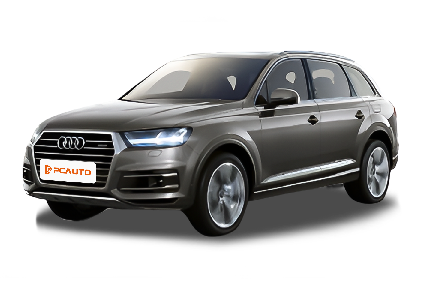
The 2025 Audi Q7 starts at RM 459,990. This marks Audi's first SUV to be locally assembled in Southeast Asia, and it comes standard with the S Line exterior and interior packages across the range. Think black styling accents, 22-inch Audi Sport 5-spoke star alloy wheels, a roof spoiler, dark gray Audi badges, HD Matrix LED headlights, and OLED taillights – all part of the deal. Under the hood, you'll find a 3.0-liter V6 TFSI turbocharged petrol engine, paired with a 48V mild hybrid system, 8-speed automatic transmission, and quattro all-wheel drive. That translates to 340 horsepower and 500 Nm of torque, rocketing it from 0-100 km/h in just 5.6 seconds and on to a top speed of 250 km/h. And for the driving dynamics? Adaptive air suspension (which smartly adjusts ride height based on road conditions) and all-wheel steering (boosting cornering agility and high-speed stability) are also in the mix.
 WittyOct 20, 2025
Popular Cars
Model Year
Car Compare
Car Photo
Related Models
 Cars
CarsLatest Q&A
Q
Is AMT similar to automatic?
There are significant differences between AMT transmissions and automatic transmissions (AT) in terms of core structure and driving experience. AMT is essentially an electronically automated version of a manual transmission, simulating manual clutch operation and gear shifting through a computerized control system while retaining the gear set structure of manual transmissions. As a result, it offers higher transmission efficiency, with fuel consumption approximately 8%-12% lower than AT, making it particularly suitable for highway or long-distance driving. However, it may exhibit jerking similar to manual transmissions during low-speed gear shifts, especially noticeable in congested traffic conditions.
AT transmissions rely on torque converters for power transfer, delivering smooth and seamless gear shifts that appeal to comfort-oriented users. However, their complex structure (incorporating planetary gear sets, hydraulic systems, etc.) results in higher maintenance costs. A single service may cost between 800 to 1,500 ringgit, whereas AMT only requires gear oil replacement at approximately 400 ringgit.
From a market perspective, AMT is predominantly used in budget vehicles or commercial models priced below 80,000 ringgit, while AT is typically featured in mid-to-high-end vehicles. Consumers should select based on actual needs: AMT suits those prioritizing fuel efficiency and low maintenance costs, while AT better serves those valuing comfort. Notably, recent advancements in AMT electronic control technology have significantly mitigated jerking issues, though test drives should still emphasize low-speed performance evaluation.
 AriaMar 26, 2026
Q
Which is better, DCT or AT?
DCT (Dual-Clutch Transmission) and AT (Automatic Transmission) each have their own advantages and disadvantages, and the choice should be based on personal driving needs. AT transmissions transfer power through a torque converter, offering excellent shift smoothness, making them suitable for urban commuting or novice drivers. However, they tend to have higher fuel consumption, and vehicles equipped with them are usually more expensive. DCT transmissions utilize a dual-clutch structure, featuring fast shift speeds and high power transmission efficiency, which provides a more direct driving experience—particularly suitable for users seeking a sporty feel. However, they may exhibit jerking at low speeds and have relatively high maintenance costs. If durability and comfort are priorities, AT is the more reliable choice; if power responsiveness and driving pleasure are preferred, wet DCT (such as Volkswagen DSG) performs better, though dry DCT models should be avoided in prolonged stop-and-go traffic conditions. Additionally, CVT transmissions excel in smoothness and fuel efficiency, making them ideal for daily commuting, but they lack driving excitement. It is recommended to test-drive before purchasing, as tuning varies significantly across brands, and real-world experience is more important than theoretical specifications.
 FlutteringMar 26, 2026
Q
Is Amt good or bad?
AMT gearboxes have a significant cost advantage in the local market, typically being around 5,000 Ringgit cheaper than models equipped with conventional automatic transmissions. Their fuel efficiency is comparable to manual transmissions, resulting in long-term fuel savings. Featuring a straightforward design, they achieve transmission efficiency exceeding 90% with relatively low maintenance costs, making them ideal for practicality-oriented consumers. However, their shifting logic contains inherent limitations: gear changes between 1st and 2nd cause 0.3-0.5 second power interruptions, while unintended upshifts on inclines may reduce engine speed by 15%-20%, compromising driving smoothness. For urban commuters or budget-conscious buyers, AMT offers excellent value, though those prioritizing premium driving dynamics should consider alternative transmission types. Some domestic models like the Perodua Axia employ enhanced AMT systems, where optimized shift programming has reduced gearshift shock by approximately 30%.
 RainbowsMar 26, 2026
Q
Which gives better mileage, CVT or AMT?
From the perspective of fuel economy, CVT transmissions generally perform better under urban driving conditions. Their continuously variable design allows the engine to consistently operate within the optimal speed range, significantly reducing fuel consumption during frequent starts and stops. Test data shows that their fuel consumption in urban driving conditions is 10% to 15% lower than that of comparable models. AMT transmissions, on the other hand, inherit the high transmission efficiency of manual transmissions, delivering fuel efficiency close to manual transmissions during high-speed cruising. This makes them particularly suitable for long-distance driving in large-displacement vehicles. However, due to power interruption during gear shifts, their overall fuel consumption may be 5% to 8% higher than CVTs.
The difference in fuel-saving characteristics between the two transmissions stems from their technical principles: CVTs achieve continuous variability through steel belts and pulleys, eliminating the fixed gear ratio limitations of traditional transmissions; AMTs simulate manual gear changes via electronic control systems while maintaining the mechanical efficiency of gear transmission. Notably, actual fuel consumption is also influenced by driving habits. Smooth acceleration and anticipatory deceleration can maximize the transmissions' fuel-saving potential. If the vehicle budget permits and urban commuting is the primary use, CVTs offer a more economical choice. For frequent highway driving with an emphasis on cost-effectiveness, AMTs are equally worth considering.
 RubyBlazeMar 26, 2026
Q
Which is cheaper, AMT or CVT?
In terms of gearbox cost, AMT is usually more economical than CVT. Essentially, AMT is a manual transmission equipped with an electronic control unit, featuring a simple structure and low maintenance costs. The unit price ranges from approximately 5,000 to 8,000 ringgit, making it suitable for budget-conscious consumers or those who prioritize long-term operating costs. CVT incurs higher manufacturing costs due to its precision steel belt transmission system and continuous variable transmission technology, with a unit price of about 7,000 to 10,000 ringgit. However, it delivers a smoother driving experience and superior fuel efficiency. The primary differences between the two lie in technical complexity: AMT retains the gear-shifting mechanism, resulting in noticeable shift shock; CVT achieves linear power output through stepless speed variation but requires periodic belt inspection and incurs higher maintenance expenses. For those prioritizing initial cost and basic transportation needs, AMT offers better value; if comfort and long-term fuel economy are priorities, CVT represents a more worthwhile investment. Note that actual prices may vary based on vehicle model, brand, and local supply chain factors.
 ShadowProwlMar 26, 2026
Related News

Audi A8 discontinued, successor to be released in the next decade
RobertMar 19, 2026

Audi's version of the "G-Wagen" is coming? Developing a rugged 4x4 with the help of the Scout platform
JamesMar 10, 2026

Audi RS6 sedan version may return to compete fully with the BMW M5
WilliamNov 21, 2025

Audi TT Moment 2.0 Debuts This September on Porsche EV Platform
MichaelAug 1, 2025
Beyond Expectations: All-New Audi Q3 Coming June 16
RobertJun 13, 2025
View More
Pros
Cons