
Q
What's the price of XPENG G6?
 JopOct 17, 2025, 05:19 PM
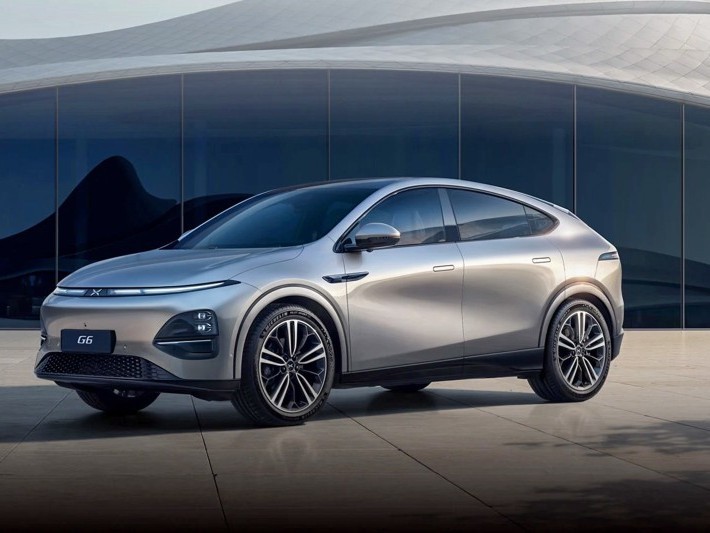
The XPeng G6 is a midsize smart electric SUV from Chinese EV maker XPeng. While official pricing for Malaysia hasn't been announced yet, looking at other markets, we're expecting it to land somewhere between RM180k to RM250k locally. Of course, the final sticker price will vary based on trim levels, import duties, and local dealer policies.
Under the skin, this SUV packs XPeng's advanced XPILOT driver-assist system. Range-wise, it's rated to go over 700 km on the CLTC cycle, and with its 800V high-voltage fast-charging tech, you can add roughly 300 km of range in just 10 minutes – perfect for those longer drives around Malaysia.
For Malaysian buyers, charging infrastructure is still a key consideration. The good news is that charging networks in major cities like KL and Penang are expanding rapidly. XPeng might also team up with local partners to build charging stations, which would definitely boost the ownership experience.
On the policy front, the Malaysian government offers incentives like import tax exemptions and road tax discounts for EVs. Before you sign on the dotted line, though, it's always a good idea to check with authorized dealers for the latest subsidy details.
Special Disclaimer: This content is published by users and does not represent the views or position of PCauto.
Related Q&A
Q
What Segment is Xpeng G6?
The Xpeng G6 belongs to the D-segment cars. Generally speaking, D-segment cars usually refer to large luxury sedans or models with larger sizes, rich configurations, and a more high-end positioning. In terms of wheelbase, the Xpeng G6 has a wheelbase of up to 2,890 mm, showing excellent performance in space. It can provide a spacious seating space for the passengers in the car, especially ensuring a good legroom for the rear passengers.
In terms of configuration, it is equipped with many high - end comfort features and advanced intelligent technologies. For example, the front seats have ventilation, heating, and massage functions. The center console is equipped with a wireless charging pad and extra storage space, and the air - conditioning vents are simply designed. It also comes with the AI Turing intelligent driving system, offering advanced autonomous driving capabilities. Overall, with its large size and rich and high - end configurations, the Xpeng G6 meets the characteristics of a D - segment car.
 KindheartedJul 22, 2025
Q
What is the PCD Size of Xpeng G6?
The PCD (Pitch Circle Diameter) of the XPeng G6 is 5x114.3mm. This means the diameter of the circle formed by the 5 bolt holes on the wheel hub is 114.3mm, which is also a common specification among many mainstream vehicle models, including Japanese and some European cars. For Malaysian car owners, it's very important to know the PCD size. When replacing the wheels or upgrading the braking system, you need to make sure that the new parts match the original vehicle's data. Otherwise, it may lead to unstable installation or potential safety hazards while driving.
In addition, PCD is just one of the wheel hub parameters. Other factors such as the center bore diameter (CB), offset (ET), and wheel width also need to be considered. If you're planning to replace the wheels of your XPeng G6, it is recommended that you choose products from regular manufacturers and consult professional technicians to ensure they meet the original factory standards and the requirements of local road conditions, while also maintaining the vehicle's performance and aesthetics.
 CherryBlossomJul 22, 2025
Q
Does Xpeng G6 Have Apple Carplay?
Currently, some models of the XPENG G6 in the Chinese market support the Apple CarPlay function. However, whether it is available in the Malaysian market depends on the local official configuration, as there may be differences in vehicle configurations across different regions. As an intelligent in - vehicle system developed by Apple, Apple CarPlay can seamlessly connect to iPhones to enable functions such as navigation, music playback, and calls, enhancing driving convenience. If the Malaysian version doesn't come pre - installed with this function, users can still use basic multimedia services by connecting their phones via Bluetooth or USB.
It's worth noting that smart electric vehicles like the XPENG G6 are usually equipped with a native in - vehicle system, such as Xmart OS. With high integration and voice control support, it may reduce the reliance on CarPlay. It is recommended that Malaysian consumers confirm the configuration list through XPENG's local official website or authorized dealers. They can also compare the intelligent connectivity solutions of other EVs in the same class, such as the localized in - vehicle functions of the BYD Atto 3 or the Tesla Model Y, and choose the most suitable model according to their usage habits.
 ClimberPeakJul 22, 2025
Q
What is the Tyre Brand of Xpeng G6?
The original tire brands of the XPENG G6 may vary depending on different markets and configurations. However, it is commonly equipped with internationally renowned brands such as Michelin or Goodyear. These brands are well - known for their high performance, quietness, and comfort, which meet the requirements of electric vehicles for low rolling resistance and durability.
For users in Malaysia, where the local climate is hot and rainy, it is necessary to pay attention to wet - grip and high - temperature resistance when choosing tires. Tires like Michelin's Pilot Sport series or Goodyear's Eagle F1 Asymmetric series can meet these needs. Meanwhile, it is recommended to regularly check tire pressure and tread depth to ensure driving safety.
In addition, due to the large instantaneous torque of electric vehicles, tire wear may be faster than that of fuel - powered vehicles. Therefore, choosing tires specifically designed for electric vehicles (such as those with the "EV" logo) can better balance range and performance. If you need to replace tires, you can consult the local authorized service center or a professional tire shop for suitable suggestions.
 ExplorerPathJul 22, 2025
Q
Is Xpeng G6 a Good Car? Learn the Pros and Cons Here
The XPENG G6 is a new - energy SUV that has performed well in the Chinese market. Its advantages include an advanced intelligent driving assistance system, an efficient electric powertrain, and a relatively spacious interior. In particular, its 800V high - voltage fast - charging technology can significantly reduce charging time. For Malaysian users, if the local charging infrastructure is well - developed, this will be a practical highlight.
In addition, the G6's design is more youthful, and its interior has a strong sense of technology. The standard Xmart OS infotainment system supports a wide range of voice control and OTA upgrade functions.
However, its drawbacks may lie in the relatively low brand awareness in Malaysia. The after - sales service network may not be as comprehensive as that of traditional brands, and local consumers may have doubts about the resale value of electric vehicles.
For Malaysian users, when considering an electric vehicle, it is recommended that in addition to the vehicle itself, they also need to evaluate the local charging convenience, warranty policy, and the acceptance of the second - hand market. At the same time, compare it with other models in the same price range, such as the Tesla Model Y or the BYD Atto 3, and make a choice based on their own needs.
 FunnyJokeJul 22, 2025
Q
What is the Width of Xpeng G6?
The body width of the Xpeng G6 is 1,920 millimeters, which is relatively wide among mid - sized pure - electric SUVs. It can provide more spacious lateral space for passengers inside the vehicle, especially meeting the comfort needs of Malaysian family users. This car features a streamlined design. The wide - body structure not only enhances the visual sense of sportiness but also contributes to stability during high - speed driving. Among vehicles in the same class, models with similar widths include the Tesla Model Y (1,921 millimeters) and the BYD Song PLUS EV (1,890 millimeters), indicating that the G6 is competitive in terms of space layout.
It's worth noting that the relatively wide body may require drivers to be more cautious when driving on the narrow roads in the old urban areas of Malaysia or in multi - level car parks. However, the standard 360 - degree panoramic imaging system can effectively assist with passing through such areas. This size data is sourced from Xpeng's official specification sheet and complies with the internationally recognized SAE J1100 vehicle measurement standard.
For Malaysian consumers, when purchasing new energy vehicles, apart from the width parameter, they can also pay attention to localized configurations such as charging compatibility (for example, the G6 supports Type 2 and CCS2 interfaces). These details often have a greater impact on the actual usage experience than a single size data.
 DiverzzJul 22, 2025
Q
What is the Road Tax Price of Xpeng G6? How to Calculate?
Regarding the Road Tax price of the Xpeng G6 in Malaysia, the model has not been officially launched in Malaysia yet. Therefore, the specific road tax cost still needs to wait for the official announcement from the Malaysian Road Transport Department (JPJ). In Malaysia, the way of calculating the road tax for electric vehicles (EVs) is different from that for traditional fuel - powered vehicles. EVs usually enjoy certain preferential policies. For example, the road tax is calculated based on the motor power (kW) instead of the engine displacement, and the tax rate is lower. This is a measure taken by the government to promote the use of EVs.
Generally speaking, the formula for calculating the road tax of an EV is: the basic rate (such as RM20) plus the rate per kilowatt (ranging from RM0.40 to RM0.90, for example). The specific rates need to refer to the latest regulations of JPJ. Taking the motor power of the Xpeng G6 (assuming it is around 200kW) as an example, the estimated annual road tax might be between RM100 and RM200, but the final amount should be based on the official data.
For readers who want to know more about the road tax policies for EVs, they can pay attention to the announcements from the Malaysian Ministry of Transport or the Ministry of Energy. Besides the road - tax discounts, EVs may also enjoy benefits such as import tax exemptions and subsidies for charging facilities. These policies aim to encourage more people to choose environmentally friendly ways of traveling.
 BuddyzzJul 22, 2025
Q
What is the Xpeng G6 Engine Oil Capacity?
Regarding the oil capacity of the Xpeng G6, according to official technical data, the oil change volume for its 1.8-liter turbocharged engine is approximately 4.5 liters (including the oil filter). When performing the actual operation, it is recommended to refer to the oil dipstick markings. It is advisable to use 0W - 20 fully synthetic oil that meets the SP/GF - 6A grade.
For Malaysian car owners, special attention should be paid to the impact of the tropical climate on oil performance. The high - temperature and high - humidity environment may accelerate oil oxidation. Therefore, it is recommended to shorten the maintenance interval to every 8,000 - 10,000 kilometers or 6 months (whichever comes first). At the same time, regularly check the oil condition. Although electric vehicles do not require oil changes, as a hybrid model, the G6 still needs to follow the maintenance specifications of traditional power units.
If you change the oil by yourself, you need to use professional tools to handle the waste oil. Most maintenance centers in Malaysia offer recycling services to avoid environmental pollution. It is worth noting that the oil capacity may vary slightly depending on the engine model and year. Car owners can query the specific data through the in - vehicle information system or the "Maintenance" section of the user manual. They can also contact the Xpeng authorized service center in Malaysia for localized advice. The service center can also provide the purchase channels for original - factory oil and seasonal usage guidance.
 FixerzzJul 22, 2025
Q
What is the Second Hand Price of Xpeng G6? Check Used Price Here
Currently, the used car prices of the Xpeng G6 in Malaysia are affected by factors such as the vehicle's age, mileage, condition, and configuration. The specific price needs to be evaluated according to the actual situation. It is recommended to check the latest market conditions through local used car platforms or dealers. As a pure - electric SUV, the Xpeng G6 has good range performance and intelligent driving assistance functions, and is gradually gaining attention in the Malaysian electric vehicle market. When buying a used car, in addition to the price, it is recommended that you check the battery health, warranty period, and charging compatibility, as these will all affect the vehicle's usage experience. The Malaysian government provides certain policy support for electric vehicles, such as import tax exemptions, which may also indirectly affect the resale value of used electric vehicles. If you are considering buying a used electric vehicle, you can compare several models in the same class and also understand the distribution of local charging facilities to make a more suitable choice for yourself.
 JourneyzJul 22, 2025
Q
What is the Tyre Pressure of Xpeng G6?
The recommended standard tire pressure for the Xpeng G6 usually ranges between 2.3 and 2.5 bar (about 33 to 36 psi). The specific value may vary slightly depending on vehicle configuration, load, or driving conditions. It is recommended to refer to the vehicle user manual or the tire pressure label on the door frame for accurate information. In the tropical climate of Malaysia, tire pressure will increase slightly as the temperature rises. Therefore, the tires should be inflated according to the manufacturer's recommended values when they are cold to avoid a decrease in grip due to excessive tire pressure or increased fuel consumption and tire wear caused by insufficient tire pressure. Regularly checking the tire pressure (at least once a month) is an important part of vehicle maintenance. It's especially necessary to confirm the tire pressure before long - distance driving. If abnormal tire pressure is found, it should be adjusted in time, and the tires should be checked for air leakage. In addition, electric models like the Xpeng G6 may be sensitive to tire pressure due to the battery weight distribution. Maintaining the correct tire pressure can not only improve the range performance but also ensure driving safety and comfort.
 HikerTrailJul 22, 2025
Popular Cars
Model Year
Car Compare
Car Photo
Related Models
 Cars
CarsLatest Q&A
Q
Is AMT similar to automatic?
There are significant differences between AMT transmissions and automatic transmissions (AT) in terms of core structure and driving experience. AMT is essentially an electronically automated version of a manual transmission, simulating manual clutch operation and gear shifting through a computerized control system while retaining the gear set structure of manual transmissions. As a result, it offers higher transmission efficiency, with fuel consumption approximately 8%-12% lower than AT, making it particularly suitable for highway or long-distance driving. However, it may exhibit jerking similar to manual transmissions during low-speed gear shifts, especially noticeable in congested traffic conditions.
AT transmissions rely on torque converters for power transfer, delivering smooth and seamless gear shifts that appeal to comfort-oriented users. However, their complex structure (incorporating planetary gear sets, hydraulic systems, etc.) results in higher maintenance costs. A single service may cost between 800 to 1,500 ringgit, whereas AMT only requires gear oil replacement at approximately 400 ringgit.
From a market perspective, AMT is predominantly used in budget vehicles or commercial models priced below 80,000 ringgit, while AT is typically featured in mid-to-high-end vehicles. Consumers should select based on actual needs: AMT suits those prioritizing fuel efficiency and low maintenance costs, while AT better serves those valuing comfort. Notably, recent advancements in AMT electronic control technology have significantly mitigated jerking issues, though test drives should still emphasize low-speed performance evaluation.
 AriaMar 26, 2026
Q
Which is better, DCT or AT?
DCT (Dual-Clutch Transmission) and AT (Automatic Transmission) each have their own advantages and disadvantages, and the choice should be based on personal driving needs. AT transmissions transfer power through a torque converter, offering excellent shift smoothness, making them suitable for urban commuting or novice drivers. However, they tend to have higher fuel consumption, and vehicles equipped with them are usually more expensive. DCT transmissions utilize a dual-clutch structure, featuring fast shift speeds and high power transmission efficiency, which provides a more direct driving experience—particularly suitable for users seeking a sporty feel. However, they may exhibit jerking at low speeds and have relatively high maintenance costs. If durability and comfort are priorities, AT is the more reliable choice; if power responsiveness and driving pleasure are preferred, wet DCT (such as Volkswagen DSG) performs better, though dry DCT models should be avoided in prolonged stop-and-go traffic conditions. Additionally, CVT transmissions excel in smoothness and fuel efficiency, making them ideal for daily commuting, but they lack driving excitement. It is recommended to test-drive before purchasing, as tuning varies significantly across brands, and real-world experience is more important than theoretical specifications.
 FlutteringMar 26, 2026
Q
Is Amt good or bad?
AMT gearboxes have a significant cost advantage in the local market, typically being around 5,000 Ringgit cheaper than models equipped with conventional automatic transmissions. Their fuel efficiency is comparable to manual transmissions, resulting in long-term fuel savings. Featuring a straightforward design, they achieve transmission efficiency exceeding 90% with relatively low maintenance costs, making them ideal for practicality-oriented consumers. However, their shifting logic contains inherent limitations: gear changes between 1st and 2nd cause 0.3-0.5 second power interruptions, while unintended upshifts on inclines may reduce engine speed by 15%-20%, compromising driving smoothness. For urban commuters or budget-conscious buyers, AMT offers excellent value, though those prioritizing premium driving dynamics should consider alternative transmission types. Some domestic models like the Perodua Axia employ enhanced AMT systems, where optimized shift programming has reduced gearshift shock by approximately 30%.
 RainbowsMar 26, 2026
Q
Which gives better mileage, CVT or AMT?
From the perspective of fuel economy, CVT transmissions generally perform better under urban driving conditions. Their continuously variable design allows the engine to consistently operate within the optimal speed range, significantly reducing fuel consumption during frequent starts and stops. Test data shows that their fuel consumption in urban driving conditions is 10% to 15% lower than that of comparable models. AMT transmissions, on the other hand, inherit the high transmission efficiency of manual transmissions, delivering fuel efficiency close to manual transmissions during high-speed cruising. This makes them particularly suitable for long-distance driving in large-displacement vehicles. However, due to power interruption during gear shifts, their overall fuel consumption may be 5% to 8% higher than CVTs.
The difference in fuel-saving characteristics between the two transmissions stems from their technical principles: CVTs achieve continuous variability through steel belts and pulleys, eliminating the fixed gear ratio limitations of traditional transmissions; AMTs simulate manual gear changes via electronic control systems while maintaining the mechanical efficiency of gear transmission. Notably, actual fuel consumption is also influenced by driving habits. Smooth acceleration and anticipatory deceleration can maximize the transmissions' fuel-saving potential. If the vehicle budget permits and urban commuting is the primary use, CVTs offer a more economical choice. For frequent highway driving with an emphasis on cost-effectiveness, AMTs are equally worth considering.
 RubyBlazeMar 26, 2026
Q
Which is cheaper, AMT or CVT?
In terms of gearbox cost, AMT is usually more economical than CVT. Essentially, AMT is a manual transmission equipped with an electronic control unit, featuring a simple structure and low maintenance costs. The unit price ranges from approximately 5,000 to 8,000 ringgit, making it suitable for budget-conscious consumers or those who prioritize long-term operating costs. CVT incurs higher manufacturing costs due to its precision steel belt transmission system and continuous variable transmission technology, with a unit price of about 7,000 to 10,000 ringgit. However, it delivers a smoother driving experience and superior fuel efficiency. The primary differences between the two lie in technical complexity: AMT retains the gear-shifting mechanism, resulting in noticeable shift shock; CVT achieves linear power output through stepless speed variation but requires periodic belt inspection and incurs higher maintenance expenses. For those prioritizing initial cost and basic transportation needs, AMT offers better value; if comfort and long-term fuel economy are priorities, CVT represents a more worthwhile investment. Note that actual prices may vary based on vehicle model, brand, and local supply chain factors.
 ShadowProwlMar 26, 2026
Related News

From Pure Electric to Range-Extended, The New Version of XPeng G6 is Coming Soon!
RobertMar 6, 2026

2025 Xpeng G6 launched, still a strong competitor to Model Y
RobertOct 14, 2025
Toyota has released a surprising all-electric SUV in China, priced lower than BYD
LienMar 7, 2025
XPENG G9 is about to be launched in China, bringing 66 upgrades in features
RobertMar 6, 2025
Try electric travel, which is more fun, BYD Sealion 7 or Xpeng G6?
MichaelDec 12, 2024
View More
Pros
Cons