
Q
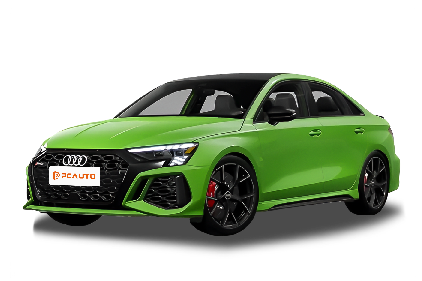
Is the 2023 RS3 a supercar?
 RainbowGlowOct 21, 2025, 03:55 PM
The 2023 Audi RS3 is an absolute beast, no doubt about it, but let's be real—it's not a full-blown supercar. Think of it more like a high-performance compact sedan that means business. Under the hood, there's this burly 2.5-liter five-cylinder turbo engine cranking out 400 horsepower and 500 Nm of torque. Pair that with Audi's legendary Quattro all-wheel drive and a snappy 7-speed dual-clutch gearbox, and you're looking at a 0-100 km/h sprint in just 3.8 seconds. Yeah, that performance is definitely knocking on the door of entry-level supercars. But here's the thing: its body structure, front-engine, all-wheel-drive layout, and practical side—like the five-door hatchback or sedan options—set it apart from those traditional mid-engine, track-focused supercars that live and breathe for the circuit.
In the Malaysian market, the RS3's party piece is how it balances daily driving comfort with some serious track-ready potential. And let's not forget the price tag—starting around RM600k, which is a whole lot friendlier than something like a Lamborghini Huracán that starts north of RM1.2M. If you're chasing that top-tier performance but watching your wallet, you might also have your eye on rivals like the Mercedes-AMG CLA 45 S, which sits in a similar ballpark and plays in the same league.
But let's be clear: real supercars usually bring even more extreme lightweight construction, next-level aerodynamics, and that intangible brand cachet. Take Audi's own R8, for example—it's been discontinued, and word on the street is its successor might go fully electric. That right there tells you everything about where the high-performance car game is heading these days.
Special Disclaimer: This content is published by users and does not represent the views or position of PCauto.
Related Q&A
Q
Is the 2023 Audi RS 3 good for daily driving?
The 2023 Audi RS 3 is a high-performance compact sedan that fits Malaysian daily driving needs like a glove. Under the hood, that 2.5-liter five-cylinder turbo engine pumps out a healthy 400 horsepower, mated to a 7-speed dual-clutch gearbox. It's not just quick off the line; the shifts are super smooth too, making it perfect whether you're crawling through city traffic or stretching its legs on the highway.
Audi's done a great job tuning the suspension – it strikes a really nice balance between comfort and sportiness. Even on Malaysia's less-than-perfect roads, it still delivers a stable, composed ride. Step inside, and you're greeted with high-quality materials everywhere, plus the latest MMI infotainment system that hooks up seamlessly with Apple CarPlay and Android Auto. So it's got the tech cred and the practicality covered.
Another big plus is the Quattro all-wheel-drive system. When the rain hits or the roads get slippery – which, let's face it, happens often enough here – it gives you that extra grip and confidence, making it ideal for Malaysia's unpredictable weather. Sure, the fuel economy isn't quite on par with your average family car, but if you're someone who craves performance, that's a small trade-off to make.
If your budget allows and you want a car that's just as happy being a daily runabout as it is putting a smile on your face when the road opens up, the RS 3 is definitely one to add to your shortlist.
 InventorMindOct 21, 2025
Q
How does the 2023 Audi RS 3 compare to the BMW M2?
Both the 2023 Audi RS 3 and BMW M2 are high-performance compact cars, but they each bring their own distinct flavor to the table when it comes to design and driving dynamics.
The Audi RS 3 packs a punch with its 2.5-liter five-cylinder turbocharged engine, cranking out 400 horsepower. Paired with a seven-speed dual-clutch transmission and Audi's legendary Quattro all-wheel-drive system, this thing rockets from 0-100km/h in just 3.8 seconds. It's a solid pick for Malaysian drivers who value consistent handling and the confidence to tackle any weather condition.
On the flip side, the BMW M2 goes with a 3.0-liter inline-six turbo, pushing out a meaty 453 horsepower. It sticks to rear-wheel drive, giving you the choice between a six-speed manual – for those who love rowing their own gears – or an eight-speed automatic. The auto gets you from 0-100km/h in around 4.1 seconds. This one's all about driver engagement and that classic rear-drive feel, perfect for enthusiasts chasing that pure, unadulterated driving rush.
Inside, both cabins scream sportiness. The RS 3 leans into tech with its Virtual Cockpit, while the M2 keeps things a bit more traditional, focusing on the essentials for the driver.
Here in Malaysia, the RS 3's Quattro system is a real ace up its sleeve during the rainy season, offering way more grip on slippery roads. The M2 though? It's in its element on dry tarmac, where you can really exploit that rear-wheel drive for some sideways fun.
Practicality-wise, the RS 3's slightly more compact dimensions make it easier to zip around town. But the M2? Man, that wide-body stance gives it some serious road presence – it just looks the part of a proper performance machine.
At the end of the day, both are absolute beasts in the high-performance compact segment. Choosing between them really comes down to what you prioritize: the sure-footed tech and all-weather capability of the RS 3, or the raw driver focus and rear-drive thrills of the M2. It's all about personal taste and how you plan to use it most.
 ActorStageOct 21, 2025
Q
What is the warranty on the 2023 Audi RS 3?
The 2023 Audi RS 3 in Malaysia comes with a factory warranty of 5 years or 100,000 kilometers, whichever comes first. This warranty covers repair costs resulting from manufacturing defects or material issues, but excludes components subject to normal wear and tear or damage caused by human error. On top of that, Audi Malaysia is throwing in 5 years of free maintenance for the RS 3, which takes care of consumables like engine oil and filters during regular services – a really handy perk for high-performance car owners.
It's worth highlighting that as part of Audi's high-performance lineup, the RS 3 is powered by a 2.5-liter TFSI five-cylinder turbocharged engine, cranking out 400 horsepower and 500 Nm of torque. Paired with a 7-speed S tronic gearbox and the legendary quattro all-wheel-drive system, it rockets from 0-100km/h in just 3.8 seconds. That kind of performance puts it right up there as a serious contender in its segment.
When buying a high-performance car like this in Malaysia, besides the warranty, it's smart to check out the insurance terms and the availability of service centers to ensure a hassle-free ownership experience down the line. Fortunately, Audi has a well-established dealer network and a professional after-sales service team in Malaysia, so owners can count on reliable support when they need it.
 ArtistBrushOct 21, 2025
Q
How reliable is the 2023 Audi RS 3?
The 2023 Audi RS 3 stands out for its solid reliability. The 2.5-liter five-cylinder turbo engine under the hood has been battle-tested over the years, delivering consistent power and impressive durability. Pair that with the refined 7-speed dual-clutch gearbox—shifts are smooth, and it’s proven to be pretty trouble-free. Here in Malaysia’s tropical heat, the RS 3’s cooling system and electronics hold up well, making it right at home in our local driving conditions.
Then there’s Audi’s Quattro all-wheel-drive system—this thing offers killer grip, especially handy during the rainy season when roads get slippery, giving you that extra peace of mind. Inside, the materials feel premium, and tech like the Virtual Cockpit and driver-assistance features have clearly been put through their paces; they’re built to last without throwing up annoying glitches down the line.
For performance car enthusiasts, the RS 3’s maintenance costs are actually quite reasonable, and sticking to regular servicing should keep it running strong for ages. When it comes to used car value retention, the RS 3 sits around the middle of the pack in Malaysia, but let’s be real—its sheer driving fun and the Audi badge still pull in plenty of buyers. If you’re thinking about picking one up, my advice is to go through official channels and stick to the factory maintenance schedule. Do that, and this thing should keep thrilling you for years to come.
 BoarderWaveOct 21, 2025
Q
What is the cargo space of the 2023 Audi RS 3?
The 2023 Audi RS 3, a high-performance compact sedan, offers 282 liters of trunk space – enough for daily use, but maybe a bit tight if you're hauling a lot of gear. The good news? The rear seats fold down in a 40:20:40 split, letting you expand that cargo area when needed, which adds a decent amount of flexibility. Over in Malaysia, this car is a hit with performance enthusiasts, thanks to its punchy 2.5-liter five-cylinder turbo engine and quattro all-wheel drive. Sure, it's more about driving thrills than being a cargo hauler, but for city commutes or short trips, that trunk space should do the job just fine. Let's be real though – high-performance cars often trade some space and practicality for sharper handling, and the RS 3 is no exception to that rule you see across the segment. If you need serious load-lugging ability, you might want to start eyeing an SUV or wagon instead.
 CheeryMoodOct 21, 2025
Q
Does the 2023 Audi RS 3 have all-wheel drive?
Yep, the 2023 Audi RS 3 comes standard with Audi's legendary quattro all-wheel drive system. This thing intelligently shuffles power between the front and rear axles based on road conditions and what you're trying to do behind the wheel, serving up awesome grip and handling stability. It's a total boss for Malaysia's tricky roads – whether it's rainy and slippery or you're carving through a fast corner, it just nails it. As a high-performance compact sedan, the RS 3 packs a 2.5-liter five-cylinder turbo engine cranking out 400 horsepower, mated to a seven-speed dual-clutch gearbox. That translates to a 0-100km/h sprint in just 3.8 seconds, and that quattro system? It's the real hero making sure all that muscle gets put down properly. Over here in Malaysia, AWD cars are getting more and more love. They handle the monsoon season's slippery stuff like a champ, and even on dry roads, they give a more engaging, sporty drive. And hey, Audi's quattro tech has come a long way over the years – it's lighter and way quicker to react now. On the RS 3, there's even that rear axle torque vectoring, which makes cornering feel sharper and more agile. So, for Malaysian petrolheads who want both performance and day-to-day usability, the 2023 RS 3's all-wheel drive system is definitely a solid win.
 GoldenSunsetOct 21, 2025
Q
What is the interior like in the 2023 Audi RS 3?
The 2023 Audi RS 3's interior design stays true to the brand's signature blend of sophistication and sportiness. It's decked out with high-quality materials like Nappa leather, aluminum trim, and carbon fiber accents. The tech factor is strong too, thanks to the 12.3-inch fully digital instrument cluster and the 10.1-inch central touchscreen. The seats are sporty one-piece units that offer excellent support without skimping on comfort – a real plus for those long drives in Malaysia's warm weather.
Step inside, and you'll find nice touches like the Bang & Olufsen premium sound system, ambient lighting, and those exclusive RS badges, all of which crank up the luxury and make the car feel that much more personal. Being a high-performance machine, the RS 3 gets a flat-bottom steering wheel with shift paddles, and when paired with Audi's Virtual Cockpit, it puts all the vital driving info right at the driver's fingertips.
For Malaysian buyers, the RS 3's interior hits the sweet spot between daily-driving comfort and performance car attitude. Audi's MMI infotainment system, which supports Apple CarPlay and Android Auto, is a user-friendly touch that makes connecting your smartphone a breeze – perfect for local drivers. And let's not forget the solid sound insulation; even when you're cruising on the highway, the cabin stays nice and quiet. That's a big deal given how much time we spend on Malaysia's expressways.
 MusicianNoteOct 21, 2025
Q
What is the 0-60 mph time for the 2023 Audi RS 3?
The 2023 Audi RS 3 clocks in at an official 3.8 seconds for the 0-60 mph (that's roughly 0-96 km/h) sprint. That kind of zip comes courtesy of its 2.5-liter five-cylinder turbo engine, cranking out 400 horsepower and 500 Nm of torque. Pair that with a 7-speed dual-clutch gearbox and Audi's quattro all-wheel drive, and you've got acceleration that pins you back and handling that inspires confidence, no question.
For Malaysian petrolheads, the RS 3 isn't just a daily driver – it can seriously bring the heat on track days too. And let's not forget that iconic five-cylinder soundtrack; it's music to any performance car fan's ears. Throw in the sport suspension and dynamic steering system, and the driving experience gets even better.
If you're into high-performance sedans, it's worth checking out the usual suspects in this class, like the Mercedes-AMG A 45 S or the BMW M2. They each have their own strengths in terms of performance and styling. But the RS 3? With its unique five-banger and Audi's tech wizardry, it's still a really strong contender in the segment.
 GlimmeringOct 21, 2025
Q
What type of engine does the 2023 Audi RS 3 have?
The 2023 Audi RS 3 packs a 2.5-liter TFSI inline-five turbocharged engine, a powerplant legendary for its unique five-cylinder layout and blistering performance. Cranking out 400 horsepower and 500 Nm of peak torque, paired with a 7-speed S tronic dual-clutch gearbox and quattro all-wheel drive, it rockets from 0-100 km/h in just 3.8 seconds – that's some serious grunt. For Malaysian petrolheads, this engine isn't just carrying forward the Audi RS lineage's track DNA; its compact size and efficient turbo tech make it a solid fit for our diverse local driving conditions, dishing out that surging power whether you're navigating city traffic or cruising the highways. And let's not forget that iconic five-cylinder soundtrack – Audi's done a bang-up job tuning the exhaust to blend deep, throaty rumbles with high-revving howls, taking the driving fun up another notch. On top of all that, this engine also features advanced fuel injection tech and lightweight construction, so it's not just about raw performance; it actually keeps fuel economy in check too. For Malaysian buyers who want that perfect sweet spot between performance and practicality, this one's definitely worth a look.
 DreamyEscapeOct 21, 2025
Q
Does the RS3 have a Lamborghini engine?
The Audi RS3 doesn't just slot a Lamborghini engine under its hood, but the 2.5-liter TFSI five-cylinder turbocharged powerplant it does carry shares some tech DNA with Lambo. After all, both Audi and Lamborghini are under the Volkswagen Group umbrella, so they tap into shared technical resources. This five-cylinder is an Audi legend, renowned for its high-revving nature and that iconic, spine-tingling soundtrack. We're talking 400 horsepower and 480 Nm of torque here—seriously impressive grunt. Over in Malaysia, the RS3 has built a solid following among performance fans thanks to its compact size paired with that brute force. Sure, it's not a Lambo engine, but this Audi five-pot has serious track credibility, even picking up international engine awards more than once. It's worth noting how VW Group's internal tech sharing benefits so many brands. Take the Lamborghini Huracán's V10, for example—that traces its roots back to the Audi R8's engine tech. But this isn't just a simple swap; it's all about tweaking and optimizing to fit each brand's needs, making sure every car keeps its own distinct driving character.
 FriendzzOct 21, 2025
Popular Cars
Model Year
Car Compare
Car Photo
Related Models
 Cars
CarsLatest Q&A
Q
Is AMT similar to automatic?
There are significant differences between AMT transmissions and automatic transmissions (AT) in terms of core structure and driving experience. AMT is essentially an electronically automated version of a manual transmission, simulating manual clutch operation and gear shifting through a computerized control system while retaining the gear set structure of manual transmissions. As a result, it offers higher transmission efficiency, with fuel consumption approximately 8%-12% lower than AT, making it particularly suitable for highway or long-distance driving. However, it may exhibit jerking similar to manual transmissions during low-speed gear shifts, especially noticeable in congested traffic conditions.
AT transmissions rely on torque converters for power transfer, delivering smooth and seamless gear shifts that appeal to comfort-oriented users. However, their complex structure (incorporating planetary gear sets, hydraulic systems, etc.) results in higher maintenance costs. A single service may cost between 800 to 1,500 ringgit, whereas AMT only requires gear oil replacement at approximately 400 ringgit.
From a market perspective, AMT is predominantly used in budget vehicles or commercial models priced below 80,000 ringgit, while AT is typically featured in mid-to-high-end vehicles. Consumers should select based on actual needs: AMT suits those prioritizing fuel efficiency and low maintenance costs, while AT better serves those valuing comfort. Notably, recent advancements in AMT electronic control technology have significantly mitigated jerking issues, though test drives should still emphasize low-speed performance evaluation.
 AriaMar 26, 2026
Q
Which is better, DCT or AT?
DCT (Dual-Clutch Transmission) and AT (Automatic Transmission) each have their own advantages and disadvantages, and the choice should be based on personal driving needs. AT transmissions transfer power through a torque converter, offering excellent shift smoothness, making them suitable for urban commuting or novice drivers. However, they tend to have higher fuel consumption, and vehicles equipped with them are usually more expensive. DCT transmissions utilize a dual-clutch structure, featuring fast shift speeds and high power transmission efficiency, which provides a more direct driving experience—particularly suitable for users seeking a sporty feel. However, they may exhibit jerking at low speeds and have relatively high maintenance costs. If durability and comfort are priorities, AT is the more reliable choice; if power responsiveness and driving pleasure are preferred, wet DCT (such as Volkswagen DSG) performs better, though dry DCT models should be avoided in prolonged stop-and-go traffic conditions. Additionally, CVT transmissions excel in smoothness and fuel efficiency, making them ideal for daily commuting, but they lack driving excitement. It is recommended to test-drive before purchasing, as tuning varies significantly across brands, and real-world experience is more important than theoretical specifications.
 FlutteringMar 26, 2026
Q
Is Amt good or bad?
AMT gearboxes have a significant cost advantage in the local market, typically being around 5,000 Ringgit cheaper than models equipped with conventional automatic transmissions. Their fuel efficiency is comparable to manual transmissions, resulting in long-term fuel savings. Featuring a straightforward design, they achieve transmission efficiency exceeding 90% with relatively low maintenance costs, making them ideal for practicality-oriented consumers. However, their shifting logic contains inherent limitations: gear changes between 1st and 2nd cause 0.3-0.5 second power interruptions, while unintended upshifts on inclines may reduce engine speed by 15%-20%, compromising driving smoothness. For urban commuters or budget-conscious buyers, AMT offers excellent value, though those prioritizing premium driving dynamics should consider alternative transmission types. Some domestic models like the Perodua Axia employ enhanced AMT systems, where optimized shift programming has reduced gearshift shock by approximately 30%.
 RainbowsMar 26, 2026
Q
Which gives better mileage, CVT or AMT?
From the perspective of fuel economy, CVT transmissions generally perform better under urban driving conditions. Their continuously variable design allows the engine to consistently operate within the optimal speed range, significantly reducing fuel consumption during frequent starts and stops. Test data shows that their fuel consumption in urban driving conditions is 10% to 15% lower than that of comparable models. AMT transmissions, on the other hand, inherit the high transmission efficiency of manual transmissions, delivering fuel efficiency close to manual transmissions during high-speed cruising. This makes them particularly suitable for long-distance driving in large-displacement vehicles. However, due to power interruption during gear shifts, their overall fuel consumption may be 5% to 8% higher than CVTs.
The difference in fuel-saving characteristics between the two transmissions stems from their technical principles: CVTs achieve continuous variability through steel belts and pulleys, eliminating the fixed gear ratio limitations of traditional transmissions; AMTs simulate manual gear changes via electronic control systems while maintaining the mechanical efficiency of gear transmission. Notably, actual fuel consumption is also influenced by driving habits. Smooth acceleration and anticipatory deceleration can maximize the transmissions' fuel-saving potential. If the vehicle budget permits and urban commuting is the primary use, CVTs offer a more economical choice. For frequent highway driving with an emphasis on cost-effectiveness, AMTs are equally worth considering.
 RubyBlazeMar 26, 2026
Q
Which is cheaper, AMT or CVT?
In terms of gearbox cost, AMT is usually more economical than CVT. Essentially, AMT is a manual transmission equipped with an electronic control unit, featuring a simple structure and low maintenance costs. The unit price ranges from approximately 5,000 to 8,000 ringgit, making it suitable for budget-conscious consumers or those who prioritize long-term operating costs. CVT incurs higher manufacturing costs due to its precision steel belt transmission system and continuous variable transmission technology, with a unit price of about 7,000 to 10,000 ringgit. However, it delivers a smoother driving experience and superior fuel efficiency. The primary differences between the two lie in technical complexity: AMT retains the gear-shifting mechanism, resulting in noticeable shift shock; CVT achieves linear power output through stepless speed variation but requires periodic belt inspection and incurs higher maintenance expenses. For those prioritizing initial cost and basic transportation needs, AMT offers better value; if comfort and long-term fuel economy are priorities, CVT represents a more worthwhile investment. Note that actual prices may vary based on vehicle model, brand, and local supply chain factors.
 ShadowProwlMar 26, 2026
Related News

Audi A8 discontinued, successor to be released in the next decade
RobertMar 19, 2026

Audi's version of the "G-Wagen" is coming? Developing a rugged 4x4 with the help of the Scout platform
JamesMar 10, 2026

Audi RS6 sedan version may return to compete fully with the BMW M5
WilliamNov 21, 2025

Audi TT Moment 2.0 Debuts This September on Porsche EV Platform
MichaelAug 1, 2025
Beyond Expectations: All-New Audi Q3 Coming June 16
RobertJun 13, 2025
View More
Pros
Cons