
Q
Is Honda Odyssey suitable as a daily driver?
 MoeJun 06, 2025, 12:05 PM
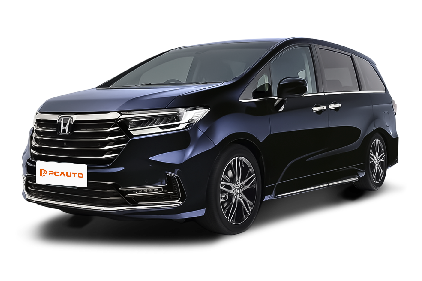
Honda Odyssey is an excellent daily driver. With its 7-seat configuration, it provides ample space for family outings or group travel, making it convenient for school runs, road trips, or business-related colleague transportation.
Powered by gasoline, the vehicle achieves an official fuel consumption of 8.1 liters per 100 kilometers (2022 model), which is relatively reasonable for its size. Its front-wheel-drive system paired with MacPherson strut independent suspension delivers a smooth driving experience and good handling across various road conditions.
Safety features stand out as one of the Odyssey's major strengths. Standard equipment includes an anti-lock braking system (ABS), vehicle stability control, multiple airbags, along with various driver assistance systems like lane departure warning and forward collision warning - all contributing to greater peace of mind while driving. Additionally, convenience features such as keyless operation, power-adjustable seats, and a touchscreen infotainment system enhance overall comfort and practical utility for journeys.
Special Disclaimer: This content is published by users and does not represent the views or position of PCauto.
Related Q&A
Q
Is the 2018 Honda Odyssey reliable?
In 2018, the Honda Odyssey gained popularity among many family users in the Malaysian market for its reliability and practicality. This MPV is equipped with a 2.4-liter i-VTEC engine, which provides smooth power output and good fuel economy, making it suitable for long-distance driving and city commuting. Its Earth Dreams technology also enhances the overall efficiency. In terms of the transmission, it uses a CVT continuously variable transmission, which offers smooth gear shifts and has a relatively low failure rate.
The interior space is spacious. In particular, the flexible seat layout and abundant storage designs are very suitable for family use. In terms of safety, it is equipped with the Honda SENSING system, which includes active safety features such as collision mitigation braking and lane-keeping assist, thus improving driving safety. However, some owners have reported that the third-row seats are of average comfort during long trips, and due to the large body size, drivers need some time to get used to driving it on narrow roads.
Overall, the 2018 Odyssey is a worthy MPV, especially outstanding in terms of space and reliability. If you need a vehicle suitable for family outings, it can be added to your list of options. Of course, when buying a used car, it is recommended to check the maintenance records and conduct a professional inspection to ensure the vehicle is in good condition.
 WanderzzSep 18, 2025
Q
What is the maintenance schedule for a Honda Odyssey 2018?
The 2018 Honda Odyssey in Malaysia is recommended to have regular maintenance every 6 months or every 10,000 kilometers, whichever comes first. Basic maintenance includes changing the engine oil and oil filter, checking tire pressure, the braking system, lights, and chassis components. The air filter and air - conditioning filter need to be replaced every 20,000 kilometers. It is recommended to change the brake fluid and transmission fluid every 40,000 kilometers, and at the same time, check the drive belt and spark plugs. The coolant needs to be replaced every 60,000 kilometers.
Given the hot and humid climate in Malaysia, it is advisable to shorten the replacement cycle of the air - conditioning filter to ensure the cooling effect. Additionally, it's also important to regularly check the battery status and wiper blades, as high temperatures can accelerate the aging of these components. Following the official maintenance plan can not only maintain the vehicle's performance but also extend its service life.
It should be noted that if the vehicle is often driven in congested traffic or harsh environments, you may consider advancing the maintenance interval appropriately. The specific maintenance items may vary depending on the actual usage of the vehicle. It is recommended that car owners refer to the vehicle's manual or consult the local authorized dealer for personalized advice.
 SunnyRadiantSmileSep 18, 2025
Q
How often should I change the oil in my 2018 Honda Odyssey?
Regarding the oil change frequency for the 2018 Honda Odyssey, it is recommended to follow the standard of changing the oil every 5,000 to 8,000 kilometers or every six months. The specific interval depends on your driving conditions. If you often drive short distances in the hot climate of Malaysia or encounter traffic jams, it is advisable to opt for the shorter interval of 5,000 kilometers. On the other hand, if you do a lot of highway driving, you can extend the interval to 8,000 kilometers.
Honda's original recommendation is to use fully synthetic oil with a viscosity of 0W - 20 or 5W - 30. These two types of oil perform stably in high - temperature environments and can better protect the engine. It's worth noting that regular oil changes not only keep the engine running smoothly but also improve fuel economy. It is recommended to check the oil filter every time you change the oil to ensure its filtering effect.
If you are using Honda's maintenance reminder system, you can also perform maintenance according to the system's prompts. However, it should be noted that this system calculates based on normal driving conditions. If your driving environment is relatively harsh, it is recommended to perform maintenance a bit earlier.
In addition, it is also necessary to regularly check the oil level and quality. If you notice that the oil has turned black or its viscosity has decreased, you should consider changing the oil even if the maintenance period has not arrived.
 HealerHeartSep 18, 2025
Q
When to change timing belt on 2018 Honda Odyssey?
According to general maintenance guidelines for vehicles with timing belts, it is commonly recommended to replace the timing belt of the 2018 Honda Odyssey every 60,000 to 80,000 kilometers or every 3 to 5 years, whichever occurs first. The hot and humid climate in Malaysia may accelerate the aging of rubber components, so owners are advised to have the timing belt inspected more frequently under these conditions.
The timing belt is a critical engine component. Its failure can lead to piston-to-valve interference, potentially causing catastrophic engine failure and expensive repairs. In addition to the timing belt, it is highly recommended to replace related components like the water pump, tensioner, and idler pulleys concurrently. Since these parts usually can only be accessed after removing the timing belt, replacing them all at once can save subsequent labor costs.
Car owners in Malaysia should also pay attention to using original or replacement parts of equivalent quality to ensure durability and choose a repair shop with experience in servicing Honda models for the operation. Because the transverse V6 engine of the Odyssey has a relatively compact structure, professional tools and techniques are required.
If high-pitched chirping or squealing noises emanate from the engine bay, or if cracks, fraying, or missing teeth on the belt are visible, an immediate inspection is imperative. Such signs often indicate that the belt is worn.
 ThornFangSep 18, 2025
Q
Is the 2018 Honda Odyssey 2wd or 4wd?
The 2018 Honda Odyssey available in the Malaysian market is mainly the front - wheel drive (2WD) version, and the four - wheel drive (4WD) configuration was not introduced. This model is equipped with a 2.4 - liter i - VTEC naturally aspirated engine, paired with a CVT transmission. It focuses on comfort and family practicality. Its space layout and intelligent features are well - suited for the long - distance travel needs of Malaysian families.
In Malaysia, front - wheel drive vehicles have become the mainstream choice for most MPV models because of their simple structure, lower fuel consumption, and more cost - effective maintenance. On the other hand, four - wheel drive versions are generally more suitable for regions that require higher off - road performance or face complex road conditions. However, as an urban family car, the front - wheel drive design of the Odyssey can fully meet daily use.
For consumers considering an MPV, besides the drive type, they can also pay attention to the highlights of the Odyssey, such as the Honda Sensing safety system and the flexible seat layout. At the same time, it is recommended to compare the drive configurations and functional differences with peer models like the Toyota Alphard according to actual needs to make a more appropriate choice.
 AstralFlightSep 18, 2025
Q
Is a 2018 Honda Odyssey a good car?
The 2018 Honda Odyssey is a seven - seat MPV that has performed well in the Malaysian market. It's a great fit for families. It comes with the Honda Sensing safety system, including features like adaptive cruise control and lane - keeping assist, enhancing driving safety.
The interior space is spacious. The third - row seats can be flexibly folded, offering excellent storage capacity, making it ideal for long - distance trips. However, its chassis tuning leans towards comfort, so its handling isn't as good as that of sporty models. Also, the maintenance cost is slightly higher than that of locally assembled vehicles.
If you're looking for a reliable family car, the 2018 Odyssey is worth considering. But it's recommended to check the condition of used cars and confirm the original factory warranty status before purchasing. Additionally, there's a high demand for MPVs in the Malaysian market. Similar models include the Toyota Innova and Nissan Serena. You can compare the configurations and space performance according to your budget and needs.
 CobaltCrushSep 18, 2025
Q
How often should the transmission fluid be changed in a 2018 Honda Odyssey?
According to Honda's official recommendation, the transmission fluid replacement interval for the 2018 Honda Odyssey is typically every 40,000 to 60,000 kilometers or every 2 to 3 years. The specific interval depends on driving conditions. If you often drive short distances frequently in Malaysia's hot climate, tow heavy loads, or get stuck in long - term traffic jams, it is recommended to shorten the replacement interval to 40,000 kilometers to ensure the smooth operation of the transmission and extend its service life.
Transmission fluid is a crucial medium for power transmission and lubrication. After it ages, it can cause rough shifting, increased fuel consumption, and even component wear. In particular, the Earth Dreams technology transmission used in the Honda Odyssey has relatively high requirements for the cleanliness of the oil. Owners in Malaysia should also pay attention to using the ATF DW - 1 type of oil specified by the original factory and avoid mixing different specifications of products. At the same time, regularly check the color of the oil (normally it should be a clear red; if it darkens or becomes cloudy, it needs to be replaced immediately). And adjust the maintenance plan according to the "Severe Driving Conditions" clause in the maintenance manual. For example, the hot and humid Southeast Asian environment all year round may be classified as severe working conditions.
In addition, although some new - type transmissions claim to be "maintenance - free", regularly replacing the oil is still the most cost - effective way to prevent major overhauls, which is especially important for 7 - seat MPVs that are often fully loaded.
 HypnoticGlowSep 18, 2025
Q
Does a 2018 Honda Odyssey have a timing chain or timing belt?
In 2018, the Honda Odyssey was equipped with a timing chain rather than a timing belt. This model features a 3.5 - liter V6 i - VTEC engine. The timing system of this engine uses a chain design, which is more durable compared to a belt. Usually, it doesn't need to be replaced regularly like a timing belt. You just need to check its condition during regular maintenance.
For Malaysian car owners, the advantage of the timing chain lies in its lower maintenance cost. Especially in the hot and humid climate, the metal material of the chain is more resistant to aging than the rubber belt, making it suitable for long - term use.
However, although the timing chain has a long service life, it is still recommended that car owners follow the original manufacturer's maintenance manual and regularly check the engine oil condition. Insufficient oil lubrication may affect the chain's lifespan. In addition, if you hear abnormal metallic noises in the engine compartment, it may indicate that the chain or the tensioner needs to be inspected. Timely repairs can prevent greater damage.
Understanding the type of the timing system and the key points of maintenance can help car owners better maintain their vehicles and ensure the long - term stable operation of the engine.
 OmegaStrikeSep 18, 2025
Q
What is the fuel pump recall on 2018 Odyssey?
Honda Odyssey initiated a global recall due to fuel pump malfunctions. Some vehicles in the Malaysian market might also be affected. The problem stems from the possible deformation of the impeller inside the fuel pump due to manufacturing defects, which could cause the engine to suddenly stall while driving, posing a safety hazard. Subsequently, Honda Malaysia replaced the improved fuel pump assemblies for the affected vehicles free of charge through authorized dealers.
As the core component of the fuel supply system of an EFI engine, the reliability of the fuel pump directly affects driving safety. It is recommended that owners of the 2018 Odyssey continuously follow the recall announcements on the official website of Honda Malaysia or use the VIN code query tool to confirm whether their vehicles are on the list. If they notice symptoms such as weak acceleration, unstable idling, or abnormal stalling, they should immediately contact the dealer for inspection.
It's worth noting that fuel system maintenance is particularly important in Malaysia's tropical climate. Regularly replacing the fuel filter and using gasoline that meets the standards can effectively extend the lifespan of the fuel pump. If the owner has modified the fuel system or installed external devices on their own, it may affect the effectiveness of the original - factory recall service. It is advisable to inform the service center in advance to ensure the maintenance rights.
 VelvetNightSep 18, 2025
Q
Does the 2018 Honda Odyssey have all wheel drive?
The 2018 Honda Odyssey doesn't offer an all - wheel drive (AWD) version in the Malaysian market. This model is only equipped with a front - wheel drive (FWD) system. This design mainly focuses on fuel economy and ride comfort for city driving, making it suitable for daily use by family users.
An all - wheel drive system is generally more suitable for areas that need to deal with complex road conditions or adverse weather. However, the climate and road conditions in Malaysia are relatively stable, and front - wheel drive can meet most needs. If you have a particular preference for all - wheel drive, you can consider other brands or models. But note that all - wheel drive may increase the purchase cost and fuel consumption.
The advantages of the Honda Odyssey lie in its spacious interior, flexible seat layout, and reliable power performance. These features make it one of the popular choices for family cars in Malaysia.
 GammaRaySep 18, 2025
Related Models
 Cars
CarsLatest Q&A
Q
How many Litres per 100km does a Toyota Yaris take?
According to official Toyota data, the fuel consumption of the Toyota Yaris varies by model and powertrain configuration. The 1.5L petrol version currently sold in Malaysia has a combined fuel consumption of approximately 5.2 to 5.5 liters per 100 kilometers. The actual figure can vary depending on driving habits, road conditions, and vehicle maintenance. When driving in urban areas, fuel consumption may rise to around 6.0 liters per 100 kilometers, while on highway cruises, it can drop to 4.8 liters per 100 kilometers. For Malaysian consumers, the Yaris, as an economical hatchback, offers quite competitive fuel efficiency, making it especially suitable for city commuting. Additionally, Toyota's Dual VVT-i technology effectively optimizes fuel efficiency. It is recommended to perform regular maintenance such as replacing the air filter and using the recommended engine oil to maintain optimal fuel consumption. Furthermore, keeping proper tire pressure and avoiding sudden acceleration can further improve fuel economy.
 WildflowerMeadowLoverNov 4, 2025
Q
What is the Yaris comparable to?
In the Malaysian market, the Toyota Yaris is primarily positioned as a B-segment hatchback, with direct competitors including the Honda Jazz, Mazda 2, and Nissan Almera. These models also highlight affordability, nimble handling, and urban commuting convenience as their key selling points. Thanks to Toyota's reputation for reliability and low maintenance costs, the Yaris holds strong resale value in the local used car market, making it especially suitable for budget-conscious young buyers who value brand credibility. Notably, since the launch of the 2023 Yaris Cross in Southeast Asia, its crossover variant has also attracted some buyers who were originally considering the HR-V or Raize. This model derivative strategy demonstrates Toyota's precise grasp of niche markets. Technically, while the 1.5L Dual VVT-i engine in the Yaris doesn't stand out in terms of power figures, when paired with a CVT transmission, it achieves fuel efficiency of over 18km/L—an especially crucial feature given Malaysia's persistently high fuel prices. Potential buyers are advised to test drive the Perodua Myvi, a same class model. Although positioned under a different brand, both offer unique strengths in space utilization and local adaptation. The final choice should ultimately depend on personal brand preference and actual usage scenarios.
 SnowflakeFrostyNov 4, 2025
Q
Is the 2021 Yaris easy to park?
The 2021 Toyota Yaris is a great little city car for Malaysia. Its compact size and nimble handling make parking a breeze – under 4 meters long with a tight turning radius, it slides into parallel spots or reverse parks easily, even in cramped parking lots or along narrow roads. Plus, some trims come with a reverse camera and parking assist, which really boost convenience and safety when squeezing into spaces. In Malaysia's typical congested city environments like KL or Penang, the Yaris's small footprint definitely takes the stress out of driving. And let's not forget, small cars usually nail fuel efficiency – a big plus for Malaysian drivers stuck in constant traffic. If you're zipping around the city a lot, a small car like the Yaris just makes more sense than a bigger vehicle. Of course, parking skills and knowing your car's dimensions matter too – new owners should practice a bit to get the most out of the Yaris's handy size.
 CherryBlossomBreezeNov 4, 2025
Q
What is the mileage limit for a Toyota Yaris?
The Toyota Yaris, known as a practical and economical car, its mileage limit mainly depends on the vehicle's maintenance condition and usage environment. Generally speaking, a properly maintained Yaris can easily clock over 200,000 kilometers or even more. The actual lifespan in terms of mileage is also closely tied to driving habits, road conditions, and regular upkeep. In Malaysia, with its hot and rainy climate, it's advisable for owners to check the engine oil, cooling system, and tires more frequently to ensure the vehicle runs steadily for the long haul. Besides, the Yaris's engine and transmission are built to be pretty durable, but regularly replacing wear-and-tear parts like the timing belt and spark plugs can significantly extend its service life. For consumers planning to buy a used Yaris, it's recommended to confirm the vehicle's actual mileage and mechanical condition through professional inspection to avoid issues caused by improper maintenance from previous owners. Overall, as long as you pay attention to maintenance, the Yaris can maintain reliable performance even in Malaysia's hot and humid environment.
 PurpleHazeDrifterNov 4, 2025
Q
Is the 2021 Yaris reliable?
The 2021 Toyota Yaris has delivered an overall solid reliability performance in the Malaysian market. Under the hood, it’s packing a 1.5L Dual VVT-i engine that serves up smooth power delivery and excellent fuel efficiency—perfect for both the daily city grind and longer highway drives around here. Toyota’s TNGA-B platform really shines here, boosting body rigidity and nailing the suspension tuning, which makes for some pretty impressive handling stability.
From what owners are saying, day-to-day maintenance costs are reasonable, and Toyota’s 5-year unlimited mileage warranty takes a lot of the long-term ownership worry out of the equation. Most issues reported are minor, occasional glitches with the electronics, while major mechanical bits like the transmission and engine have shown low failure rates.
One thing that stands out is its above-average used car resale value in its class—definitely a big plus for Malaysian buyers who care about that. If you’re looking at a used 2021 Yaris, make sure to check the brake system and battery condition closely; those tend to wear faster in our tropical climate. And when it comes to regular servicing, keeping an eye on the cooling system and AC filter will help it hold up better in the local heat and humidity.
All in all, this car hits the spot for Malaysian drivers who want something economical, practical, and backed by a strong brand after-sales network.
 DandelionWishMakerNov 4, 2025
Related News

Honda N-ONE e: Officially launched in the Japanese market, with a range of 295 kilometers
AshleySep 12, 2025

Honda Prelude returns after 24 years, the sixth-generation Prelude will be released in Japan
Kevin WongSep 4, 2025

Honda S7 and P7 sales in China fall short of expectations, significantly lagging behind Toyota and Nissan.
RobertSep 4, 2025

The 2025 Honda Prelude Is Back: Hybrid-Powered Coupe with Type R Chassis Tech
JohnAug 4, 2025

Honda Chief Engineer Goes Viral for Hairstyle, Formerly Led EV Dynamic Tuning
RobertJul 31, 2025
View More
Pros
Cons