
Q
What engine is in a 2017 Range Rover?
 SweetestNov 25, 2025, 11:26 AM
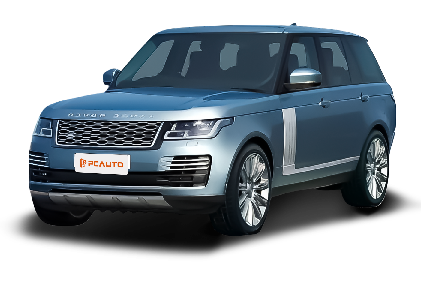
The 2017 Range Rover offers a variety of engine options to suit different needs. Gasoline variants include a 3.0-liter V6 supercharged engine (340 horsepower) and a 5.0-liter V8 supercharged engine (510 horsepower), while diesel versions come with a 3.0-liter V6 turbocharged engine (258 horsepower or 306 horsepower). All these engines are paired with an 8-speed automatic transmission, balancing power performance and fuel efficiency. The model features an all-aluminum body structure, effectively reducing weight and enhancing handling, along with the Terrain Response system that easily tackles various road conditions. Notably, diesel versions are more common locally as they are better suited for long-distance driving and offer superior fuel economy. These engine technologies showcase the brand's deep expertise in powertrain systems, delivering an excellent driving experience whether for city commuting or off-road adventures.
Special Disclaimer: This content is published by users and does not represent the views or position of PCauto.
Related Q&A
Q
How many miles will a 2017 Range Rover last?
The durability of a 2017 Range Rover depends on maintenance, driving habits, and usage conditions. With proper care, it can typically hit 200,000 to 300,000 kilometers or more. The key is regular oil changes—engine, transmission, differential—and sticking to the manufacturer's recommended service intervals. The V6 and V8 engines under the hood are solid, proven units, but the complex electronics and air suspension need extra attention. If something acts up, get it fixed quickly to avoid bigger problems down the line.
Long-term ownership of a luxury SUV isn't cheap. I'd recommend using the dealer or authorized service centers to ensure quality parts. Also, keeping an eye on the undercarriage and 4WD system will definitely help it last longer. If you're looking at a used one, have a pro inspect the engine, transmission, and service records. A good maintenance history tells you way more about the truck's actual condition than just the mileage. Honestly, for these high-end rigs, how long they last has more to do with how well the owner takes care of them than any factory-set lifespan. So, shelling out for proper maintenance when you need to is the real secret to keeping it reliable for the long haul.
 StormWingNov 25, 2025
Q
How much does a 2017 Range Rover Evoque cost?
The used car prices for the 2017 Range Rover Evoque typically range from 120,000 to 180,000 Malaysian Ringgit. The specific price depends on factors such as vehicle condition, mileage, configuration, and whether it's purchased through an officially certified used car channel. The high-end HSE Dynamic version or models with additional optional features will have higher prices. This vehicle is equipped with a 2.0-liter turbocharged engine, offering decent power performance and a luxurious interior, suitable for city driving and light off-roading. Maintenance costs are relatively high. It is recommended to check for common issues such as the transmission and electronic systems before purchasing, and also pay attention to regular maintenance to maintain vehicle performance. The Evoque is popular for its stylish appearance and brand value, but it is advisable to compare it with competitors like the BMW X3 or Mercedes-Benz GLC from the same year, and make a decision after comprehensively considering maintenance convenience and parts availability.
 PlasmaFangNov 25, 2025
Q
How much is a 2017 Range Rover Discovery?
Used 2017 Range Rover Discoverys typically range in price from RM180,000 to RM280,000, depending on factors like condition, mileage, trim level, and whether they're officially certified. Higher-spec models such as the HSE Luxury or those with the 3.0-liter V6 diesel engine will command a premium. This SUV is known for its excellent off-road capability, spacious seven-seat layout, and luxurious interior, making it a solid pick for families or outdoor enthusiasts. Keep in mind that maintenance costs align with its premium positioning—always buy through official channel and check the full service history to avoid potential issues. Rivals like the BMW X5 or Mercedes-Benz GLE are worth comparing, but the Discovery stands out with its superior terrain adaptability and Land Rover's Terrain Response system.
 FuryStrikeNov 25, 2025
Q
Is a 2017 Land Rover Range Rover a good car?
The 2017 Land Rover Range Rover is a luxury SUV that blends opulence with off-road capability. Its iconic Terrain Response system delivers excellent traversal, making it suitable for all kinds of road conditions. Under the hood, you'll find either a 3.0-liter supercharged V6 or a 5.0-liter supercharged V8 engine, both packing plenty of power. Inside, the cabin features high-grade leather and real wood trim, and tech-wise, it's pretty advanced with stuff like the Touch Pro infotainment system. Now, it's worth noting that maintenance costs can run high—especially the electronic systems and air suspension might throw up minor issues from time to time. Regular servicing is a good idea to keep it reliable. Also, its resale value in the used market is just average, so checking the service records before buying is smart. Among its peers, its off-road performance stands out, but if fuel economy is a bigger priority, the diesel version is worth considering. All in all, if you're after luxury and versatility and can handle the higher upkeep costs, it's a solid pick.
 OceanblueNov 25, 2025
Q
Who owned Land Rover in 2017?
In 2017, Land Rover was part of Jaguar Land Rover, which is owned by India's Tata Motors. Tata Motors acquired both Jaguar and Land Rover from Ford Motor Company in 2008 and has retained ownership of the brands ever since. As a luxury SUV brand under Land Rover, it's renowned for its exceptional all-terrain capability and premium features. Back in 2017, its product lineup included the Range Rover, Discovery, and Defender families, all of which enjoyed a strong global reputation. Land Rover vehicles not only boast impressive off-road performance but also integrate advanced technology and luxurious interior design, catering to diverse consumer needs and delivering an excellent experience whether for city driving or outdoor adventures. Locally, Land Rover models have also gained a following among many car enthusiasts for their distinctive design and reliable performance, with the Range Rover series in particular standing out as one of the benchmarks in the luxury SUV market.
 EmeraldsNov 25, 2025
Q
What is the price of Land Rover 2017?
The specific price of a 2017 Land Rover depends on factors like model, configuration, and condition. In the used car market, prices typically range from RM200,000 to RM400,000. For example, the base Range Rover Evoque might start around RM200,000, while a fully-loaded Range Rover Sport could get close to RM400,000. Key price influencers include mileage, service records, remaining factory warranty, and optional extras like premium sound systems or off-road packages. It’s best to check official certified pre-owned channels or reputable dealers for specific listings—these usually offer warranties and condition inspection reports for more reliability. Land Rover is known for its all-terrain capability and luxurious interiors; most 2017 models come with turbocharged engines and the Terrain Response system, balancing on-road comfort with off-road performance. Just keep in mind maintenance costs can be high, especially for precision components like air suspension. If considering a used model, prioritize those with complete service histories and set aside a budget for potential repairs.
 RubyglowNov 25, 2025
Q
Does the 2017 Range Rover Sport have good resale value?
The 2017 Range Rover Sport holds its value pretty steadily in the used car market. As a luxury SUV from Land Rover, its brand cachet, strong off-road capability, and iconic design keep demand relatively high. The 3.0L diesel and 5.0L supercharged petrol versions are especially popular thanks to their reliable performance and versatility. Of course, the exact retention rate depends on overall condition, mileage, service history, and trim level—typically, well-maintained examples retain around 50-60% of their value after three years.
It’s worth noting that luxury vehicles come with higher maintenance costs. Sticking to regular servicing at authorized dealerships and keeping complete repair records can really boost resale value. Also, local buyers tend to prefer higher-spec models; versions with panoramic sunroofs, premium sound systems, and off-road packages are easier to sell. If you’re planning to keep it long-term, the diesel engine’s fuel efficiency and durability might give it an edge over petrol variants. But before buying, it’s smart to get a professional inspection to rule out major accidents or mechanical issues, and check listings for similar models on used car platforms to set realistic expectations.
 AmberliteNov 25, 2025
Q
Who owned Range Rover in 2017?
In 2017, the Land Rover brand was part of India's Tata Motors Group, which had acquired Jaguar Land Rover from Ford Motor Company in 2008, including the Range Rover lineup. As an icon of British luxury SUVs, Range Rover continued to roll out several upgraded models in 2017. Highlights included the fourth-generation Range Rover with its Intelligent Terrain Response system and the Range Rover Sport featuring a lightweight aluminum body, technologies that maintained the brand's strengths in off-road capability and luxurious comfort. Back then, there was still strong global demand for diesel-powered vehicles, so the Range Rover lineup offered several efficient diesel engine options, including the 3.0-liter SDV6, while also beginning to lay the groundwork for new energy transition with plug-in hybrid technology. The locally popular Range Rover Evoque also received a mid-cycle refresh that year, upgrading to a 10.2-inch touchscreen and more advanced driver assistance systems, further solidifying its competitiveness in the luxury compact SUV market. Notably, Jaguar Land Rover continued investing heavily in electrification research and development during this period, laying the groundwork for subsequent plug-in hybrid Range Rover models and the all-electric I-PACE.
 JoyfultiNov 25, 2025
Q
How long do 2017 Range Rovers last?
A 2017 Range Rover can typically hit 150,000 to 200,000 kilometers with proper care and maintenance—sometimes even more. Its lifespan really boils down to how you drive it and how well you keep up with service. The 3.0L V6 and 5.0L V8 engines under the hood are solid, reliable units. Stick to regular oil changes, filter replacements, and key component checks as per the manufacturer’s schedule, and you can count on their mechanical durability. Yeah, the chassis and air suspension are a bit complex, but stay on top of inspections and swap out worn parts when needed, and it’ll keep riding smooth. One thing to note though—luxury cars pack a lot of electronics and fancy features, so you might run into minor glitches down the line. Best bet is to hit up authorized service centers for professional diagnostics and repairs. If you’re diligent with maintenance and avoid aggressive driving, this SUV will hold up better over time and keep a decent resale value. And for off-road enthusiasts? Don’t skip regular checks on the 4x4 system and underbody protection to make sure it’s ready for rough terrain.
 HunterzzNov 25, 2025
Q
What is the mileage of Range Rover 2017?
The fuel economy of the 2017 Range Rover varies by specific model and drivetrain. Gasoline versions return around 12-14L/100km in the city and 9-11L/100km on the highway, while diesel variants are more efficient at approximately 8-10L/100km in urban settings and 6-8L/100km on the open road. Actual consumption depends heavily on driving habits and road conditions. This luxury SUV offers multiple powertrain options, including 3.0L V6 supercharged and 5.0L V8 supercharged gasoline engines, plus a 3.0L TDV6 diesel unit, all paired with an 8-speed automatic transmission and full-time four-wheel drive system. Notably, the second-generation Terrain Response system ensures strong performance across various surfaces, while the aluminum body structure effectively reduces overall weight—helping keep fuel usage in check. If considering a used model, it's advisable to check the on-board computer for historical fuel consumption data and thoroughly inspect the engine and transmission condition, as well-maintained vehicles tend to retain fuel efficiency closer to factory specifications.
 FearlessNov 25, 2025
Popular Cars
Model Year
Car Compare
Car Photo
Related Models
 Cars
CarsLatest Q&A
Q
Is the turn signal always on the left?
The switch for a car's turn signals is usually located on the control lever below the left side of the steering wheel. The operation follows the universal design of "up for right, down for left"—pushing up activates the right turn signal, while pulling down activates the left one. This ergonomic layout allows drivers to operate it quickly.
The turn signals themselves are installed on the front and rear sides of the vehicle and near the left and right side mirrors. They achieve the flashing function through xenon tubes and an electronic control system. Their core component, the flasher, comes in three types: thermal (bimetallic strip), capacitor, and electronic, ensuring stable and reliable signals.
When using turn signals, attention should be paid to timing and specifications: activate them 10 seconds before changing lanes or turning; engage them 30 to 10 meters in advance when turning at intersections; use the right signal when pulling over to park and the left signal when pulling away; and select the corresponding signal based on the direction of travel at roundabouts.
The design of turn signals, with standardized positions and clear light signals, aims to effectively reduce traffic accidents caused by insufficient communication, making them an indispensable part of the road safety system.
 JoggerPaceEnduranceMar 20, 2026
Q
How should you give a signal to turn left?
To correctly activate the left turn signal, use your left hand to push down the control lever on the left side of the steering wheel. This will cause the left turn indicator light to appear on the dashboard while the front and rear left turn signals flash simultaneously. It is recommended to activate the turn signal at least 3 seconds in advance, particularly before changing lanes or making turns. Always check the rearview mirror to confirm rear safety before initiating any turning maneuver. The turn signal typically deactivates automatically when the steering wheel returns to the center position; if automatic cancellation fails, manually return the lever to the neutral position. Notably, during nighttime or rainy conditions, activate turn signals 10 seconds earlier to improve visibility. Regular inspection of bulb luminosity and lens cleanliness ensures optimal signal clarity. When navigating roundabouts, no signal is required upon entry, but the right turn signal must be activated prior to exiting. During overtaking procedures, first engage the left turn signal to indicate passing intent. As a critical inter-vehicle communication device, proper turn signal usage significantly reduces traffic accident risks. Drivers should inspect electrical connections monthly and use genuine OEM components for maintenance.
 GamerZoneFunMar 20, 2026
Q
Why do vehicles have turn signals?
The core purpose of equipping vehicles with turn signals is to communicate driving intentions to other road users in advance through standardized signals, thereby coordinating traffic behavior and reducing accident risks. As an important medium for transmitting dynamic vehicle information, turn signals function in scenarios such as turning, lane changing, overtaking, and parking. For example, turning on the left turn signal when making a left turn can warn rear vehicles to slow down and yield, while activating the right turn signal before exiting a roundabout can effectively alert oncoming vehicles. From a technical perspective, modern turn signals primarily use LED light sources, which have a longer lifespan and lower energy consumption compared to traditional gas lamps. Their circuit design achieves regular flashing through relays or electronic controllers to ensure the signals are clearly distinguishable. Legally, the proper use of turn signals is a statutory obligation for drivers; failure to operate them as required may lead to collisions and corresponding liability. It is noteworthy that some drivers hold the misconception that "turn signals are unnecessary for short-distance lane changes," but any directional change should activate the turn signal at least 3 seconds in advance, which is particularly crucial in road environments with high motorcycle density. Although turn signals are small components, they are indispensable safety elements for establishing orderly traffic.
 ActorStagePerformanceMar 20, 2026
Q
What is the most serious warning light in a car?
The most serious warning lights on a car's dashboard are the red emergency warning lights, especially the oil pressure warning light (oil can icon), the brake system warning light (exclamation mark inside a circle), and the high engine temperature warning light (thermometer inserted into wavy lines). The illumination of the oil pressure warning light indicates a failure in the engine's lubrication system; continuing to drive may cause severe engine damage, so the engine should be turned off immediately to check the oil level or contact maintenance. The brake system warning light signals an abnormality in the braking system, which may be accompanied by the risk of brake failure, so the vehicle must be stopped immediately for inspection and repair. The high engine temperature warning light indicates that the engine's cooling system has failed; high temperatures may cause cylinder block deformation or cylinder explosion, so the vehicle should be stopped and idled to cool down, and the coolant should be checked. These red warning lights all require immediate attention; otherwise, they will directly threaten driving safety or result in high repair costs. Although yellow warning lights such as the check engine light or ABS light need to be inspected and repaired as soon as possible, short-distance low-speed driving is allowed. It is recommended that car owners regularly check the status of fluids, tires, and sensors, and read the vehicle manual thoroughly to accurately identify various warning lights.
 SingerVoiceHarmonyMar 20, 2026
Q
What's another word for turn signal?
In automotive terminology, common synonyms for "turn signal" include "indicator" (primarily used in British English), "blinker" (American colloquialism), and "direction indicator" (technical designation). These terms collectively denote the vehicular safety device that flashes to signal turning intent, with its primary function being to communicate directional changes (left or right turns) to other road users. For instance, in local markets, operational turn signals are mandatory inspection items during annual vehicle checks. Damaged bulbs require prompt replacement, with standard halogen turn signal bulbs priced at approximately 15 to 30 ringgit, while LED turn signal assemblies range from 80 to 200 ringgit. Notably, certain premium vehicle models incorporate turn signals into side mirrors or daytime running light strips—a design approach that improves both aesthetics and warning effectiveness. Under Section 48 of Malaysia's Road Transport Act 1987, failure to activate turn signals during lane changes or turns constitutes a traffic violation punishable by fines up to 300 ringgit. For safe driving practices, motorists should engage turn signals at least three seconds prior to lane changes to ensure adequate reaction time for following vehicles.
 HeartHealerComforterMar 20, 2026
Related News
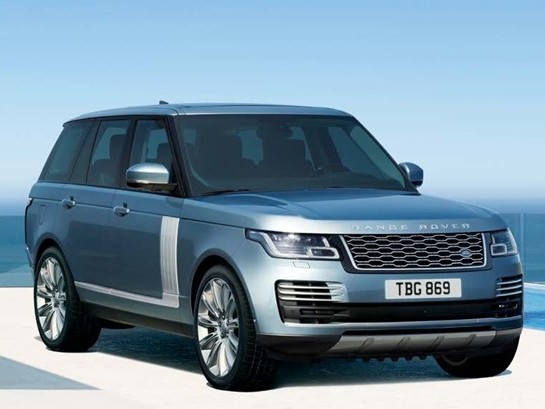
Starting from RM 1,220,000! Luxury SUV: Land Rover Range Rover, unlimited driving pleasure!
AshleyJul 16, 2024

Return to the top! Land Rover Defender D7X-R Swept the top two spots in the Dakar Rally's Production Class
RobertJan 20, 2026

Land Rover releases Defender Dakar D7X-R, returning to Dakar Rally
RobertNov 28, 2025
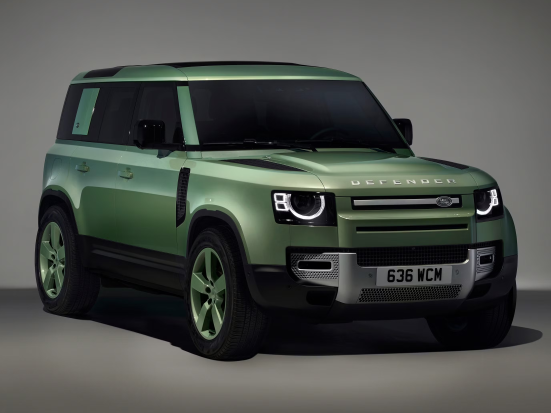
Land Rover Defender: Hardcore Chassis Conquers Any Terrain
LienMay 19, 2025
Pros
Cons