
Land Rover releases Defender Dakar D7X-R, returning to Dakar Rally
 RobertNov 28, 2025, 11:14 AM
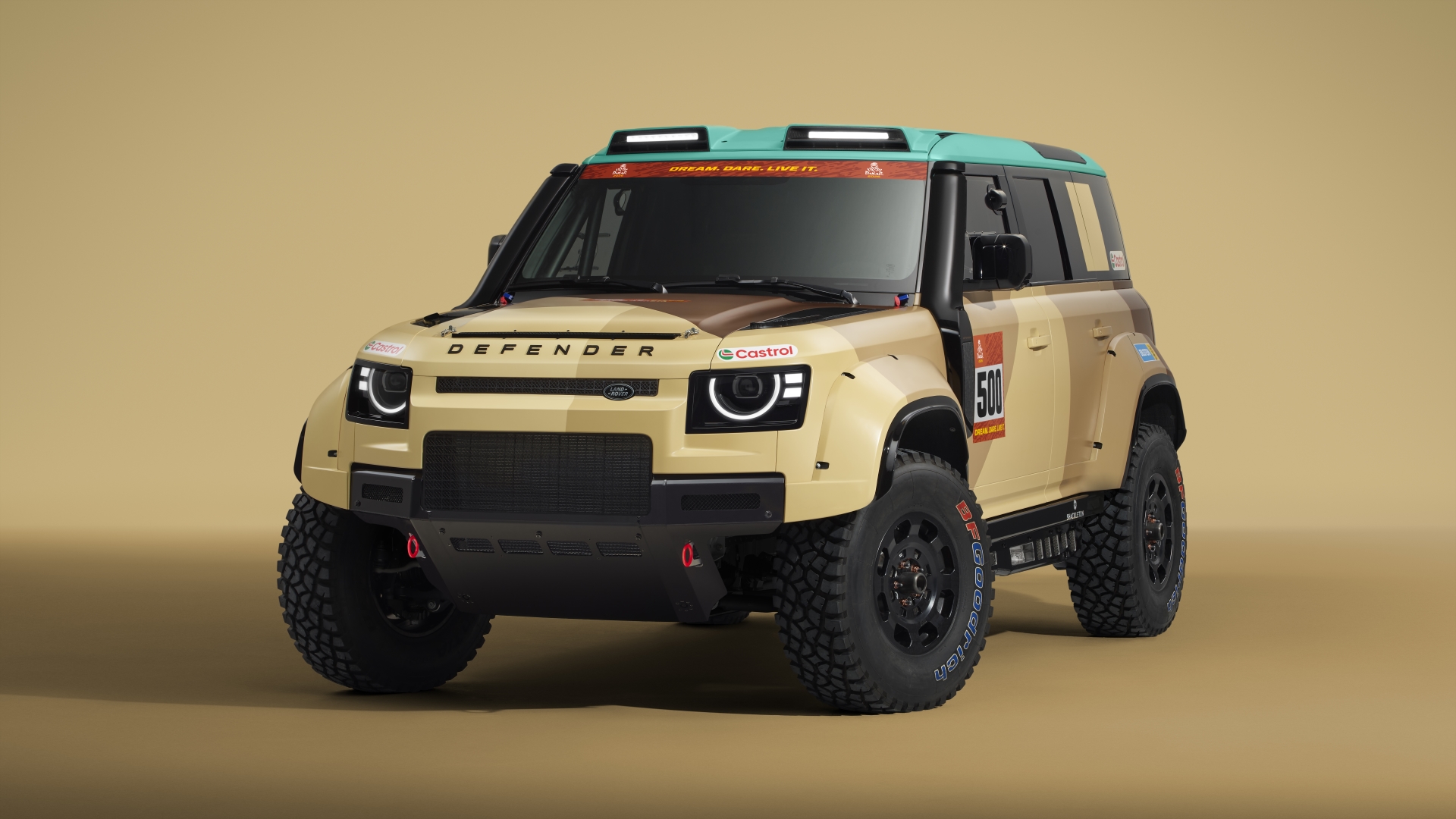
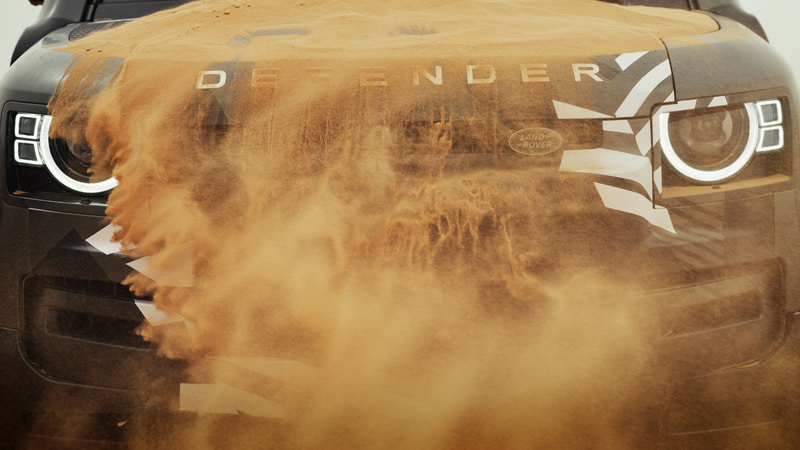
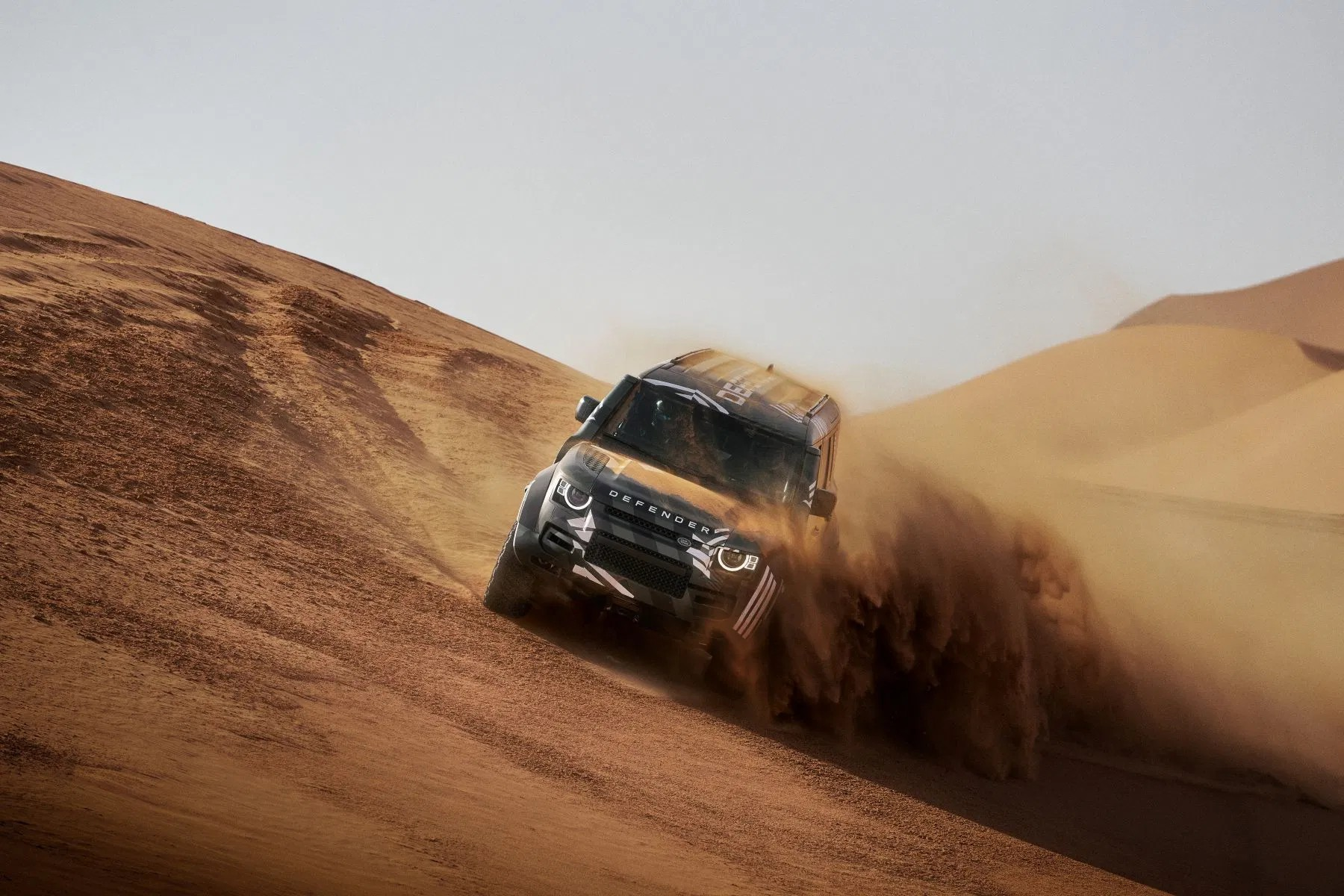
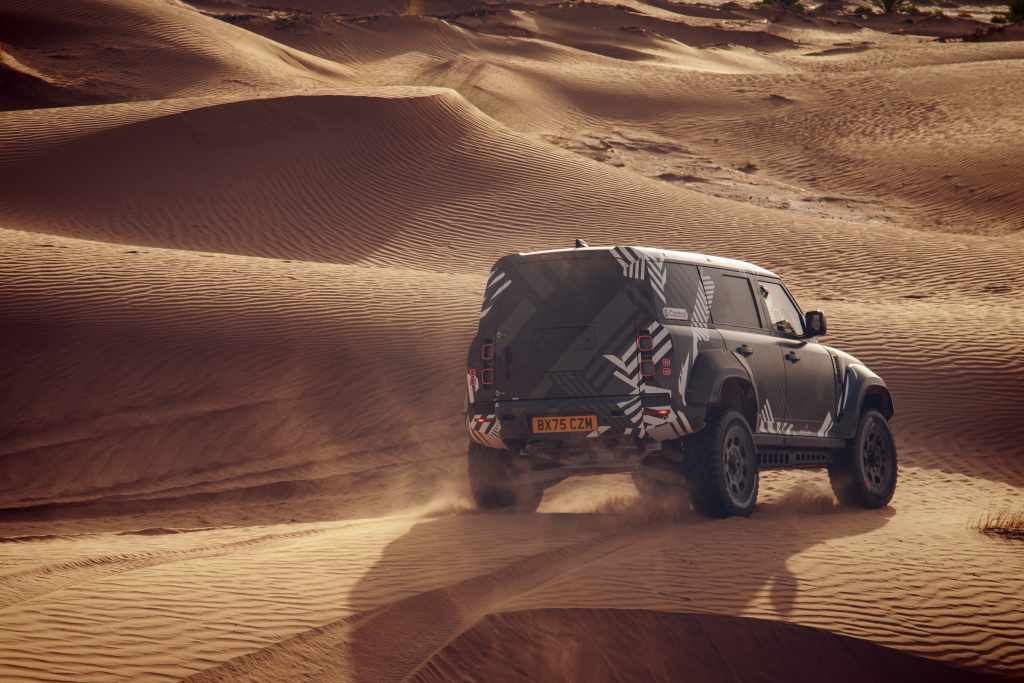
【PCauto】Land Rover has officially unveiled the all-new Defender Dakar D7X-R, a rally-racing model derived from the production Defender. This announcement signals Land Rover's return to competition in both the Dakar Rally and the World Rally-Raid Championship (W2RC) circuits, commencing in 2026.
It is worth noting that although Land Rover has long been renowned for its off-road capabilities, the brand has been absent from top-tier rally racing for some time.
The D7X-R retains the production model’s 4.4-liter twin-turbocharged V8 engine and is built on the latest Octa platform. However, engineers have equipped it with a reinforced chassis, suspension, and cooling system specifically designed for rally racing conditions.
This approach remains uncommon in modern rally racing, where most teams rely on purpose-built vehicles.
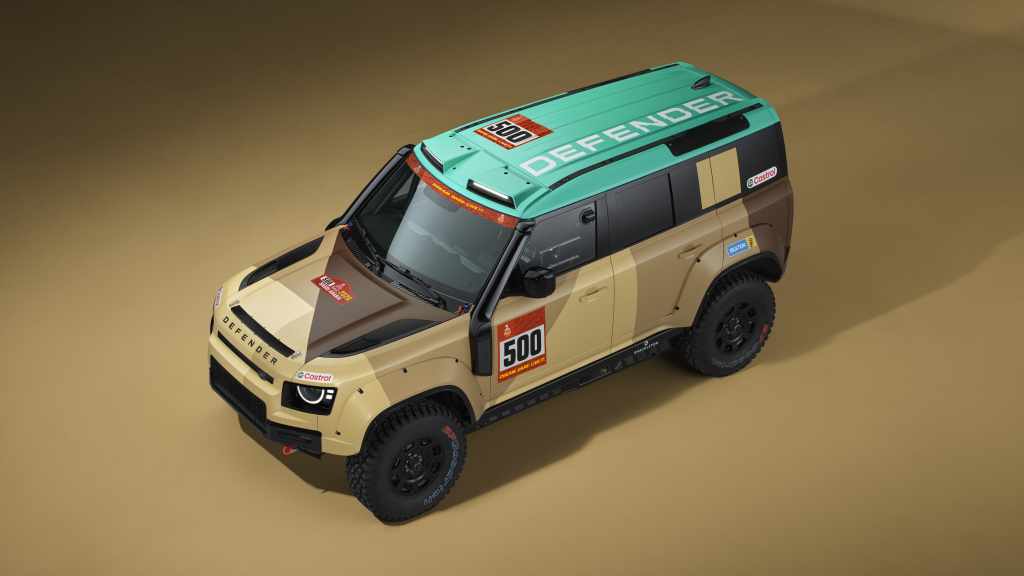
What modifications have been made to the Defender Dakar D7X-R?
The research and development philosophy of the Defender Dakar D7X-R is entirely centered on “maintaining speed, stability, and durability under extreme conditions.”
Platform and chassis
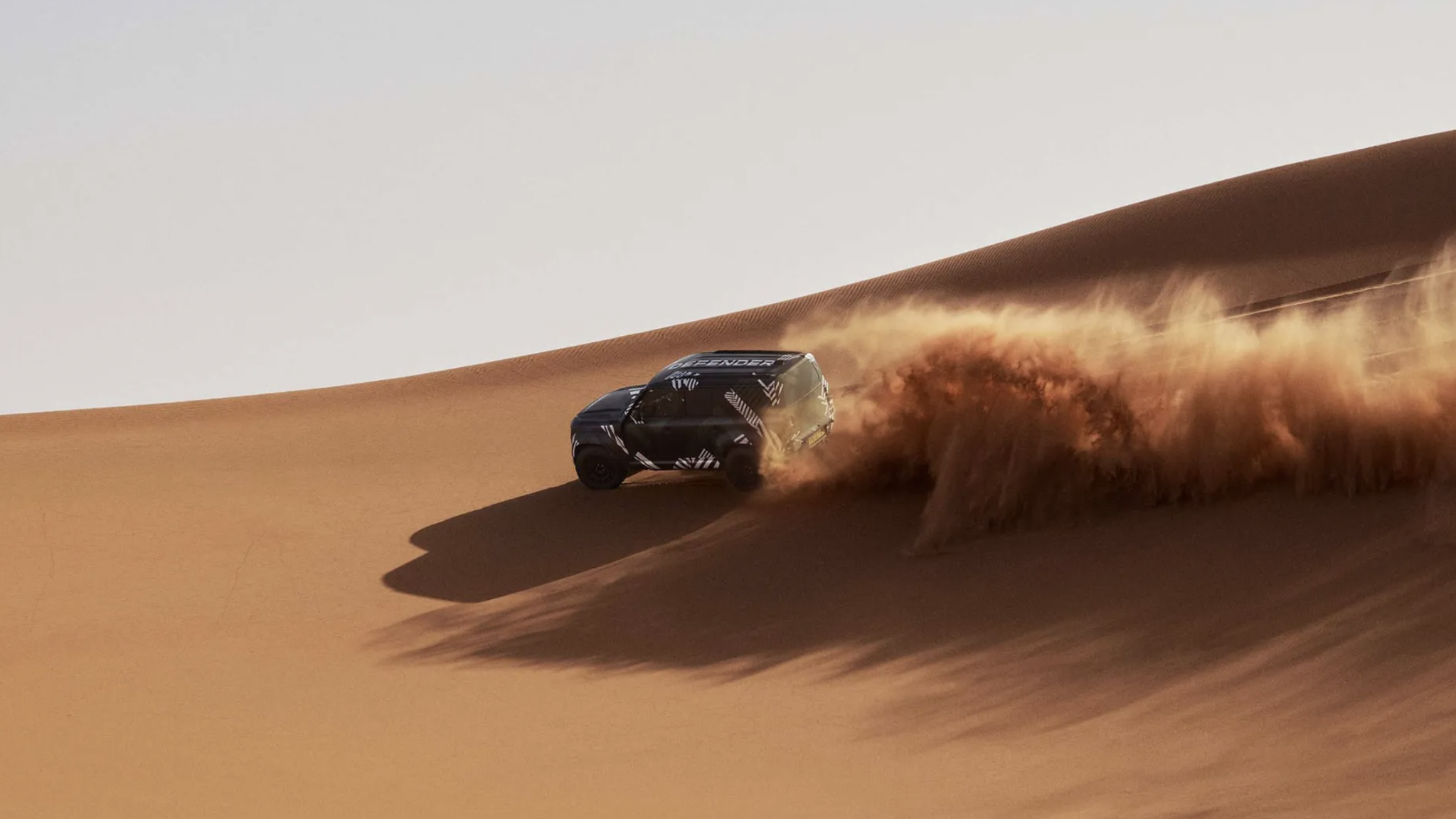
The D7X-R continues to be based on the Defender’s D7x structural architecture. While this high-strength unibody was originally designed for off-road use, Land Rover has enhanced the number of weld points, localized structural rigidity, and torsional resistance. These upgrades allow the vehicle to withstand peak loads during dune jumps and high-speed impacts over rocky terrain.
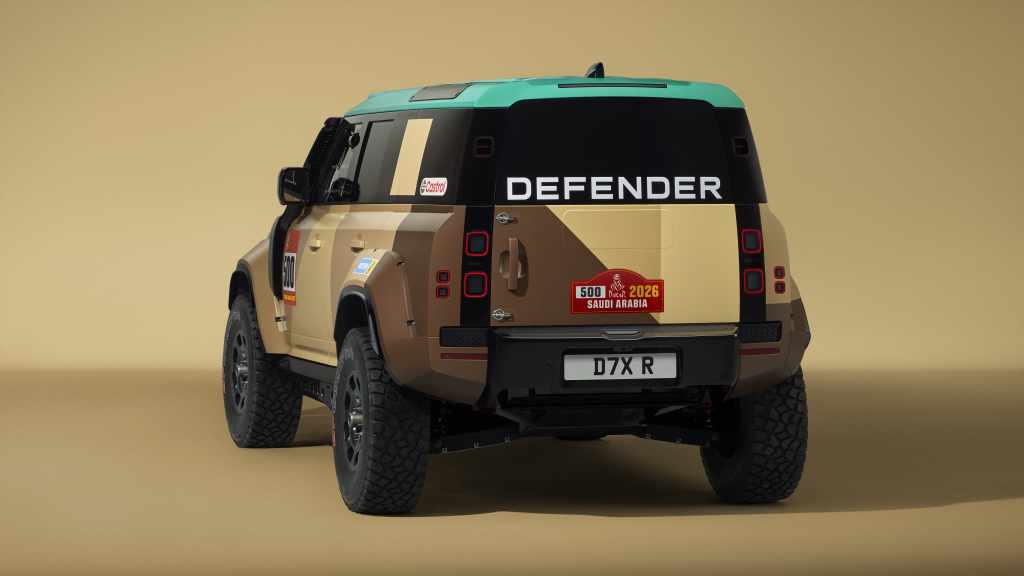
Unlike traditional tubular-frame Dakar racing cars, the D7X-R’s advantage lies in its retention of the production car’s bodywork integrity. This not only provides a regulatory advantage in the Stock category but also aligns maintenance costs, spare parts supply, and breakdown recovery with the logic of production vehicles. For a machine that must endure “over 8,000 kilometers of continuous stages,” this represents a practical and critical engineering strategy.
Powertrain enhancements
It carries over the Defender’s 4.4-liter V8 twin-turbocharged engine. Although it remains in production specification, Land Rover has reinforced the ECU calibration, thermal management, and intake/exhaust durability to meet Dakar’s demanding requirements.
More critically, the final drive ratio has been altered; the car uses a shorter gear ratio compared to the production model, enabling the engine to quickly reach its optimal torque range in high-load scenarios such as low-speed dune climbing or starting on deep sand.
This configuration sacrifices high-speed cruising efficiency and fuel economy, but in Dakar’s sandy and rocky stages, instant torque response is more critical than theoretical top speed.
Endurance and fuel capacity
Therefore, the D7X-R is equipped with a high-capacity fuel system, with an official capacity of nearly 550 liters. This enables the vehicle to maintain operational range through long non-refueling sections and reduces strategic constraints imposed by mid-stage refueling.
The substantial weight added by the large fuel tank is offset by comprehensive upgrades to the suspension, brakes, and cooling systems.
Rally-tuned suspension
The D7X-R uses long-travel dampers developed in collaboration with specialized manufacturers such as Bilstein. The rear axle features a dual shock absorber layout to handle the significant impacts from high-speed dune jumps and hard landings.
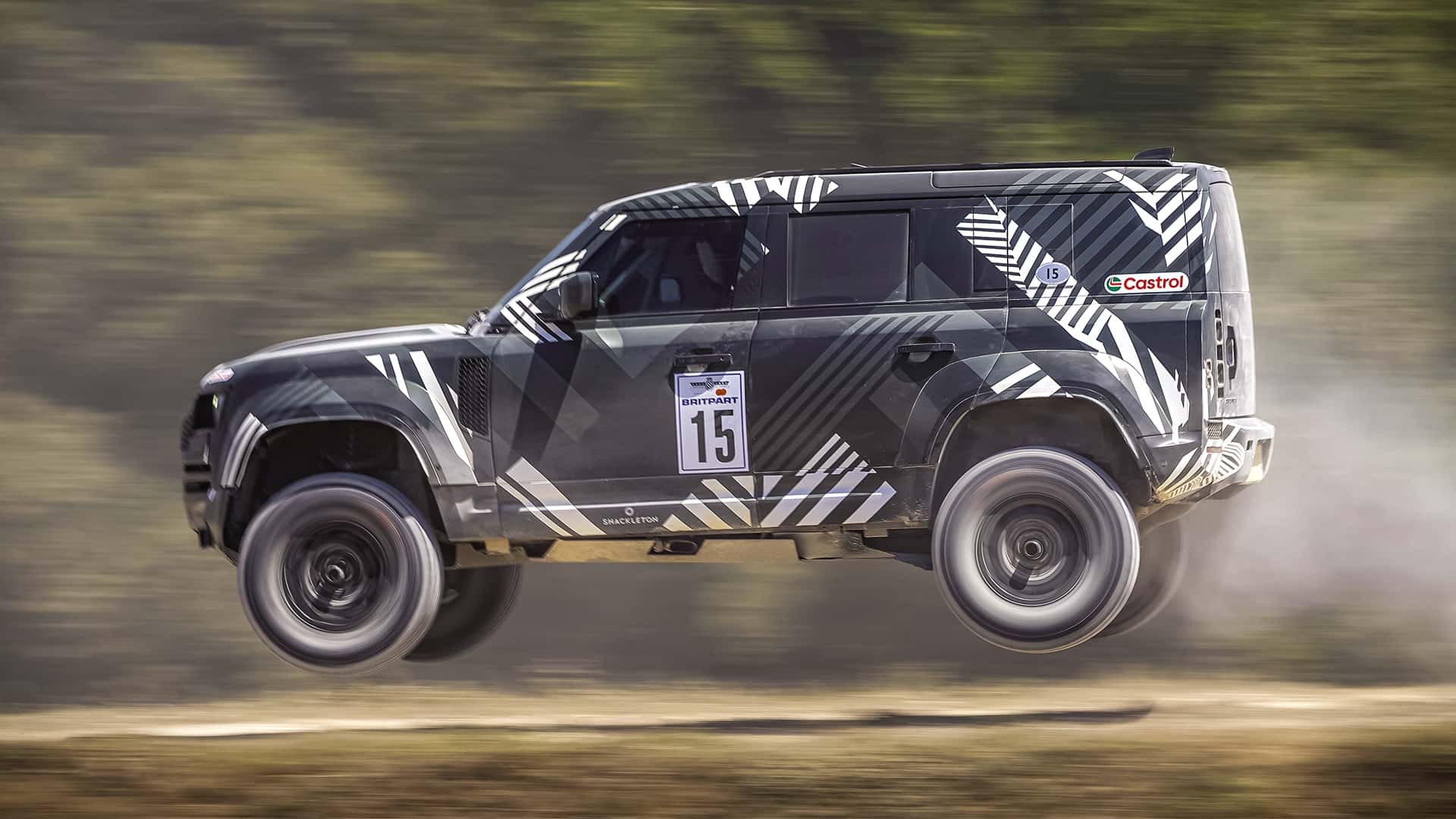
Land Rover has introduced a unique system here—the "Flight Mode".
By monitoring the vehicle’s posture in the air, it actively adjusts power delivery and suspension preloading before landing, ensuring that impact forces are distributed evenly and not transferred abruptly to the drive shaft or differential.
For races like Dakar, which involve frequent high-dune crossings and dozens of jumps daily, the “Landing Attitude Control” system can significantly influence average speed, chassis durability, and even the completion rate.
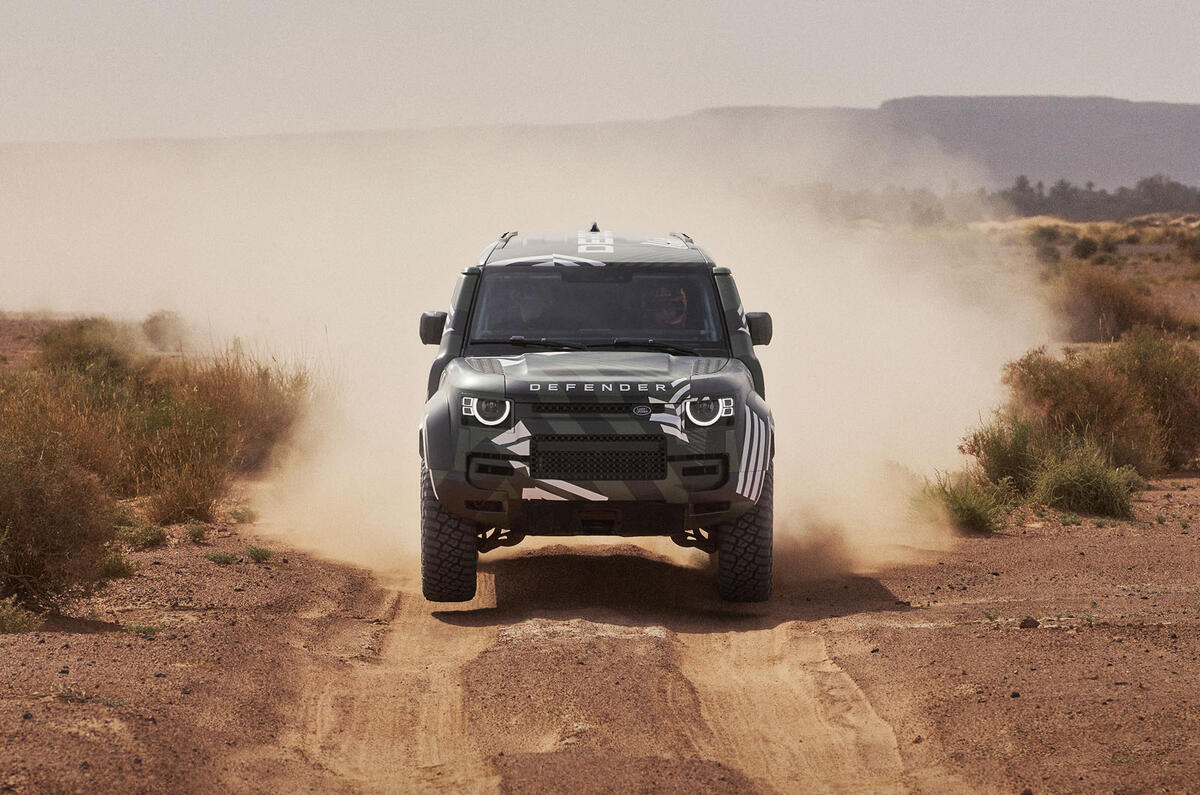
The braking system and tire specifications are also designed for durability
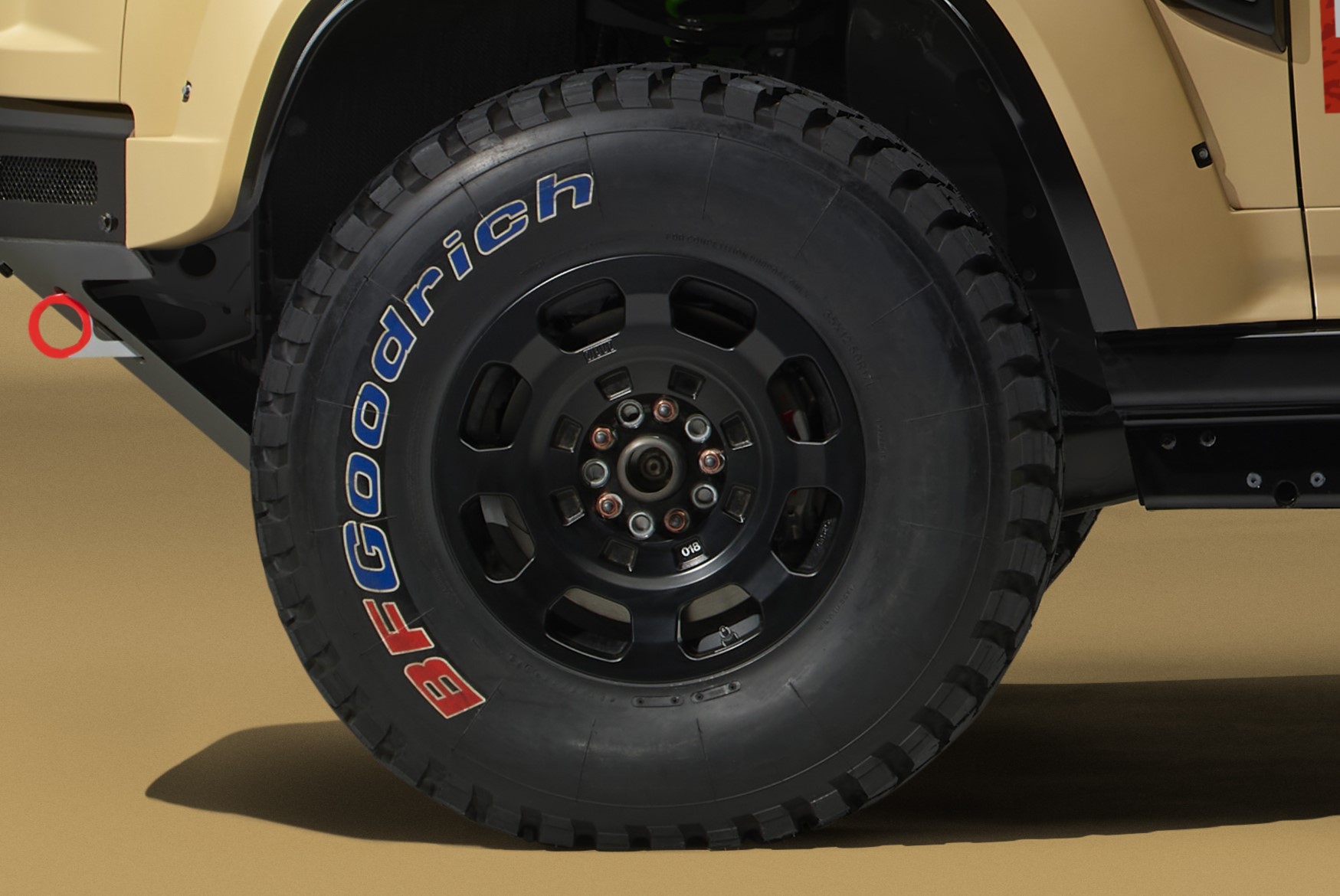
The front six-piston brake calipers, paired with enlarged ventilated discs, ensure braking stability during long downhill stretches and in high-temperature environments. The accompanying 35-inch off-road tires ensure sand flotation and gravel absorption, while also providing greater buffer space for the suspension.
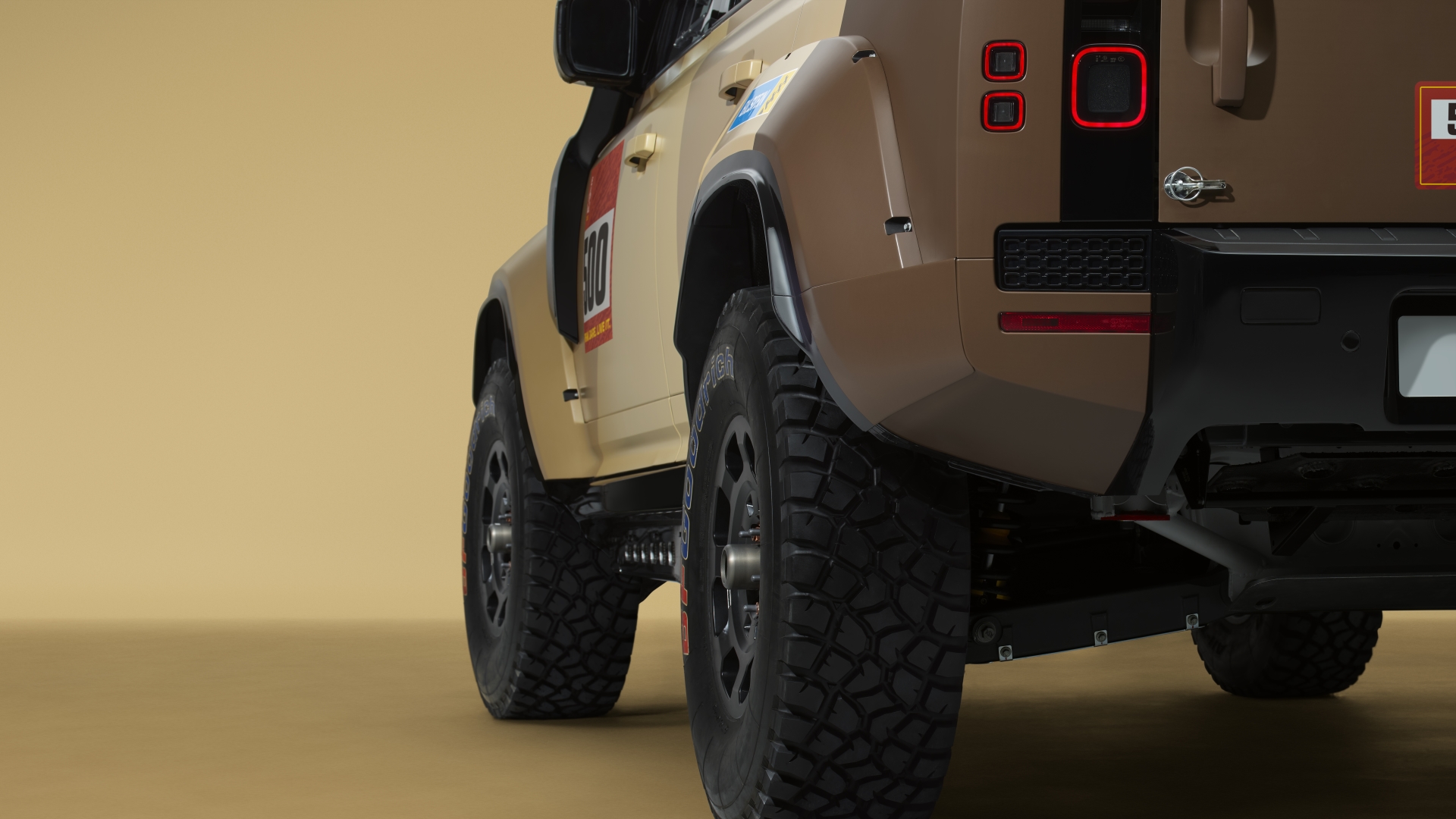
These tires endure hundreds or even thousands of lateral impacts in extreme environments, so sidewall rigidity and the number of heat-resistant layers are core indicators for Dakar race tires. The specifications of the D7X-R are geared precisely in this direction.
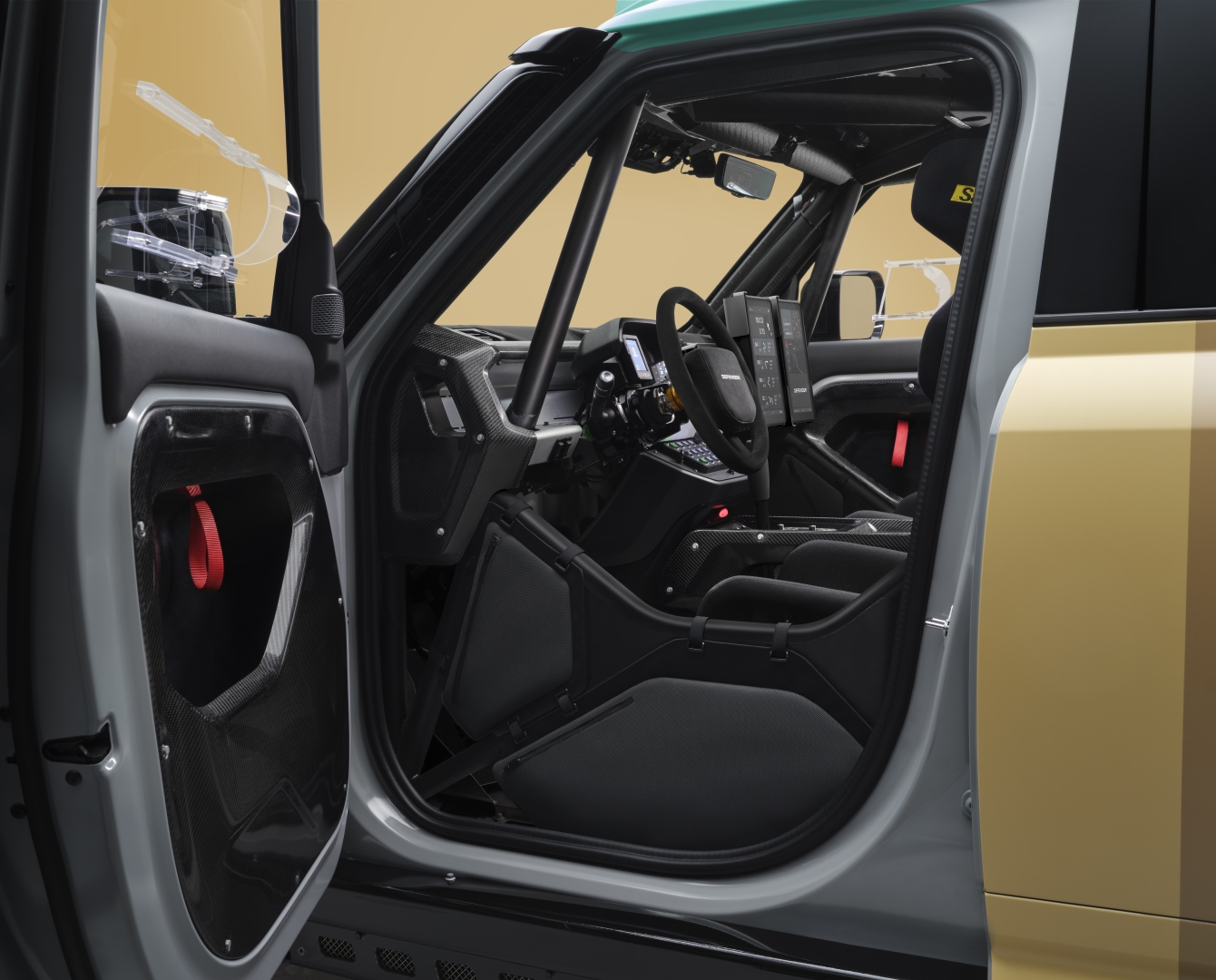
Finally, the reshaping of electronic and safety systems
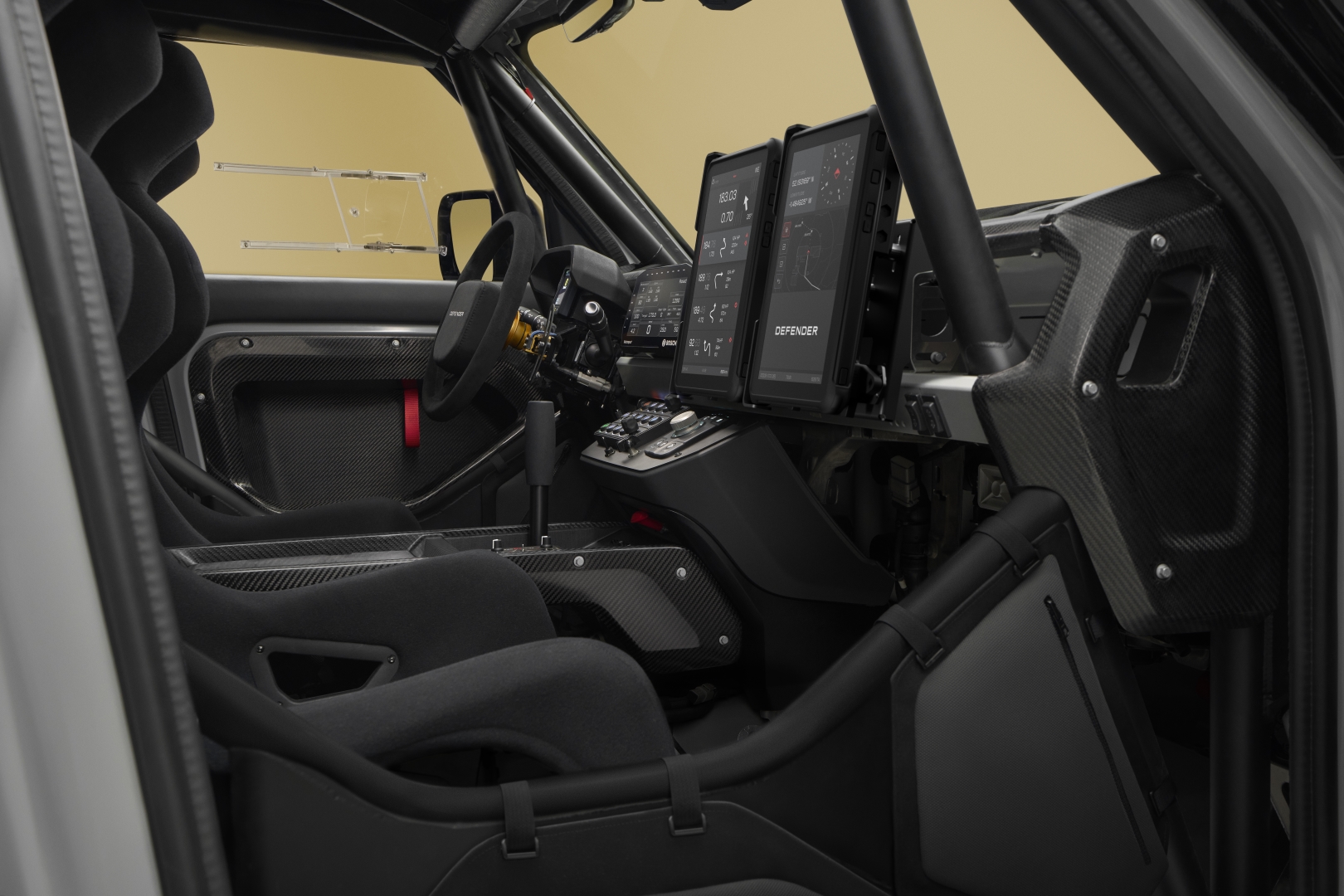
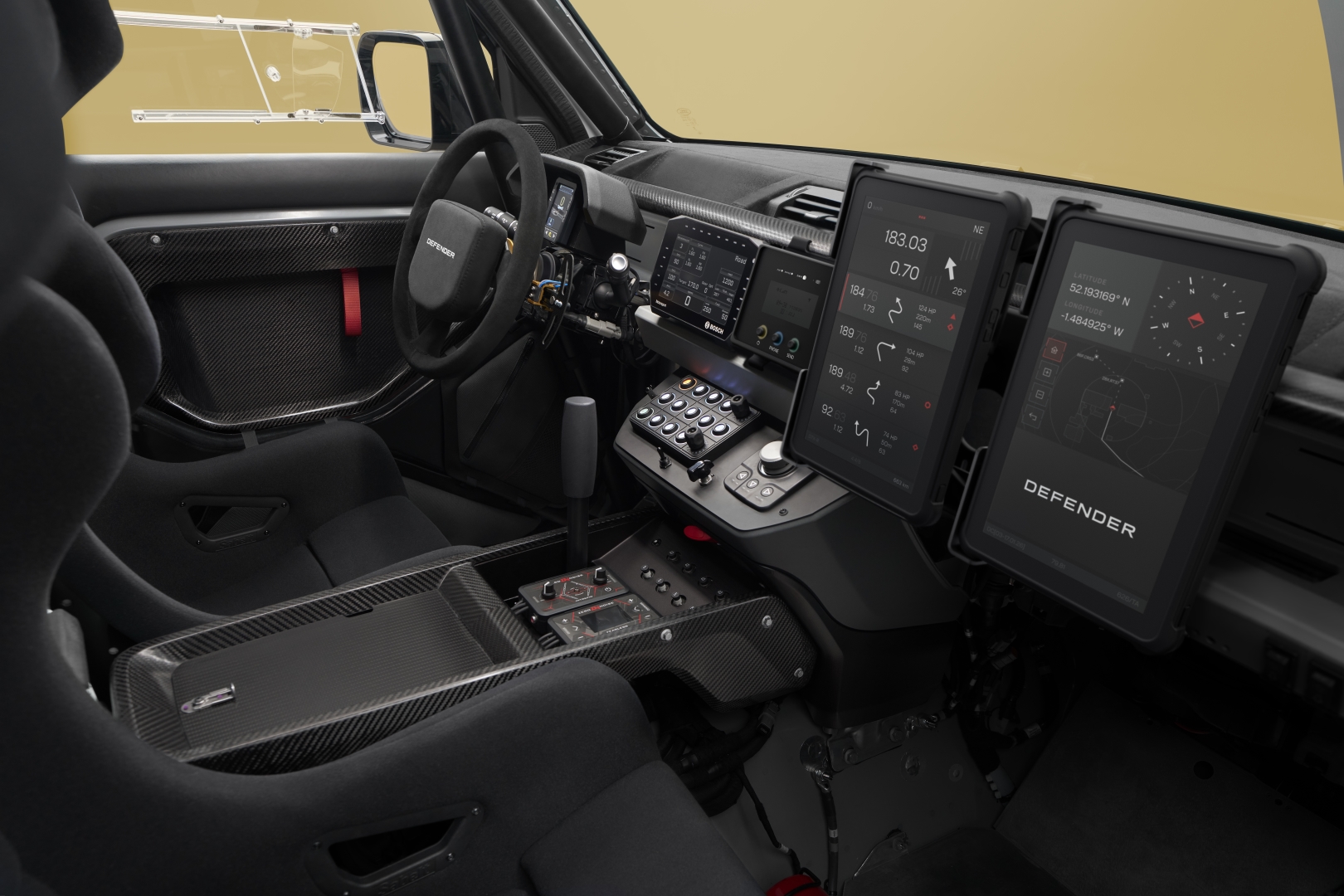
A full FIA-certified roll cage, fire suppression system, satellite navigation, an emergency rescue device, and a driver-focused interface are integrated into a cockpit designed for endurance racing.
Compared with mass-production vehicles, the D7X-R’s electronic control systems are simplified yet reliable, with built-in redundancy in critical components such as the ECU, fuel pump, and cooling system, ensuring the vehicle can continue to complete a full-day stage even in the event of partial functional failure.
What remarkable achievements has Land Rover had in Dakar?
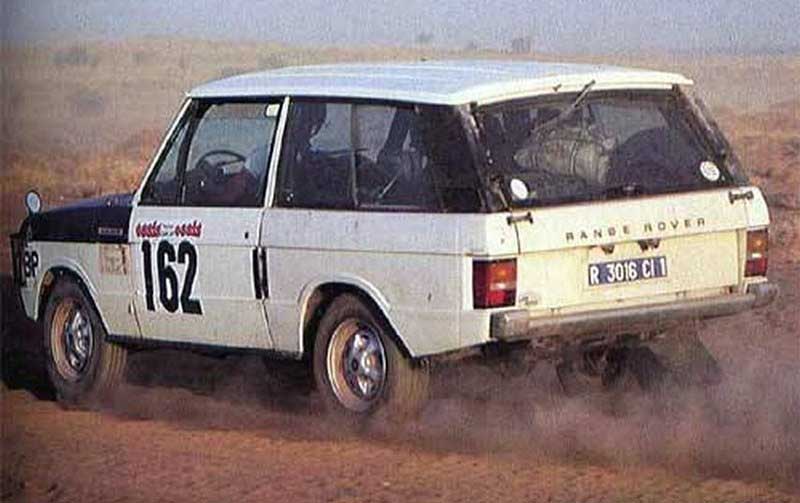
In 1979, during the first Paris–Dakar rally (later known as the Dakar Rally), a Range Rover won the “car category” championship, driven by Alain Génestier. This was Land Rover’s first victory in Dakar, which held symbolic significance and demonstrated its off-road capability to tackle extreme terrains at the time.
Two years later, in 1981, a Range Rover again claimed the championship—that year, first place in the car category was won by René Metge driving a Range Rover.
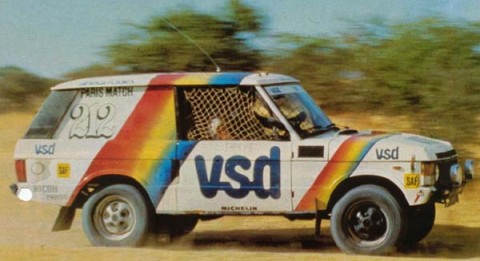
Thus, the Range Rover secured top honors for Land Rover during the Dakar Rally’s formative years. This period of history became a significant part of its off-road heritage and reputation.
These achievements demonstrate that during the less “specialized” era of Dakar, Land Rover’s mass-produced or modified off-road vehicles were competitive enough to contend with other participants and win championships. This helped establish Land Rover’s reputation as an authentic off-road vehicle manufacturer.
As the event became more professionalized, Land Rover fell into obscurity
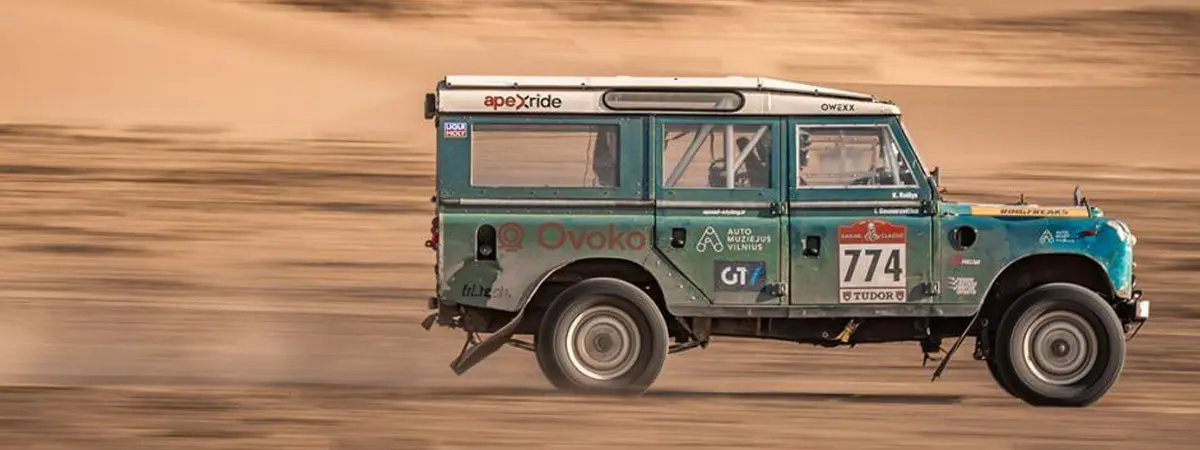
As the Dakar Rally evolved, it grew increasingly professionalized. Competitors shifted toward highly customized, lightweight chassis and race-specific tuning, rather than simply mass-produced or modified off-road vehicles. Since the mid-1980s, Land Rover’s victories have significantly decreased.
Land Rover also intends to reduce participation as a factory team
Within its broader brand strategy, Land Rover also appeared to gradually reduce its investment in factory-team participation in the Dakar Rally. In the past few decades, Land Rover has rarely appeared on the Dakar podium as a major competitor.
Although Land Rover has not participated as a main force with its own production or custom teams in recent years, the brand has not completely severed its ties with the Dakar Rally. As early as the 2010s, it participated in the event through sponsorship, supporting teams, or serving in a logistics or support role.
With the introduction of the new Defender Dakar D7X-R, Land Rover will re-enter the Dakar Rally as a factory team in 2026, marking its first dedicated works effort with a Defender-based platform.
If any infringement occurs, please contact us for deletion





Popular Cars
Model Year
Car Compare
Car Photo