
Q
Which is better, Phantom or Ghost?
 AdventureSeekOct 23, 2025, 05:44 PM
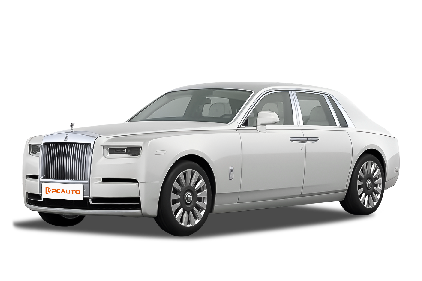
Both the Rolls-Royce Phantom and Ghost are pinnacle luxury sedans, but they carve out distinct niches in terms of positioning and character. The Phantom, as the brand's flagship, stretches longer and places the utmost emphasis on that plush rear-seat experience – it's tailor-made for buyers chasing the absolute pinnacle of prestige. That iconic coach door design and handcrafted interior? Pure, unadulterated top-tier craftsmanship. The Ghost, on the other hand, is a touch more compact but leans harder into the driving dynamics. Its powertrain's tuned with a bit more verve, though it never sacrifices that quintessential Rolls-Royce ride comfort. It's the one for the owner who actually enjoys getting behind the wheel themselves.
For Malaysian customers, both handle local roads admirably, but the Phantom's extended wheelbase might feel a bit cumbersome on tighter lanes. The Ghost's nimbleness makes it the more city-friendly companion in that regard. Notably, both share that sonorous 6.75-liter V12 heart, but the Ghost adds a 48V mild-hybrid system to eke out better fuel efficiency – a definite plus given Malaysia's not-so-friendly fuel prices. When it comes to options, the Phantom opens the door to几乎 limitless personalization, while the Ghost's offerings are a touch more standardized, though still far from basic.
At the end of the day, it all boils down to what you're after. If it's about making an uncompromising statement of luxury and nailing those business reception, the Phantom reigns supreme. But if driving engagement and everyday usability are higher on your list, the Ghost is the smarter choice.
Special Disclaimer: This content is published by users and does not represent the views or position of PCauto.
Related Q&A
Q
Is the 2018 Rolls-Royce Phantom reliable?
The 2018 Rolls-Royce Phantom, as a top-tier luxury sedan, stands out with exceptional reliability in its class. Thanks to Rolls-Royce's meticulous craftsmanship and stringent quality control, the powertrain, chassis, and electronics undergo rigorous testing to ensure long-term stability. Especially in Malaysia's hot and rainy climate, its body rust-proofing and air conditioning system are optimized for high-temperature environments, further enhancing durability. While maintenance costs for the Phantom are on the higher side, regular servicing at authorized centers effectively prevents potential issues. Rolls-Royce's after-sales service, including global warranty and roadside assistance, adds an extra layer of security for owners. For Malaysian consumers, when buying a luxury car, local road conditions and fuel quality should also be considered. It's advisable to choose official import channels to ensure vehicle adaptability. Additionally, the Phantom's customization options allow owners to tailor configurations to personal preferences, which is one of its unique selling points. Overall, the 2018 Phantom excels in both reliability and luxury experience, making it ideal for buyers seeking the ultimate in quality.
 AimOct 23, 2025
Q
Is the Phantom considered a luxury car?
The Rolls-Royce Phantom is undoubtedly a top-tier luxury car, representing the pinnacle of automotive craftsmanship. Renowned worldwide for its exquisite hand-built construction, ultimate comfort, and unparalleled brand heritage, the Phantom stands as a true icon of opulence. Here in the Malaysian market, it's more than just a car—it's a powerful symbol of status and prestige, highly coveted by discerning high-end consumers.
From its signature coach doors that open gracefully to the lavish interior adorned with premium leather and rich wood veneers, every detail exudes luxury. Add to that the highly personalized customization options, and the Phantom perfectly embodies what "ultra-luxury" truly means. It's also worth noting that Malaysia's hot and rainy climate can be tough on vehicles, but the Phantom's top-shelf materials and precision Craftsmanship ensure it holds up exceptionally well in local conditions, maintaining its allure through the years.
Sure, there are rivals like the Bentley Mulsanne and Mercedes-Maybach S-Class in the same league, but the Phantom still holds a unique edge when it comes to brand prestige and the depth of handcrafted customization it offers. For Malaysian buyers who demand nothing but the absolute best in luxury, the Phantom is undoubtedly the crowning choice at the very top of the pyramid.
 WanderPathOct 23, 2025
Q
How much is the 2018 Phantom?
The 2018 Rolls-Royce Phantom's price tag in Malaysia can vary quite a bit depending on the spec, optional extras, and all the taxes involved. Brand-new, you're typically looking at somewhere between 4 million to 5 million Ringgit, but that really hinges on the dealer's quote and how bespoke you want your ride to be. For used models, the price fluctuates based on condition, mileage, and service history, usually landing in the 2.5 million to 3.5 million Ringgit ballpark.
As Rolls-Royce's flagship, the Phantom is famous for its handcrafted interior, that smooth 6.75-liter V12 engine, and the iconic "Magic Carpet" suspension system—total overkill in the best way for folks who demand the absolute pinnacle of luxury and comfort. Over here in Malaysia, these ultra-luxury machines get hit with pretty steep import duties and consumption taxes, so you’re definitely paying a premium compared to their home market.
If you’re thinking about picking one up, I’d strongly suggest reaching out to the official dealers for the latest quotes. And if you’re eyeing a used Phantom, make sure to check for a full service history and proper import documentation to guarantee the car’s up to scratch. Also, keep in mind that maintaining a Phantom isn’t cheap—factor in a solid budget for servicing to keep that luxury experience top-notch for the long haul.
 StrongWillpowerOct 23, 2025
Popular Cars
Model Year
Car Compare
Car Photo
Related Models
 Cars
CarsLatest Q&A
Q
Is AMT similar to automatic?
There are significant differences between AMT transmissions and automatic transmissions (AT) in terms of core structure and driving experience. AMT is essentially an electronically automated version of a manual transmission, simulating manual clutch operation and gear shifting through a computerized control system while retaining the gear set structure of manual transmissions. As a result, it offers higher transmission efficiency, with fuel consumption approximately 8%-12% lower than AT, making it particularly suitable for highway or long-distance driving. However, it may exhibit jerking similar to manual transmissions during low-speed gear shifts, especially noticeable in congested traffic conditions.
AT transmissions rely on torque converters for power transfer, delivering smooth and seamless gear shifts that appeal to comfort-oriented users. However, their complex structure (incorporating planetary gear sets, hydraulic systems, etc.) results in higher maintenance costs. A single service may cost between 800 to 1,500 ringgit, whereas AMT only requires gear oil replacement at approximately 400 ringgit.
From a market perspective, AMT is predominantly used in budget vehicles or commercial models priced below 80,000 ringgit, while AT is typically featured in mid-to-high-end vehicles. Consumers should select based on actual needs: AMT suits those prioritizing fuel efficiency and low maintenance costs, while AT better serves those valuing comfort. Notably, recent advancements in AMT electronic control technology have significantly mitigated jerking issues, though test drives should still emphasize low-speed performance evaluation.
 AriaMar 26, 2026
Q
Which is better, DCT or AT?
DCT (Dual-Clutch Transmission) and AT (Automatic Transmission) each have their own advantages and disadvantages, and the choice should be based on personal driving needs. AT transmissions transfer power through a torque converter, offering excellent shift smoothness, making them suitable for urban commuting or novice drivers. However, they tend to have higher fuel consumption, and vehicles equipped with them are usually more expensive. DCT transmissions utilize a dual-clutch structure, featuring fast shift speeds and high power transmission efficiency, which provides a more direct driving experience—particularly suitable for users seeking a sporty feel. However, they may exhibit jerking at low speeds and have relatively high maintenance costs. If durability and comfort are priorities, AT is the more reliable choice; if power responsiveness and driving pleasure are preferred, wet DCT (such as Volkswagen DSG) performs better, though dry DCT models should be avoided in prolonged stop-and-go traffic conditions. Additionally, CVT transmissions excel in smoothness and fuel efficiency, making them ideal for daily commuting, but they lack driving excitement. It is recommended to test-drive before purchasing, as tuning varies significantly across brands, and real-world experience is more important than theoretical specifications.
 FlutteringMar 26, 2026
Q
Is Amt good or bad?
AMT gearboxes have a significant cost advantage in the local market, typically being around 5,000 Ringgit cheaper than models equipped with conventional automatic transmissions. Their fuel efficiency is comparable to manual transmissions, resulting in long-term fuel savings. Featuring a straightforward design, they achieve transmission efficiency exceeding 90% with relatively low maintenance costs, making them ideal for practicality-oriented consumers. However, their shifting logic contains inherent limitations: gear changes between 1st and 2nd cause 0.3-0.5 second power interruptions, while unintended upshifts on inclines may reduce engine speed by 15%-20%, compromising driving smoothness. For urban commuters or budget-conscious buyers, AMT offers excellent value, though those prioritizing premium driving dynamics should consider alternative transmission types. Some domestic models like the Perodua Axia employ enhanced AMT systems, where optimized shift programming has reduced gearshift shock by approximately 30%.
 RainbowsMar 26, 2026
Q
Which gives better mileage, CVT or AMT?
From the perspective of fuel economy, CVT transmissions generally perform better under urban driving conditions. Their continuously variable design allows the engine to consistently operate within the optimal speed range, significantly reducing fuel consumption during frequent starts and stops. Test data shows that their fuel consumption in urban driving conditions is 10% to 15% lower than that of comparable models. AMT transmissions, on the other hand, inherit the high transmission efficiency of manual transmissions, delivering fuel efficiency close to manual transmissions during high-speed cruising. This makes them particularly suitable for long-distance driving in large-displacement vehicles. However, due to power interruption during gear shifts, their overall fuel consumption may be 5% to 8% higher than CVTs.
The difference in fuel-saving characteristics between the two transmissions stems from their technical principles: CVTs achieve continuous variability through steel belts and pulleys, eliminating the fixed gear ratio limitations of traditional transmissions; AMTs simulate manual gear changes via electronic control systems while maintaining the mechanical efficiency of gear transmission. Notably, actual fuel consumption is also influenced by driving habits. Smooth acceleration and anticipatory deceleration can maximize the transmissions' fuel-saving potential. If the vehicle budget permits and urban commuting is the primary use, CVTs offer a more economical choice. For frequent highway driving with an emphasis on cost-effectiveness, AMTs are equally worth considering.
 RubyBlazeMar 26, 2026
Q
Which is cheaper, AMT or CVT?
In terms of gearbox cost, AMT is usually more economical than CVT. Essentially, AMT is a manual transmission equipped with an electronic control unit, featuring a simple structure and low maintenance costs. The unit price ranges from approximately 5,000 to 8,000 ringgit, making it suitable for budget-conscious consumers or those who prioritize long-term operating costs. CVT incurs higher manufacturing costs due to its precision steel belt transmission system and continuous variable transmission technology, with a unit price of about 7,000 to 10,000 ringgit. However, it delivers a smoother driving experience and superior fuel efficiency. The primary differences between the two lie in technical complexity: AMT retains the gear-shifting mechanism, resulting in noticeable shift shock; CVT achieves linear power output through stepless speed variation but requires periodic belt inspection and incurs higher maintenance expenses. For those prioritizing initial cost and basic transportation needs, AMT offers better value; if comfort and long-term fuel economy are priorities, CVT represents a more worthwhile investment. Note that actual prices may vary based on vehicle model, brand, and local supply chain factors.
 ShadowProwlMar 26, 2026

Pros
Cons