

2014 Maxus V80 2.5L Bas Pekerja Window Van 15 Seater Review

 Share
Share/Exterior/001.jpg)
/Exterior/002.jpg)
/Exterior/003.jpg)
/Exterior/005.jpg)
 Segment
 Body Type
 Capacity(L)
 Engine Power(PS)
 Transmission
 Driven Wheels
In Malaysia's commercial vehicle market, there aren't many options that cater to the need for 15-passenger seating while balancing everyday commuting practicality, especially for small to medium-sized businesses or team users with limited budgets who require a balance of space and basic configurations. The Maxus V80 2.5L Bas Pekerja Window Van 15 Seater by SAIC Motor is aimed precisely at this niche market. Its suggested price of RM139,000, length under 7 meters, and standard features such as parking sensors and a 220V power outlet are its core selling points for attracting target users. This time, we conducted a test drive with the vehicle, and the core purpose was to verify whether it can truly meet the needs for daily team commuting or short-distance shuttle services in terms of space, power, and practicality.
Starting with the exterior, the Maxus V80 follows the typical practical design route for commercial vehicles without excessive decorative elements. The boxy front design ensures optimal interior space utilization, while the large front grille, combined with chrome trim, prevents the front from looking too plain. Halogen headlights are a common configuration for commercial vehicles at this price point; their illumination is sufficient for daily use, and their durability aligns with the positioning of a commercial vehicle. The side profile features straight lines, with a length of 5700mm and a wheelbase of 3850mm fully serving the 15-seat layout. The side windows are large, ensuring that rear passengers don’t feel claustrophobic. The 16-inch wheels paired with 215/75 R16 tires have thick sidewalls, providing better cushioning on the unpaved roads commonly found in Malaysia’s rural areas. The rear design is also simple, featuring vertical tailgates that make it convenient to load and unload small items. The vertically aligned tail lights offer decent recognition. Overall, the exterior design of this vehicle is entirely focused on practicality, with no superfluous elements, aligning with its commercial vehicle identity.
Sitting inside the cockpit, the interior styling also maintains a practical approach. The dashboard uses hard plastic materials, which may not feel premium but are wear-resistant and easy to clean, aligning with scenarios where the vehicle is frequently used by multiple people. The dashboard layout is intuitive, with rotary knobs and buttons for the manual air conditioning system, making it easy for even new drivers to operate. The standard 220V power outlet is highly practical and convenient for users who need to charge devices temporarily. The driver’s seat supports electric adjustment and has a memory function, making it adaptable for drivers of varying heights and allowing for relatively comfortable positions during long drives. The front passenger seat supports manual adjustment and can be folded flat, providing extra storage space for long tools or items. The rear seats are arranged in a 2+3+3+3+4 layout (some models are 2+3+3+3+4, depending on the specific vehicle), with each seat equipped with individual headrests. The rear seats also support manual reclining, allowing passengers to slightly adjust the angle of the backrest, relieving fatigue during long rides. The interior offers decent storage space, with door panel pockets large enough for water bottles and storage compartments under the dashboard for items like phones or receipts.
Space performance is one of the key advantages of this vehicle. The 3850mm wheelbase provides ample legroom in the rear. When all 15 seats are occupied by adults, everyone still has basic space to move without feeling overly cramped. The trunk space is limited when all 15 seats are occupied and can only accommodate small personal luggage. However, if there are only about 10 passengers, folding down the last row of seats will create a larger storage area, meeting luggage-carrying needs for short-distance transit. Rear air conditioning is a standard feature, ensuring cooling for all passengers in the vehicle. This is particularly practical in Malaysia’s hot weather.
Powertrain-wise, this vehicle is equipped with a 2.5L naturally aspirated diesel engine, delivering a maximum horsepower of 138PS, and its peak torque is available at 1800rpm. It is paired with a manual transmission. During acceleration, the power response is not particularly quick, but the low-end torque advantage of the diesel engine is apparent. When fully loaded with 15 people, as long as you are willing to press the accelerator, starting and uphill driving is not overly strenuous. When driving on urban roads, gear shifting is fairly smooth, and the clutch's engagement point is clear, making it relatively easy for novices to adapt. At highway speeds, the engine maintains about 2500rpm at 100km/h. Noise control is at a normal level for commercial vehicles, with wind noise and tire noise within an acceptable range.
In terms of handling, the steering wheel has moderate weight, and although the directional precision is not exceptionally sharp, it is entirely adequate for a commercial vehicle. The suspension system uses a front MacPherson independent suspension and a rear leaf spring non-independent suspension (subject to the actual vehicle), achieving a balance between load-bearing capacity and comfort. On flat roads, the ride comfort is quite good, but on bumpy roads, the rear suspension's shock absorption is average, causing noticeable vibrations for rear passengers. The standard ABS anti-lock braking system and reverse radar enhance day-to-day driving safety, particularly when reversing, as the radar alerts can help the driver avoid scrapes and collisions.
In terms of fuel consumption, the official combined fuel consumption is 9.1L/100km. During our test drive, with 10 passengers on board, 60% urban roads, and 40% highways, the actual fuel consumption was about 10.5L/100km. This performance is fairly standard and within an acceptable range for a 15-seater commercial vehicle.
In conclusion, the core strengths of the Maxus V80 2.5L Bas Pekerja Window Van 15 Seater are significant: the spacious 15-seater design meets team commuting needs, while practical features like power-adjustable driver seats, 220V power outlets, and rear air conditioning enhance usability. Priced at 139,000 MYR, it offers a certain level of cost-effectiveness within its class. Compared to competitors like the Toyota Hiace, it is more affordable and comes with more features; however, it may slightly lag behind the Hiace in terms of brand retention value and durability reputation.
The target audience for this vehicle is clear: small and medium-sized enterprises in need of daily team commuting, hotels requiring short-distance shuttle services, and travel agencies running short-distance tours. It is not a vehicle designed for luxury or performance, but it is a practical tool that meets basic user needs. If you need an affordable, spacious, and practical 15-seater commuter vehicle, the Maxus V80 Bas Pekerja is worth considering.
Maxus V80 Loan Calculator
More Maxus Reviews
Cars With Similar Price And Features
1
Rank in Commercial
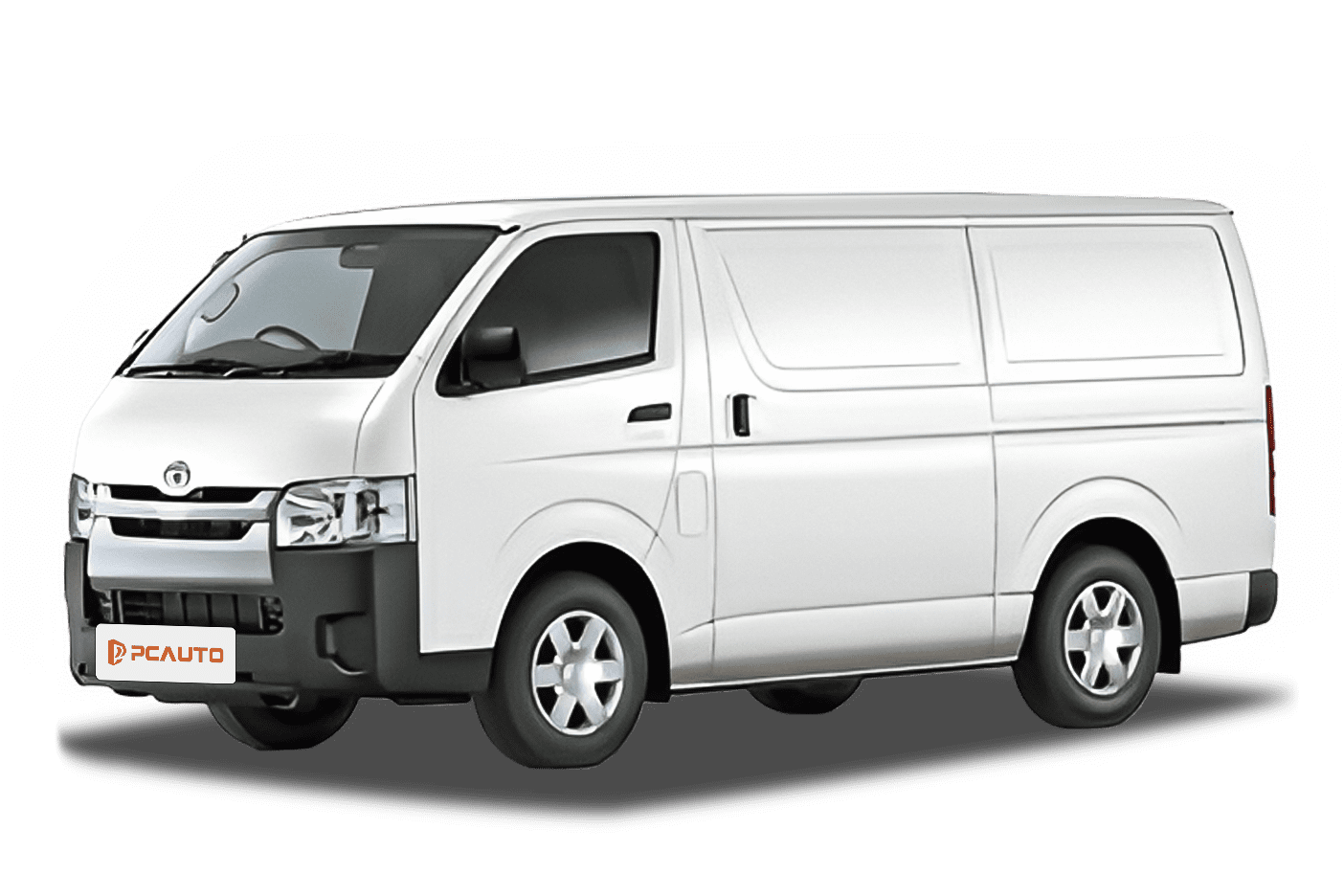
2018 Toyota Hiace Panel Van 2.5 Turbo Diesel is a small van that balances durability, off-road capability with four-wheel drive, and practical configurations, suitable for urban deliveries and rural unpaved roads.