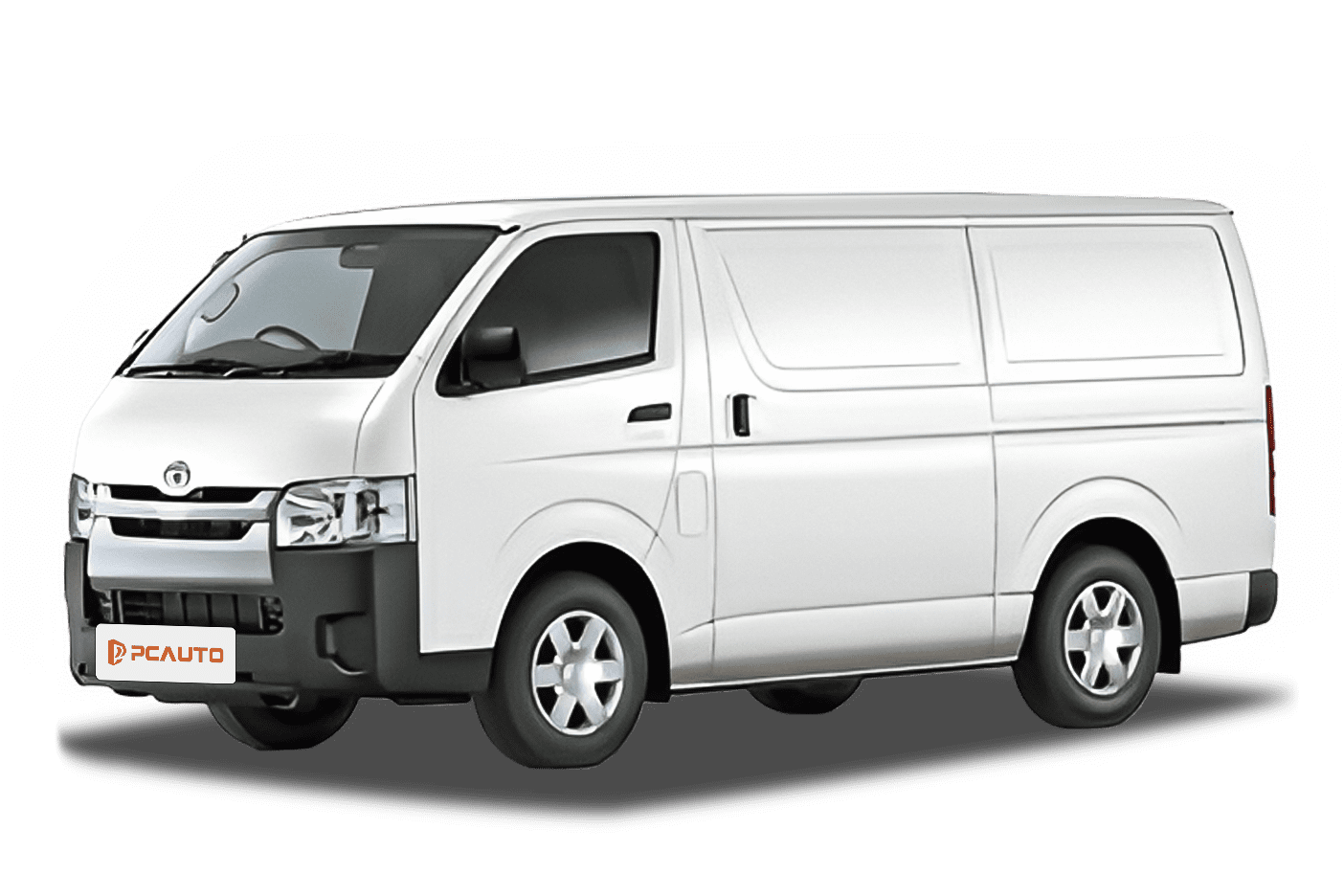
Maxus photo

2014 Maxus V80 2.5L Window Van 12 Seater Review

2014 Maxus V80 2.5L Window Van 12 Seater is a 12-seater commercial vehicle that combines spacious interior, practical features, and durable diesel power, catering to the needs of small and medium-sized enterprises, travel agencies, and large families.
Maxus V80 photo
Maxus V80 photo
Maxus V80 photo
Maxus V80 photo
Maxus V80 photo
RM 131,901
2014 Maxus V80 2.5L Window Van 12 Seater
Segment
Commercial
Body Type
Commercial
Capacity(L)
2.5
Engine Power(PS)
138
Transmission
MT
Driven Wheels
Front Wheel Drive
Review
User Review
Specs

In Malaysia's commercial vehicle market, 12-seater passenger vans have always been a necessity for small and medium-sized enterprises, travel agencies, or large families — they need to meet the daily commuting capacity while maintaining a certain level of comfort and practicality. The 2014 Maxus V80 2.5L Window Van 12 Seater, as one of the early representatives of SAIC Maxus entering the local market, is marketed with "large space + high configuration + durable diesel power" as its core selling points, and it still maintains a certain level of popularity in the second-hand market. In this review, we will focus on its space utilization, actual performance of the diesel engine, and the daily driving and riding experience of a 12-seater van to see if this vehicle can still meet the needs of today's users.

From a distance, the V80's exterior continues the classic boxy design of commercial vehicles, with straight and simple lines and no excessive ornamental elements. At the front, the polygonal front grille is paired with two horizontal chrome strips, with the Maxus brand logo in the center, adding a touch of stability to the visual impression. The front headlights use halogen light sources, have a square shape, and are connected to the grille, achieving a decent level of overall harmony. On the side of the vehicle, its dimensions of 5700mm in length, 2383mm in width, and 2345mm in height, along with an ultra-long wheelbase of 3850mm, cement its foundation as a spacious vehicle. The vehicle features a five-door design, with a large sliding door for easier access for rear passengers. At the back, the upright rear windshield is matched with simple tail lamp units, and rear parking sensors are installed at the bottom—functional design remains the primary approach.

Opening the door reveals an interior style leaning towards practicality. The dashboard layout is straightforward, and most areas utilize hard plastic materials, consistent with its commercial vehicle positioning, but the edges are finished neatly without noticeable roughness. The central console features a basic radio and air conditioning control knobs, with simple and direct operation logic, allowing even beginners to get the hang of it quickly. In terms of configuration, the highlight is the standard 220V/230V power socket, which is very practical for users needing to work or charge devices inside the car; the Keyless Operation system enhances daily convenience. As for seating, the driver's seat supports manual adjustment, the front passenger seat can fold flat, and all 10 rear seats have manual recline adjustment. While not as convenient as electric adjustments, it suffices for basic seating comfort.

Space performance is the core strength of the V80. The 3850mm wheelbase provides ample space for both the front and rear rows. Even a passenger with a height of 175cm sitting in the last row would still have about one fist's worth of legroom, and the headroom is as high as two fists, leaving no sense of confinement. Regarding storage capabilities, the front door storage slots and the storage compartment below the dashboard can hold personal items, while the gaps between the rear seats can accommodate small luggage. Notably, the rear rows come with independent air conditioning, with air vents for each zone, ensuring the comfort of all passengers. Indoor lighting fixtures are well-distributed, providing adequate brightness inside the vehicle at night.

In terms of power, the V80 is equipped with a 2.5L naturally aspirated diesel engine, producing a maximum horsepower of 138PS, reaching peak power at 3800rpm, with maximum torque available at 1800rpm. Paired with a manual gearbox, the power output is smooth during startup. Although it lacks the aggressiveness of a turbocharged engine, it performs adequately when carrying 12 people and some light luggage, as long as the accelerator is pushed. During daily driving, the engine offers abundant torque at low RPMs, making urban stop-and-go traffic or uphill drives feel effortless. At highway speeds, while acceleration after reaching 100km/h shows some lack of power reserves, cruising within legal speed limits poses no issues. There is only a standard driving mode without additional selections, which accommodates the driving habits of most users.

In terms of handling, the steering wheel has a moderate turning force with slightly excessive play, but the direction is relatively precise, in line with the tuning style of commercial vehicles. The front suspension adopts a MacPherson independent suspension, while the rear suspension is a non-independent suspension (a common configuration in commercial vehicles). When dealing with bumpy roads, the suspension can filter out most of the small vibrations, but when encountering larger potholes, rear passengers will feel noticeable bumps. During cornering, due to the relatively high body, the vehicle tends to tilt more significantly, so it is recommended to slow down when turning. Regarding braking performance, the front and rear ventilated disc brakes perform stably, the brake pedal travel is moderate, and the braking force output is linear, providing sufficient safety during daily driving.

In the fuel consumption test phase, we traveled 50km each on congested urban roads and highways, fully loaded with 4 people (not the full capacity of 12 people). The final combined fuel consumption was about 9.5L/100km, slightly higher than the official figure of 9.1L/100km. However, considering the attributes of a commercial vehicle, this fuel consumption performance is within normal levels. In terms of noise control, the diesel engine produces slightly loud noise at idle, but once in motion, wind noise and tire noise become the main sources of noise. However, among commercial vehicles, it ranks above average and does not hinder normal conversations among passengers inside the vehicle.

Overall, the core advantages of the 2014 Maxus V80 2.5L Window Van 12 Seater lie in its spacious interior, practical features (such as a 220V power outlet and keyless entry), and durable diesel engine. Compared with the same class Toyota HiAce, the V80 has a longer wheelbase, offering more space for rear passengers, and comes standard with a 220V power outlet, which the HiAce lacks. Nevertheless, in terms of brand resale value, the HiAce has a slight edge. This vehicle is suitable for small and medium-sized enterprises for employee commuting, travel agencies for short-distance transfers, or large families for long-distance trips—it doesn’t aim for luxury but reliably fulfills the need to "transport more people with reliable materials."

If you need a commercial vehicle that can reliably carry 12 people, has practical features, and offers ample space, the 2014 Maxus V80 2.5L Window Van 12 Seater remains a worthy option to consider. It may lack the latest smart technologies, but it performs solidly in meeting core needs.

Pros
The appearance is square and tough, with high recognition. The 5.7-meter-long body stands out among commercial vehicles in Malaysia and looks imposing.
The interior seating layout is practical. With 12 seats foldable for cargo, the rear row's standard air conditioning is suitable for Malaysia's hot weather.
The layout of the buttons on the center console is clear and easy to operate, and the plastic material is wear-resistant and stain-resistant, showing no significant wear after long-term use.
Cons
Driving a manual car in Malaysia's city traffic is tiring
The number of airbags is small (only two), lacking a sense of safety when carrying more passengers
The interior plastic material is not premium, lacking a sense of luxury
Overall Rating
4.7
Excellent
From 4 Reviews
Section Rating
Performance
4.5 / 5
Interior Design
4.8 / 5
Safety
4.8 / 5
Exterior Design
4.8 / 5
Showing 4 reviews
5 Excellent
X3M40i
Owner of 2014 Maxus V80 2.5L Window Van 12 Seater
As the owner of a 2014 Maxus V80 12-seater Window Van, having used it in Malaysia for almost ten years, I must say I would give full marks to its interior and exterior! Let’s talk about the exterior first. This size stands out too much among commercial vehicles in Malaysia—its 5.7-meter-long body paired with the boxy design makes it highly recognizable on the road, especially with that Maxus emblem on the front. My friends can recognize my van from far away every time. Plus, the vehicle’s bold lines give off a dependable vibe, whether it’s for transporting goods or passengers. Even my clients often say, "This van looks reliable at first glance." The interior surprised me even more! Although it’s a commercial vehicle, the 12-seat layout is particularly practical. On weekdays, I use it to transport employees to construction sites, and when the rear-row seats are manually folded down, I can load tools as well. On weekends, when taking the family to Genting Highlands, the third-row space doesn’t feel cramped either. The most thoughtful feature is the standard rear air conditioning. In Malaysia’s hot weather, rear passengers won’t feel stuffy. The button layout on the center console is clear, and even someone as clumsy as me can operate it without looking. Although the plastic materials aren’t high-end, they’re durable and resistant to dirt. After ten years of use, apart from some dust, there’s virtually no wear and tear. In conclusion, the exterior and interior hit all the right notes for commercial vehicle owners in Malaysia. Full marks well deserved!
5 Excellent
KLCityDriver
Owner of 2014 Maxus V80 2.5L Window Van 12 Seater
As the owner of this vehicle, I use this 2014 Maxus V80 12-seater Window Van in Malaysia to transport employees and occasionally take my family on trips, and the experience has been truly excellent! Firstly, the exterior is very much to my liking. The square-shaped body makes it highly recognizable on the streets of Kuala Lumpur, and its length of 5.7 meters is just right for navigating the narrow alleys of Klang Valley flexibly, without being as hard to park as some large trucks. In terms of the interior, even though it's a commercial vehicle, the craftsmanship is quite solid. The plastic components don't feel cheap, the layout of the 12 seats is reasonable, and the rear space is spacious. The employees all say that they don't feel cramped even on long-distance trips. The safety features also give me peace of mind, as ABS anti-lock braking and dual airbags come standard. I encountered an emergency brake once on the highway in Malacca, and the vehicle remained stable without veering off course. Additionally, its diesel engine provides adequate power. With a 2.5L displacement, it easily handles carrying 12 people uphill. The fuel consumption of 9.1L/100km is considered fuel-efficient for a commercial vehicle. The only minor drawback is that the manual transmission can be a bit tiring in traffic jams, but overall, the value-for-money aspect of this vehicle is very high. For a price of over RM130,000, getting such a practical car makes me very satisfied!
5 Excellent
RangerXLT
Owner of 2014 Maxus V80 2.5L Window Van 12 Seater
As the owner of a 2014 Maxus V80 12-seater van, having used it for nearly 5 years in Malaysia, I sincerely feel this car was the right choice! First, let’s talk about the interior. Although it’s a commercial vehicle, the 12-seat layout is especially practical—on weekends when taking the whole family to Genting Highlands, the third row can seat three adults without feeling cramped, and the rear has an independent air conditioner, so even during traffic jams in Kuala Lumpur, the elderly and children in the back won’t feel stuffy. The seats are manually adjustable, but the fabric is durable, so there’s no worry about scratches when carrying cargo. The dashboard layout is simple and clear, and the diesel vehicle storage compartments are sufficient for toll cards and phones. There’s nothing flashy, just solid practicality. In terms of performance, the 2.5L diesel engine is powerful enough for Malaysia’s hilly roads and highways! Last time, I carried 10 relatives to Penang and overtaking on the North-South Expressway was smooth—at 3800 RPM, the engine delivered 138 horsepower, and it climbed slopes with ease. Although a manual transmission can be a bit tiring in traffic jams, the fuel efficiency of the diesel engine is truly economical. On the highway, the fuel consumption is about 9L/100km, which is much better than petrol vehicles of the same class—perfect for someone like me who often carries passengers. When it comes to safety, I feel the most assured. It comes standard with ABS and front and rear ventilated disc brakes. Last time, during a rainy day in Selangor on a slippery road, an emergency brake stopped the car steadily without skidding. The rear parking sensors are also super practical—they give accurate distance warnings when reversing in Kuala Lumpur’s narrow alleys, preventing scratches with roadside motorcycles. Although it only has two airbags, this configuration is considered solid for a commercial vehicle. Driving it to transport family or staff gives me peace of mind. In conclusion, this vehicle is practical in its interior, strong in performance, and reliable in terms of safety, making it fully meet my needs on Malaysia’s roads!
4 Excellent
F150Rap
Owner of 2014 Maxus V80 2.5L Window Van 12 Seater
Sure! Here's the translated content: As the owner of a 2014 Maxus V80 12-seater window van, having used it in Malaysia for almost three years, I’d like to share my honest thoughts. Firstly, I’d give the exterior a full score. This large-sized body is one of the most attractive among local commercial vehicles. It’s boxy but not stiff in design. Whether used for transporting goods or employees around Klang Valley, its recognition rate is quite high. For safety, I’d give it 4 points. The basic configurations are all present. ABS and dual airbags are sufficient for daily use, especially during following traffic in Kuala Lumpur’s congestion. The braking response is relatively stable. However, having a few more airbags would be even better. Since it often carries many people, a little extra sense of safety would be appreciated. In terms of performance, I’d rate it 4 points. The 2.5L diesel engine is sufficient for local road conditions. With 12 passengers fully loaded, running on the North-South Expressway, the acceleration is not particularly fast but has adequate power, and uphill driving is effortless. The manual transmission can be a bit tiring in urban traffic jams, but it shifts smoothly on highways. Fuel consumption also meets expectations; overall, it consumes about 9.5 liters per 100 kilometers, slightly higher than the official figure but acceptable. Overall, as a commercial van, its performance on Malaysian roads is quite reliable. The exterior is eye-catching, and its safety and performance meet daily needs. It is worth recommending.
Engine
Capacity(L)
2.5
Capacity(cc)
2499
Aspiration Form
NA
Engine Power(PS)
138
Rpm at Max Hp(RPM)
3800
Rpm at Max torque(RPM)
1800
Number of Cylinders
4
Fuel Type
Diesel
General
Fuel Consumption
9.1
Transmission and Chassis
Transmission
MT
Driven Wheels
Front Wheel Drive
Front Suspension
MacPherson Independent Suspension
Front Tyres
215/75 R16
Rear Tyres
215/75 R16
Size&Capacity
Segment
Commercial
Length(mm)
5700
Width(mm))
2383
Height(mm)
2345
Wheelbase(mm)
3850
Find out if you can afford your dream car using our user friendly car loan calculator.
Total Amount
Down Payment
Interest Rate(%)
Loan Period (In Years)
Monthly Payment
RM --
Calculate

Who makes the Maxus MIFA 9?

How much is MIFA 9 in Malaysia?

Where is Maxus MIFA 9 from?