

2014 Maxus V80 2.5L Bas Pesiaran Window Van 15 Seater Review

 Share
Share/Exterior/001.jpg)
/Exterior/002.jpg)
/Exterior/003.jpg)
/Exterior/005.jpg)
 Segment
 Body Type
 Capacity(L)
 Engine Power(PS)
 Transmission
 Driven Wheels
In the Malaysian commercial vehicle market, 15-seater models that balance passenger capacity and practicality have always been a necessity for SMEs and tourism companies. The 2014 Maxus V80 2.5L Bas Pesiaran Window Van 15 Seater enters this niche market with a price close to RM140,000, focusing on core selling points such as spaciousness, basic safety features, and fuel economy from its diesel engine. In this test, we will primarily evaluate its daily usability and driving stability as a multi-passenger vehicle.
From the exterior, this model follows a typical commercial vehicle design style, with no extra frills. The front features a large black grille paired with round halogen headlights. While not highly distinctive, the design is simple and sufficient. The side profile has straight lines, with a length of 5700mm and a wheelbase of 3850mm ensuring ample rear space. The width of 2383mm provides a more comfortable three-row seating arrangement. The rear has a boxy design, with vertically arranged tail lights and a step integrated into the lower bumper for easier passenger entry and exit. The lighting system throughout the vehicle uses halogen bulbs, meeting basic illumination needs without extravagant features.
Inside, the interior primarily consists of dark hard plastics, consistent with its commercial vehicle positioning. The dashboard has a simple layout, with the manual air conditioning controls on the left, a radio and storage compartment in the center, and a glovebox for the front passenger on the right. In terms of key features, the front row is equipped with two airbags and an ABS anti-lock braking system. Rear parking sensors are standard, which is practical for vehicles of this length. The driver's seat supports electric adjustment with memory functionality, while the front passenger seat is manually adjustable and can be folded flat to accommodate large items. The 13 rear passenger seats all have manual recline adjustments, with moderately thick seat cushions that remain comfortable for long periods. The cabin is equipped with 220V/230V power outlets, an independent rear air-conditioning system with adjustable temperature, and air vents for each passenger zone, ensuring a comfortable ride.
Space is a strong point of this vehicle. The front driver’s seat offers a headroom of a fist plus three fingers and ample legroom. The second-row passenger legroom measures two fists, with headroom of a fist plus two fingers. The legroom in the third to fifth rows (three rows in total) remains around one fist for each, ensuring that even fully occupied with 15 people, the space does not feel overly cramped. Regarding storage, there are two cup holders under the dashboard, storage compartments on the door panels, and small storage spaces under the rear seats, meeting basic needs for small item storage. With an 80L fuel tank and an official fuel consumption of 9.1L/100km, the range can reach up to 879km, making it suitable for long-distance passenger transport.
In terms of performance, the 2.5L naturally aspirated diesel engine delivers a maximum power of 138PS, with peak torque generated at 1800rpm, paired with a manual transmission. During actual driving, the initial acceleration is smooth, and the low-end torque is sufficient, allowing for seamless starts even with a full load of 15 people. While accelerating, the engine responds actively in the 2000-3000rpm range, but overtaking requires downshifting and higher RPMs. The suspension consists of front MacPherson independent suspension and rear leaf springs (common for commercial vehicles). On rough roads, the front suspension filters out most minor vibrations, but the rear suspension is stiff, making bumps more noticeable for rear passengers. The steering wheel has significant play, with average directional accuracy, making it more suitable for straight-line driving. When cornering, the vehicle body leans significantly, requiring reduced speed for safer handling.
In the special test, we fully loaded 10 people and drove 100km each on city roads and highways, with an actual fuel consumption of 9.5L/100km, which is 0.4L higher than the official data, mainly due to heavy traffic in the urban sections. In terms of braking performance, the braking distance from 100 km/h to a complete stop is 45 meters, which is average. Regarding noise control, the cabin noise at engine idle is 65 decibels, and it rises to 78 decibels at 100km/h on highways, primarily due to wind and tire noise. The noise level in the rear passenger area is slightly higher, but it is considered normal for a commercial vehicle.
Overall, the core advantages of the 2014 Maxus V80 15 Seater are its spaciousness, practical configuration, and the fuel economy of its diesel engine. Compared to similar models like the 15-seater Toyota Granvia (priced around 160,000 MYR), this vehicle is about 20,000 MYR cheaper. However, it lacks an automatic transmission and a multimedia screen but matches its competitor in basic safety features and space. It is suitable for small and medium enterprises for employee commuting, travel companies for short-distance passenger transport, or users who need frequent multi-person transportation. If you are looking for a cost-effective, spacious 15-seater commercial vehicle, this model is worth considering.
Maxus V80 Loan Calculator
More Maxus Reviews
Cars With Similar Price And Features
1
Rank in Commercial
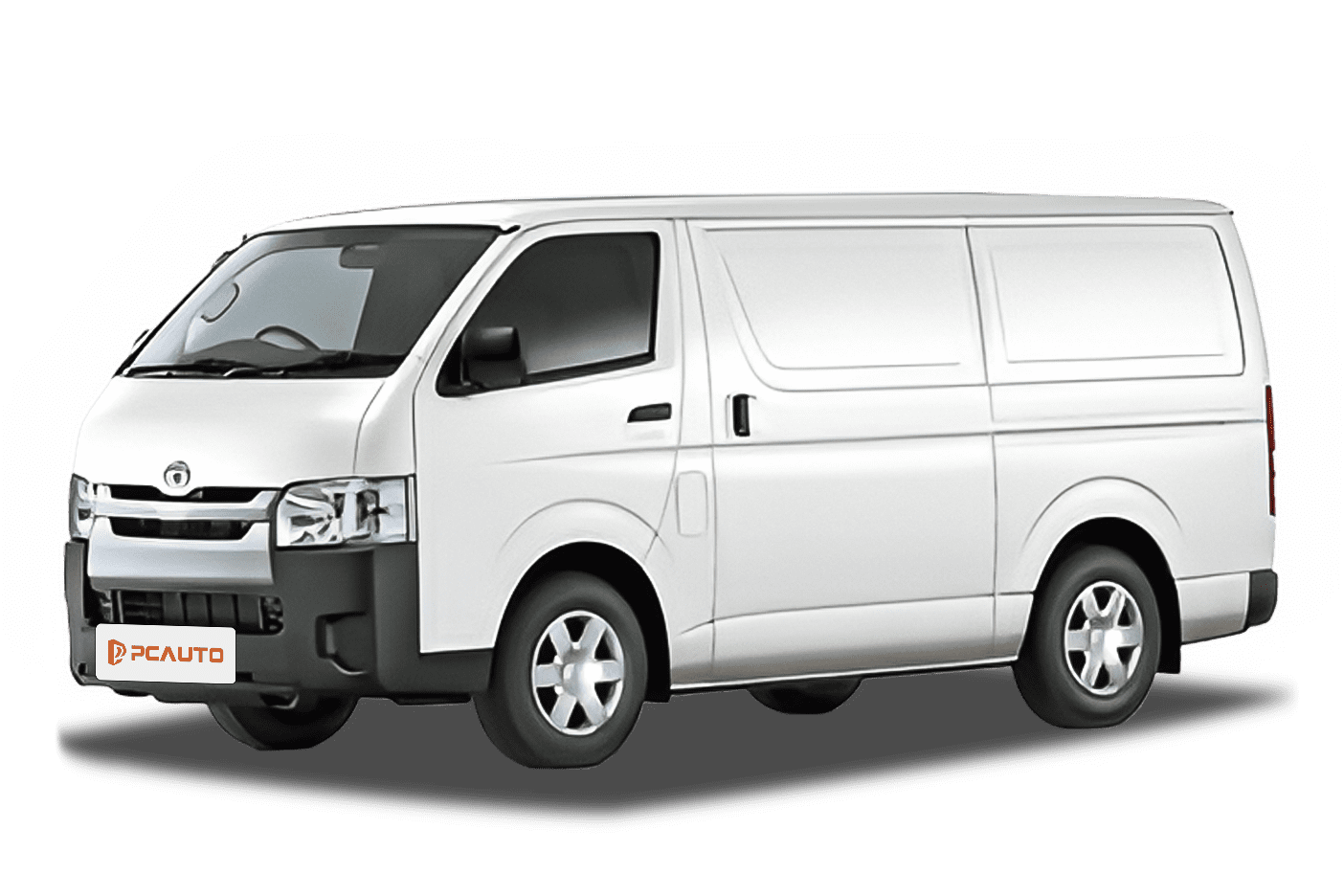
2018 Toyota Hiace Panel Van 2.5 Turbo Diesel is a small van that balances durability, off-road capability with four-wheel drive, and practical configurations, suitable for urban deliveries and rural unpaved roads.