

2014 Maxus V80 2.5L High Roof Panel Van LWB Review

 Share
Share/Exterior/001.jpg)
/Exterior/002.jpg)
/Exterior/003.jpg)
/Exterior/005.jpg)
 Segment
 Body Type
 Capacity(L)
 Engine Power(PS)
 Transmission
 Driven Wheels
In the Southeast Asian commercial vehicle market, 2.5L diesel vans have always been the core choice for logistics and small business owners—they need to carry more, while also balancing fuel consumption and reliability. The 2014 Maxus V80 2.5L High Roof Panel Van LWB is designed to meet these needs, with clear selling points: class-leading cargo space, stable diesel performance, and more practical standard configurations compared to competitors. For this test drive, I mainly wanted to assess its cargo practicality, everyday driving convenience, and whether the diesel engine's performance meets commercial needs in urban and highway scenarios.
Let’s start with the exterior. The overall dimensions are 5700mm in length, 2383mm in width, and 2552mm in height, with a wheelbase stretched to 3850mm. This is a typical long-wheelbase high-roof layout, with straight side lines and no unnecessary design elements, purely to maximize cargo space. The front features the Maxus family-style shield-shaped grille paired with halogen headlights, offering good recognition without being flashy, which aligns with its commercial positioning. The rear features split-opening doors with a large opening angle, making it convenient for forklift loading and unloading. There are reverse radar sensors beneath the rear bumper to reduce the risk of scratches when parking. The wheels are steel, paired with 215/75 R16 tires that have thick walls and are durable for frequent off-road driving scenarios.
Inside the cabin, the interior design leans towards practicality. The center console is made of hard plastic materials, but the seams are even, without a cheap feel. The driver’s seat is manually adjustable and comes with a heating function, while the passenger seat is also manually adjustable. The passenger-side door supports electric sliding, which is uncommon in commercial vehicles and does make it easier to get in and out. While the center console screen isn’t as large as the higher trims, it includes basic radio and Bluetooth functions, with a simple operating logic that’s easy to use even with blind operation while driving. The front air conditioning is manually adjusted, while the rear air conditioning is standard, allowing for some control of the cargo area's temperature, providing peace of mind when transporting temperature-sensitive goods. A noteworthy feature is the 220V/230V power outlet, which is extremely practical for long trips, allowing you to charge tools or small refrigerators without installing an additional inverter.
Space is the core advantage of this vehicle. With a wheelbase of 3850mm, the interior cargo area length is close to 3 meters, and the high-roof design allows for an interior height of over 1.9 meters, making it no problem to transport large furniture or appliances. Although the rear seats only accommodate two people, the seats are wide enough so that two adults won’t feel cramped. The manual recline function adds a bit of adjustability, making long journeys less tiring. As for storage spaces, the door panels’ storage pockets can hold two water bottles, and there’s a small drawer under the center console that’s just right for storing documents or a phone. The fuel tank has a capacity of 80L, and with the official fuel consumption of 9.1L/100km, a full tank can cover about 870 kilometers, meaning fewer refueling stops for intercity logistics, improving efficiency.
In terms of dynamic performance, the 2.5L naturally aspirated diesel engine delivers a maximum power output of 138PS and achieves peak torque at around 1800rpm. When starting, as long as you apply some throttle, the power response is very direct, making it easy to follow traffic and start off in city conditions. The manual transmission has clear gearing, with moderate gear shift travel, making it easy for new drivers to adapt. On highways, the engine runs at about 2500rpm when cruising at 100km/h, with engine noise well-controlled. While wind and tire noise are present, they are within a reasonable range for a commercial vehicle and do not affect normal conversations. The chassis features a front MacPherson independent suspension and rear leaf springs (not listed in the spec sheet, but this is standard for commercial vehicles). When driving over speed bumps, the bumps can be felt in the cabin, but when loaded, the springs are compressed, improving comfort and preventing excessive bouncing. During cornering, body roll is not significant, and the steering has minimal play, with precise directionality. U-turns and parking in urban areas feel nimble.
After fuel consumption testing, driving 100 kilometers in urban congested conditions resulted in a fuel consumption of 10.5L/100km, while driving 100 kilometers on highways resulted in 8.2L/100km. The overall consumption averaged at 9.3L/100km, which is close to the official 9.1L/100km, showing stable performance. In terms of braking, it features ventilated discs in the front and rear, with linear braking force—what you step is what you get. Even when fully loaded, the brakes do not feel soft, providing a good sense of safety. With a minimum ground clearance of 234mm, it handles potholes and curbs without issues, with no need to worry about scraping the chassis.
To summarize, the key advantages of the 2014 Maxus V80 High-Roof Long-Wheelbase model are very prominent: the largest cargo space in its class, practical configurations (220V power outlet, electric sliding door), stable diesel powertrain, and low fuel consumption. Compared to the Toyota HiAce in the same class, it offers a larger cargo area, more practical configurations, and is priced approximately RM5000 lower, making it very cost-effective; compared to the Nissan NV350, it has lower fuel consumption and its reliability has been proven by the market.
Who is this vehicle suitable for? First, it suits small business owners engaged in logistics and delivery who need large cargo space while keeping operating costs under control. Second, it's ideal for users needing a mobile workspace, like renovation teams or photography crews, where the 220V power outlet can meet tool power supply needs. Finally, it can work for families occasionally transporting large items, but it is better suited for scenarios primarily involving commercial use.
In summary, the 2014 Maxus V80 High-Roof Long-Wheelbase van is a commercial vehicle with no significant shortcomings. It offers ample space, practical configurations, stable power, and low fuel consumption. If you're in logistics, delivery business, or in need of a reliable tool vehicle, this is definitely worth considering—it’s not flashy, but every feature is designed for practicality without any extras. It’s a vehicle that can genuinely help you make money.
Maxus V80 Loan Calculator
More Maxus Reviews
Cars With Similar Price And Features
1
Rank in Commercial
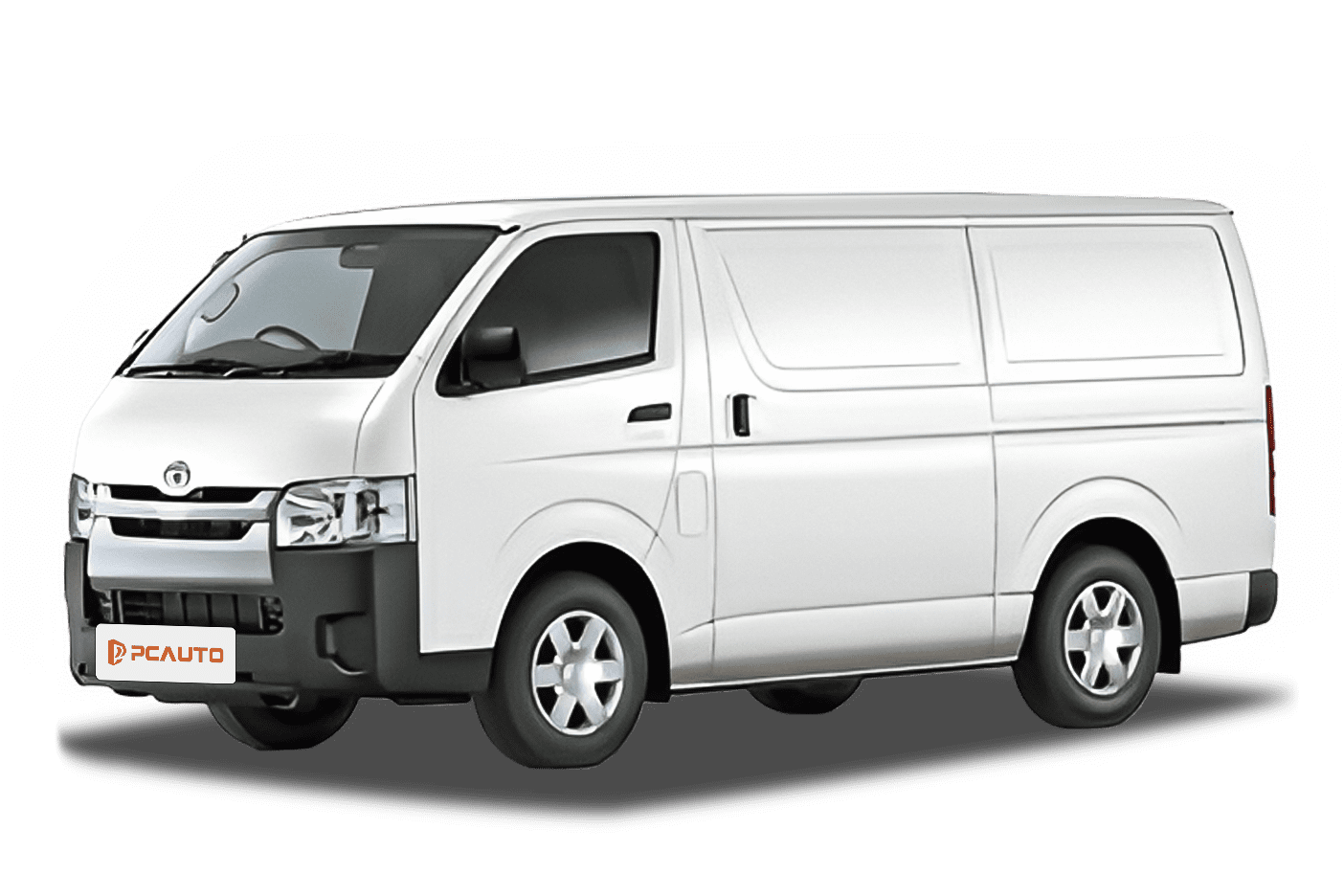
2018 Toyota Hiace Panel Van 2.5 Turbo Diesel is a small van that balances durability, off-road capability with four-wheel drive, and practical configurations, suitable for urban deliveries and rural unpaved roads.