

2014 Maxus V80 2.5L Window Van 15 Seater Review

 Share
Share/Exterior/001.jpg)
/Exterior/002.jpg)
/Exterior/003.jpg)
/Exterior/005.jpg)
 Segment
 Body Type
 Capacity(L)
 Engine Power(PS)
 Transmission
 Driven Wheels
In Malaysia's commercial vehicle market, 15-seater passenger models have always been a rigid demand choice for SMEs hosting guests and short-distance team travel. Users value both passenger capacity and have clear requirements for space practicality and operating costs. As a popular option in this segment, the 2014 Maxus V80 2.5L Window Van 15 Seater positions its core selling points on the fuel economy of its diesel engine and its flexible spatial layout. This time, we will conduct a comprehensive evaluation through static experience and dynamic test drives to determine whether it meets the actual needs of commercial scenarios.
From the exterior, this vehicle continues the boxy design style of the Maxus V80 series, with overall lines that are clean and practical without excessive adornments. The front features a large black grille matched with halogen headlights on both sides for a steady look. The side of the vehicle maintains a straight van-like contour, with a wheelbase of 3850mm and a dimension of 5700mm in length, 2383mm in width, and 2345mm in height, providing the foundation for a 15-seater interior layout. The rear design is equally simple, with vertical taillights and a rear bumper equipped with a reversing radar, aligning with the practical orientation of a commercial vehicle. The overall exterior lacks flashy elements, focusing instead on maximizing space and recognizability, suitable for daily commercial operations.
Inside the vehicle, the interior is predominantly made of dark plastic materials, aligning with the positioning of a commercial vehicle. While it lacks a luxurious feel, the craftsmanship is solid. The dashboard layout is simple: the left side houses the manual air conditioning controls, the center features a radio and storage compartment, and the right side has a cup holder. The operational logic is clear, making it easy for drivers to quickly acclimate. In terms of configuration, the front-row seats support electric adjustments to accommodate drivers of different heights. The rear seats support manual reclining, allowing slight angle adjustments to enhance passenger comfort. The interior is equipped with 220V/230V power outlets, convenient for rear passengers to charge devices or use small appliances. Both the front and rear rows have air conditioning systems, which can cover the entire vehicle and are suitable for coping with Malaysia's high temperatures. In terms of safety features, it comes standard with ABS anti-lock braking and dual airbags for the front and rear rows, sufficiently meeting commercial safety requirements.
Space performance is one of the core advantages of this vehicle. The 15-seater layout adopts a 2+3+3+3+4 arrangement (with the last row housing 4 seats). The spacing between seats is moderate, allowing a passenger of 175cm height to sit in the middle rows with about a fist's space for legroom and ample headroom without feeling cramped. In terms of storage, the area under the dashboard includes storage compartments. The door panels also feature cup holders and small storage slots, providing places for the driver's personal items. When fully seated with 15 passengers, the trunk space is relatively limited, but by folding the last row of seats, a larger storage area can be created, suitable for carrying a small amount of luggage or cargo. With a minimum ground clearance of 234mm, it offers good capability to handle unpaved roads, making it suitable for suburban or rural route operations.
In the dynamic test drive segment, this vehicle is equipped with a 2.5L naturally aspirated diesel engine, delivering a maximum horsepower of 138PS and reaching maximum power at 3800rpm. The maximum torque output is achieved at 1800rpm, paired with a manual transmission. The power output during startup is stable, with decent low-end torque. When fully loaded with 15 passengers, acceleration from a stop requires firm pressure on the accelerator. However, on urban roads or highways, acceleration under 60km/h is sufficient for daily use. The transmission gears are clearly defined, with a moderate shift travel distance, suitable for stop-and-go operating scenarios. The suspension system adopts a front MacPherson independent setup and a rear non-independent leaf spring configuration (common for commercial vehicles). When unloaded, the suspension tends to be stiff, causing noticeable vibrations when going over speed bumps or rough roads. However, when fully loaded, the suspension becomes steadier, reducing vibrations and ensuring basic passenger comfort. The steering system is precise, with minimal play, and the steering wheel remains stable during high-speed cruising without feeling loose.
The fuel consumption performance aligns with the advantages of diesel vehicles. The official combined fuel consumption is 9.1L/100km. During the actual test drive, the fuel consumption in urban congested areas (fully loaded with 8 people) is about 10.5L/100km, and on highways (fully loaded with 12 people), it is about 8.8L/100km. Overall, its fuel economy is slightly above average among 15-seater vehicles in the same class, which helps to reduce operating costs. In terms of noise control, the diesel engine noise is more noticeable at idle speeds, but while driving, wind and tire noise become the primary sources of noise. The overall performance meets the expectations for commercial vehicles and does not affect normal passenger communication. Regarding driving and riding comfort, the front electric seats provide good support, making long drives less tiring. Although the rear seats are fabric-covered, the cushion thickness is moderate, making short-distance rides reasonably comfortable.
In summary, the core advantages of the 2014 Maxus V80 2.5L Window Van 15 Seater lie in its practical space, the fuel economy of its diesel engine, and its comprehensive basic features. Compared to similar models like the Toyota HiAce or Nissan Urvan, this vehicle is more cost-effective with a price of RM 135,791. Additionally, features such as a 220V power supply and rear air conditioning make it better suited for commercial scenarios. Its target audience mainly includes small and medium-sized enterprises, travel companies, or rental companies, making it suitable for short-distance group transfers, employee commuting, or tourist charter purposes.
Overall, this vehicle does not focus on flashy features but instead emphasizes the core needs of commercial use: ample passenger space, reliable power, low operating costs, and practical configurations. If you need a vehicle that meets the daily operational needs for 15 people, while focusing on practicality and cost-effectiveness, then the 2014 Maxus V80 2.5L Window Van 15 Seater is a worthwhile choice to consider.
Maxus V80 Loan Calculator
More Maxus Reviews
Cars With Similar Price And Features
1
Rank in Commercial
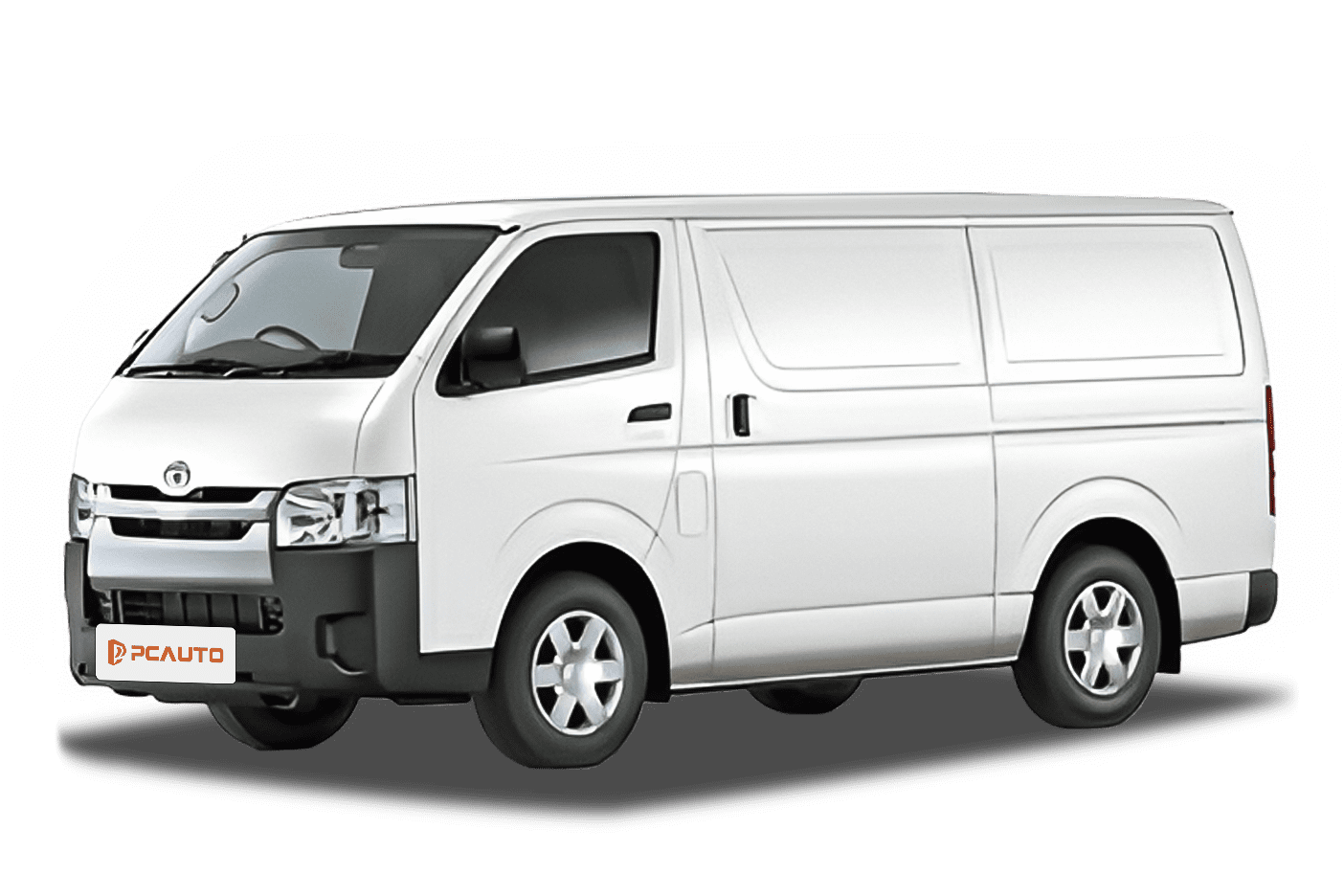
2018 Toyota Hiace Panel Van 2.5 Turbo Diesel is a small van that balances durability, off-road capability with four-wheel drive, and practical configurations, suitable for urban deliveries and rural unpaved roads.