

2018 Maxus V80 Panel Van Review

 Share
Share/Exterior/001.jpg)
/Exterior/002.jpg)
/Exterior/003.jpg)
/Exterior/005.jpg)
 Segment
 Body Type
 Capacity(L)
 Engine Power(PS)
 Engine Torque(Nm)
 Transmission
The competition in the commercial van market in 2018 still focuses on practicality and cost control. Small and medium-sized enterprises and individual operators maintain a stable demand for "spacious and durable" light commercial vehicles. The Maxus V80 Panel Van, as a rising star in this segment, highlights large space, high load capacity, and relatively affordable cost of use. The main purpose of our test drive today is to verify whether it meets the core needs of local commercial vehicle users.
From the exterior, the V80 Panel Van adopts a typical European light commercial vehicle design, with a boxy silhouette and minimal decorative elements. At the front, the large grille is paired with three horizontal chrome trim strips, with the Maxus brand logo embedded in the middle, providing decent recognition; the rectangular front headlights on both sides are connected to the grille, integrating halogen light sources to meet basic lighting needs. The sides of the vehicle maintain a straight design, and the double sliding doors have a wide opening size, making it convenient for loading and unloading goods; the wheels are 16-inch steel wheels paired with thick-walled tires, which are more suitable for carrying heavy loads. At the rear, vertically arranged combination taillights are positioned on both sides, and a high-mounted brake light is integrated at the top of the rear doors. The rear doors are designed with a double-opening configuration, allowing a maximum opening angle of up to 180 degrees. Together with the low ground clearance, this facilitates forklifts or manual handling of goods.
Inside the vehicle, the interior prioritizes practicality. The dashboard is made of hard plastic material, prioritizing durability over texture. The three-spoke steering wheel has multimedia control buttons on the left side, allowing volume adjustment and track switching. The instrument cluster features traditional mechanical gauges with a monochrome LCD display that clearly shows basic information such as speed, RPM, and fuel level. The center console is equipped with a 7-inch touchscreen that supports Bluetooth connection and USB ports. Although its functionality is not extensive, it satisfies daily usage needs. Regarding seating, the front row features a 2+1 three-seat layout, with the middle seat being foldable and usable as an armrest. The seats are made of fabric material and offer decent support, though slight lumbar fatigue might occur after extended driving.
The space performance is one of the V80 Panel Van's core advantages. The vehicle’s dimensions are 5700×1998×2345mm, with a wheelbase of 3850mm. The cargo area’s internal dimensions are 3750×1800×1750mm, providing an effective volume of approximately 12 cubic meters, which can easily accommodate standard-sized cargo pallets. The cargo area is equipped with 6 tie-down points to help secure items. The rear passenger space is sufficient for occasional passengers, but as a cargo van, its primary advantage lies in the cargo area. In terms of storage, the cabin has multiple storage spaces, including door panel holders, a storage box under the center console, and a glove compartment, which can meet the needs for storing daily tools and documents.
In terms of power performance, the test-drive model is equipped with a 2.5L naturally aspirated gasoline engine, delivering a maximum power of 136 horsepower and peak torque of 230 N·m, paired with a 6-speed manual transmission. Power delivery is smooth during startup, and the low torque performance is satisfactory. However, when fully loaded, stepping hard on the accelerator is necessary to gain sufficient acceleration. During high-speed driving, the engine speed remains at around 2500 rpm at 100 km/h. The noise level is slightly high but within an acceptable range. The suspension system features front MacPherson independent suspension and rear leaf-spring non-independent suspension. When unloaded, the road feedback is direct, and bumps are noticeable. However, when fully loaded, the suspension compresses to a reasonable position, significantly improving driving stability and enhancing the shock absorption effect when dealing with bumpy roads.
In terms of handling, the steering wheel has moderate turning force with slightly noticeable play, which is in line with the positioning of a commercial vehicle; the turning radius is small, making it quite agile in narrow streets and parking lots. The braking system features front disc and rear drum brakes, with even braking power, but a significantly longer braking distance when fully loaded. During specialized performance testing, we measured a fuel consumption of approximately 12.5L per 100 kilometers under mixed road conditions, which is average for a truck of this size.
As for driving comfort, the noise control of the vehicle is moderate, with noticeable wind noise and tire noise at high speeds. It is recommended that the manufacturer optimizes the sealing performance in subsequent versions. The suspension system offers average comfort when empty, but performs well when fully loaded; the seats lack sufficient wrap-around support, making long drives likely to cause fatigue. The design of the storage space is quite reasonable, and the storage compartments in the cabin can meet daily usage needs.
Overall, the core advantages of the Maxus V80 Panel Van lie in its large cargo volume, high payload capacity, and relatively economical running costs. Compared with similar models like the Transit and Master, the V80 has a price advantage while also offering a longer wheelbase and larger cargo space. This makes it suitable for small and medium businesses, individual entrepreneurs, and users in the logistics industry requiring frequent goods transportation. As a commercial vehicle, it lacks luxurious features, but stands out in practicality, fully meeting the needs of its target users.
More Maxus Reviews
Cars With Similar Price And Features
1
Rank in Commercial
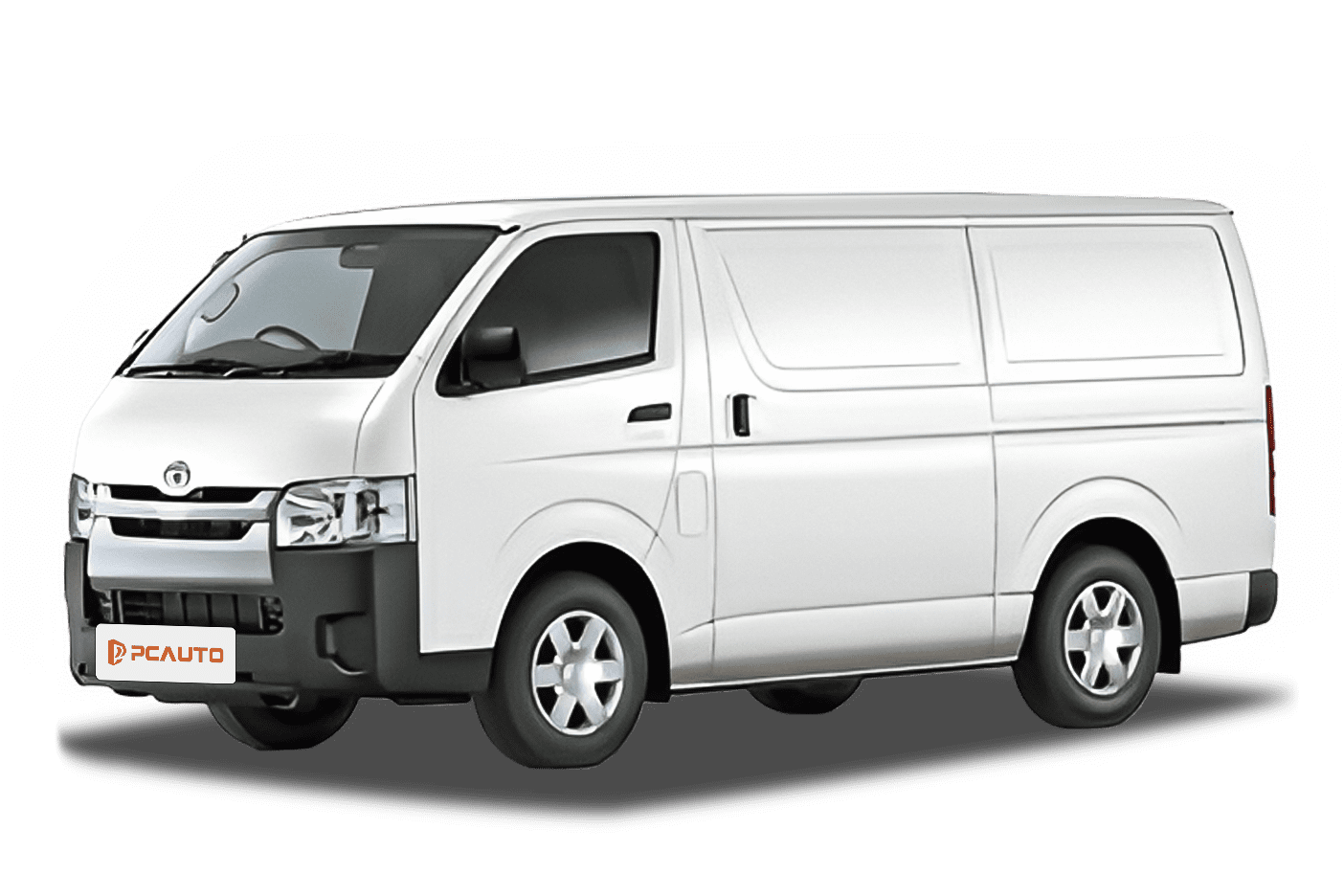
2018 Toyota Hiace Panel Van 2.5 Turbo Diesel is a small van that balances durability, off-road capability with four-wheel drive, and practical configurations, suitable for urban deliveries and rural unpaved roads.