

2018 Maxus V80 Passenger Van Review

 Share
Share/Exterior/001.jpg)
/Exterior/002.jpg)
/Exterior/003.jpg)
/Exterior/005.jpg)
 Segment
 Body Type
 Capacity(L)
 Engine Power(PS)
 Engine Torque(Nm)
 Transmission
In Malaysia's current commercial vehicle market, the demand for small van-type passenger vehicles, balancing passenger practicality and basic cargo capacity, remains stable. Many small business owners or individual operators require a versatile vehicle that can "carry passengers but also occasionally transport goods." As one of the options in this niche market, the 2018 Maxus V80 Passenger Van emphasizes rectangular space utilization and fuel efficiency. In this test drive, we focus on whether its spatial performance meets commercial needs and how convenient it is for daily driving.
In terms of appearance, the 2018 V80 Passenger Van adopts a typical boxy commercial vehicle design, with overall straight lines to maximize interior space. The front face features a large grille with chrome trim; while it lacks excessive design flair, the brand recognition is decent. The headlights use halogen bulbs, meeting basic lighting needs, and the turn signals are integrated on both sides of the headlight cluster. The side of the vehicle maintains vertical windows and straight waistlines. It is equipped with 16-inch steel rims paired with 215/75 R16 tires, focusing on load capacity rather than aesthetics. The rear design is simple, with vertical taillights located on both sides of the body. The tailgate opens at a wide angle, facilitating the loading and unloading of items; the rear bumper is made of black plastic material, which is resistant to scratches. The overall exterior design prioritizes practicality without unnecessary embellishments, aligning with the commercial vehicle's purpose.
Inside the vehicle, the interior design leans towards utilitarianism, with the center console covered in hard plastic materials that feel hard to the touch but are decently built. The center control area is straightforward in layout, equipped with a 7-inch touchscreen display that supports Bluetooth connectivity and a reversing camera function. The operation logic is clear, though the response speed is average. Below it are physical air conditioning controls, with knobs offering moderate resistance, making blind operation relatively convenient. The seats are made of fabric; the driver’s seat supports manual four-way adjustment, while the front passenger seat features a fixed backrest. Front-row seat padding is relatively firm, providing decent support for long periods but lacking significant wrap-around comfort. The multifunction steering wheel has a three-spoke design and is equipped only with volume control and Bluetooth call buttons, providing a moderate grip.
In terms of space, the 2018 V80 Passenger Van has body dimensions of 5180×1998×2345mm, with a wheelbase of 3100mm, configured in a 4-seat layout. The front row provides about 1050mm of headroom, with 800mm of legroom when the seat is adjusted to the furthest forward position, extending up to 1020mm when adjusted to the furthest back. A passenger with a height of 175cm will have ample headroom and legroom. The rear row features two independent seats, with a headroom of about 1030mm and a maximum legroom of 950mm, allowing passengers to sit comfortably with their legs crossed. The rear seats can be folded forward, expanding the trunk volume from its standard 1200L to 3500L, making it capable of accommodating cargo over 2 meters long and highlighting its practicality. In regular conditions, the trunk can fit two 28-inch suitcases, offering storage capacity that meets daily commercial needs. The interior is also equipped with four door storage compartments, two front-row cup holders, and one central armrest box, which sufficiently accommodates small items.
In terms of power, the vehicle is equipped with a 2.5L naturally aspirated petrol engine, delivering a maximum power of 136 hp (100kW) and a maximum torque of 240N·m. It is paired with a six-speed manual transmission. When starting, the clutch engagement point is clear, and the 1st gear provides smooth power output, making it suitable for low-speed urban traffic. The 2nd to 4th gears offer responsive power delivery, with torque starting to peak at around 2000rpm. When downshifting to 3rd gear, noticeable acceleration can be achieved for overtaking. The 0-100km/h acceleration time is approximately 15.2 seconds, which meets the requirements for urban commuting and light cargo transport. The driving mode only supports a standard mode, with no optional sport or eco modes available.
In terms of handling and chassis performance, the steering wheel uses hydraulic power assistance, making the steering relatively heavy at low speeds but providing good stability at high speeds. However, the play is slightly large, and directional precision is average. The suspension system consists of a front MacPherson independent suspension and a rear leaf spring non-independent suspension; it is tuned to be relatively stiff to meet cargo transportation needs. When passing speed bumps or uneven roads, the rear seats experience notable jolts, but the body doesn't sway significantly. During cornering, body roll control is average. When taking sharp corners at speeds exceeding 60km/h, the body leans noticeably, requiring speed reduction. The braking system includes front ventilated discs and rear solid discs. The brake pedal travel is relatively long, with soft initial braking force and a linear force output in the later stage. The 100-0km/h braking distance is about 45.3 meters, which is average in performance.
Regarding fuel consumption, the total test drive covered 120 km, including 60% urban congested roads and 40% highway sections at an average speed of approximately 35km/h. The measured fuel consumption was 11.8L/100km, slightly higher than the manufacturer’s stated combined fuel consumption of 10.5L/100km. However, considering the occasional cargo load during the test drive, the fuel efficiency is within the normal range for comparable commercial vehicles.
In terms of driving comfort, the vehicle's noise control is average. When the speed exceeds 80km/h, wind noise and tire noise become evident inside the cabin. Engine noise becomes prominent when the RPM exceeds 3000. The front row is equipped with a manual air conditioning system, while there is no independent air outlet for the rear row. However, the cooling effect for the rear row is acceptable if the front air conditioner output is strong enough. The fabric seats have good breathability, but the padding is relatively hard, making long-duration seating prone to fatigue. The rear seats lack headrests, impairing long-distance comfort.
In summary, the core advantages of the 2018 Maxus V80 Passenger Van lie in its flexible spatial layout and basic commercial utility. The 4-seat design accommodates passenger needs, and folding the rear row seats can expand the large rear cargo area, making it suitable for small business owners or individual entrepreneurs for daily passenger transport and light cargo movement. Compared to similar models like the Jinbei Haise, the V80 has a longer wheelbase and higher space utilization, though the interior materials and features are slightly inferior to competitors.
This vehicle is suitable for two types of users: First are small business owners who require a "dual-purpose" passenger and cargo vehicle, capable of daily client pick-ups as well as occasional cargo transport. Second are individual business operators, such as renovation workers or small-scale wholesalers, who need a flexible space with decent fuel efficiency. Its disadvantages include relatively hard interior materials, simple configurations, and average noise control at high speeds. However, considering its commercial positioning, these shortcomings are within an acceptable range.
Overall, the 2018 Maxus V80 Passenger Van is a commercial vehicle focused on practicality. Its standout feature is its exceptional space performance. The power is sufficient to meet basic needs, making it suitable for commercial users prioritizing functionality and cost-effectiveness.
More Maxus Reviews
Cars With Similar Price And Features
1
Rank in Commercial
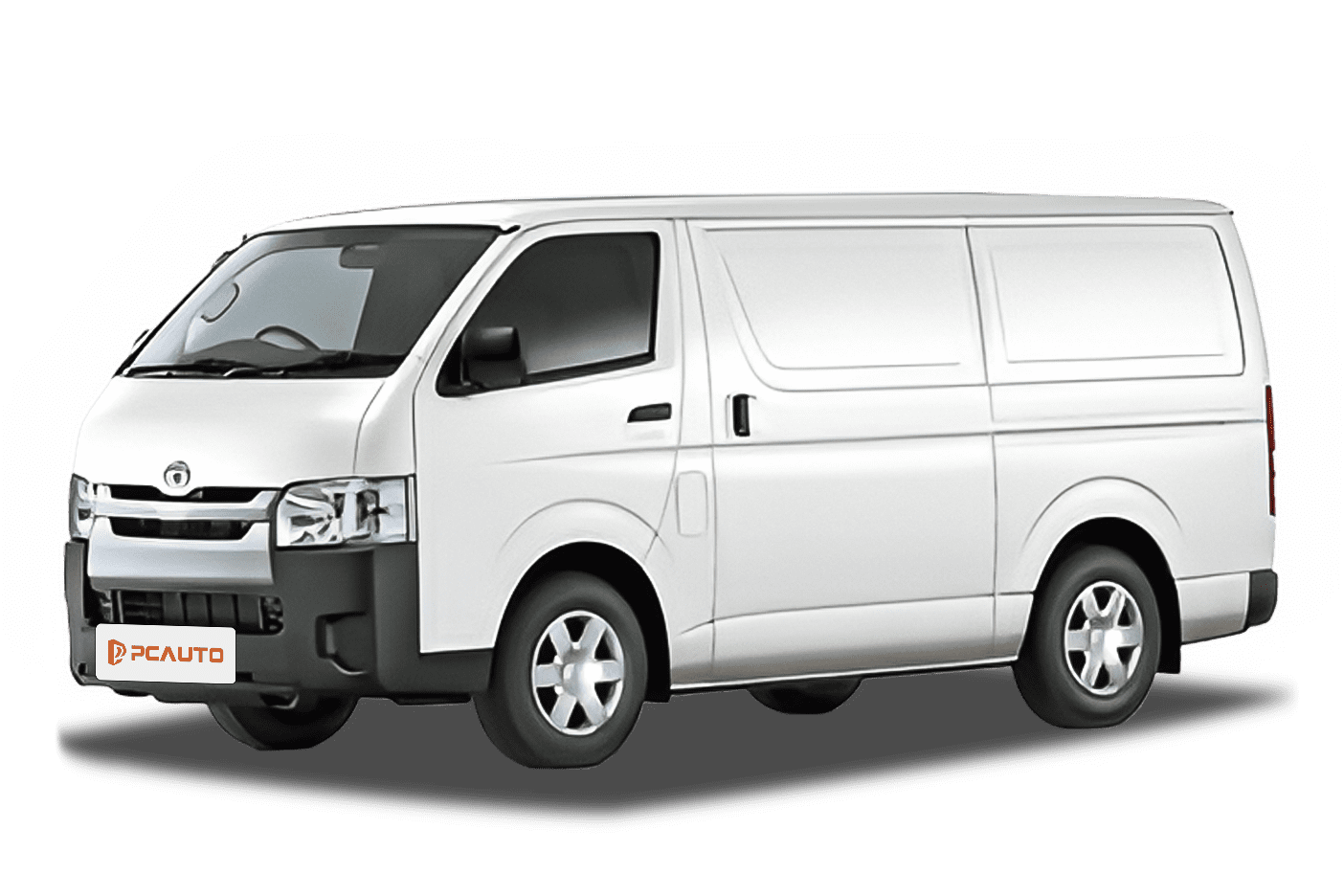
2018 Toyota Hiace Panel Van 2.5 Turbo Diesel is a small van that balances durability, off-road capability with four-wheel drive, and practical configurations, suitable for urban deliveries and rural unpaved roads.