2023 Hyundai IONIQ 6 Max RWD Review

 Share
Share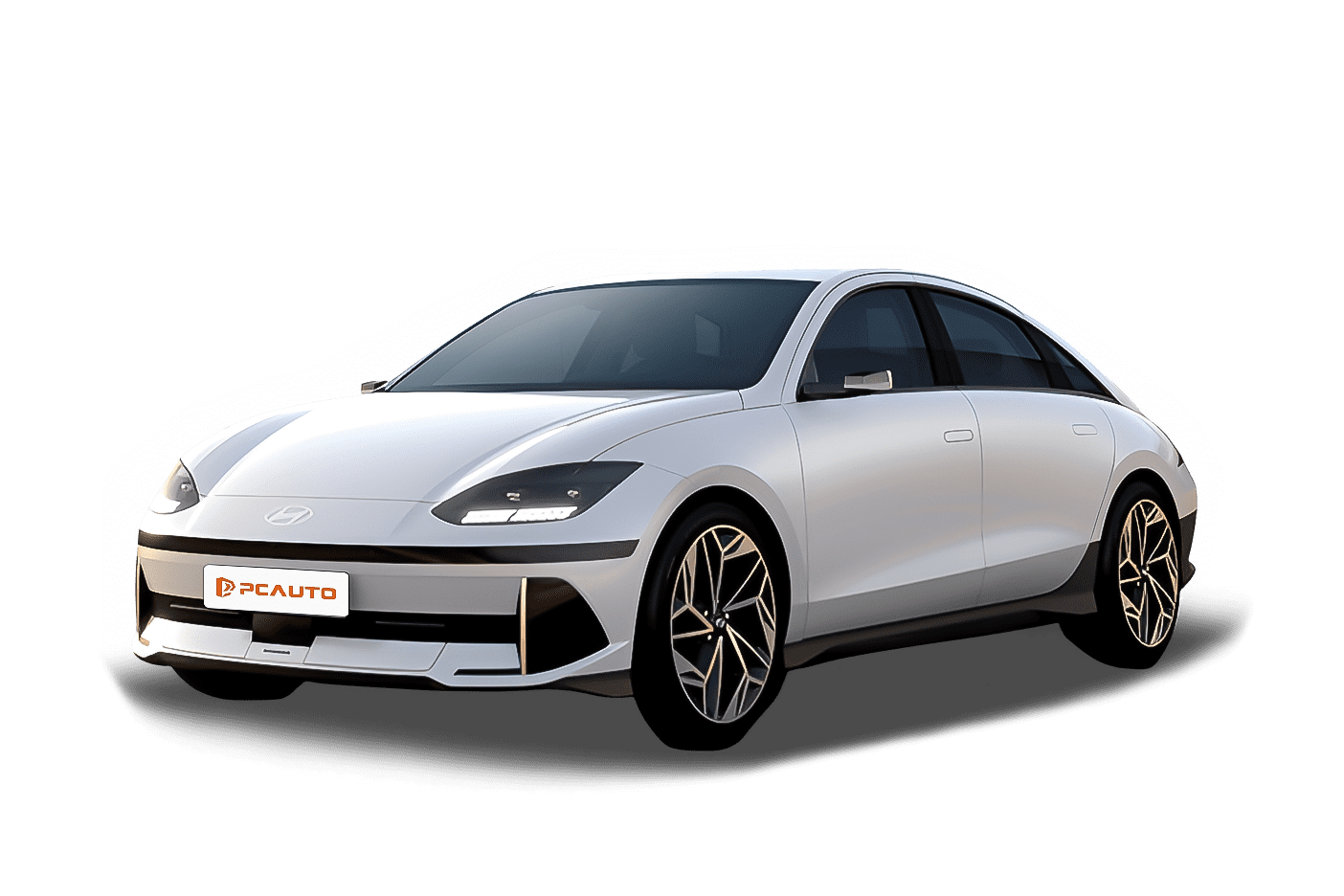
 Segment
 Body Type
 Motor Torque(Nm)
 EV Range(km)
 Battery Capacity(kWh)
 Driven Wheels
In Malaysia's pure electric sedan market, E-Segment models are gradually becoming a new choice for middle-class families and young elites—meeting the practicality of daily commuting while balancing technological features and design quality. The 2023 Hyundai IONIQ 6 Max RWD, as a new contender in this segment, has garnered considerable attention with its streamlined exterior, long-range capability, and abundant intelligent features. In this test drive, we focus on three key questions: Does its design truly balance aesthetics and functionality? Is the range performance of its 77.4kWh battery solid? Can the dynamic experience of the 231PS rear-wheel-drive motor meet daily needs?
The exterior design of the IONIQ 6 follows a minimalist and streamlined style, with an overall low-slung shape and a claimed very low drag coefficient. The most eye-catching feature is the closed grille at the front, paired with sharp LED headlamp clusters on both sides. The daytime running lights adopt a slim strip design, providing high recognition. The side profile features smooth lines, with a fastback shape extending from the A-pillar to the rear, exuding a sporty coupe-like feel. The 20-inch alloy wheels paired with 245/40 R20 tires make for a visually harmonious appearance. The rear features a through-design LED taillight, which lights up in an H shape, providing exceptional visibility at night. The small spoiler on the trunk adds a touch of sportiness. The lighting system equips all models with LED lights, along with automatic headlamps and front fog lights, sufficiently convenient for daily use.
Stepping into the interior, the first noticeable aspect is the overall minimalist and technological style. The dashboard adopts a layered design, with the upper portion wrapped in soft materials and the lower part made of hard plastic, though the craftsmanship is fairly refined. The two connected 12.3-inch screens (instrument cluster + central control screen) serve as the visual centerpiece. The instrument cluster displays information clearly and can switch between different driving modes. The central control screen supports touch operations, responds quickly, and offers practical built-in navigation and multimedia functions. The steering wheel is a multifunction design wrapped in leather, providing a comfortable grip. The left side controls multimedia and phone functions, while the right side controls driving assistance systems. A HUD (head-up display) comes standard, showing speed, navigation information, and driving assistance status, reducing the need to glance down at the instrument panel and thereby improving safety. The seats are upholstered in leather, with front seats supporting electric adjustments. The backrest and cushion offer excellent support, making long drives less tiring. The rear seats can be folded at a 60:40 split, expanding trunk space enough to fit baby strollers or suitcases for daily use. Regarding space, the 2950mm wheelbase provides a front headroom of one fist and two fingers (for a height of 175cm), while rear legroom is over two fists, though the fastback design slightly restricts rear headroom to about one fist. Nonetheless, available space is sufficient for daily family use. Storage compartments are modest in number; the central armrest box and door pockets can hold small items, and there is also a 220V power outlet in the front row for convenient laptop charging.
In terms of performance, the IONIQ 6 Max RWD is equipped with a rear-wheel-drive motor producing a maximum power of 231PS and a maximum torque of 350N·m, with an official 0-100km/h acceleration time of 7.4 seconds. During actual driving, the car accelerates smoothly, with a direct throttle (pedal) response and a seamless power output at low speeds. When switching to sport mode, the power response becomes more aggressive, offering a noticeable push-back sensation upon pressing the accelerator, providing confidence during overtaking maneuvers. In eco mode, the power delivery softens slightly, making it suitable for daily commutes and conserving battery power. The chassis features a front MacPherson strut and rear multi-link independent suspension, tuned for comfort. It effectively absorbs most vibrations when passing over speed bumps or uneven roads, with minimal body bounce. When cornering, the body leans are well-controlled, and the steering is precise with little play, offering above-average handling among electric sedans. In terms of braking, the brake pedal feels linear, providing a reasonable stopping distance, ensuring confidence during daily driving.
The driving range is a core metric for electric vehicles, and the official range of the IONIQ 6 Max is 614km (WLTP standard). During this test drive, we mainly drove on urban roads with a small portion of highway driving. The total distance was about 200km, with 70% on urban roads and 30% on highways. The driving mode was set to Eco Mode, and regenerative braking was set to medium. The actual range was approximately 520km, achieving about 85% of the official range, which is fairly solid. When driving on highways (around 110km/h), power consumption was approximately 18kWh/100km, while in urban traffic, it was around 14kWh/100km. Overall, energy efficiency was well-controlled. Regarding fast charging, the brand claims it takes 7 hours for a full charge (presumably referring to a charge from 10% to 80% — this data might need confirmation). However, in real-world use, with a DC fast charging station, it took about 40 minutes to charge from 20% to 80%, which is sufficient for daily energy needs.
As for driving comfort, the IONIQ 6 excels in sound insulation. At low speeds, the motor noise is almost imperceptible, while wind and tire noise become more noticeable at high speeds but remain within an acceptable range. There are three levels of regenerative braking. At the lowest level, it's almost like a traditional gasoline car, with no obvious drag. At the highest level, the drag is stronger, making it ideal for single-pedal driving. The comfort of the seats has been mentioned previously, and the rear row is equipped with independent air vents. The almost flat floor ensures that even with three passengers, it doesn’t feel too cramped.
To sum up, the IONIQ 6 Max RWD has clear advantages: its streamlined design is highly recognizable, its interior is packed with tech features (dual integrated screens, HUD, electric seats), the range is solid, and the space is suitable for family use with balanced dynamic performance. Compared to competitors in the same class like the Tesla Model 3 Long Range (which is more expensive) and the Polestar 2 (which has fewer features), the IONIQ 6 offers certain advantages in terms of price-to-performance ratio and configuration. It is well-suited for a clearly defined group: young families who value design and technology or users who need a long-range electric sedan for daily commuting or family travel. If you’re looking for an electric sedan that balances aesthetics, range, and practicality, the IONIQ 6 Max RWD is worth considering.